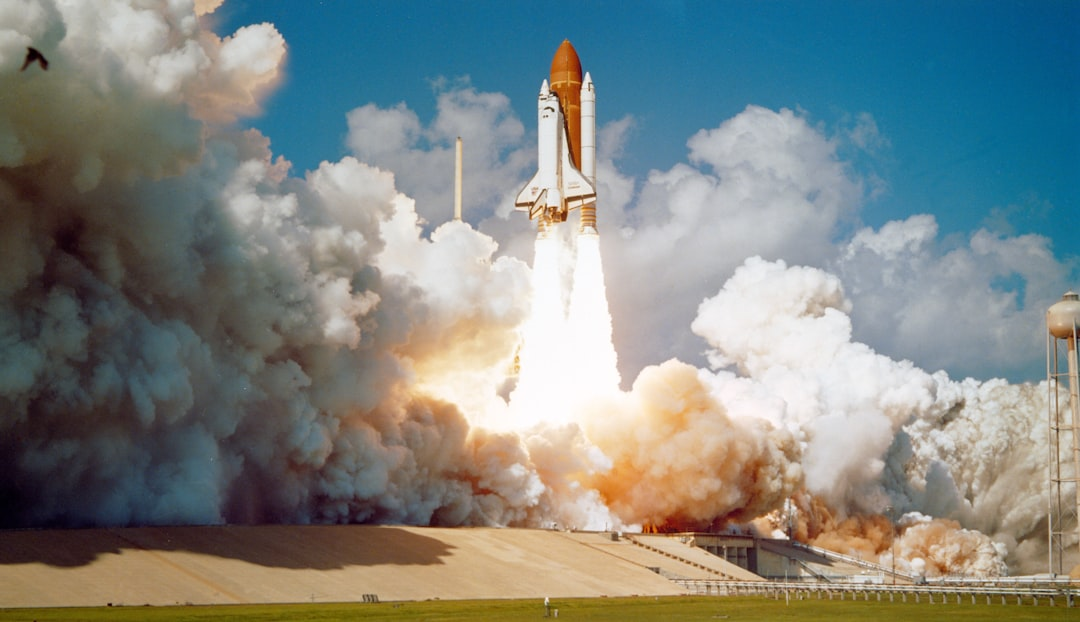
First Moon Launch: A Historic Leap for Humanity
The quest to reach the Moon stands as one of humanity’s most ambitious and defining endeavors. For millennia, our celestial neighbor has captivated imaginations, but it was not until the mid-20th century that the dream of touching its surface transformed into a tangible goal. The first moon launch, a monumental achievement, didn’t just mark a technological triumph; it redefined our perception of what is possible and set the stage for an era of unprecedented exploration.
💡 Key Takeaways
- The first moon launch marked a pivotal moment, shifting humanity’s future in space.
- It showcased unprecedented scientific and engineering innovation, pushing the boundaries of what was thought possible.
- The mission inspired a new generation of explorers and scientists globally, fostering a widespread interest in STEM.
- Its legacy continues to influence modern space exploration, technological development, and our understanding of the universe.
“The first steps on the moon weren’t just for science; they were for the human spirit. It was the ultimate proof of concept that our wildest dreams, even those penned in science fiction, could become reality – a testament to our ingenuity and daring.”
— Astrid Bellweather, Astrophysicist & Science Fiction Consultant
Before humanity could contemplate a future where a `moon launch today` is part of a regular schedule, a colossal effort was required to send the first humans to another celestial body. This journey was fraught with challenges, yet it culminated in one of the most celebrated moments in human history. This article delves into the iconic mission that achieved this historic feat, its profound impact, and the exciting future of lunar exploration.
In This Article
- → First Moon Launch: A Historic Leap for Humanity
- — 💡 Key Takeaways
- → 🚀 The Genesis of Lunar Ambition: The Space Race
- → 🌕 Apollo 11: The Historic Mission
- — 🗓️ The Countdown and Liftoff
- — 🚶 One Small Step: The Lunar Landing
- → ⚙️ Impact and Legacy: Shaping Future Exploration
- → 🌌 Beyond Apollo: Continuing Lunar Exploration
- — 💔 Apollo 13: The Successful Failure
- — 🏁 Apollo 17: The Last of an Era
- → 🚀 The Next Era of Lunar Exploration: A Return and Beyond
- — 🌟 NASA Artemis Program
- — 🛰️ SpaceX Starship and Commercial Lunar Landers
- → 💫 Conclusion: A Continuing Journey
🚀 The Genesis of Lunar Ambition: The Space Race

The drive to reach the Moon was born out of a fierce geopolitical competition known as the Space Race, primarily between the United States and the Soviet Union. This era, spanning from the late 1950s to the early 1970s, pushed the boundaries of scientific and engineering innovation.
- ✅ Early Pioneers: Both nations achieved significant milestones, from the Soviet Union’s Sputnik 1 (first artificial satellite) and Yuri Gagarin (first human in space) to the U.S.’s Mercury and Gemini programs, which honed critical skills for lunar missions.
- ➡️ Setting the Goal: In 1961, President John F. Kennedy famously declared the ambitious goal of landing a man on the Moon and returning him safely to Earth before the decade was out, galvanizing the American space effort.
- 💡 Technological Leaps: This audacious goal spurred the development of revolutionary technologies, from powerful rockets like the Saturn V to advanced navigation and life support systems, all essential for a successful `first moon launch`.
🌕 Apollo 11: The Historic Mission
Of all the missions launched during this intense period, Apollo 11 stands as the undisputed pinnacle. It was the mission that delivered on Kennedy’s promise and achieved what had once seemed an impossible dream.
🗓️ The Countdown and Liftoff
On July 16, 1969, at 9:32 AM EDT, the mighty Saturn V rocket ignited its engines at Launch Complex 39A at Kennedy Space Center, Florida. Aboard were three extraordinary astronauts:
- 👨🚀 Neil Armstrong: Commander
- 👨🚀 Buzz Aldrin: Lunar Module Pilot
- 👨🚀 Michael Collins: Command Module Pilot
The sheer power of the Saturn V, a predecessor to the modern `sls launch` vehicle, was a spectacle in itself, propelling the Apollo 11 crew towards the Moon.
🚶 One Small Step: The Lunar Landing
Four days later, on July 20, 1969, the Lunar Module “Eagle,” with Armstrong and Aldrin aboard, separated from the Command Module “Columbia” (piloted by Collins) and began its descent towards the lunar surface. After a tense manual landing avoiding a boulder field, Armstrong announced, “Houston, Tranquility Base here. The Eagle has landed.” A few hours later, he descended the ladder and uttered the immortal words: “That’s one small step for [a] man, one giant leap for mankind.” This moment cemented the `first moon launch` into the annals of human history. You can learn more about this historic moment directly from NASA’s historical archives.

⚙️ Impact and Legacy: Shaping Future Exploration
The success of Apollo 11 profoundly impacted not just space exploration but also society, technology, and human ambition.
- 💡 Technological Spinoffs: Many technologies developed for the Apollo program, from integrated circuits to freeze-dried food, found their way into everyday life.
- 🔬 Scientific Discoveries: The lunar samples brought back by Apollo missions revolutionized our understanding of the Moon’s geology and the early solar system.
- ✨ Inspiration for Generations: The sight of humans walking on the Moon inspired countless individuals to pursue careers in science, engineering, and exploration. The Apollo 11 mission is widely celebrated, as detailed by institutions like the Evergreen Museum.
The `first moon launch` proved that with dedication and ingenuity, seemingly impossible goals could be achieved, laying the groundwork for future deep-space endeavors.
🌌 Beyond Apollo: Continuing Lunar Exploration
While Apollo 11 achieved the primary objective, it was part of a larger series of missions that continued to explore the Moon, each contributing unique lessons and discoveries.
💔 Apollo 13: The Successful Failure
The `apollo 13 launch` is remembered not for a lunar landing, but for the remarkable ingenuity and resilience of the crew and ground control in overcoming a catastrophic in-flight emergency. An oxygen tank explosion crippled the spacecraft, turning a planned landing into a desperate fight for survival, ultimately leading to a safe return to Earth.
🏁 Apollo 17: The Last of an Era
The `apollo 17 launch` in December 1972 marked the final mission of NASA’s Apollo program and the last time humans walked on the Moon. It was also the only Apollo mission to carry a scientist, geologist Harrison Schmitt, to the lunar surface, bringing back the most diverse set of lunar samples.
The `last moon launch` with humans aboard left a rich legacy of data and a longing for humanity’s return.
🚀 The Next Era of Lunar Exploration: A Return and Beyond
Decades after Apollo, humanity is once again looking towards the Moon, not just for flags and footprints, but for sustained presence and as a stepping stone for deeper space exploration. The `moon launch today` refers to a new generation of missions and vehicles being developed.

🌟 NASA Artemis Program
The `NASA Artemis Program` aims to return humans to the Moon, including the first woman and first person of color, and establish a long-term human presence. This ambitious program leverages the powerful Space Launch System (SLS) rocket for its deep-space missions. Upcoming missions like Artemis II Crew: Paving the Way for Lunar Exploration are crucial steps toward this goal. The `sls launch` vehicles are key to Artemis’s capabilities.
🛰️ SpaceX Starship and Commercial Lunar Landers
Private companies are playing an increasingly vital role. `SpaceX Starship` is a fully reusable super heavy-lift launch vehicle designed to transport both crew and cargo to the Moon, Mars, and beyond. NASA has selected Starship as the Human Landing System for the Artemis program, signifying a significant partnership. The prospect of a `spacex manned launch` to the Moon on Starship represents a paradigm shift in space travel, potentially making lunar access more frequent and affordable.
Furthermore, new generations of NASA Lunar Landers: Next Stop, the Moon are being developed by commercial partners, promising diverse approaches to delivering payloads and eventually humans to the lunar surface. The landscape for a `moon launch today` is more diverse and dynamic than ever before.
While the focus is on lunar missions, it’s worth noting the broader activity in space. From various commercial launches to military satellites, like the `next vandenberg launch` supporting different orbital needs, the global space industry is booming. However, the Moon remains a primary target for international collaboration and scientific advancement, representing the frontier of humanity’s expansion beyond Earth. For those looking to explore how these advancements might impact future travel, consider our Space Tourism Guide: Your Trip to the Final Frontier.
Recommended Video
💫 Conclusion: A Continuing Journey
The `first moon launch` was far more than a single event; it was a testament to human ingenuity, perseverance, and the timeless desire to explore the unknown. It solidified our place as a spacefaring species and provided an indelible chapter in the story of human ambition.
From the pioneering spirit of Apollo to the ambitious goals of the `NASA Artemis Program` and the innovative capabilities of `SpaceX Starship`, humanity’s gaze remains fixed on the Moon. As we look forward to the next giant leaps, the legacy of that initial, historic `first moon launch` continues to inspire. It reminds us that by daring to dream beyond our immediate horizons, we unlock not only scientific breakthroughs but also a deeper understanding of our place in the vast and wondrous cosmos. For a comprehensive look at the universe’s grandest questions, explore our pillar content: Cosmic Queries: Probing the Mysteries of the Universe.
Frequently Asked Questions
When did the first crewed mission land on the moon?
The Apollo 11 mission, carrying Neil Armstrong and Buzz Aldrin, successfully landed on the Moon on July 20, 1969.
Who were the astronauts on the first moon landing mission?
The crew of Apollo 11 consisted of Commander Neil Armstrong, Lunar Module Pilot Buzz Aldrin, and Command Module Pilot Michael Collins.
What was the primary goal of the first moon launch?
The primary goal of the Apollo 11 mission was to perform a crewed lunar landing and return safely to Earth, fulfilling President John F. Kennedy’s national goal set in 1961.
How long did the first moonwalk last?
Neil Armstrong’s first moonwalk lasted approximately 2.5 hours, with Buzz Aldrin joining him for most of that time.