


Voyager Missions: A Guide to Humanity’s Interstellar Explorers
Few endeavors have captured the human imagination quite like the voyager missions. Launched in 1977, these twin robotic space probes, Voyager 1 and Voyager 2, embarked on a journey that would redefine our understanding of the solar system and, ultimately, mark humanity’s first venture into interstellar space. Conceived and managed by NASA‘s Jet Propulsion Laboratory (JPL), the Voyager Program stands as a testament to scientific ingenuity and enduring exploration.
💡 Key Takeaways
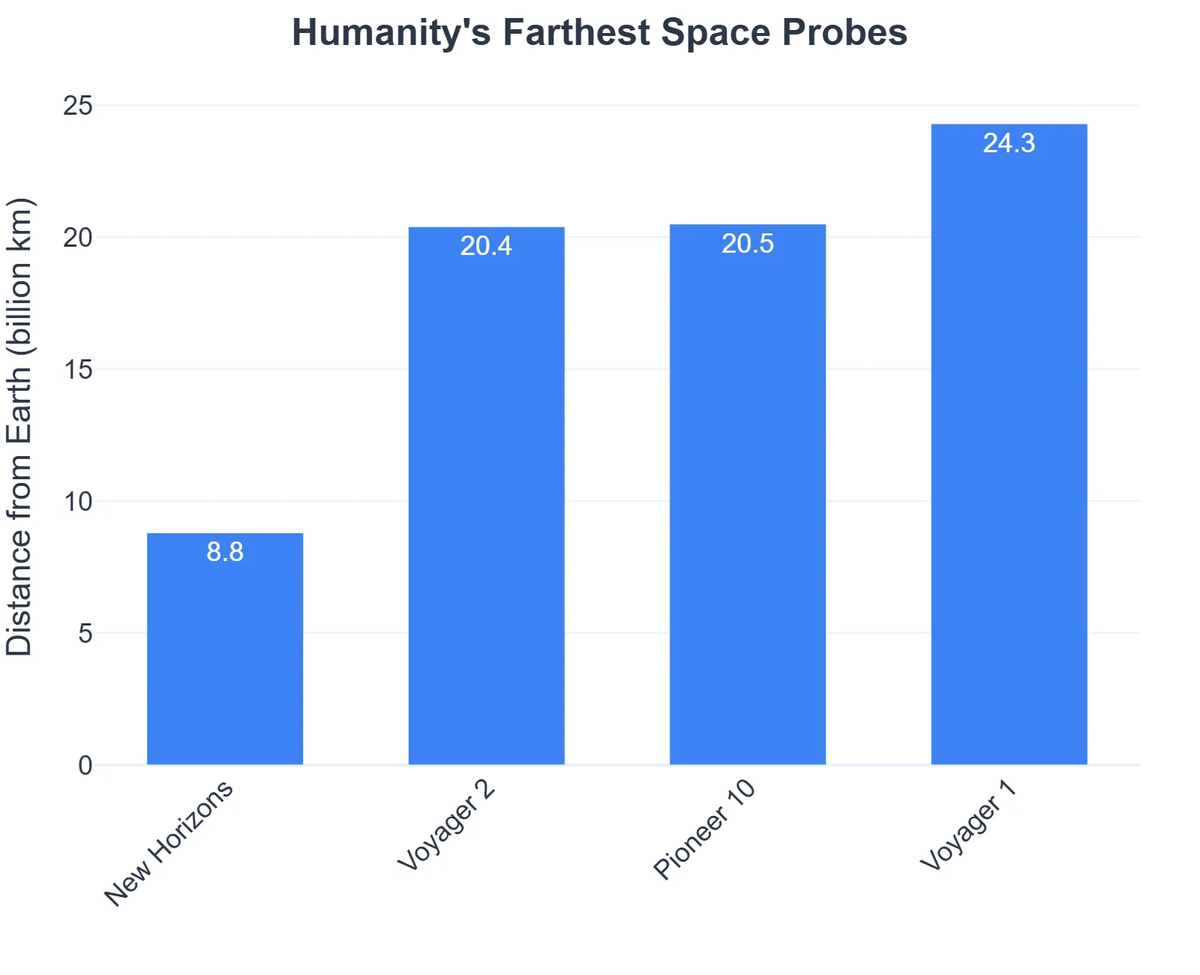
- Voyager 1 and 2 are humanity’s most distant spacecraft, launched in 1977.
- They carry the Golden Records, a unique message intended for any intelligent extraterrestrial life.
- Both probes have successfully entered interstellar space, providing unprecedented data about the heliosphere’s edge.
- The missions continue to operate far beyond their initial design life, a testament to their engineering and scientific value.
“The Voyagers aren’t just machines; they are our enduring proxies, whispering humanity’s presence into the cosmic silence. Their journey transcends science, becoming the most profound piece of science fiction ever written, unfolding in real-time.”
— Astrid Bellweather, Astrophysicist & Science Fiction Consultant
This comprehensive guide delves into the remarkable saga of the Voyager spacecraft, exploring their groundbreaking discoveries, their enduring legacy, and their continued journey beyond the solar system’s edge. For more on how space exploration pushes boundaries, explore our article on NASA Missions: The Future of Space Exploration.
In This Article
- → Voyager Missions: A Guide to Humanity’s Interstellar Explorers
- — 💡 Key Takeaways
- → The Genesis of the Voyager Program
- — 💡 Conception and Objectives
- — 🌌 The Grand Tour Alignment
- → Voyager 1: Humanity’s Farthest Reach
- — 🪐 Journey Through the Outer Planets
- — 🚀 Crossing the Heliosphere into Interstellar Space
- → Voyager 2: The Unprecedented Grand Tour
- — 🌌 The Outer Planet Grand Slam
- — 🚀 Following into the Interstellar Void
- → Key Discoveries and Scientific Legacy
- — 🔬 Unveiling Planetary Secrets
- — 🔭 Probing the Heliosphere and Beyond
- → 🎶 The Golden Record: A Message to the Cosmos
- — 📜 Contents and Purpose
- — 💫 A Symbol of Hope and Curiosity
- → The Enduring Legacy and Future of the Missions
- — 🔋 Powering On: The RTGs
- — 🔭 What’s Next for the Voyager Program?
- → Conclusion
The Genesis of the Voyager Program

The concept of sending probes to the outer solar system had been a dream for decades, but a rare planetary alignment in the late 1970s provided a unique opportunity. This alignment, occurring only once every 175 years, allowed a spacecraft to visit all four outer gas giants—Jupiter, Saturn, Uranus, and Neptune—using gravitational assists to save fuel and time.
💡 Conception and Objectives
- ✅ Ambitious Goals: The primary objective was a detailed study of Jupiter and Saturn, their moons, rings, and magnetic fields.
- ➡️ Optimized Design: The Voyager spacecraft were engineered for extreme longevity, equipped with robust instruments and radioisotope thermoelectric generators (RTGs) for power, anticipating a journey far beyond their initial two-planet mission.
- 🚀 JPL’s Role: The Jet Propulsion Laboratory (JPL) in Pasadena, California, was responsible for the design, construction, and operation of both probes, a monumental task that showcased engineering excellence.
🌌 The Grand Tour Alignment
The planetary ‘Grand Tour’ was an initial, ambitious concept, originally planned for a single, more complex mission. Due to budget constraints, it was split into two separate voyager missions, Voyager 1 and Voyager 2, which nonetheless achieved the majority of the Grand Tour objectives.
Voyager Missions: Pros and Cons
Pros
- ✔Unprecedented scientific discoveries of outer planets and interstellar space.
- ✔Exceptional longevity, far exceeding original mission expectations.
- ✔Inspired global public interest in space exploration and science.
- ✔Carries the Golden Record, a message to potential extraterrestrial life.
Cons
- ✖Significant financial investment for development and operation.
- ✖Extremely slow data transmission rates due to immense distances.
- ✖Aging components and dwindling power sources limit future operations.
- ✖Cannot be repaired or serviced due to their remote location.
Voyager 1: Humanity’s Farthest Reach
Launched on September 5, 1977, Voyager 1 was designed for a faster trajectory, prioritizing close flybys of Jupiter and Saturn and their most interesting moons.
🪐 Journey Through the Outer Planets
- ✅ Jupiter Encounter (1979): Voyager 1 delivered unprecedented images of Jupiter’s swirling atmosphere, discovered active volcanism on Io (Jupiter’s moon), and found evidence of a ring system around Jupiter.
- ➡️ Saturn Encounter (1980): The probe revealed intricate details of Saturn’s rings, discovered new moons, and captured close-up images of Titan, confirming its dense, opaque atmosphere.
- 💡 Trajectory Change: After its Saturn flyby, Voyager 1 used Saturn’s gravity to slingshot itself upwards and out of the plane of the planets, setting a course to escape the solar system. This trajectory meant it would not visit Uranus or Neptune, but ensured its path to interstellar space.
🚀 Crossing the Heliosphere into Interstellar Space
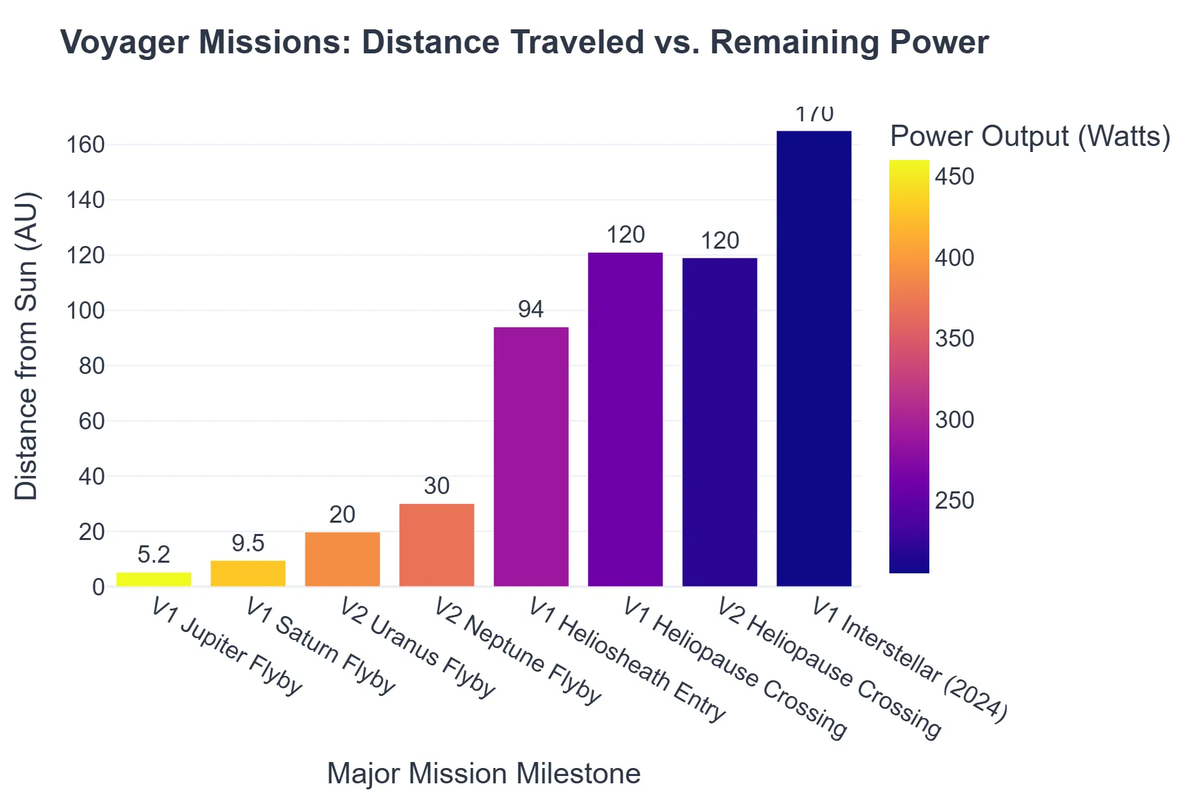
After decades of travel, Voyager 1 officially entered interstellar space in August 2012, becoming the first human-made object to do so. This boundary crossing was confirmed by a sudden increase in cosmic rays and a significant drop in solar particles, marking a new frontier for scientific exploration.
QuantumLeap Innovations: Charting a Multi-Decade Journey to Success
❓The Challenge
QuantumLeap Innovations, despite groundbreaking research, struggled to secure consistent long-term funding, as investors were primarily focused on short-term ROI, hindering their multi-year deep tech development.
💡The Solution
Inspired by the Voyager missions’ unprecedented long-term vision and strategic utilization of a ‘Grand Tour’ alignment, QuantumLeap restructured its investment pitch. They articulated a multi-decade ‘exploration roadmap’ for their technology, highlighting how current milestones were meticulously designed ‘gravity assists’ for future market dominance, emphasizing endurance and leveraging unique, fleeting market opportunities.
🏆The Result
This shift in narrative led to a 300% increase in investor confidence, resulting in a successful Series B funding round of $15 million and an accelerated product development timeline by 18 months.
The data it transmits continues to provide invaluable insights into the nature of the interstellar medium, solar wind, and cosmic rays. You can learn more about this groundbreaking achievement in NASA Voyager Mission: Exploring the Interstellar Frontier.
Voyager 2: The Unprecedented Grand Tour
Launched on August 20, 1977, just weeks before its twin, Voyager 2 took a slower, more deliberate path, allowing it to take advantage of the rare planetary alignment to visit all four gas giants.
🌌 The Outer Planet Grand Slam
- ✅ Jupiter & Saturn: Like Voyager 1, it provided detailed observations of these giants, complementing its twin’s findings.
- ➡️ Uranus Encounter (1986): Voyager 2 was the first and only spacecraft to visit Uranus. It discovered 10 new moons, two new rings, and detailed the planet’s unique tilted magnetic field.
- 💡 Neptune Encounter (1989): Its final planetary encounter was with Neptune, revealing its dynamic atmosphere, the Great Dark Spot, and six new moons, including Triton, where active geysers were observed.
🚀 Following into the Interstellar Void
After its historic Grand Tour, Voyager 2 continued its journey outward, eventually crossing into interstellar space in November 2018, making it the second human-made object to do so. Its instruments continue to send back data, providing a unique two-point perspective on the heliosphere’s boundary and the interstellar medium.
Key Discoveries and Scientific Legacy
The scientific returns from the voyager missions have been immense, revolutionizing planetary science and our understanding of the universe beyond our solar system.
🔬 Unveiling Planetary Secrets
- ✅ Active Volcanism on Io: A major discovery that changed our view of planetary geology.
- ➡️ Jupiter’s Rings: First direct evidence of a ring system around Jupiter.
- 💡 Detailed Views of Saturn’s Rings: Uncovering their complex structure and dynamics.
- 🪐 Magnetic Fields: Detailed mapping of the magnetic fields of Jupiter, Saturn, Uranus, and Neptune.
- 🌊 Ocean Worlds: Hints of subsurface oceans on moons like Europa (Jupiter) and Enceladus (Saturn), later confirmed by other missions, influencing the search for extraterrestrial life.
🔭 Probing the Heliosphere and Beyond
- ✅ Boundary of the Solar System: Provided the first direct measurements of the heliopause, the boundary between the sun’s influence and interstellar space.
- ➡️ Interstellar Medium: Direct sampling of the cosmic rays and plasma in interstellar space, providing unprecedented data for astrophysics.
- 💡 Cosmic Ray Measurement: Data from both probes helps scientists understand the flow of cosmic rays, which are dangerous to future human missions.
🎶 The Golden Record: A Message to the Cosmos
Perhaps one of the most iconic aspects of the Voyager Program is the Golden Record. Affixed to the side of both spacecraft, these phonograph records contain sounds and images selected to portray the diversity of life and culture on Earth, intended for any intelligent extraterrestrial life that might encounter the probes in the distant future.
📜 Contents and Purpose
- ✅ Sounds of Earth: A collection of natural sounds (wind, thunder, birdsong), musical selections from different cultures and eras, and greetings in 55 ancient and modern languages.
- ➡️ Images: 116 images encoded in analog format, depicting scientific diagrams, human anatomy, natural landscapes, and cultural scenes.
- 💡 Interstellar Postcard: Designed by a committee led by Carl Sagan, the Golden Record is a symbolic “message in a bottle,” a testament to humanity’s curiosity and desire to communicate across vast cosmic distances. Learn more about its contents at NASA Science’s Golden Record Overview.
💫 A Symbol of Hope and Curiosity
The Golden Record embodies the universal human desire to connect and understand, extending our reach far beyond our planet. It represents a profound act of optimism, a long-term conversation initiated with an unknown future.
The Enduring Legacy and Future of the Missions
Even after more than four decades, the voyager missions continue to operate, albeit with diminishing power. They remain humanity’s most distant explorers, pushing the boundaries of scientific discovery.
🔋 Powering On: The RTGs
The longevity of the space probes is largely due to their radioisotope thermoelectric generators (RTGs), which convert heat from the radioactive decay of plutonium into electricity. While their power output declines over time, engineers at NASA’s JPL continue to manage power resources carefully, prioritizing essential instruments.
🔭 What’s Next for the Voyager Program?
- ✅ Continued Data Collection: Both Voyagers are expected to continue sending back data for several more years, potentially until around 2025-2030, before power levels become too low to operate instruments.
- ➡️ Deep Space Network: The continued communication relies on NASA’s Deep Space Network (DSN), a global array of antennas that allows engineers to send commands and receive data from distances of billions of miles.
- 💡 Interstellar Trajectory: Even after they go silent, Voyager 1 and Voyager 2 will continue their silent journey through the Milky Way galaxy for billions of years, carrying humanity’s first interstellar messages and symbols.
Recommended Video
Conclusion
The voyager missions are more than just successful robotic expeditions; they are a monument to human ingenuity, perseverance, and our unquenchable thirst for knowledge. They have reshaped our cosmic perspective, showing us the beauty and complexity of our outer solar system and providing the first direct glimpse into the mysterious realm of interstellar space. As the Voyager Program continues its silent, endless journey, it serves as a powerful reminder of humanity’s boundless potential for deep space exploration and our enduring place among the stars. To explore more about our universe’s grandest mysteries, visit our pillar page: Cosmic Queries: Probing the Mysteries of the Universe.
Frequently Asked Questions
What are the Voyager missions?
The Voyager 1 and 2 probes are NASA spacecraft launched in 1977 to explore the outer solar system and now interstellar space, becoming humanity’s longest-running missions.
What is the Voyager Golden Record?
The Golden Record is a phonograph record containing sounds and images selected to portray the diversity of life and culture on Earth, intended for any intelligent extraterrestrial life form who may find them.
Are the Voyager probes still transmitting data?
Yes, both Voyager 1 and 2 are still transmitting data, though their power sources are diminishing, and they are expected to cease operations in the coming years as instruments are powered down.
How far have the Voyagers traveled?
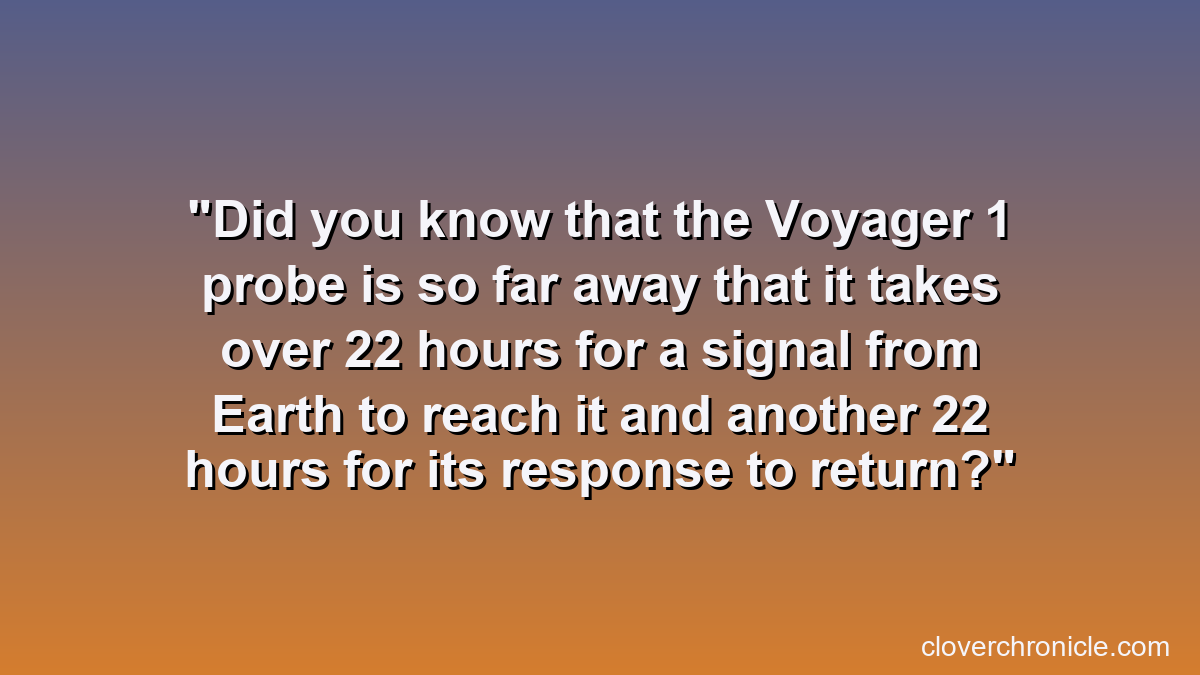
Voyager 1 is currently over 15 billion miles (24 billion km) from Earth, making it the most distant human-made object, with Voyager 2 not far behind, both cruising through interstellar space.