
Disruptive Technology: Innovations Reshaping Industries
In a world defined by relentless change, certain innovations don’t just improve existing processes; they fundamentally transform entire markets, create new ones, and render old ways of doing business obsolete. These are what we call disruptive technology. From the advent of personal computing to the rise of the internet, and now to artificial intelligence and beyond, these groundbreaking advancements are not merely trends—they are seismic shifts that redefine the very fabric of our industries and daily lives.
💡 Key Takeaways
- Disruptive technologies fundamentally redefine market landscapes and competitive dynamics.
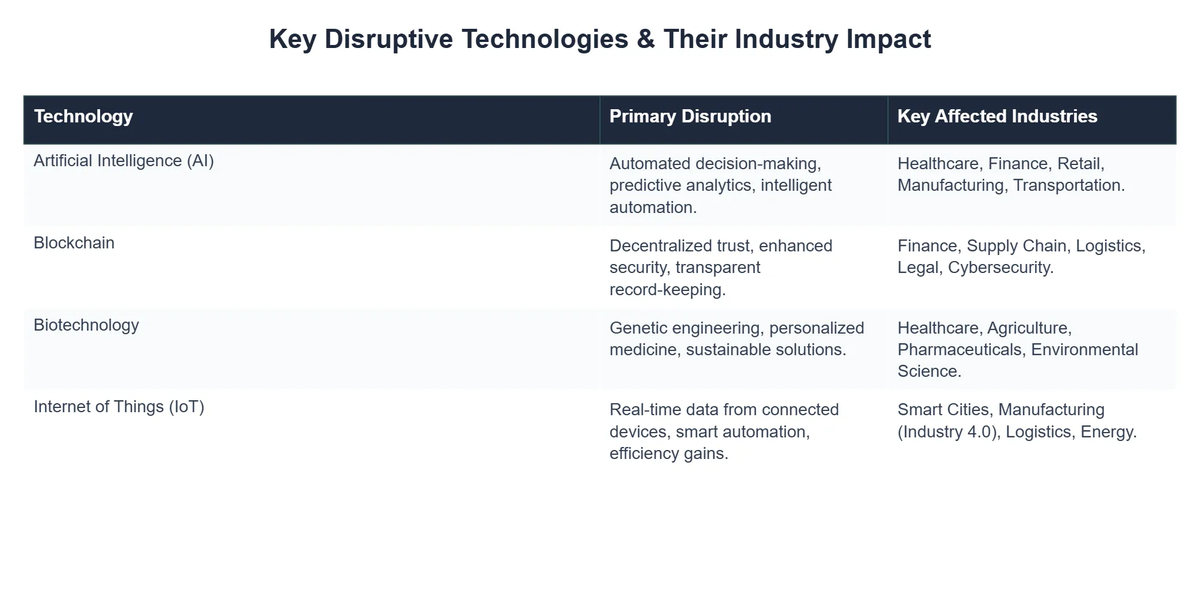
- Key drivers of disruption include AI, blockchain, quantum computing, and advanced biotechnologies.
- Businesses must embrace agility and continuous innovation to adapt and thrive in an era of rapid technological change.
- The ethical implications and societal impact of disruptive technologies require careful consideration and proactive governance.
“Disruptive technology isn’t just about what we can build, but what we *should* build. Our ethical frameworks must evolve faster than our innovations to ensure a future that serves humanity, not just efficiency.”
— Kira Chen, Futurist & AI Ethics Advocate
Understanding these powerful forces is crucial for businesses, policymakers, and individuals alike. This comprehensive guide will chart the course of tomorrow’s technology, exploring what disruptive innovations are, showcasing key examples, and detailing their profound impact across various sectors. Prepare to navigate the landscape of progress, challenge, and immense opportunity.
In This Article
- → Disruptive Technology: Innovations Reshaping Industries
- — 💡 Key Takeaways
- → What is Disruptive Technology? Defining a Game-Changer
- — 💡 The Core Meaning of Disruptive Technology
- — ➡️ Key Characteristics of a Disruptive Innovation
- → Major Disruptive Technology Examples Reshaping Industries
- — 🧠 Artificial Intelligence (AI) & Machine Learning
- — 🔗 Blockchain & Distributed Ledger Technology (DLT)
- — 🤖 Advanced Robotics & Humanoid Technology
- — ⚛️ Quantum Computing
- — 🛰️ Space Technology & Connectivity
- → How Disruptive Tech Impacts Industries: A Deep Dive
- — 💊 Healthcare
- — 💸 Finance (FinTech)
- — 🚚 Transportation & Logistics
- — ⚙️ Manufacturing & Industry 4.0
- → Navigating the Future: Challenges & Opportunities
- — 🤔 The Ethical Dilemma
- — 🚧 Regulatory Hurdles
- — ✨ Seizing the Opportunity
- → Preparing for the Next Wave of Innovation
- — 🚀 Fostering a Culture of Agility
- — 🔬 Investing in Research & Development
- — 🧑💻 Lifelong Learning & Reskilling
- → Conclusion: The Future is Now, and It’s Disruptive
What is Disruptive Technology? Defining a Game-Changer

The term “disruptive technology” was coined by Harvard Business School professor Clayton Christensen in his seminal 1997 book, The Innovator’s Dilemma. It describes an innovation that creates a new market and value network, eventually displacing established market-leading firms, products, and alliances.
💡 The Core Meaning of Disruptive Technology
Unlike “sustaining innovations” that improve existing products for existing customers, a disruptive technology often starts by offering a simpler, more affordable, or more convenient product or service. Initially, it may not appeal to mainstream customers, but it finds a foothold in neglected or entirely new market segments. Over time, it improves rapidly, eventually outperforming traditional offerings and capturing the mainstream market.
- ✅ Low-End Disruption: Targets over-served customers with a lower-cost solution (e.g., budget airlines disrupting full-service carriers).
- ✅ New-Market Disruption: Targets non-consumers, turning complex and expensive products into simple and affordable ones (e.g., personal computers disrupting mainframes).
For a deeper dive into this concept, we recommend reading: What Is Disruptive Innovation? 10 Examples for You!
➡️ Key Characteristics of a Disruptive Innovation
Identifying a disruptive technology involves looking beyond mere incremental improvements. Here are its hallmarks:
- ⬆️ New Value Proposition: It solves problems in ways previously unimaginable or impractical.
- 💲 Accessibility & Affordability: Often makes products or services available to a broader audience due to lower cost or ease of use.
- 🔄 Market Transformation: It doesn’t just compete; it redefines the rules of competition, creating new business models and customer expectations.
- 📉 Initial Underperformance: May initially seem inferior to existing solutions by traditional metrics, but excels on new metrics valued by an emerging market.
Major Disruptive Technology Examples Reshaping Industries
The landscape of disruptive technology examples is vast and ever-expanding. Here are some of the most impactful innovations currently transforming our world:
🧠 Artificial Intelligence (AI) & Machine Learning
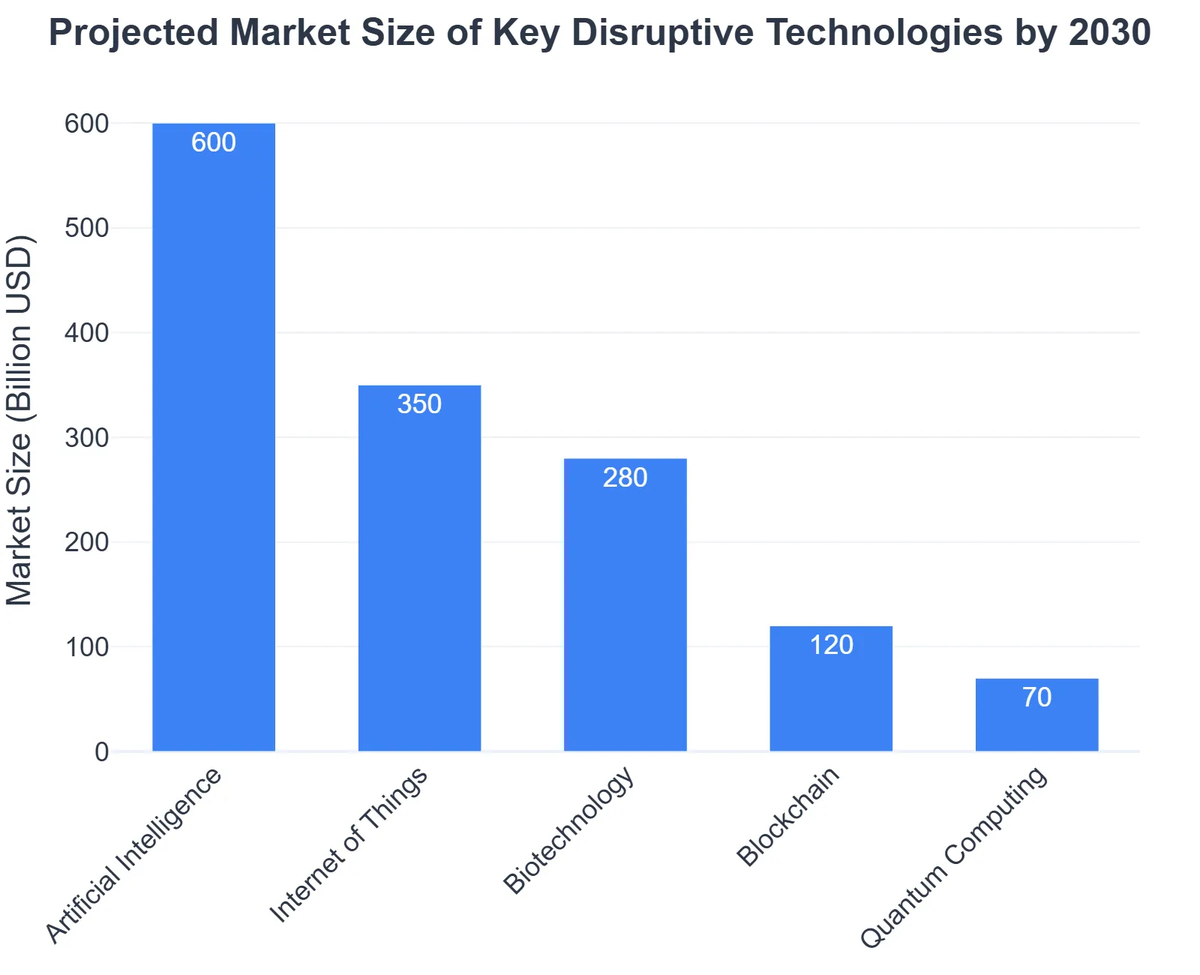
AI is arguably the most significant disruptive tech of our era. From automating complex tasks to enabling predictive analytics, AI is revolutionizing decision-making, personalization, and efficiency across every sector.
- ➡️ Generative AI & Large Language Models: Tools like OpenAI’s ChatGPT have democratized content creation, customer service, and knowledge work, allowing individuals and businesses to generate text, code, and ideas with unprecedented speed and scale.
- ➡️ AI Hardware Acceleration: The power behind advanced AI models often comes from specialized hardware. Companies like NVIDIA, with their high-performance AI GPUs, are critical enablers, providing the computational backbone necessary for training and deploying sophisticated AI systems.
🔗 Blockchain & Distributed Ledger Technology (DLT)
Beyond cryptocurrencies, blockchain’s core innovation lies in its ability to create secure, transparent, and immutable records. This distributive technology (referring to its decentralized, distributed nature) holds immense potential for:
- ✅ Supply chain management, enhancing transparency and traceability.
- ✅ Digital identity verification, reducing fraud and simplifying authentication.
- ✅ Smart contracts, automating agreements without intermediaries.
🤖 Advanced Robotics & Humanoid Technology
Robotics continues its relentless march from specialized industrial applications to more versatile and intelligent forms. Advanced robotics, including the burgeoning field of humanoid technology, is poised to transform manufacturing, logistics, healthcare, and even personal assistance.
- ✅ Automation in Industry: Robots are increasingly performing tasks requiring precision, speed, and endurance, improving productivity and safety in factories and warehouses.
- ✅ Human-Robot Collaboration: The development of humanoid robots is paving the way for more natural interactions and collaborations between humans and machines. For insights into a leading example, explore Tesla Optimus Robot: Elon Musk’s Vision for Humanoid AI. Further discussions on their realism can be found in our article on Realistic Humanoid Robots: Are They Among Us?.
⚛️ Quantum Computing
While still in its nascent stages, quantum computing promises to solve problems that are currently intractable for even the most powerful classical supercomputers. Its potential applications span:
- ✅ Drug discovery and material science, simulating molecular interactions.
- ✅ Cryptography, creating unbreakable encryption or breaking existing ones.
- ✅ Complex optimization problems in logistics and finance.
🛰️ Space Technology & Connectivity
The new space race isn’t just about exploration; it’s about connectivity and resource utilization. Innovations in satellite technology are creating a truly global network.
Disruptive Technology: Advantages and Disadvantages
Pros
- ✔Fosters rapid innovation and economic growth.
- ✔Enhances efficiency and productivity across industries.
- ✔Creates new markets and business opportunities.
- ✔Improves accessibility and user experience for consumers.
Cons
- ✖Potential for significant job displacement.
- ✖Creates market instability and challenges for incumbents.
- ✖Raises complex ethical and regulatory concerns.
- ✖Requires substantial investment and adaptability.
- ✅ Satellite Internet: Projects like Starlink are providing high-speed internet access to remote and underserved areas globally, bridging the digital divide and enabling new economic opportunities.
- ✅ Earth Observation: Satellite imagery and data are revolutionizing agriculture, environmental monitoring, and urban planning.
How Disruptive Tech Impacts Industries: A Deep Dive
The ripple effect of disruptive tech is felt across virtually every industry, forcing incumbents to adapt or face obsolescence. According to a report by Nerac, these technologies are fundamentally reshaping business models and competitive landscapes worldwide. (Unveiling the Future: How Disruptive Technologies Are Reshaping Industries)
💊 Healthcare
- ➡️ Personalized Medicine: AI and genomics enable treatments tailored to an individual’s genetic makeup.
- ➡️ Remote Patient Monitoring: Wearable tech and telehealth platforms make healthcare more accessible and proactive.
- ➡️ Drug Discovery: AI accelerates the identification of new drug candidates and optimizes clinical trials.
💸 Finance (FinTech)
- ➡️ Digital Payments: Mobile payments and blockchain-based transactions offer faster, cheaper, and more secure alternatives to traditional banking.
- ➡️ Automated Trading & Robo-Advisors: AI-driven platforms provide sophisticated financial advice and investment management at lower costs.
- ➡️ Fraud Detection: Machine learning algorithms identify suspicious patterns in transactions with high accuracy. Financial institutions often leverage these advancements; for instance, entities like BNP Paribas actively invest in and utilize various forms of disruptive technology to maintain a competitive edge.
🚚 Transportation & Logistics
- ➡️ Autonomous Vehicles: Self-driving cars and trucks promise safer, more efficient transportation.
- ➡️ Drone Delivery: Revolutionizing last-mile delivery, especially in challenging terrains or for rapid response.
- ➡️ Smart Logistics: AI-driven route optimization and inventory management enhance supply chain efficiency.
⚙️ Manufacturing & Industry 4.0
- ➡️ Automation & Robotics: From assembly lines to complex operations, robots increase precision and productivity.
- ➡️ Internet of Things (IoT): Connected sensors and devices enable real-time monitoring and predictive maintenance.
- ➡️ 3D Printing (Additive Manufacturing): Facilitates rapid prototyping, customized production, and decentralized manufacturing.
Navigating the Future: Challenges & Opportunities
While the promise of a disruptive technology is immense, its implementation comes with significant challenges that require careful consideration.
🤔 The Ethical Dilemma
The rapid advancement of technologies, particularly AI and robotics, raises critical ethical questions:
- ⚠️ Job Displacement: Automation can lead to job losses in sectors reliant on repetitive tasks.
- ⚠️ Data Privacy & Security: The collection and use of vast amounts of data necessitate robust privacy frameworks.
- ⚠️ Bias in AI: Algorithms trained on biased data can perpetuate or amplify societal inequalities. For more on this, consider our discussion on Moral Artificial Intelligence: Building Ethical AI Systems.
🚧 Regulatory Hurdles
Existing regulations often lag behind technological advancements, creating a complex environment for innovators and users. Governments grapple with how to regulate new technologies without stifling innovation, ensuring fairness, safety, and accountability.
✨ Seizing the Opportunity
Despite the challenges, the opportunities presented by disruptive tech are unparalleled:
- ✅ New Business Models: Companies can leverage these technologies to create entirely new services and revenue streams.
- ✅ Enhanced Efficiency: Automation and AI can streamline operations, reduce costs, and improve productivity across all sectors.
- ✅ Solving Grand Challenges: Disruptive technologies offer powerful tools to address global issues like climate change, disease, and poverty. Embracing these innovations will also shape the Future of Workplace Design: Hybrid Models & Beyond.
Preparing for the Next Wave of Innovation
To thrive in an era of constant disruption, organizations and individuals must adopt proactive strategies.
🚀 Fostering a Culture of Agility
Organizations need to be flexible, adaptable, and willing to experiment. This means:
- ➡️ Embracing rapid prototyping and iterative development.
- ➡️ Encouraging cross-functional collaboration and open innovation.
- ➡️ Being prepared to pivot quickly in response to market shifts.
🔬 Investing in Research & Development
Staying at the forefront requires continuous investment in understanding and developing new technologies. This isn’t just about large corporations; startups and even individual researchers play a vital role in identifying and nurturing the next big thing.
🧑💻 Lifelong Learning & Reskilling
For individuals, the key is continuous learning. Acquiring new skills, especially in areas related to AI, data science, and advanced manufacturing, is crucial for staying relevant in the evolving job market.
Recommended Video
Conclusion: The Future is Now, and It’s Disruptive
The impact of disruptive technology is undeniable, reshaping industries at an unprecedented pace. From the transformative power of AI fueled by companies like OpenAI and NVIDIA, to the global connectivity enabled by Starlink, we are witnessing a fundamental shift in how we live, work, and interact.
These innovations aren’t just about incremental improvements; they represent entirely new paradigms that challenge the status quo and create immense opportunities for those willing to embrace change. Understanding their meaning, anticipating their effects, and preparing for their implications is no longer optional—it is essential for anyone charting the course of tomorrow’s technology. For a comprehensive overview of what lies ahead, delve into our pillar page: Future Perfect?: Charting the Course of Tomorrow’s Technology.
Frequently Asked Questions
What defines disruptive technology?
Disruptive technology is an innovation that significantly alters the way consumers, industries, or businesses operate, often creating new markets and value networks while displacing existing ones.
What are some current examples of disruptive technology?
Current examples include artificial intelligence (AI), blockchain, quantum computing, gene editing (CRISPR), advanced robotics, and sustainable energy solutions.
How do disruptive technologies impact traditional industries?
They can lead to the obsolescence of existing business models, create new competitors, necessitate workforce reskilling, and force traditional industries to innovate or face decline.
How can businesses prepare for disruptive changes?
Preparation involves fostering a culture of innovation, investing in research and development, developing agile strategies, embracing continuous learning, and forming strategic partnerships.