


The Paradigm Shift: Why Hybrid is Here to Stay
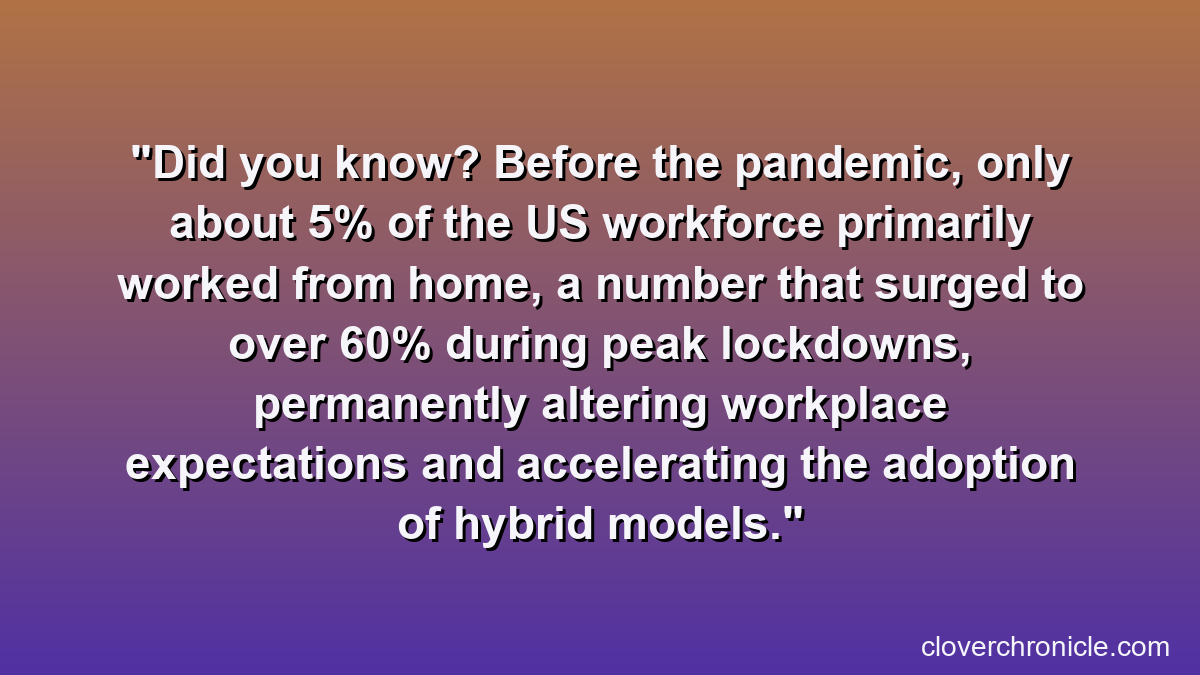
The traditional nine-to-five office model is rapidly becoming a relic of the past. The COVID-19 pandemic accelerated a transformation that was already underway, fundamentally reshaping the future of workplace design. What emerged as a necessity has now solidified into a preferred mode of operation for many organizations: the hybrid workplace.
💡 Key Takeaways
- Hybrid models are redefining traditional office roles, focusing on flexibility.
- Technology integration is crucial for seamless collaboration in distributed teams.
- Well-being and adaptability are central to designing future-proof workspaces.
- Physical offices will transform into dynamic hubs for culture, innovation, and connection.
“The future workplace isn’t just hybrid; it’s an intelligent ecosystem where AI optimizes collaboration and well-being, shifting our focus from location to purposeful connection.”
— Kira Chen, Futurist & AI Ethics Analyst
Hybrid work, characterized by a flexible approach where employees split their time between working remotely and in a physical office, offers a compelling blend of autonomy and collaboration. This shift isn’t just about location; it’s a re-evaluation of how work gets done, where productivity thrives, and how company culture is fostered.
Data consistently shows a strong preference among employees for flexible arrangements. According to a recent survey, a significant percentage of employees desire continued hybrid work options, highlighting that flexibility is now a non-negotiable expectation for many. This employee-centric demand, coupled with advancements in connectivity and collaboration tools, has cemented hybrid workplace design as the strategic imperative for forward-thinking companies. For a deeper understanding of this broader societal shift, consider exploring Future of Work: Designing Work in the Digital Age.
Pros and Cons of Hybrid Workplace Design
Pros
- ✔Enhanced employee flexibility and work-life integration.
- ✔Wider talent pool accessibility beyond geographic limits.
- ✔Potential for reduced real estate and operational costs.
- ✔Improved business resilience and adaptability.
Cons
- ✖Challenges in fostering a unified company culture and team cohesion.
- ✖Risk of inequity and disparate experiences between onsite and remote staff.
- ✖Increased complexity in IT infrastructure, security, and management.
- ✖Potential for blurred boundaries between work and personal life.
This evolving landscape isn’t just a temporary trend; it represents a fundamental recalibration of how businesses attract, retain, and empower their talent. Companies that embrace and intelligently design for this new reality are better positioned for success.
In This Article
- → The Paradigm Shift: Why Hybrid is Here to Stay
- — 💡 Key Takeaways
- → Core Components of Effective Hybrid Workplace Design
- → Empowering the Future: The Role of Hybrid Workplace Technology
- — ⚙️ Key Hybrid Workplace Technology Pillars:
- → Navigating Challenges and Ensuring Success
- — Challenges to Address:
- — Strategies for Success:
- → Beyond Hybrid: Anticipating the Next Evolution
- — Potential Future States:
Core Components of Effective Hybrid Workplace Design
Designing a successful hybrid workplace goes far beyond simply allowing employees to work from home a few days a week. It requires a holistic approach that integrates physical space, organizational culture, and technological infrastructure.
- ✅ Flexible Physical Spaces: The office must transform from a fixed individual workspace into a dynamic hub for collaboration, innovation, and community building. This means:
- ➡️ Activity-Based Work Zones: Creating dedicated areas for different types of work – focus pods for deep concentration, agile team rooms for brainstorming, and open social spaces for informal interactions.
- 💡 Reservable Desks & Meeting Rooms: Implementing booking systems for hot desks and various meeting room configurations ensures efficient space utilization.
- 🛋️ Comfort & Amenity Focus: Prioritizing comfortable furniture, natural light, and amenities like healthy food options or wellness areas to make the office a desirable destination.
- ✅ Purpose-Driven Culture: A strong culture is the glue of a hybrid model. It needs to be intentionally cultivated to bridge the physical distance:
- ➡️ Trust & Autonomy: Empowering employees with the flexibility to choose where and when they work, trusting them to deliver results.
- 💬 Inclusive Communication: Ensuring all employees, regardless of location, have equal access to information, discussions, and decision-making processes.
- 🤝 Intentional Collaboration: Designing specific times and methods for in-person collaboration that maximize value and minimize unnecessary commutes.
- ✅ Employee Well-being & Engagement: The hybrid model presents unique challenges and opportunities for employee well-being:
- 🧘 Work-Life Integration: Supporting employees in balancing their professional and personal lives, understanding that work is no longer confined to a single physical space.
- 📈 Performance Management: Shifting focus from “face time” to output and results, using clear metrics and regular feedback.
- 🔗 Building Connections: Creating opportunities for social interaction and team building, both virtually and in-person, to combat isolation and foster a sense of belonging.
Empowering the Future: The Role of Hybrid Workplace Technology
Technology is the backbone of any successful hybrid model, bridging the gap between physical and remote teams. It enables seamless communication, collaboration, and productivity, forming the core of the future of digital workplace.
⚙️ Key Hybrid Workplace Technology Pillars:
- ✅ Advanced Collaboration Platforms: Tools like Microsoft Teams, Slack, Zoom, and Google Workspace are essential for real-time communication, file sharing, and virtual meetings. High-quality audio-visual equipment in meeting rooms ensures remote participants are fully integrated.
- ➡️ Smart Office & IoT Solutions: These technologies optimize physical space utilization. Examples include:
- 💡 Desk and Room Booking Systems: Software that allows employees to reserve workspaces, meeting rooms, or parking spots in advance.
- 📊 Occupancy Sensors: IoT devices that provide data on space usage, helping organizations optimize layouts and cleaning schedules.
- 🌡️ Environmental Controls: Smart systems that manage lighting, temperature, and air quality for optimal comfort and energy efficiency.
- 🔒 Robust Cybersecurity Measures: With data moving between various networks and devices, robust security is paramount. This includes VPNs, multi-factor authentication, endpoint protection, and secure cloud storage. Understanding emerging digital frameworks, such as those discussed in Future Internet Technology: Exploring Web3 and Beyond, is crucial for future-proofing security protocols.
- 📈 Data Analytics & Insights: Tools that collect and analyze data on employee engagement, space utilization, and technology adoption provide valuable insights for continuous improvement of the hybrid model.
Investing in the right hybrid workplace technology isn’t just about tools; it’s about creating an integrated ecosystem that supports flexibility, fosters connection, and maintains productivity, regardless of where work happens.
Navigating Challenges and Ensuring Success
While the benefits of hybrid work are clear, implementing and sustaining a successful model comes with its own set of challenges. Proactive planning and continuous adaptation are key.

Challenges to Address:
- ⚖️ Maintaining Equity: Ensuring all employees, whether in-office or remote, have equal opportunities for career growth, recognition, and access to resources and leadership. Proximity bias is a real concern that must be actively mitigated.
- 🤝 Preserving Company Culture: It can be harder to organically foster team cohesion and a shared sense of purpose when interactions are less frequent or primarily virtual.
- 🛡️ Security and Compliance: Managing data security across diverse home networks and personal devices poses increased risks, requiring stringent policies and technology.
- 💡 Technology Adoption & Training: Not all employees are equally tech-savvy, and ensuring universal proficiency with new tools requires ongoing training and support.
- 🔌 Infrastructure Disparities: Unequal access to reliable internet or suitable home workspaces can create divides among the workforce.
Strategies for Success:
- ➡️ Clear Guidelines & Expectations: Establish clear policies regarding attendance, communication protocols, and performance metrics. Transparency is vital.
- 📈 Invest in Leadership Training: Managers need to be equipped with the skills to lead hybrid teams effectively, focusing on outcomes, empathy, and inclusive communication. McKinsey & Company offers valuable insights into executive perspectives on these shifts, as detailed in their report: What executives are saying about the future of hybrid work.
- 👂 Solicit Continuous Feedback: Regularly survey employees and collect data to understand what’s working and what isn’t, then iterate on the design.
- 🌐 Prioritize Digital-First Mindset: Design processes and communication for remote participants first, ensuring that in-office experiences merely enhance, rather than exclude.
- ⚖️ Focus on Fairness and Inclusion: Implement strategies to ensure equitable access to opportunities, mentorship, and informal networks for all employees.
Recommended Video
Beyond Hybrid: Anticipating the Next Evolution
The future of workplace design is not static; it’s a dynamic landscape that will continue to evolve beyond the current hybrid models. As technology advances and societal preferences shift, we can anticipate further transformations in how and where we work.
Potential Future States:
- ✨ Asynchronous Work Models: Greater emphasis on working independently at optimal times, with less reliance on synchronous meetings, enabled by advanced project management and communication tools.
- 🤖 AI-Augmented Workspaces: Artificial intelligence will play an increasing role in optimizing schedules, personalizing workspaces, automating routine tasks, and providing insights into productivity and well-being.
- 🌌 Metaverse & Immersive Collaboration: While still nascent, the concept of virtual reality (VR) and augmented reality (AR) creating immersive collaborative environments could revolutionize remote interaction, making it feel more like being together in person. This aligns with broader discussions on Future Perfect?: Charting the Course of Tomorrow’s Technology.
- 🌍 Distributed Global Teams: Companies may increasingly leverage talent pools across different time zones and geographies, requiring even more sophisticated digital infrastructure and cultural integration strategies.
Ultimately, the trajectory of workplace design points towards greater flexibility, personalization, and technology integration. Organizations that remain agile, embrace continuous learning, and prioritize the well-being and productivity of their people will be best equipped to thrive in this exciting, ever-changing environment.
What defines a hybrid workplace model?
A hybrid model combines remote work with in-office presence, often allowing employees flexibility in choosing where and when they work, fostering a mix of personal and collaborative spaces.
How will AI influence future office design?
AI will personalize environmental controls, optimize space utilization, enhance security, and power smart tools that improve communication and collaboration for distributed teams.
What are the primary benefits of flexible work arrangements?
Benefits include increased employee satisfaction, improved work-life balance, reduced operational costs for companies, access to a wider talent pool, and enhanced business resilience.
Will physical offices become obsolete in the future?
No, physical offices will evolve. They will likely transform into vital hubs for collaboration, team building, innovation, and cultural reinforcement, rather than serving as sole locations for individual work.