


Three Types of Plate Boundaries: Shaping Earth’s Surface
Our planet is a dynamic, ever-changing entity, constantly reshaped by forces unseen yet incredibly powerful. Beneath its serene surface lies a restless energy, driven by the slow, inexorable movement of colossal rock slabs known as tectonic plates. These movements are not random; they occur along specific zones where plates interact. Understanding these interactions is key to comprehending Earth’s magnificent landscapes, from towering mountain ranges to deep ocean trenches, and the natural phenomena that affect us, such as earthquakes and volcanic eruptions.
💡 Key Takeaways
- Earth’s crust is divided into several large tectonic plates that are constantly in motion.
- There are three main types of plate boundaries: divergent (plates move apart), convergent (plates collide), and transform (plates slide past each other).
- Each boundary type is associated with distinct geological phenomena, including earthquakes, volcanic activity, mountain building, and ocean trench formation.
- Understanding plate boundaries is crucial for comprehending Earth’s dynamic geological history and predicting future geological events.
“The boundaries where Earth’s plates meet are not merely lines on a map; they are the planet’s primary engines of change, driving everything from the deepest ocean trenches to the tallest mountain ranges, profoundly influencing our planet’s geological and climatic evolution.”
— Marcus Sterling, Geophysical Explorer & Climate Dynamics Analyst
In this comprehensive guide, we’ll delve into the fascinating world of plate tectonics, focusing on the three primary types of plate boundaries. These boundaries are the epicenters of geological activity, defining how our planet’s surface is continually formed and reformed.
In This Article
- → Three Types of Plate Boundaries: Shaping Earth’s Surface
- — 💡 Key Takeaways
- → Understanding Plate Tectonics: Earth’s Moving Puzzle
- → 1. Divergent Plate Boundaries: Earth’s Creative Rifts
- — ➡️ What Happens Here?
- — 🌋 Key Features & Phenomena
- — 🌍 Real-World Examples
- → 2. Convergent Plate Boundaries: Collisions of Giants
- — 💥 What Happens Here?
- — 🏔️ Three Sub-Types of Convergence
- — 🌊 Key Features & Phenomena
- → 3. Transform Plate Boundaries: Sideswiping the Surface
- — ↔️ What Happens Here?
- — ⚡ Key Features & Phenomena
- — 🏞️ Real-World Examples
- → The Global Impact of Plate Boundaries
- → Conclusion: A Living Planet in Motion
Understanding Plate Tectonics: Earth’s Moving Puzzle
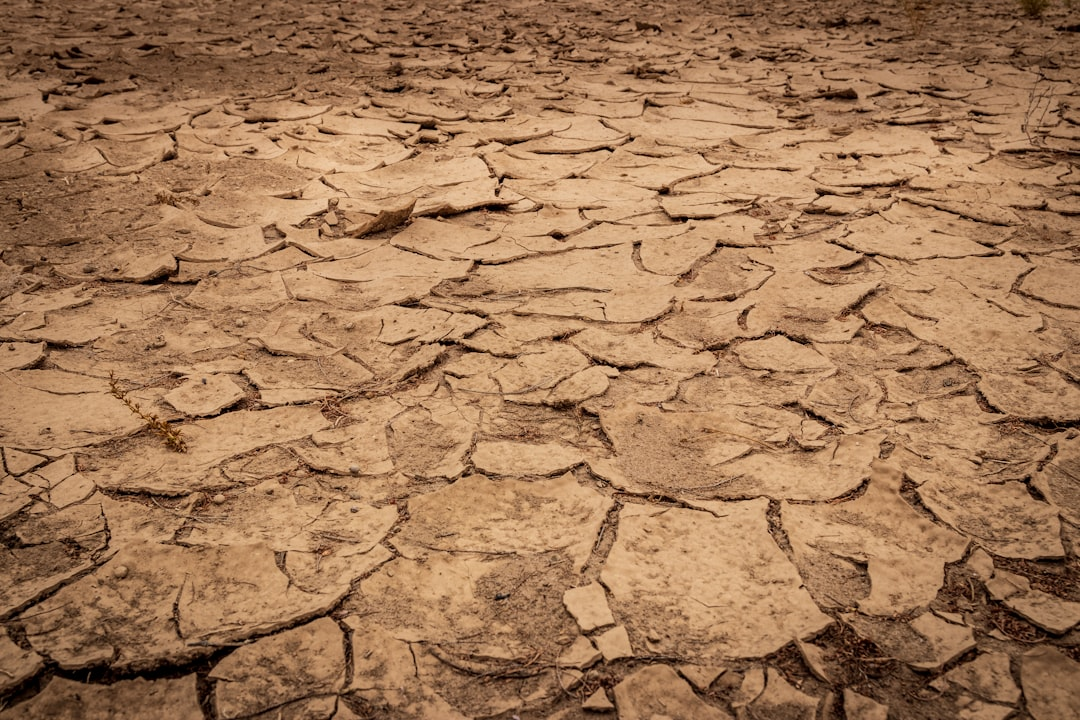
At the heart of Earth’s dynamism is the theory of plate tectonics, which posits that the Earth’s rigid outer layer, the lithosphere, is broken into large and small plates. These plates are not static; they are in constant, albeit slow, motion, gliding over the semi-fluid asthenosphere beneath them. This movement is primarily driven by convection currents within the Earth’s mantle, where heat from the core causes hot rock to rise and cooler rock to sink.

The interactions at the edges of these plates—the plate boundaries—are responsible for the vast majority of the Earth’s geological activity. For a deeper understanding of the underlying mechanics, explore our guide on Earth’s Geo Plates: Understanding Plate Tectonics.
1. Divergent Plate Boundaries: Earth’s Creative Rifts
➡️ What Happens Here?
Divergent boundaries are zones where two tectonic plates move away from each other. As the plates pull apart, molten material from the Earth’s mantle rises to fill the gap, creating new crustal material. This process is known as seafloor spreading.
🌋 Key Features & Phenomena
- ✅ Mid-Ocean Ridges: The most prominent feature of divergent boundaries is the formation of vast underwater mountain ranges, such as the Mid-Atlantic Ridge.
- ✅ Rift Valleys: On continents, divergent boundaries can create large rift valleys as the land stretches and thins.
- ✅ Volcanism: The upwelling of magma leads to frequent volcanic activity, often forming pillow lavas on the ocean floor or fissure eruptions on land.
- ✅ Shallow Earthquakes: Though generally less powerful than those at convergent boundaries, shallow earthquakes occur as the crust fractures and shifts.
🌍 Real-World Examples
- The Mid-Atlantic Ridge: This iconic underwater mountain range extends through the Atlantic Ocean, separating the North American and Eurasian plates, and the South American and African plates. It’s one of the most active sites of seafloor spreading globally.
- The East African Rift Valley: A dramatic example of continental rifting, this massive rift system is slowly pulling East Africa apart from the rest of the continent, eventually leading to the formation of a new ocean basin.
- Iceland: This unique island nation sits directly atop the Mid-Atlantic Ridge, showcasing extensive volcanic activity and geothermal energy.
2. Convergent Plate Boundaries: Collisions of Giants
💥 What Happens Here?
Convergent boundaries are characterized by plates moving towards each other, resulting in a collision. The outcome of this collision depends on the types of crust involved (oceanic or continental), but it invariably leads to immense geological forces.

🏔️ Three Sub-Types of Convergence
The interaction at convergent boundaries can manifest in three distinct ways:
- Oceanic-Continental Convergence:
- ➡️ An oceanic plate, being denser, is forced to slide beneath a continental plate. This process is called subduction.
- ➡️ As the oceanic plate descends, it melts, forming magma that rises to create volcanic mountain ranges (volcanic arcs) on the overlying continental plate.
- ➡️ A deep ocean trench often forms parallel to the coastline where the oceanic plate begins its descent.
- Example: The Andes Mountains along the west coast of South America, formed by the subduction of the Nazca Plate beneath the South American Plate.
- Oceanic-Oceanic Convergence:
- ➡️ When two oceanic plates collide, one typically subducts beneath the other (the older, colder, and thus denser, plate usually subducts).
- ➡️ This process forms a chain of volcanic islands, known as an island arc, often accompanied by a deep oceanic trench.
- Example: The Mariana Trench and the Mariana Islands in the western Pacific Ocean, formed by the subduction of the Pacific Plate beneath the Mariana Plate. The Japan archipelago is another classic example.
- Continental-Continental Convergence:
- ➡️ When two continental plates collide, neither plate is typically dense enough to subduct significantly.
- ➡️ Instead, the immense compressional forces cause the crust to buckle, fold, and thrust upwards, creating massive mountain ranges.
- ➡️ This type of collision results in a broad zone of seismic activity and intense deformation, but generally very little volcanism.
- Example: The Himalayas, the world’s highest mountain range, formed by the collision of the Indian Plate with the Eurasian Plate.
🌊 Key Features & Phenomena
- ✅ Volcanoes: Common at oceanic-continental and oceanic-oceanic boundaries.
- ✅ Mountain Ranges: Formed at all three types, but most dramatically at continental-continental boundaries.
- ✅ Deep Ocean Trenches: Characteristic of subduction zones.
- ✅ Powerful Earthquakes: Subduction zones are responsible for the Earth’s most powerful and deepest earthquakes.
3. Transform Plate Boundaries: Sideswiping the Surface
↔️ What Happens Here?
Transform boundaries occur where two tectonic plates slide horizontally past each other, typically without creating or destroying crust. The movement is not smooth; friction causes stress to build up until it is released in sudden, jerky movements.
⚡ Key Features & Phenomena
- ✅ Fault Lines: The primary feature of transform boundaries are large faults, which are fractures in the Earth’s crust where movement has occurred. For more on these critical geological features, see our article on Earth’s Fault Lines: Exploring Plate Boundaries and Movements.
- ✅ Frequent Shallow Earthquakes: These boundaries are infamous for producing numerous and often powerful shallow earthquakes as stress is released.
- ✅ No Volcanism or Mountain Building: Unlike divergent and convergent boundaries, there is typically no significant magma generation or vertical crustal deformation.
🏞️ Real-World Examples
- The San Andreas Fault: Perhaps the most famous transform boundary, located in California. It marks the boundary between the Pacific Plate and the North American Plate, responsible for many of California’s earthquakes.
- Transform Faults along Mid-Ocean Ridges: Many short transform faults offset segments of mid-ocean ridges, accommodating the varying rates of seafloor spreading along the ridge axis.
The Global Impact of Plate Boundaries
The three types of plate boundaries are not just geological curiosities; they are fundamental drivers of our planet’s surface evolution and natural hazards. From the birth of new oceans to the uplift of colossal mountain ranges, these interactions have sculpted continents and ocean basins over millions of years. Understanding these processes is vital for predicting seismic and volcanic risks, identifying mineral deposits, and even comprehending past climatic conditions.
The dynamic interplay at these boundaries is a core component of Earth’s Unseen Forces: The Hidden Dynamics of Our Planet, continually shaping the world we live on.
Recommended Video
Conclusion: A Living Planet in Motion
The Earth’s surface is a complex, ever-evolving mosaic of tectonic plates, each interacting at its boundaries in unique ways. Whether pulling apart at divergent zones, colliding with immense force at convergent boundaries, or grinding past each other at transform faults, these plate boundary types are the architects of our planet’s topography and the source of its most dramatic geological events. By studying these unseen forces, we gain a profound appreciation for the living, breathing planet beneath our feet, constantly in motion, constantly reshaping itself.
Frequently Asked Questions
What are the three main types of plate boundaries?
The three main types of plate boundaries are divergent, where plates move apart; convergent, where plates collide; and transform, where plates slide horizontally past each other.
What geological features are associated with divergent boundaries?
Divergent boundaries are typically associated with mid-ocean ridges, rift valleys, and volcanic activity, as new crust is created when magma rises to fill the gap between separating plates.
What happens when two continental plates converge?
When two continental plates converge, neither plate typically subducts deeply because they are both buoyant. Instead, their collision leads to intense folding and faulting, forming large mountain ranges like the Himalayas.
Why are transform boundaries known for earthquakes?
Transform boundaries are characterized by strong earthquakes because the plates slide past each other horizontally, building up immense stress that is suddenly released along the fault lines, causing the ground to shake.