

Understanding Threatened Biodiversity: What It Means and Why It Matters
Our planet is a tapestry woven with an extraordinary array of life forms, from microscopic bacteria to towering redwoods and colossal whales. This richness of life is known as biodiversity. However, this intricate web is increasingly under threat. Threatened biodiversity refers to the decline in the variety of life on Earth, encompassing everything from genes within a species to entire ecosystems. At the forefront of this crisis are endangered species – plants and animals whose populations have dwindled to critical levels, facing a high risk of extinction in the wild.
💡 Key Takeaways
- Global biodiversity is declining at an alarming rate, driven primarily by habitat loss, climate change, pollution, and overexploitation.
- Protecting endangered species is crucial not only for ecological balance but also for maintaining vital ecosystem services that support human life.
- Effective conservation efforts require a multifaceted approach, including international cooperation, policy changes, sustainable practices, and community engagement.
- Every individual can contribute to reversing biodiversity loss through awareness, responsible consumption, and active support for conservation initiatives.
“Our planet’s genetic library is shrinking before our eyes. Each lost species is not just a statistical mark, but an irreversible deletion of unique evolutionary heritage that holds untold secrets and potential solutions for life itself.”
— Julian Aris, PhD, Geneticist & Evolutionary Biologist
The International Union for Conservation of Nature (IUCN) plays a crucial role in assessing the conservation status of species worldwide through its Red List of Threatened Species. This globally recognized inventory classifies species into categories such as ‘Critically Endangered,’ ‘Endangered,’ and ‘Vulnerable,’ providing a vital benchmark for conservation efforts. Understanding these classifications is the first step in recognizing the scale of the challenge.
Why does this matter? The loss of biodiversity isn’t just an aesthetic issue; it has profound implications for every aspect of life on Earth, including human well-being. Diverse ecosystems are more resilient to disturbances like climate change and disease. They provide essential services that underpin human societies:
- ✅ Ecosystem Services: From clean air and water to pollination of crops and regulation of climate, healthy ecosystems provide indispensable services for free.
- ➡️ Genetic Resources: Wild species hold genetic material critical for future agricultural resilience, medical breakthroughs, and adaptation to environmental changes.
- 💡 Economic Value: Biodiversity supports industries like tourism, fisheries, and forestry, contributing significantly to global economies.
- 🌱 Cultural and Ethical Value: Many species hold deep cultural significance, and there’s a widely recognized ethical imperative to protect all life forms.
In This Article
- → Understanding Threatened Biodiversity: What It Means and Why It Matters
- — 💡 Key Takeaways
- → Major Biodiversity Threats: Drivers of Species Decline
- — 🔥 Habitat Loss and Degradation
- — 🌍 Climate Change
- — ️Pollution
- — 🎣 Overexploitation
- — 🕷️ Invasive Alien Species
- → Global Conservation Efforts: Strategies for Protection
- — 🏞️ Establishing Protected Areas
- — 🧬 Species-Specific Conservation Programs
- — 📜 Policy, Legislation, and International Cooperation
- — 🤝 Community-Based Conservation
- → The Role of Individuals and Communities in Protecting Endangered Species
- — 🛍️ Make Sustainable Consumer Choices
- — 📣 Advocate and Educate
- — 💚 Support Conservation Organizations
- — 🔬 Participate in Citizen Science
- → Looking Ahead: The Future of Biodiversity Conservation
- — 🔬 Technological Advancements
- — 🔄 Integrating Conservation into Development
- — ✊ The Urgency of Action
Major Biodiversity Threats: Drivers of Species Decline
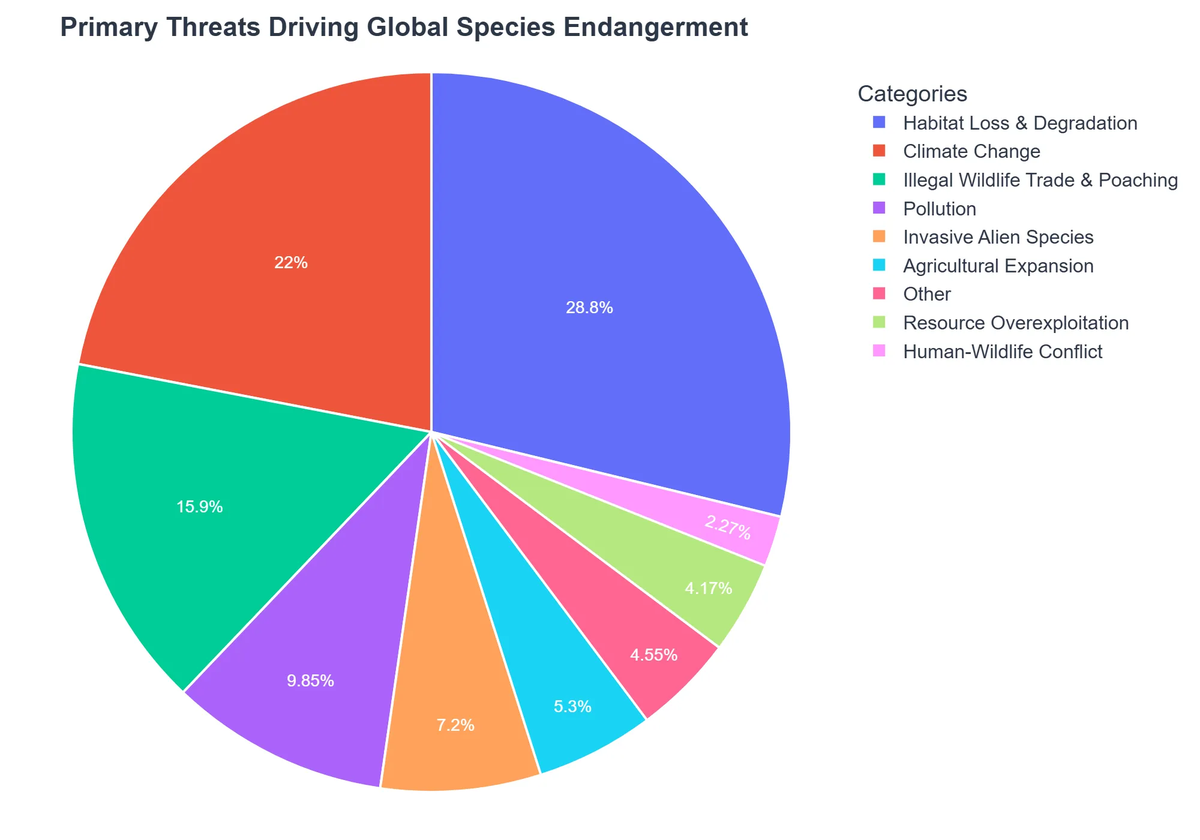
The alarming rate at which species are vanishing is largely driven by human activities. Pinpointing these primary biodiversity threats is essential for developing effective conservation strategies. For a more comprehensive look at global challenges, explore Global Biodiversity: Challenges and Conservation.
🔥 Habitat Loss and Degradation
This is by far the biggest threat. As human populations grow, natural landscapes are converted for agriculture, urbanization, infrastructure development, and resource extraction. Deforestation, wetland drainage, and coastal development destroy the homes and food sources of countless species, fragmenting remaining habitats and isolating populations.
🌍 Climate Change
Rising global temperatures, altered precipitation patterns, and more frequent extreme weather events are pushing many species to their limits. Climate change shifts habitats faster than some species can adapt, leading to reduced reproductive success, increased disease susceptibility, and direct mortality. Polar bears losing sea ice and coral reefs bleaching are stark examples.
️Pollution
Our activities release a vast array of pollutants into the environment. Plastic waste chokes marine life, pesticides harm pollinators and disrupt food chains, and industrial chemicals contaminate ecosystems. Nutrient runoff from agriculture creates ‘dead zones’ in aquatic environments, severely impacting marine biodiversity.
🎣 Overexploitation
The unsustainable harvesting of wild populations for food, medicine, pets, or other products is a major driver of decline. Overfishing has depleted many marine stocks, while illegal wildlife trade continues to decimate iconic species like rhinos, elephants, and pangolins. This direct pressure can push already vulnerable populations past their recovery threshold.
🕷️ Invasive Alien Species
When non-native species are introduced to new environments, often accidentally or through human activity, they can outcompete native species for resources, prey upon them directly, or introduce new diseases. Without natural predators or controls, invasive species can rapidly spread, devastating local ecosystems and leading to native species extinctions.
Global Conservation Efforts: Strategies for Protection
Despite the immense challenges, dedicated conservation efforts are underway worldwide to protect endangered species and reverse the trend of threatened biodiversity. These efforts range from local community initiatives to international treaties.
🏞️ Establishing Protected Areas
Creating national parks, wildlife reserves, and marine protected areas is a cornerstone of conservation. These areas offer safe havens for species, allowing them to thrive away from direct human disturbance. Protecting these critical spaces is vital for safeguarding Biodiversity Habitats: Protecting Nature’s Homes.
🧬 Species-Specific Conservation Programs
For critically endangered species, targeted interventions are often necessary. These can include:
- ✅ Captive Breeding and Reintroduction: Breeding animals in zoos or specialized facilities and then releasing them back into the wild to bolster wild populations. Zoos play an increasingly important role in these endeavors (Philadelphia Zoo).
- ➡️ Habitat Restoration: Active measures to restore degraded ecosystems, such as reforesting deforested areas, restoring wetlands, or removing invasive species to allow native vegetation to recover. For effective strategies, consider Key Strategies for Ecosystem Recovery.
- 💡 Anti-Poaching and Anti-Trafficking: Enhanced law enforcement, community engagement, and technological solutions to combat illegal wildlife trade.
📜 Policy, Legislation, and International Cooperation
National laws protect species and habitats, regulate land use, and control pollution. Internationally, agreements like the Convention on Biological Diversity (CBD) and the Convention on International Trade in Endangered Species of Wild Fauna and Flora (CITES) provide frameworks for global cooperation. These agreements guide nations in setting conservation targets and regulating cross-border trade in wildlife.
🤝 Community-Based Conservation
Engaging local communities is paramount. When people who live alongside wildlife are involved in and benefit from conservation, efforts are far more sustainable. This can include ecotourism initiatives, sustainable resource management, and education programs that foster a sense of stewardship.
Protecting Endangered Species Globally: Pros and Cons
Pros
- ✔Maintains ecosystem health and vital environmental services.
- ✔Preserves genetic diversity for future adaptations and discoveries.
- ✔Upholds ethical responsibilities for the intrinsic value of life.
- ✔Supports ecotourism and sustainable local economies.
Cons
- ✖Requires substantial funding and long-term resource commitment.
- ✖Can create conflicts with human development and resource needs.
- ✖Involves complex political and logistical challenges across borders.
- ✖May restrict local community access to traditional resources or land use.
The Role of Individuals and Communities in Protecting Endangered Species
While large-scale policies and international agreements are crucial, individual actions and community-level initiatives also hold significant power in protecting endangered species and supporting conservation efforts. Every choice we make has an impact, collectively contributing to the well-being of the planet.
🛍️ Make Sustainable Consumer Choices
- ✅ Support Sustainable Products: Choose products certified as sustainably sourced, especially seafood, timber, and palm oil. This reduces demand for products linked to habitat destruction or overexploitation.
- ➡️ Reduce, Reuse, Recycle: Minimize your overall consumption and waste, particularly single-use plastics, which often end up in natural environments.
- 💡 Ethical Tourism: Opt for eco-tourism operators who prioritize conservation, respect wildlife, and support local communities. Avoid activities that exploit animals.
📣 Advocate and Educate
- 🗣️ Raise Awareness: Talk to friends, family, and colleagues about the importance of biodiversity and the threats it faces. Share reliable information from reputable sources.
- ✍️ Support Policy: Contact your elected officials to advocate for stronger environmental protection laws, increased funding for conservation, and responsible land-use planning.
- 📚 Continuous Learning: Deepen your understanding of ecological principles and the interconnectedness of life by exploring resources like The Code of Life: Decoding Genetics, Evolution, and Existence.
💚 Support Conservation Organizations
Financial contributions, no matter how small, can make a difference. Organizations like the World Wildlife Fund (WWF) and countless local groups work tirelessly on the ground, implementing projects, conducting research, and advocating for change. Volunteering your time or skills, if possible, can also be invaluable.
🔬 Participate in Citizen Science
Many conservation projects rely on data collected by ordinary citizens. Participating in bird counts, identifying species through apps, or monitoring local wildlife can provide critical information for researchers and conservation managers, helping to track populations and identify new biodiversity threats.
Recommended Video
Looking Ahead: The Future of Biodiversity Conservation
The fight to protect threatened biodiversity is an ongoing, complex challenge, but one that is absolutely essential for the health of our planet and future generations. The urgency of the crisis demands innovative solutions and widespread collaboration. We are seeing a growing integration of cutting-edge technology with traditional conservation practices.
🔬 Technological Advancements
- 💡 Genomic Research: DNA sequencing helps us understand species’ genetic diversity, track illegal wildlife trade, and guide captive breeding programs.
- 📡 Remote Sensing and AI: Satellite imagery, drones, and artificial intelligence are used to monitor deforestation, track animal movements, detect poaching activities, and assess ecosystem protection needs on a vast scale.
- ⚙️ Data Analytics: Big data helps identify biodiversity hotspots, predict future threats, and optimize conservation resource allocation.
🔄 Integrating Conservation into Development
A crucial shift involves moving away from viewing conservation as separate from human development. Instead, it must be integrated into economic planning, urban development, and agricultural practices. Sustainable development models aim to meet human needs while preserving natural resources and biodiversity. This includes promoting circular economies, green infrastructure, and sustainable land management.
✊ The Urgency of Action
While the statistics on species loss can be daunting, they also underscore the profound opportunity we have to act. Every successful conservation story, from the recovery of the California condor to the rewilding of European bison, demonstrates that with concerted effort, species can be pulled back from the brink. The global commitment to protecting endangered species is not just about saving individual animals; it’s about preserving the intricate balance of life that sustains us all.
What are the primary drivers of biodiversity loss?
The main drivers include habitat destruction and fragmentation, climate change, pollution, invasive species, and the overexploitation of natural resources.
Why is protecting endangered species important for humans?
Protecting endangered species helps maintain healthy ecosystems that provide essential services like clean air and water, pollination for crops, disease regulation, and climate stability. It also preserves potential sources for medicines and scientific discovery.
How can individuals contribute to species protection?
Individuals can contribute by reducing their carbon footprint, supporting sustainable businesses, avoiding products from endangered species, volunteering for conservation groups, and advocating for stronger environmental policies.
Are there success stories in endangered species conservation?
Yes, despite the challenges, there are notable successes such as the recovery of the California condor, the giant panda, and the black-footed ferret, demonstrating that focused conservation efforts can bring species back from the brink.