
In This Article
- → Why Titan? The Enigma of Saturn’s Largest Moon
- — 💡 Key Takeaways
- — 🌎 A World with Atmosphere and Liquids
- — 🧬 The Promise of Prebiotic Chemistry
- → The Cassini-Huygens Legacy: Paving the Way
- — 🛰️ Unveiling Titan’s Secrets
- — 🚀 Huygens’ Historic Descent
- → Introducing the Dragonfly Mission: NASA’s Revolutionary Rotorcraft
- — 🚁 How Dragonfly Will Explore
- — 🎯 Key Scientific Objectives
- — 🗺️ The Proposed Journey on Titan
- → Scientific Instruments and Exploration Strategies
- — ⚙️ The Drone’s Toolkit
- — 🧭 Navigating a New World
- → The Future of Titan Exploration and Astrobiology
Why Titan? The Enigma of Saturn’s Largest Moon
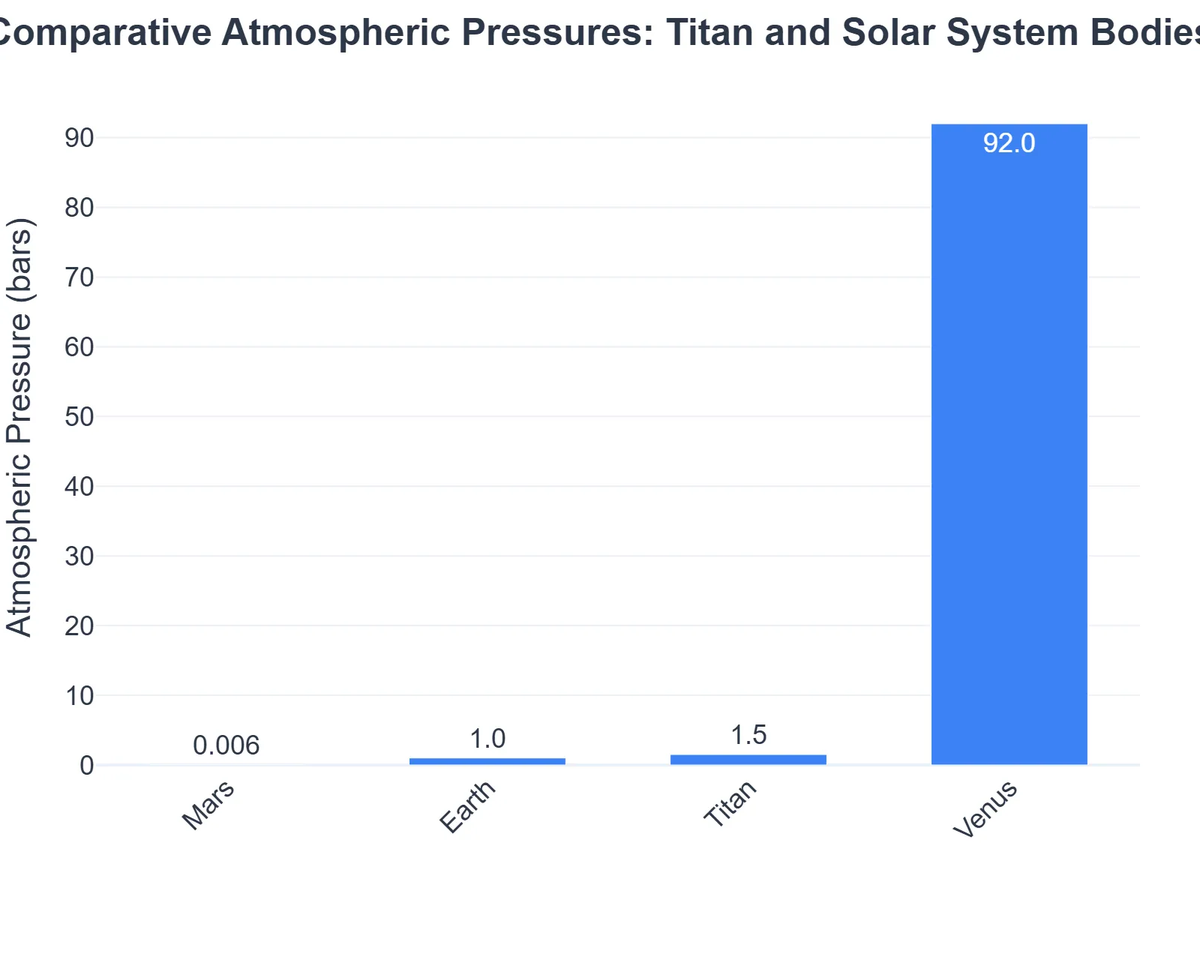
Titan, the largest moon of Saturn, stands out as one of the most scientifically compelling destinations in our solar system. Unlike any other moon, it boasts a dense, nitrogen-rich atmosphere, even thicker than Earth’s. This atmospheric blanket not only gives Titan its distinctive orange hue but also enables a fascinating methane cycle, mirroring Earth’s water cycle with clouds, rain, rivers, lakes, and seas of liquid hydrocarbons.
💡 Key Takeaways
- Titan is Saturn’s largest moon, unique for its dense, nitrogen-rich atmosphere and surface lakes and rivers of liquid methane and ethane.
- NASA’s Dragonfly mission will deploy a rotorcraft lander to explore Titan’s diverse environments, including dunes and impact craters.
- The primary goal of the mission is to investigate Titan’s prebiotic chemistry, habitability, and the potential for life beyond Earth.
- Dragonfly is set to launch in 2027 and arrive in the mid-2030s, offering unprecedented insights into planetary evolution.
“Titan represents a truly alien yet strangely familiar world, offering an unparalleled laboratory to study the origins of life under conditions vastly different from Earth’s. It’s a key to understanding universal biological processes.”
— Astrid Bellweather, Astrophysicist & Science Communicator
The prospect of a substantial, active world has long captivated scientists, leading to the development of ambitious missions to unravel its secrets. The sheer uniqueness of Titan as an active, organic-rich world makes it a prime target for the next generation of deep space exploration by NASA Titan missions.
🌎 A World with Atmosphere and Liquids
What sets Titan apart is its dynamic surface and atmospheric processes. Beneath its hazy atmosphere, observations from the Cassini-Huygens mission revealed vast liquid bodies, primarily composed of methane and ethane. These lakes and seas are not just static features; they are part of a vibrant meteorological system that includes seasonal changes, atmospheric hazes, and potential cryovolcanic activity. Such complexity hints at geological and chemical processes that could be relevant to the origins of life.
- ✅ Dense atmosphere: Rich in nitrogen, shielding the surface from harmful radiation.
- ✅ Liquid lakes and rivers: A unique hydrological cycle based on methane.
- ✅ Active weather: Clouds, rain, and surface erosion patterns.
🧬 The Promise of Prebiotic Chemistry
Titan’s appeal isn’t just its exotic landscapes; it’s the potential for prebiotic chemistry. The moon’s atmosphere is a factory for complex organic molecules, which are the building blocks of life. These molecules rain down onto the surface, accumulating in the lakes and across the terrain. While Titan’s surface temperature is extremely cold (around -179°C or -290°F), preventing liquid water from existing stably on the surface, the presence of liquid methane and abundant organics raises profound questions about alternative forms of life or the conditions under which life might first emerge.
Understanding these processes could provide crucial insights into how life originated on Earth or whether it could arise under vastly different conditions elsewhere in the universe. It’s a key reason why humanity continues to send probes to this distant world, pushing the boundaries of Cosmic Queries: Probing the Mysteries of the Universe.
The Cassini-Huygens Legacy: Paving the Way
Before the current ambitious plans, the Cassini-Huygens mission provided an unprecedented look at Saturn and its moon system, fundamentally changing our understanding of Titan. Launched in 1997, the Cassini orbiter and its Huygens probe spent over 13 years at Saturn, executing numerous flybys of Titan and delivering the first human-made object to land on an outer solar system moon.
For more details on this foundational mission, explore our article on Cassini NASA: Exploring Saturn and its Moons.
🛰️ Unveiling Titan’s Secrets
Cassini’s radar instrument peered through Titan’s opaque haze, revealing a diverse landscape of dunes, mountains, and the now-famous hydrocarbon lakes and seas, such as Kraken Mare and Ligeia Mare. It mapped large portions of the moon’s surface and studied its atmospheric composition, temperature, and seasonal changes. These findings confirmed Titan as a truly Earth-like body in its geological and meteorological complexity, albeit with very different ingredients.
🚀 Huygens’ Historic Descent
On January 14, 2005, the Huygens probe, developed by the European Space Agency (ESA) as part of the Cassini mission, successfully detached from Cassini and parachuted through Titan’s atmosphere, landing softly on its surface. This historic event marked the farthest planetary landing ever achieved. During its two-and-a-half-hour descent and brief time on the surface, Huygens transmitted invaluable data and images, revealing a “shoreline” terrain with pebbles of water ice and an orange sky.
- ➡️ First successful landing on an outer solar system moon.
- ➡️ Provided direct measurements of atmospheric properties and surface composition.
- ➡️ Confirmed the presence of liquid methane on the surface.
Introducing the Dragonfly Mission: NASA’s Revolutionary Rotorcraft
Building on Cassini’s discoveries, NASA’s Dragonfly mission represents the next giant leap in Titan exploration. Confirmed in 2019 as part of NASA’s New Frontiers program, Dragonfly is a unique rotorcraft designed to fly across Titan’s surface, investigating diverse regions to understand its habitability and prebiotic chemistry. This mission is a significant departure from previous landers, offering unprecedented mobility and the ability to visit multiple distinct geological settings.
You can delve deeper into this groundbreaking endeavor with our comprehensive guide, Dragonfly: NASA’s Mission to Saturn’s Moon Titan.
🚁 How Dragonfly Will Explore
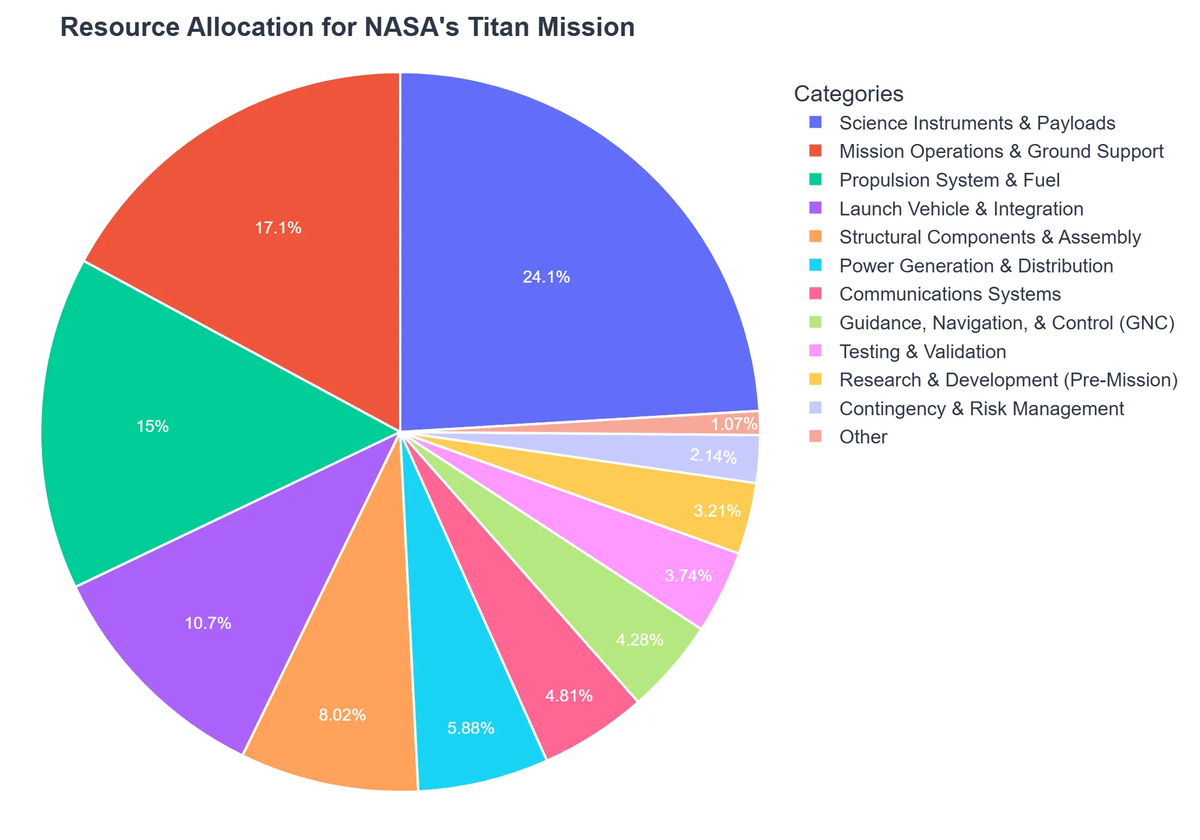
Dragonfly is essentially a car-sized drone, or octocopter, equipped with four sets of two rotors, allowing it to take off, fly, and land vertically. Titan’s dense atmosphere and low gravity (about one-seventh of Earth’s) make aerial exploration remarkably efficient. This enables Dragonfly to perform dozens of short flights, hopping from one scientific target to another over its expected 2.7-year primary mission. Each “hop” can cover distances of several miles, vastly expanding the exploration range beyond what a traditional lander or rover could achieve.
The mission concept is detailed by NASA, emphasizing the vehicle’s unique ability to explore this fascinating world. NASA’s Dragonfly Will Fly Around Titan Looking for Origins, Signs of Life.
🎯 Key Scientific Objectives
Dragonfly’s primary scientific goals are ambitious and centered around astrobiology and understanding the chemical processes on Titan. These objectives include:
- 💡 Investigating Titan’s habitability: Searching for chemical biosignatures and conditions conducive to life.
- 🔬 Studying the composition of organic materials: Analyzing surface and atmospheric samples to understand the progression of prebiotic chemistry.
- 🌬️ Characterizing atmospheric and surface processes: Observing meteorological phenomena, surface geology, and the methane cycle.
- 🌊 Exploring potential subsurface oceans: While not a direct objective, data could hint at interaction with a potential internal water ocean.
🗺️ The Proposed Journey on Titan
The mission plans for Dragonfly to land in the equatorial dune fields known as Shangri-La, which are dark, organic-rich terrains. From there, it will conduct short flights, moving to different geologically interesting sites, including impact craters that might expose deeper subsurface materials. The ultimate goal is to reach the Selk Crater region, an area of particular interest due to evidence of past liquid water and complex organics, potentially representing an ideal environment for investigating life’s building blocks.
For more on the innovative approach to exploration, refer to Dragonfly Mission to Titan: Exploring an Alien Ocean World.
Scientific Instruments and Exploration Strategies
Dragonfly is equipped with a suite of advanced scientific instruments designed to analyze Titan’s surface and atmosphere during its aerial and stationary operations. The strategic use of its mobility and scientific payload will allow for unprecedented detailed exploration.
⚙️ The Drone’s Toolkit
The rotorcraft carries several key instruments:

- DraMS (Dragonfly Mass Spectrometer): This instrument will identify the chemical composition of surface and atmospheric materials, including complex organic molecules.
- DraGNS (Dragonfly Gamma-Ray and Neutron Spectrometer): Designed to detect the elemental composition of the surface, crucial for identifying water ice, hydrocarbons, and other heavy elements.
- DraCAL (Dragonfly Camera Suite): Multiple cameras will capture panoramic images, microscopic views of surface textures, and aid in navigation.
- DraWS (Dragonfly Weather and Surface Package): Sensors to monitor atmospheric conditions (pressure, temperature, wind) and seismic activity.
These instruments will work in concert to provide a holistic view of Titan’s chemistry, geology, and meteorology. The ability to collect samples and analyze them directly on the surface, followed by airborne reconnaissance, is revolutionary.
🧭 Navigating a New World
Dragonfly’s exploration strategy involves a series of “hops” ranging from hundreds of meters to several kilometers, followed by periods of stationary science operations lasting several days. During these stationary periods, the drone will recharge its batteries using a Multi-Mission Radioisotope Thermoelectric Generator (MMRTG) and perform detailed scientific analyses. Navigation will rely on onboard cameras and sophisticated flight control software, allowing it to traverse complex terrains safely and efficiently.
The combination of mobility, robust power, and a comprehensive scientific payload positions Dragonfly to be one of the most exciting and productive planetary missions to date, extending humanity’s reach to an alien ocean world. Discover more about Titan’s mysteries and current exploration efforts at Titan Exploration – NASA Science.
The Future of Titan Exploration and Astrobiology
The Dragonfly mission marks a pivotal moment in our search for life beyond Earth. If successful, it will not only revolutionize our understanding of Titan but also inform future missions to other ocean worlds like Europa and Enceladus.
The insights gained from Titan’s unique environment, with its active organic chemistry, could broaden our definition of habitable zones and provide clues about the diversity of life in the cosmos. It stands as a testament to humanity’s enduring quest to answer the fundamental question: Are we alone?
The scientific community eagerly awaits Dragonfly’s arrival and the groundbreaking discoveries it promises to deliver, furthering the goals of Cosmic Queries: Probing the Mysteries of the Universe.
Recommended Video
What makes Titan unique in our solar system?
Titan is the only moon in our solar system known to have a dense atmosphere and stable bodies of liquid on its surface, much like Earth, but with methane and ethane instead of water.
What is the primary objective of NASA’s Dragonfly mission?
The Dragonfly mission aims to explore Titan’s complex organic chemistry, assess its habitability, and search for biosignatures, advancing our understanding of life’s potential in diverse environments.
How will the Dragonfly rotorcraft explore Titan’s surface?
Dragonfly is a drone-like rotorcraft that will fly between different scientific sites on Titan, allowing it to sample various geological and chemical environments over its mission duration.
When is the Dragonfly mission expected to reach Titan?
Dragonfly is currently scheduled for launch in 2027, with its arrival at Titan anticipated in the mid-2030s.