


In the vast landscape of health and well-being, oral health often serves as a critical, yet sometimes overlooked, cornerstone. It’s more than just a bright smile; it’s intrinsically linked to our overall systemic health. While general dentists provide foundational care, the complexity of human anatomy and the intricate nature of various oral conditions necessitate a deeper level of expertise. This is where dental majors — specialized fields within dentistry — come into play, profoundly impacting the quality and longevity of our oral health.
💡 Key Takeaways
- Specialized dental majors significantly enhance the depth and breadth of oral healthcare.
- Each dental specialty addresses unique aspects of patient health, leading to more targeted and effective treatments.
- Collaboration among different dental specialists is crucial for comprehensive patient management.
- The evolution of dental majors continually pushes the boundaries of what’s possible in oral health.
“The brain-mouth connection is profound. Specialized dental care, by optimizing oral health and function, directly influences cognitive well-being and overall quality of life, far beyond just a healthy smile.”
— Eleanor Vance, Neuroscience Communicator & Cognitive Psychologist
Understanding these specialized disciplines is key to navigating your healthcare journey effectively. From correcting misaligned teeth to treating complex gum diseases or performing intricate surgeries, specialized dentists possess the advanced knowledge, training, and technology to address specific challenges, often preventing minor issues from escalating into major health concerns. This article aims to be your definitive guide to understanding these crucial dental specializations and their undeniable influence on maintaining optimal oral health.
In This Article
- — 💡 Key Takeaways
- → The Foundation: General Dentistry vs. Specialization
- — 📌 Role of a General Dentist
- — ➡️ When Specialization Becomes Necessary
- → Key Specialized Dental Majors and Their Focus
- — 🦷 Orthodontics: Aligning Smiles
- — 🩸 Periodontics: Gum Health Specialists
- — 🩹 Endodontics: Root Canal Experts
- — 🔪 Oral and Maxillofacial Surgery: Beyond the Teeth
- — 👶 Pediatric Dentistry: Caring for Young Smiles
- — 👑 Prosthodontics: Restoring Function and Aesthetics
- — 🌍 Public Health Dentistry: Community Impact
- — 🔬 Oral Pathology & Radiology: Diagnosis and Imaging
- → The Profound Impact of Specialized Dental Care on Oral Health
- — ⚡ Enhanced Diagnostic Accuracy
- — 🎯 Targeted Treatment Approaches
- — 🛡️ Preventing Complex Issues
- — 🌟 Improving Quality of Life
- → Navigating Your Dental Care: When to See a Specialist
- — Referral from Your General Dentist
- — Recognizing Specific Symptoms
- → Pursuing a Career in Specialized Dentistry
- — 🎓 The Rigorous Path of Dental Education
- — 🔬 Continuous Learning and Advancements
- → Conclusion
The Foundation: General Dentistry vs. Specialization
Before diving into the specifics of dental specializations, it’s essential to understand the foundational role of a general dentist and why, at certain junctures, specialized care becomes indispensable.
📌 Role of a General Dentist
A general dentist is your primary oral healthcare provider. They are trained to diagnose, treat, and manage overall oral health needs, including:
- ✅ Routine check-ups and cleanings
- ✅ Fillings for cavities
- ✅ X-rays and basic diagnostics
- ✅ Tooth extractions
- ✅ Crowns and bridges
- ✅ Preventive care and education
Think of them as your family physician for oral health, providing comprehensive care for a wide range of common issues.
➡️ When Specialization Becomes Necessary
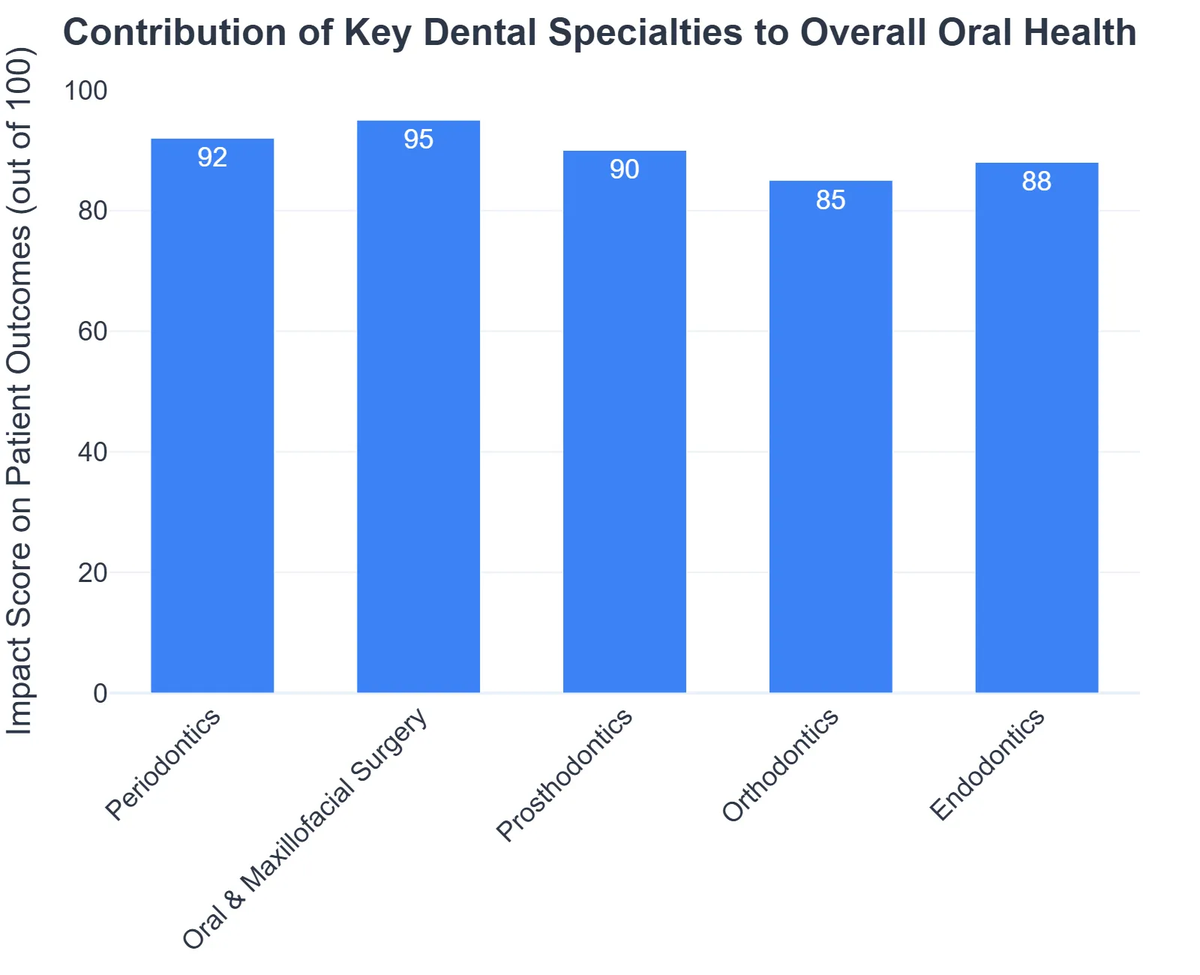
While general dentists are highly skilled, certain conditions or patient needs require expertise beyond their scope. This is when they refer patients to dental specialists. These specialists undergo additional years of rigorous dental education and training, focusing on a particular area of dentistry, allowing them to handle complex, unusual, or severe cases with precision and advanced techniques.
Key Specialized Dental Majors and Their Focus

The field of dentistry is diverse, boasting a range of specialized dental specializations, each dedicated to a unique aspect of oral health. Here are some of the most prominent:
🦷 Orthodontics: Aligning Smiles
What they do: Orthodontists specialize in correcting misaligned teeth and jaws (malocclusions). This includes treating overbites, underbites, crossbites, gaps, and crowded teeth.
- ✅ Common treatments: Braces (traditional, ceramic, lingual), clear aligners (e.g., Invisalign), retainers, and other corrective appliances.
- ✅ Impact on oral health: Proper alignment improves chewing function, reduces speech impediments, makes teeth easier to clean (reducing cavity and gum disease risk), and enhances aesthetics.
🩸 Periodontics: Gum Health Specialists
What they do: Periodontists focus on preventing, diagnosing, and treating diseases of the gums and supporting structures of the teeth. They also place dental implants.
- ✅ Common treatments: Deep cleanings (scaling and root planing), gum grafting, osseous surgery, laser treatments, and dental implant placement.
- ✅ Impact on oral health: Crucial for preventing tooth loss due to gum disease, maintaining overall oral hygiene, and supporting the longevity of natural teeth and implants.
🩹 Endodontics: Root Canal Experts
What they do: Endodontists specialize in treating diseases and injuries of the dental pulp (the soft tissue inside the tooth) and the tissues surrounding the tooth roots.
Specialized Dental Majors: Impact on Oral Health
Pros
- ✔Provides highly specific expertise for complex dental issues.
- ✔Enables advanced treatment techniques and better outcomes for niche conditions.
- ✔Contributes to research and innovation in specific dental fields.
- ✔Addresses conditions that general dentists may not be equipped to handle.
Cons
- ✖Higher treatment costs compared to general dentistry.
- ✖Limited accessibility, often requiring referrals and longer waits.
- ✖Potential for fragmented care across multiple providers.
- ✖May not cover general dental needs, requiring visits to a general dentist as well.
- ✅ Common treatments: Root canal therapy, endodontic retreatment, and apicoectomy (root-end surgery).
- ✅ Impact on oral health: Saves teeth that would otherwise need extraction due to infection or damage to the pulp, relieving pain and preventing spread of infection.
🔪 Oral and Maxillofacial Surgery: Beyond the Teeth
What they do: Oral and maxillofacial surgeons perform a wide range of surgical procedures involving the mouth, jaws, face, and neck. This is one of the most extensive dental specializations.
- ✅ Common treatments: Wisdom tooth extraction, dental implant placement, jaw surgery (orthognathic surgery), facial trauma repair, treatment of oral cancers, and cleft lip/palate repair.
- ✅ Impact on oral health: Addresses complex structural issues, restores function after injury or disease, and can significantly improve quality of life and appearance.
👶 Pediatric Dentistry: Caring for Young Smiles
What they do: Pediatric dentists provide comprehensive oral healthcare specifically for infants, children, and adolescents, including those with special health care needs.
- ✅ Common treatments: Routine check-ups, fluoride treatments, sealants, fillings, early orthodontic assessment, and management of dental trauma in children.
- ✅ Impact on oral health: Establishes positive dental habits early, prevents childhood tooth decay, guides proper tooth development, and addresses unique challenges of growing mouths.
👑 Prosthodontics: Restoring Function and Aesthetics
What they do: Prosthodontists specialize in the restoration and replacement of missing or damaged teeth and oral structures, often using artificial devices.
- ✅ Common treatments: Crowns, bridges, dentures (complete and partial), dental implants, veneers, and complex full-mouth reconstructions.
- ✅ Impact on oral health: Restores chewing ability, improves speech, enhances facial aesthetics, and prevents shifting of remaining teeth, contributing to overall oral function and confidence.
🌍 Public Health Dentistry: Community Impact
What they do: These dental professionals focus on promoting oral health and preventing oral diseases within communities rather than on individual patient treatment. They analyze public health data and develop programs to address oral health disparities.
- ✅ Common activities: Community oral health assessments, developing and implementing public health programs (e.g., school fluoride programs), advocating for oral health policies.
- ✅ Impact on oral health: Aims to improve oral health outcomes for entire populations, especially vulnerable groups. Understanding how community-level initiatives impact health can be explored further in topics like Community Healthcare: Health Science North Innovations. This field plays a crucial role in addressing health disparities in oral health, as highlighted by the CDC.
🔬 Oral Pathology & Radiology: Diagnosis and Imaging
What they do: Oral pathologists diagnose and study diseases affecting the oral and maxillofacial regions, often through microscopic examination of tissue samples. Oral and maxillofacial radiologists specialize in interpreting dental and maxillofacial images (X-rays, CT scans, MRIs).
Bright Smiles General Dentistry Elevates Patient Outcomes Through Specialized Referrals
❓The Challenge
Bright Smiles faced challenges with recurring complex oral health issues among patients, often requiring treatments beyond the scope of general dentistry, leading to suboptimal long-term outcomes and patient frustration.
💡The Solution
Recognizing the critical role of dental majors, Bright Smiles integrated a robust referral system, educating patients on the necessity of specialized care for issues like severe malocclusion (orthodontics) or advanced gum disease (periodontics), and collaborating closely with these specialists.
🏆The Result
Within a year, patient satisfaction scores related to comprehensive oral health solutions improved by 35%, and the clinic’s rate of successful resolution for complex cases saw a 40% increase.
- ✅ Common activities: Biopsy analysis, diagnosis of oral cancers and other diseases, advanced imaging interpretation for complex cases.
- ✅ Impact on oral health: Provides accurate diagnoses, especially for rare or serious conditions, guiding appropriate treatment plans. The principles of safety in imaging are deeply rooted in health physics, a field crucial for protecting humanity from radiation, a concept further detailed in Health Physics: Protecting Humanity from Radiation.
The Profound Impact of Specialized Dental Care on Oral Health
The existence of various dental majors is not merely about providing options; it’s about elevating the standard of care and achieving optimal outcomes for complex conditions. Their impact on oral health is multifaceted and profound:
⚡ Enhanced Diagnostic Accuracy
Specialists possess advanced diagnostic tools and a depth of knowledge in their specific area that allows for more precise identification of issues. This accuracy is vital for effective treatment planning, especially for conditions that might be missed or misdiagnosed by a general practitioner.
🎯 Targeted Treatment Approaches
With their focused training, specialists can offer treatments that are more precise, effective, and tailored to the specific condition. For instance, an endodontist performs root canals with higher success rates due to their specialized equipment and extensive experience, ultimately saving more teeth and reducing complications. The overall well-being and effect of oral health on the community is well-documented, showing the benefit of specialized care, as noted by the National Center for Biotechnology Information.
🛡️ Preventing Complex Issues
Early intervention by a specialist can prevent minor problems from escalating. An orthodontist addressing malocclusion early can prevent severe bite problems, excessive wear on teeth, and TMJ issues later in life. A periodontist can halt the progression of gum disease, preventing tooth loss.
🌟 Improving Quality of Life
Beyond clinical outcomes, specialized dental care significantly improves patients’ quality of life. Resolving chronic pain, restoring chewing function, improving speech, and enhancing aesthetic appearance through specialized procedures contribute immensely to a patient’s confidence and overall well-being. This comprehensive approach aligns with the broader understanding of human potential and wellness, which is a core theme in The Human Enigma: Unlocking the Secrets of Our Body and Mind.
Navigating Your Dental Care: When to See a Specialist
Knowing when to seek the expertise of a dental specialist is crucial for optimal oral health outcomes.
Referral from Your General Dentist
Most commonly, your general dentist will refer you to a specialist. They act as the gatekeepers of your oral health, identifying when a condition warrants more focused expertise. Trust their judgment, as they have a comprehensive understanding of your history and the specialized care required.
Recognizing Specific Symptoms
While a general dentist referral is typical, understanding common signs that might necessitate a specialist can be empowering:
- 💡 Persistent jaw pain or clicking: May suggest an oral surgeon or prosthodontist.
- 💡 Severe gum bleeding, receding gums, or loose teeth: Points towards a periodontist.
- 💡 Deep tooth pain, sensitivity to hot/cold, or tooth discoloration: Often requires an endodontist.
- 💡 Crooked teeth or bite problems in children/adolescents: Time for an orthodontic consultation.
- 💡 Missing multiple teeth or severe tooth wear: A prosthodontist can help with complex restorations.
Pursuing a Career in Specialized Dentistry
For those considering dentistry, the path to becoming a specialist is rigorous but highly rewarding, impacting countless lives through advanced care.
🎓 The Rigorous Path of Dental Education
Becoming a general dentist requires a Doctor of Dental Surgery (DDS) or Doctor of Dental Medicine (DMD) degree, typically a 4-year program after undergraduate studies. To become a specialist, an additional 2-6 years of advanced residency training in their chosen specialty is required. This intensive period focuses on deep theoretical knowledge, extensive clinical experience, and often research. Institutions dedicated to health sciences, such as those highlighted in Health Sciences Institutions: Rapti Academy and Beyond, are pivotal in shaping these highly skilled professionals.
🔬 Continuous Learning and Advancements
The field of dentistry, especially specialized areas, is constantly evolving with new technologies, materials, and techniques. Specialists are committed to lifelong learning, regularly attending conferences, workshops, and continuing education courses to stay at the forefront of their respective fields. This commitment ensures patients receive the most current and effective treatments available.
Recommended Video
Conclusion
The world of specialized dental majors is a testament to the intricate nature of human biology and the dedication required to maintain optimal oral health. From the subtle adjustments made by an orthodontist to the life-changing surgeries performed by an oral and maxillofacial surgeon, each specialization plays a vital role in addressing specific, complex needs that go beyond general dental care.
Understanding these different facets of dentistry empowers you as a patient to seek the right care at the right time. By collaborating with your general dentist and, when necessary, consulting with these highly trained specialists, you can ensure that your oral health remains robust, contributing significantly to your overall well-being and quality of life. Prioritize your oral health; it’s an investment that pays dividends for a lifetime.
Frequently Asked Questions
What are the main types of dental specialties?
The main types include orthodontics (braces), periodontics (gum disease), endodontics (root canals), oral and maxillofacial surgery, prosthodontics (restorations), and pediatric dentistry.
How do specialized dentists improve patient outcomes?
Specialists possess advanced training and focused expertise, allowing them to diagnose and treat complex conditions more effectively, often leading to better long-term oral health and function.
Can general dentists and specialists work together?
Yes, collaboration is common and highly beneficial. General dentists often refer patients to specialists for complex issues, and specialists may refer patients back for routine care, ensuring comprehensive treatment.
What is the impact of specialized dentistry on public health?
Specialized dentistry contributes to public health by addressing specific oral diseases, reducing the burden of chronic conditions, and improving overall quality of life, often preventing more severe health issues.