

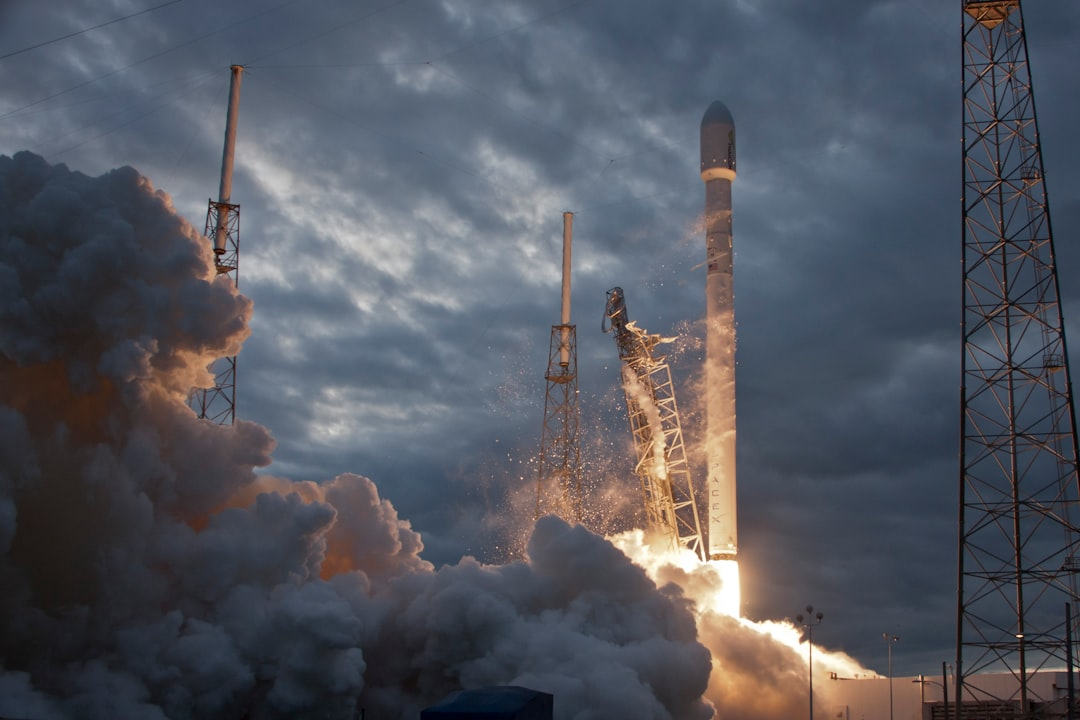
Aerospace Exploration Agencies: Missions and Pioneers
Humanity’s innate curiosity has always driven us to look up at the stars and wonder what lies beyond. This enduring quest for knowledge has given rise to some of the most ambitious and transformative undertakings in history: space exploration. At the heart of this endeavor are the world’s aerospace exploration agencies, governmental and increasingly private organizations dedicated to pushing the boundaries of what’s possible in the cosmos.
💡 Key Takeaways
- Global aerospace agencies like NASA, ESA, and Roscosmos are vital for scientific research and pushing human boundaries.
- Iconic missions, from Apollo to Hubble, have significantly expanded our knowledge of the cosmos.
- Pioneering individuals, including engineers, scientists, and astronauts, are the driving force behind exploration achievements.
- International collaboration is increasingly critical for complex and ambitious space endeavors.
“Space agencies aren’t just about rockets and satellites; they’re the embodiment of humanity’s deepest curiosity, writing the future of our cosmic narrative one mission at a time. It’s where the science of today inspires the science fiction of tomorrow.”
— Astrid Bellweather, Astrophysicist & Science Fiction Consultant
These agencies are the architects of our journeys to the Moon, Mars, and beyond, designing the spacecraft, conducting the research, and training the astronauts who venture into the unknown. From groundbreaking scientific missions that unravel the universe’s secrets to technological advancements that benefit life on Earth, the work of an aerospace exploration agency is fundamental to our understanding of the universe and our place within it. Join us as we delve into the pivotal roles, iconic missions, and visionary pioneers that have shaped the narrative of cosmic discovery.
In This Article
- → Aerospace Exploration Agencies: Missions and Pioneers
- — 💡 Key Takeaways
- → The Dawn of Space Exploration: Early Pioneers and Their Legacies
- — ✨ Origins of Government-Led Space Programs
- — 🧑🚀 Key Figures and Their Vision
- → Leading Global Aerospace Exploration Agencies and Their Milestones
- — 🇺🇸 NASA (USA): From Apollo to Artemis
- — 🇪🇺 ESA (European Space Agency): Collaborative Ventures
- — 🇷🇺 Roscosmos (Russia): Historical Achievements and Future Endeavors
- — 🇯🇵 JAXA (Japanese Aerospace Exploration Agency): Innovation and Precision
- — 🇨🇳 CNSA (China National Space Administration): Rapid Ascent in Space
- → Unveiling Distant Worlds: Missions to Jupiter and Venus
- — 🪐 Expeditions to Jupiter: Probing the Gas Giant
- — 🔥 Ventures to Venus: Exploring Our Fiery Neighbor
- → The Role of Private Sector in Aerospace Exploration
- — 🚀 SpaceX, Blue Origin, and Beyond
- — 🤝 Public-Private Partnerships
- → Future Frontiers: The Next Chapter in Space Exploration
- — 🌕 Human Return to the Moon and Beyond Mars
- — ⚛️ Asteroid Mining and Space Resources
- — ⚙️ Advancements in Propulsion and Technology
- → Conclusion: The Endless Pursuit of Cosmic Knowledge
The Dawn of Space Exploration: Early Pioneers and Their Legacies

The race to space was born from the Cold War rivalry, yet it quickly transcended political motives to become a global scientific and technological pursuit. This era laid the groundwork for all future endeavors.
✨ Origins of Government-Led Space Programs
- ✅ The Soviet Union’s launch of Sputnik 1 in 1957 shocked the world, marking the beginning of the space age and prompting immediate action from other nations.
- ➡️ The United States swiftly responded by establishing the National Aeronautics and Space Administration (NASA) in 1958, consolidating various civilian space research efforts under one umbrella.
- 💡 Other nations soon followed, recognizing the strategic, scientific, and prestige value of a dedicated space program.
🧑🚀 Key Figures and Their Vision
Behind every major space program were individuals with extraordinary vision and scientific acumen. These pioneers not only designed rockets and trajectories but also inspired generations.
- 🚀 Sergei Korolev (USSR): Often considered the “Chief Designer” of the Soviet space program, he was instrumental in the launches of Sputnik and Yuri Gagarin’s historic flight.
- 🌕 Wernher von Braun (USA): A former German rocket scientist who became a key architect of the American space program, playing a critical role in the development of the Saturn V rocket that powered the Apollo missions.
- 🔬 Countless unsung engineers, mathematicians, and scientists also contributed their brilliance, creating the foundation upon which today’s aerospace exploration stands.
Leading Global Aerospace Exploration Agencies and Their Milestones
Today, several national and international agencies lead the charge in `space exploration`, each contributing unique strengths and insights to our collective cosmic journey.
🇺🇸 NASA (USA): From Apollo to Artemis
The U.S. National Aeronautics and Space Administration remains one of the most prominent names in space exploration, with a history punctuated by monumental achievements.
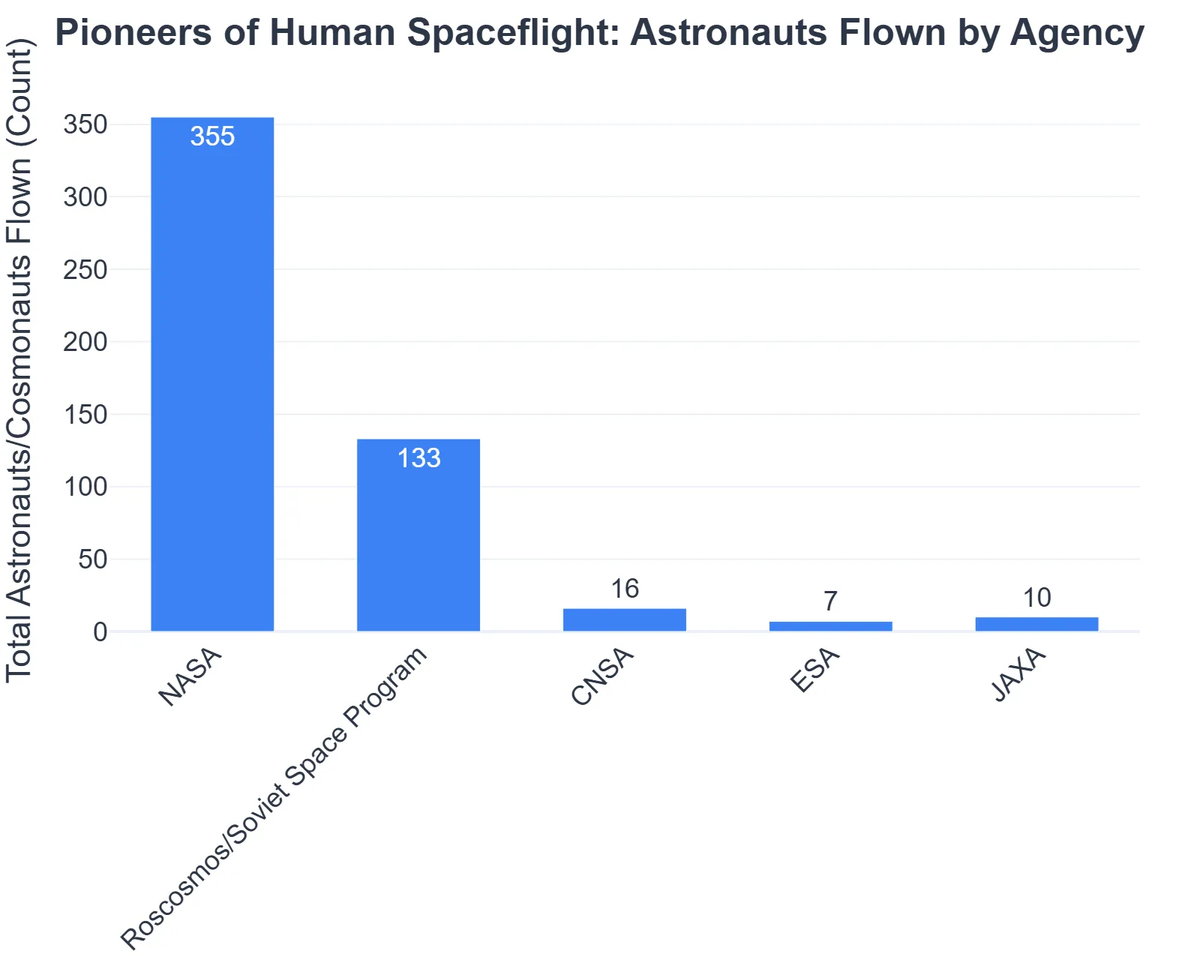
- ✅ Apollo Program: Achieved the historic first human Moon landing in 1969, a defining moment for humanity.
- 🔭 Hubble Space Telescope: Revolutionized astronomy, providing breathtaking images and crucial data about the universe.
- 🤖 Mars Rovers: Missions like Spirit, Opportunity, Curiosity, and Perseverance have tirelessly explored the Martian surface, searching for signs of past or present life. For a deeper dive into these robotic explorers, consider reading our guide on Mars Exploration: Past, Present, and Future Missions.
- 🛰️ International Space Station (ISS): A collaborative effort representing humanity’s continuous presence in low Earth orbit.
- ➡️ Artemis Program: NASA’s ambitious plan to return humans to the Moon by 2025 (Artemis III target) and establish a sustainable lunar presence as a stepping stone for future human missions to Mars, as outlined in their strategic documents: NASA’s Journey to Mars – Pioneering Next Steps in Space Exploration.
🇪🇺 ESA (European Space Agency): Collaborative Ventures
The European Space Agency unites 22 member states, pooling resources and expertise for a unified approach to space exploration.
- Rosetta Mission: First mission to orbit and land on a comet, providing unprecedented insights into cometary composition.
- Gaia Mission: Creating the most precise 3D map of the Milky Way galaxy.
- Ariane Rockets: A series of successful launch vehicles crucial for European access to space.
- Copernicus Programme: The world’s largest Earth observation program, providing data for environmental monitoring and climate change.
🇷🇺 Roscosmos (Russia): Historical Achievements and Future Endeavors
As the successor to the Soviet space program, Roscosmos boasts a rich history of firsts and continues to be a major player.
- 🌍 First Satellite & Human: Launched Sputnik 1 and sent Yuri Gagarin into space, pioneering early `space exploration`.
- 🌌 Mir Space Station: A long-duration orbital outpost that hosted numerous international crews before the ISS era.
- 🤝 ISS Partnership: A crucial partner in the operation and resupply of the International Space Station.
🇯🇵 JAXA (Japanese Aerospace Exploration Agency): Innovation and Precision
The `Japanese Aerospace Exploration Agency` is renowned for its technological innovation, particularly in robotics and asteroid sample return missions.
- Asteroid Sample Returns: Hayabusa and Hayabusa2 successfully brought asteroid samples back to Earth, providing invaluable scientific data.
- Kaguya (SELENE): Japan’s largest lunar mission since Apollo, mapping the Moon’s surface and gravity field.
- Ikaros: The first fully solar sail spacecraft to successfully demonstrate solar sailing technology in interplanetary space.
- MDA and JAXA Collaboration: JAXA often partners with international entities for its ambitious projects, demonstrating global cooperation in space exploration, as seen in contracts like MDA awarded contract for Japan Aerospace Exploration Agency….
🇨🇳 CNSA (China National Space Administration): Rapid Ascent in Space
China’s space program has rapidly advanced in recent decades, achieving significant milestones and establishing itself as a major force.
- Tiangong Space Station: Successfully constructed its own modular space station, indicating long-term human presence in orbit.
- Chang’e Lunar Program: Multiple successful robotic missions to the Moon, including the first-ever landing on the Moon’s far side.
- Tianwen-1: Successfully landed a rover (Zhurong) on Mars in its first attempt, a remarkable feat in interplanetary `space exploration`.
Unveiling Distant Worlds: Missions to Jupiter and Venus
Beyond our terrestrial neighborhood, aerospace agencies have dispatched a fleet of robotic explorers to the gas giants and our fiery planetary neighbors, expanding our cosmic horizons.
🪐 Expeditions to Jupiter: Probing the Gas Giant
`Jupiter exploration` has yielded incredible insights into the largest planet in our solar system and its mysterious moons.
- Pioneer 10 & 11: First spacecraft to visit Jupiter, providing initial close-up images and data.
- Voyager 1 & 2: Conducted flybys, revealing complex weather patterns and volcanic activity on Io, one of Jupiter’s moons.
- Galileo Orbiter: Spent eight years orbiting Jupiter, dropping a probe into its atmosphere and studying its magnetosphere and moons in detail.
- Juno Mission (NASA): Currently orbiting Jupiter, studying its origin, evolution, atmosphere, and deep structure, helping to understand giant planets in general.
🔥 Ventures to Venus: Exploring Our Fiery Neighbor
Despite its harsh conditions, `Venus exploration` has been a persistent goal, offering clues about planetary evolution and atmospheric dynamics.
- Venera Program (Soviet Union): The only missions to successfully land on Venus’s surface and transmit data, providing the first images from another planet’s surface.
- Magellan Orbiter (NASA): Used radar to map 98% of Venus’s surface, revealing its volcanic and tectonic features.
- Akatsuki (JAXA): Currently orbiting Venus, studying its super-rotating atmosphere.
- EnVision (ESA): A future mission planned to perform high-resolution radar mapping and atmospheric studies to understand Venus’s geological and atmospheric history.
The Role of Private Sector in Aerospace Exploration
The landscape of `space exploration` is rapidly evolving with the significant emergence of private companies, transforming access to space and fostering new ambitions.
Aerospace Exploration Agencies: Benefits and Challenges
Pros
- ✔Advances scientific understanding of the universe and its origins.
- ✔Drives technological innovation with widespread Earth-based applications.
- ✔Inspires future generations in STEM fields and fosters global collaboration.
- ✔Provides a long-term perspective on humanity’s place and potential.
Cons
- ✖Requires immense financial investment, potentially diverting public funds.
- ✖Inherent high risks to human life and equipment during missions.
- ✖Contributes to space debris, posing collision hazards for operational satellites.
- ✖Raises ethical concerns regarding planetary protection and potential militarization of space.
🚀 SpaceX, Blue Origin, and Beyond
These companies are not just launching rockets; they are developing reusable launch systems, mega-constellations, and ambitious plans for lunar and Martian colonization.
- ✅ SpaceX: Pioneered reusable rocket technology (Falcon 9) and developed the Dragon spacecraft for crew and cargo transport to the ISS. Their Starship system is designed for interplanetary travel. Learn more about their lunar ambitions with SpaceX Lander: Paving the Way for Lunar Exploration.
- 🌌 Blue Origin: Focused on developing reusable rocket engines and vehicles for suborbital and orbital spaceflight, including the New Shepard and New Glenn rockets.
- 🛰️ Northrop Grumman: A key player in supplying the ISS with cargo via their Cygnus spacecraft, showcasing the diversity of private contributions to space operations. For more on the Cygnus, see Cygnus Spacecraft | Northrop Grumman.
🤝 Public-Private Partnerships
Many government agencies now collaborate with private companies, leveraging their agility and innovation to achieve shared goals more efficiently.
- 💡 Commercial Crew Program: NASA partnered with SpaceX and Boeing to develop and operate spacecraft for transporting astronauts to the ISS, reducing reliance on foreign launch capabilities.
- 📈 Commercial Lunar Payload Services (CLPS): NASA contracts with private companies to deliver science and technology payloads to the Moon, fostering a lunar economy.
Future Frontiers: The Next Chapter in Space Exploration
The future of `space exploration` promises even bolder endeavors, pushing the boundaries of human presence and scientific discovery.
🌕 Human Return to the Moon and Beyond Mars
The Moon is increasingly seen not just as a destination but as a strategic outpost for deeper space missions.
- Artemis Base Camp: Plans for a sustainable human presence on the Moon, including habitats and research facilities.
- Gateway Lunar Orbital Platform: A proposed space station in orbit around the Moon, serving as a staging point for lunar and deep space missions.
- Martian Habitation: Long-term visions include establishing human outposts on Mars, requiring advanced life support and resource utilization.
⚛️ Asteroid Mining and Space Resources
The vast resources in space, from water ice on the Moon and Mars to precious metals in asteroids, are becoming a focus for future economic development.
- Water Ice Extraction: Crucial for drinking water, oxygen, and rocket propellant.
- Asteroid Surveys: Identifying resource-rich asteroids for potential mining operations.
⚙️ Advancements in Propulsion and Technology
New technologies are essential to enable faster, more efficient, and safer journeys through the cosmos.
- Ion Propulsion: Already in use for missions like Dawn, offering high fuel efficiency for long-duration missions.
- Nuclear Thermal Propulsion: A highly efficient rocket engine concept that could drastically reduce travel times to Mars.
- Advanced Robotics and AI: Increasingly sophisticated robots and artificial intelligence will play larger roles in exploration and construction. For more on the innovations propelling us forward, explore Space Exploration Technologies: Driving Humanity to the Stars.
Recommended Video
Conclusion: The Endless Pursuit of Cosmic Knowledge
From the pioneering efforts of early space agencies to the dynamic rise of private enterprises, the pursuit of aerospace exploration agency missions embodies humanity’s enduring quest for understanding. These agencies and their dedicated pioneers have not only expanded our scientific knowledge but have also inspired generations, driven technological innovation, and fostered unprecedented international cooperation.
As we continue to gaze at the stars, the collaborative spirit and relentless ambition of these organizations will undoubtedly propel us to new cosmic frontiers, unraveling the universe’s profound mysteries and redefining our place within it. The journey of Cosmic Queries: Probing the Mysteries of the Universe is far from over; it’s just beginning.
Frequently Asked Questions
Which are the primary global aerospace exploration agencies?
Key agencies include NASA (USA), ESA (Europe), Roscosmos (Russia), CNSA (China), and JAXA (Japan), each contributing significantly to space exploration.
What are some landmark missions undertaken by these agencies?
Notable missions include NASA’s Apollo program, ESA’s Rosetta, Hubble Space Telescope (NASA/ESA), and the Voyager missions, among many others.
How do aerospace agencies collaborate internationally?
Agencies frequently collaborate on large-scale projects like the International Space Station (ISS), lunar gateway projects, and joint scientific missions, pooling resources and expertise.
Who are some famous pioneers in aerospace exploration?
Pioneers include Yuri Gagarin, Neil Armstrong, Valentina Tereshkova, Katherine Johnson, and Gene Kranz, whose contributions were pivotal.