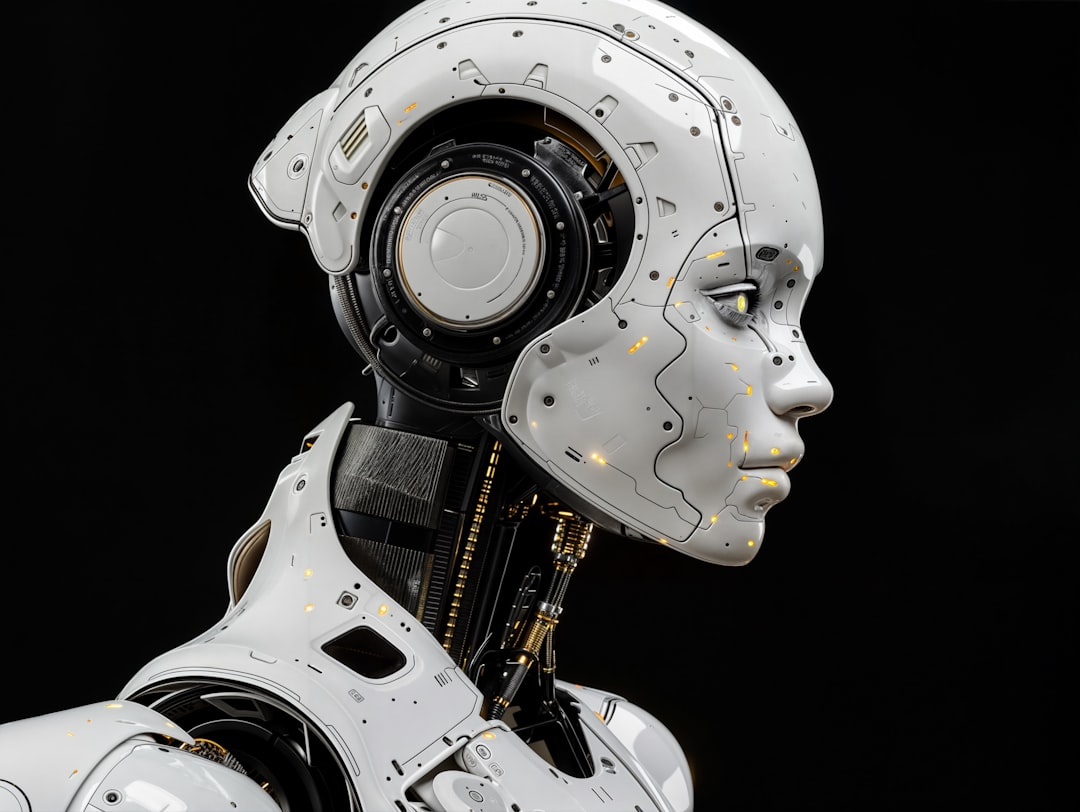
What is Ameca? The Dawn of Human-Like Robotics
In the rapidly evolving landscape of artificial intelligence and robotics, few creations have captured the public imagination quite like the Ameca humanoid robot. Developed by Engineered Arts, a Cornwall, UK-based robotics company, Ameca represents a significant leap forward in human-robot interaction. It’s designed specifically as a platform for human-robot interaction, pushing the boundaries of expressive movement and natural communication.
💡 Key Takeaways
- Ameca showcases cutting-edge advancements in human-like AI expression and interaction.
- The robot’s development prompts critical discussions about the definition and future of sentient AI.
- Ameca highlights the evolving ethical considerations as AI systems become more sophisticated and lifelike.
- It provides a tangible glimpse into the potential for future human-robot coexistence and collaboration.
“Ameca isn’t just a robot; it’s a mirror reflecting our complex relationship with artificial intelligence and the ethical responsibilities we bear as we build increasingly autonomous and expressive machines.”
— Kira Chen, Futurist & AI Ethics Analyst
Ameca isn’t just another machine; it’s a meticulously engineered system built for advanced interaction, demonstrating incredibly lifelike facial expressions, fluid body language, and sophisticated conversational capabilities. While the concept of a “sentient robot” remains firmly in the realm of science fiction, Ameca showcases how far we’ve come in simulating human-like communication and emotional responses.
Its primary purpose is to act as a research and development platform, allowing engineers and AI developers to explore the complexities of human-robot rapport, public engagement, and future applications. From captivating audiences at tech conferences to serving as a sophisticated testbed for AI algorithms, Ameca highlights the potential for robots to integrate more seamlessly into human environments.
- ✅ Mimics human-like facial expressions and gestures with uncanny accuracy.
- ✅ Equipped with advanced microphones and cameras for perception.
- ✅ Designed with a modular architecture for easy upgrades and maintenance.
- ✅ Serves as a cutting-edge platform for AI and machine learning research.
For a deeper understanding of how robots are becoming more lifelike, explore our article on Realistic Humanoid Robots: Are They Among Us?.
In This Article
- → What is Ameca? The Dawn of Human-Like Robotics
- — 💡 Key Takeaways
- → ⚙️ Unpacking Ameca’s Advanced Capabilities
- — The Art of Expression
- — Sophisticated Interaction
- → Ameca vs. The World: How it Compares to Other Humanoids
- → The Path Forward: Ameca’s Impact on AI and Society
- — Potential Applications and Industries
- — Ethical Considerations and Societal Impact
⚙️ Unpacking Ameca’s Advanced Capabilities
Ameca’s allure lies in its intricate design and the impressive technology powering its human-like performance. Engineered Arts has poured years of expertise into developing a robot that can not only understand but also express itself in ways previously thought impossible for machines.
The Art of Expression
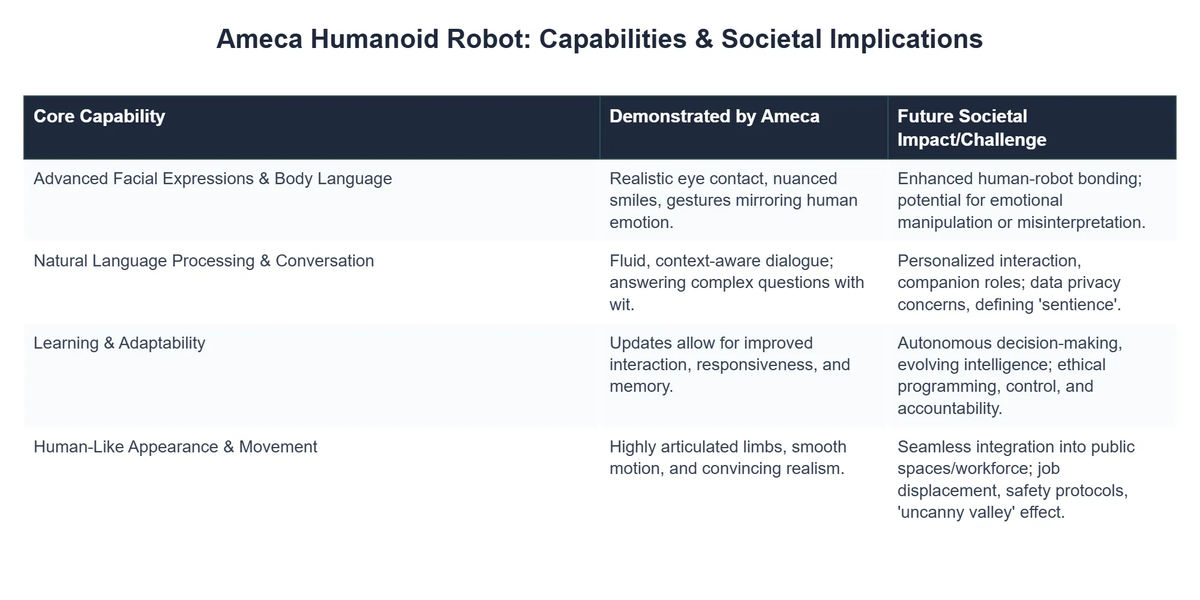
One of Ameca’s most striking features is its ability to produce a vast array of human-like facial expressions. This is achieved through a complex system of over 50 individual micro-actuators embedded in its face and neck. These allow for subtle nuances in smiles, frowns, surprise, and even winks, making interactions remarkably engaging. Its eyes are particularly lifelike, capable of making eye contact, tracking objects, and conveying a sense of presence.
Sophisticated Interaction
Beyond facial expressions, Ameca integrates advanced AI systems to facilitate natural conversation and interaction:
- 💡 Natural Language Processing (NLP): While Ameca itself doesn’t host the advanced AI, it connects to cloud-based AI models (such as GPT-3/4 and other large language models) to process speech, understand context, and generate coherent responses.
- ➡️ Speech Synthesis: Its voice output is remarkably natural, contributing to the illusion of a sentient being.
- ✅ Body Language & Gestures: Ameca’s upper body is capable of fluid, natural movements, including hand gestures, head nods, and torso shifts that complement its verbal communication, adding another layer of realism to its interactions.
- ⚙️ Modular Design: Its modular construction allows for easy replacement of components and future upgrades, ensuring the platform remains at the forefront of humanoid robotics.
It’s crucial to understand that Ameca’s “intelligence” or “sentience” is a sophisticated simulation. It responds based on complex algorithms and vast datasets, giving the impression of understanding and emotion, rather than possessing true consciousness. Engineered Arts emphasizes that Ameca is a platform for exploring these interactions, not a sentient being.
Ameca vs. The World: How it Compares to Other Humanoids
The field of humanoid robotics is diverse, with various companies and research institutions pursuing different goals. Ameca stands out for its emphasis on human-like interaction and expressiveness. Let’s compare it to some other prominent robots and robotic initiatives:
- ✅ Ameca vs. Humanoid Robot Sophia: Both Ameca and Sophia AI: Exploring Humanoid Robotics and AI Ethics, created by Hanson Robotics, excel in facial expressiveness and public interaction. However, Ameca is often cited for its more fluid and natural movements, particularly in its micro-expressions. Sophia has been more focused on media appearances and philosophical discussions about AI ethics, while Ameca is positioned primarily as a research and development platform for advanced human-robot interaction.
- ➡️ Ameca vs. Tesla Optimus Robot: Tesla Optimus Robot: Elon Musk’s Vision for Humanoid AI (also known as “Tesla Bot”) is fundamentally different. While Optimus is also a humanoid, its primary focus is on performing general-purpose physical labor and navigating unstructured environments, aiming for practical utility in manufacturing and daily life. Ameca, conversely, is built for communication and expression, with limited mobility beyond its torso.
- 💡 Other Robotic Endeavors:
- WABOT-1: As one of the earliest full-scale humanoids, WABOT-1: The Dawn of Humanoid Robotics (developed in 1973) serves as a historical benchmark, demonstrating the long journey to robots like Ameca.
- Specialized Robots: Robots like the `energetically autonomous tactical robot` (EATR), the `curiosity robot` (Mars rover), `thorvald robot` (agricultural research), and `zimmer robot` (medical applications) are purpose-built for highly specific tasks and environments, often not humanoid in form or focused on human-like interaction. Similarly, while companies like `microsoft robot` are deeply involved in AI and robotics research, they typically focus on broader AI platforms or specialized robotic applications rather than developing a single flagship humanoid like Ameca.
Each robot serves a unique purpose within the vast landscape of robotics. Ameca’s strength lies in its ability to bridge the gap between human and machine communication, making it an invaluable tool for understanding and shaping the future of interactive AI, as highlighted by leaders in the field of robotics innovation. Learn more about the companies leading this charge at Ross Dawson’s futurist insights.

Recommended Video
The Path Forward: Ameca’s Impact on AI and Society
The development of the Ameca humanoid robot and similar advanced humanoids marks a pivotal moment in the trajectory of AI and robotics. These machines are not just technological marvels; they are catalysts for rethinking how we interact with technology and what our future society might look like.
Potential Applications and Industries
Ameca’s advanced interactive capabilities open doors to a multitude of applications:
- ✅ Customer Service & Hospitality: Imagine Ameca-like robots greeting guests, providing information, or assisting with check-ins in hotels or retail spaces, offering a personalized, engaging experience.
- ➡️ Education & Training: As interactive tutors or simulation partners, they could revolutionize learning by providing dynamic and responsive instruction.
- 💡 Entertainment & Media: Ameca’s expressive nature makes it ideal for public displays, events, and even acting roles, pushing the boundaries of digital performance.
- 🔬 Research & Development: Its most immediate impact remains its role as a research platform, accelerating advancements in human-robot interaction, emotional AI, and the development of more sophisticated AI models, including the shift from large language models (LLMs) to more comprehensive Large Concept Models (LCMs), as discussed by experts at Coforge.
Ethical Considerations and Societal Impact
As humanoids become more realistic, the ethical implications grow. The “uncanny valley” effect, where robots appear almost human but unnervingly so, is a challenge. More profoundly, questions arise about:
- ✅ Job Displacement: While Ameca isn’t designed for physical labor, the broader trend of robotics raises concerns about automation impacting employment.
- ➡️ Defining Sentience: As AI progresses, the line between simulated and genuine understanding becomes blurrier, prompting philosophical debates about consciousness and rights.
- 💡 Human-Robot Relationships: What happens when humans form emotional bonds with non-sentient machines? How do we manage the psychological and social ramifications?
- ⚙️ Bias and Control: Ensuring that the AI powering these robots is free from biases and remains under human control is paramount.
The journey with robots like Ameca is just beginning. As we chart the course of tomorrow’s technology, understanding their capabilities and carefully considering their societal impact will be crucial for building a future where humans and advanced machines can coexist productively and ethically. For a comprehensive look at the broader landscape of future technologies, consider our pillar page: Future Perfect?: Charting the Course of Tomorrow’s Technology.
What is Ameca?
Ameca is a highly advanced humanoid robot developed by Engineered Arts, renowned for its remarkably human-like expressions, gestures, and interactive capabilities.
What makes Ameca’s expressions so realistic?
Ameca’s lifelike facial expressions are achieved through a complex system of 17 individual motors in its face, enabling a wide spectrum of human-like emotions and reactions.
Is Ameca sentient or conscious?
No, Ameca is not sentient or conscious. It operates on advanced AI algorithms designed for interaction and display, but it does not possess self-awareness or true understanding.
What is Ameca’s purpose?
Ameca serves as a platform for research and development in human-robot interaction, AI, and advanced robotics, showcasing what is possible in the field of humanoid technology.