What is Cloning? The Science Behind the Replicas
In the realm of biotechnology, cloning refers to the process of creating a genetically identical copy of a biological entity. This could be a gene, a cell, or even an entire organism. While often sensationalized in popular culture, the scientific principles behind cloning are rooted in fundamental biological processes, primarily involving genetics and cellular reproduction.
💡 Key Takeaways
- Cloning involves creating genetically identical copies of an organism, cell, or DNA fragment.
- There are distinct types of cloning, including reproductive and therapeutic, each with different aims and ethical implications.
- Ethical debates surrounding cloning revolve around identity, human dignity, and the potential for misuse, shaping legal frameworks globally.
- Future advancements in genetic science may offer new possibilities for cloning, demanding careful societal and ethical consideration.
“Cloning, at its core, forces us to confront fundamental questions about life, identity, and humanity’s role in evolution. It’s a field where scientific progress and ethical responsibility are inextricably linked.”
— Julian Aris, PhD, Geneticist & Evolutionary Biologist
At its core, cloning leverages the fact that every cell in an organism contains a complete set of genetic instructions. By manipulating these instructions, scientists can direct the development of a new, identical organism or replicate specific genetic material. For a broader understanding of how these instructions are passed down, explore our article on Genetics and Heredity: Understanding How Traits are Inherited.
In This Article
- → What is Cloning? The Science Behind the Replicas
- — 💡 Key Takeaways
- — Understanding Genetic Identity
- → Types of Cloning: Beyond Dolly the Sheep
- — ➡️ Reproductive Cloning
- — 🔬 Therapeutic Cloning (Embryo Cloning)
- — 🧬 Gene Cloning (DNA Cloning)
- → Ethical Dilemmas of Cloning: Navigating the Moral Maze
- — ⚖️ Reproductive Cloning: Human Dignity and Identity
- — 🔬 Therapeutic Cloning: A Different Ethical Lens
- → The Future of Cloning: Possibilities and Perils
- — 🌍 Conservation and De-Extinction
- — 💊 Medical Advancements and Personalized Medicine
- — The Broader Context: Cloning in The Code of Life
Understanding Genetic Identity
The key to cloning lies in replicating the organism’s entire genome. Unlike sexual reproduction, which combines genetic material from two parents, cloning aims to create an offspring that is a precise genetic replica of a single parent. This means the clone will possess the exact same DNA sequence as the donor.

- ✅ DNA as the Blueprint: Every living organism’s traits and functions are encoded in its DNA. Understanding DNA Explained: A Simple Guide to its Structure and Role is crucial to grasping how cloning works.
- ➡️ Cellular Reprogramming: In advanced cloning techniques, adult cells are “reprogrammed” to behave like embryonic stem cells, capable of developing into any cell type.
- 💡 Natural Cloning: It’s worth noting that cloning isn’t exclusively a lab phenomenon. Asexual reproduction in bacteria, plants, and some animals, as well as identical twins, are forms of natural cloning.
Types of Cloning: Beyond Dolly the Sheep
While the birth of Dolly the sheep in 1996 brought reproductive cloning into the global spotlight, the field of cloning encompasses several distinct methodologies, each with different applications and ethical implications.
➡️ Reproductive Cloning
Reproductive cloning aims to create a new organism that is genetically identical to the donor organism. The most common technique used for this is Somatic Cell Nuclear Transfer (SCNT).
- 1️⃣ Nucleus Removal: The nucleus (containing the DNA) is removed from an unfertilized egg cell.
- 2️⃣ Donor Nucleus Insertion: The nucleus from a somatic cell (any non-reproductive cell, like a skin cell) of the organism to be cloned is inserted into the enucleated egg cell.
- 3️⃣ Activation & Development: The reconstructed egg is stimulated, usually with an electrical pulse, to begin dividing as if it were a fertilized embryo.
- 4️⃣ Implantation: This embryo is then implanted into a surrogate mother, where it develops to term.
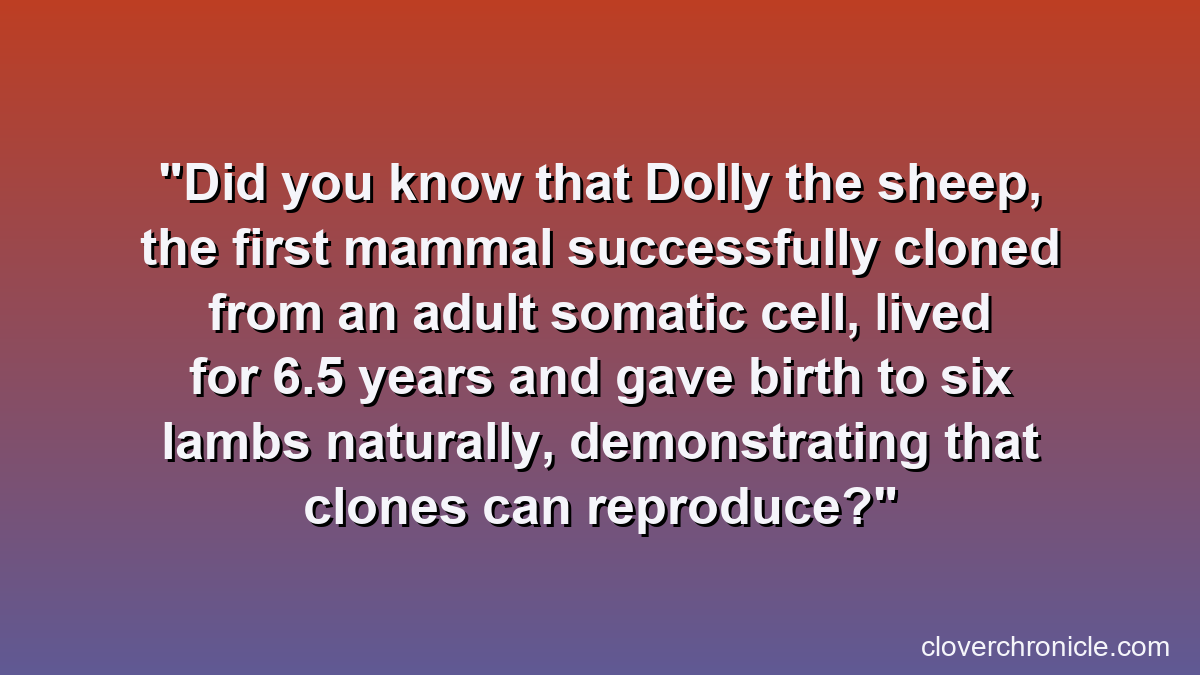
Dolly the sheep was created using this exact method, proving that a mammal could be cloned from an adult cell. This opened new avenues but also significant ethical debates.

🔬 Therapeutic Cloning (Embryo Cloning)
Unlike reproductive cloning, therapeutic cloning does not aim to create a whole new organism. Instead, its goal is to produce embryonic stem cells that are genetically identical to a patient. These stem cells could then be used to grow new tissues or organs for transplantation, effectively bypassing issues of immune rejection.
- ✅ Disease Research: These patient-specific stem cells are invaluable for studying disease progression and testing new drugs.
- 🏥 Potential for Regenerative Medicine: The promise lies in treating diseases like Parkinson’s, Alzheimer’s, spinal cord injuries, and diabetes by generating healthy replacement cells or tissues.
For more on the promises and issues surrounding this field, a detailed ethical analysis can be found on Therapeutic cloning: promises and issues.
🧬 Gene Cloning (DNA Cloning)
Gene cloning, or molecular cloning, is a fundamental technique in molecular biology. It involves making multiple identical copies of a specific gene or DNA segment. This is done by inserting the desired DNA into a “vector” (often a plasmid, a small circular DNA molecule from bacteria) and then introducing this vector into a host cell (like bacteria or yeast) which then replicates the DNA along with its own.
- 💡 Research & Biotechnology: Used extensively in genetic research, gene therapy, and the production of pharmaceuticals like insulin or human growth hormone.
- ➡️ Foundation of Genetic Engineering: This process is a cornerstone of Genetic Engineering: Reshaping Life’s Code and other advanced biotechnologies.
Ethical Dilemmas of Cloning: Navigating the Moral Maze
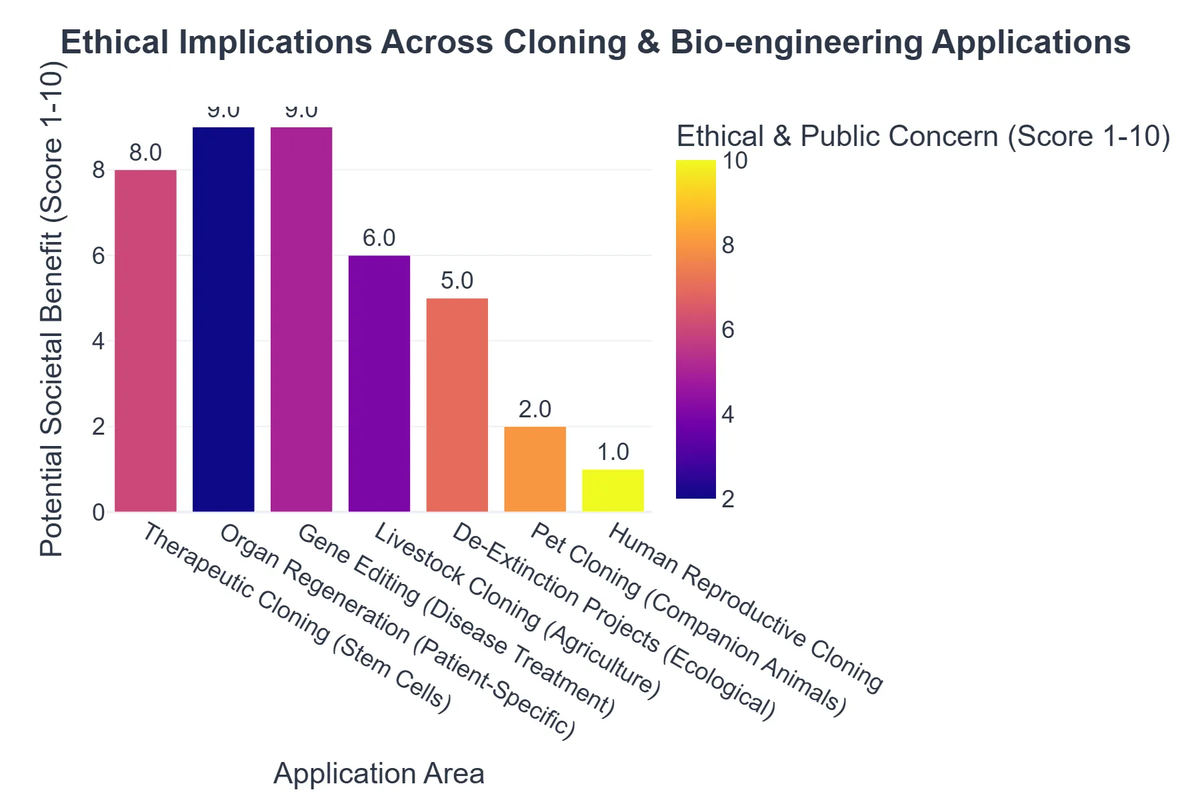
The scientific ability to clone has ignited profound ethical, social, and moral debates worldwide. These discussions touch upon the very essence of what it means to be human, the sanctity of life, and the potential for misuse of powerful technologies.
⚖️ Reproductive Cloning: Human Dignity and Identity
The prospect of human reproductive cloning raises the most significant ethical red flags. Critics argue that it:
- ⛔ Violates Human Dignity: Reducing individuals to manufactured products or means to an end, rather than unique beings.
- ❓ Questions of Identity: What would be the psychological impact on a cloned individual, knowing they are a genetic copy?
- 🚨 Safety Concerns: Reproductive cloning procedures, even in animals, often result in high failure rates, birth defects, and shortened lifespans for the cloned offspring. Applying such an inefficient and risky procedure to humans is widely considered unethical and unsafe.
- ⚠️ Exploitation: Concerns exist about the potential for exploitation of women for egg donation and surrogacy.
Many countries have outright banned human reproductive cloning due to these concerns. For a deeper dive into these considerations, the article Cloning humans? Biological, ethical, and social considerations offers extensive insights.
🔬 Therapeutic Cloning: A Different Ethical Lens
While less controversial than reproductive cloning, therapeutic cloning still presents ethical considerations, primarily concerning the use and destruction of human embryos.
- 🌱 Embryo Status: The debate hinges on when life begins and the moral status of an embryo created solely for research or medical purposes.
- 🤝 Potential for Cures vs. Moral Objections: Balancing the potential to alleviate suffering from debilitating diseases against the ethical concerns of embryo manipulation.
These discussions are part of a broader conversation about Genetic Manipulation: Science, Ethics, and Applications that continuously evolves with scientific advancements.
The Future of Cloning: Possibilities and Perils
Despite the ethical complexities, research into cloning continues, driven by its potential to revolutionize medicine, conservation, and even our understanding of evolution.
🌍 Conservation and De-Extinction
One compelling application of reproductive cloning is in conservation efforts. Cloning could potentially:
- 🐅 Save Endangered Species: By increasing the population of critically endangered animals, or preserving the genetics of species on the brink of extinction.
- 🐘 “De-extinction”: The ambitious concept of bringing back extinct species, like the woolly mammoth or passenger pigeon, by cloning them from preserved DNA. While technically challenging and ethically debated, projects like these are actively being pursued. Read more about the ethics of bringing back extinct animals on Should we clone extinct animals? The ethics of de-extinction.
💊 Medical Advancements and Personalized Medicine
The primary future impact of cloning, particularly therapeutic cloning, is expected to be in medicine:
- ✨ Drug Testing: Cloned cells and tissues could provide accurate models for testing new drugs and therapies, accelerating medical research.
- 💉 Organ & Tissue Regeneration: Custom-grown organs or tissues, genetically matched to the patient, could eliminate the need for organ donors and overcome immune rejection.
- 🧬 Understanding Diseases: Creating genetically identical cell lines from patients with specific diseases allows scientists to study disease mechanisms in a controlled environment.
Recommended Video
The Broader Context: Cloning in The Code of Life
Cloning is just one fascinating chapter in the much larger story of The Code of Life: Decoding Genetics, Evolution, and Existence. As our understanding of DNA and cellular processes deepens, the ethical frameworks surrounding these powerful technologies must evolve in tandem. The future of cloning will be shaped not just by scientific capability, but by societal values, public discourse, and careful regulation to ensure it benefits humanity responsibly.
What is cloning?
Cloning is the process of producing genetically identical copies of a biological entity, whether it’s a gene, cell, or a whole organism.
What are the main types of cloning?
The main types are reproductive cloning (creating a whole organism, like Dolly the sheep) and therapeutic cloning (creating embryonic stem cells for medical research or treatment).
Is human cloning legal?
Reproductive human cloning is currently banned in many countries worldwide due to ethical concerns, though regulations for therapeutic cloning vary.
What ethical concerns are associated with cloning?
Ethical concerns include the moral status of clones, potential for exploitation, genetic diversity reduction, and the fundamental question of humanity’s role in manipulating life.