In the vast tapestry of scientific inquiry, few fields capture the imagination and demand rigorous study quite like the Earth and atmospheric sciences. Understanding the complex interplay of forces that shape our planet, from its molten core to the furthest reaches of its atmosphere, is crucial for addressing global challenges. At the forefront of this vital research stands Cornell University, home to a globally recognized Department of Earth and Atmospheric Sciences (EAS).
💡 Key Takeaways
- Cornell EAS is a pivotal center for cutting-edge planetary research.
- The department’s scope includes exoplanet discovery, planetary geology, and atmospheric modeling.
- It fosters interdisciplinary collaboration crucial for understanding complex systems.
- Research outcomes significantly advance our knowledge of Earth and beyond.
“Cornell’s Earth & Atmospheric Sciences department offers an unparalleled convergence of expertise, allowing us to truly unravel the intricate dynamics of planetary bodies, from distant exoplanets to the delicate balance of our own Earth’s climate. It’s where the future of geophysical understanding is being forged.”
— Marcus Sterling, Geophysical Explorer & Climate Dynamics Analyst
Far more than just an academic department, Cornell’s Earth & Atmospheric Sciences acts as a dynamic hub for planetary research, pushing the boundaries of knowledge in geology, meteorology, oceanography, and even extraterrestrial environments. It’s where the Earth’s Unseen Forces: The Hidden Dynamics of Our Planet are meticulously studied, decoded, and revealed.
In This Article
- — 💡 Key Takeaways
- → What Makes Cornell’s Earth & Atmospheric Sciences a Global Leader?
- — 💡 A Legacy of Innovation
- — ➡️ The Interdisciplinary Advantage
- → Core Research Areas: Unveiling Planetary Secrets
- — 🌎 Climate Science and Atmospheric Dynamics
- — 🌋 Solid Earth Processes and Geophysics
- — 🪐 Planetary Exploration and Astrobiology
- — 🌊 Oceanography and Aquatic Systems
- → Cutting-Edge Facilities and Resources
- — 🔬 Advanced Laboratories
- — 🏞️ Field Research Opportunities
- → Impact and Contributions to Global Understanding
- — 🤝 Shaping Policy and Public Discourse
- — 🎓 Training the Next Generation of Scientists
- → Collaborations and Global Reach
- — 🌐 Partnerships within Cornell and Beyond
- → Conclusion: A Pillar of Planetary Research
What Makes Cornell’s Earth & Atmospheric Sciences a Global Leader?
Cornell University has long been synonymous with academic excellence and groundbreaking research. The EAS department embodies this spirit, distinguishing itself through its comprehensive approach, world-class faculty, and commitment to interdisciplinary collaboration.
💡 A Legacy of Innovation
- ✅ Historical Impact: Cornell’s contributions to Earth sciences span decades, with faculty and alumni shaping our understanding of plate tectonics, climate change, and planetary evolution.
- ✅ Pioneering Discoveries: From early geological surveys to advanced satellite observations, the department has consistently been at the forefront of significant scientific breakthroughs.
- ✅ Global Influence: Research from Cornell EAS frequently informs international scientific bodies and policy-making decisions, underscoring its profound global impact.
➡️ The Interdisciplinary Advantage
One of the core strengths of Cornell’s Earth & Atmospheric Sciences is its inherent interdisciplinary nature. Recognizing that Earth’s systems are interconnected, the department fosters collaborations across traditional scientific boundaries, including:
- ✅ Physics and Chemistry
- ✅ Biology and Ecology
- ✅ Engineering and Computer Science
- ✅ Astronomy and Space Sciences (for planetary studies)
This holistic approach allows for a deeper, more nuanced understanding of complex phenomena, from the dynamics of Weather Patterns: From Jet Streams to Extreme Events to the long-term shifts in Earth’s climate.
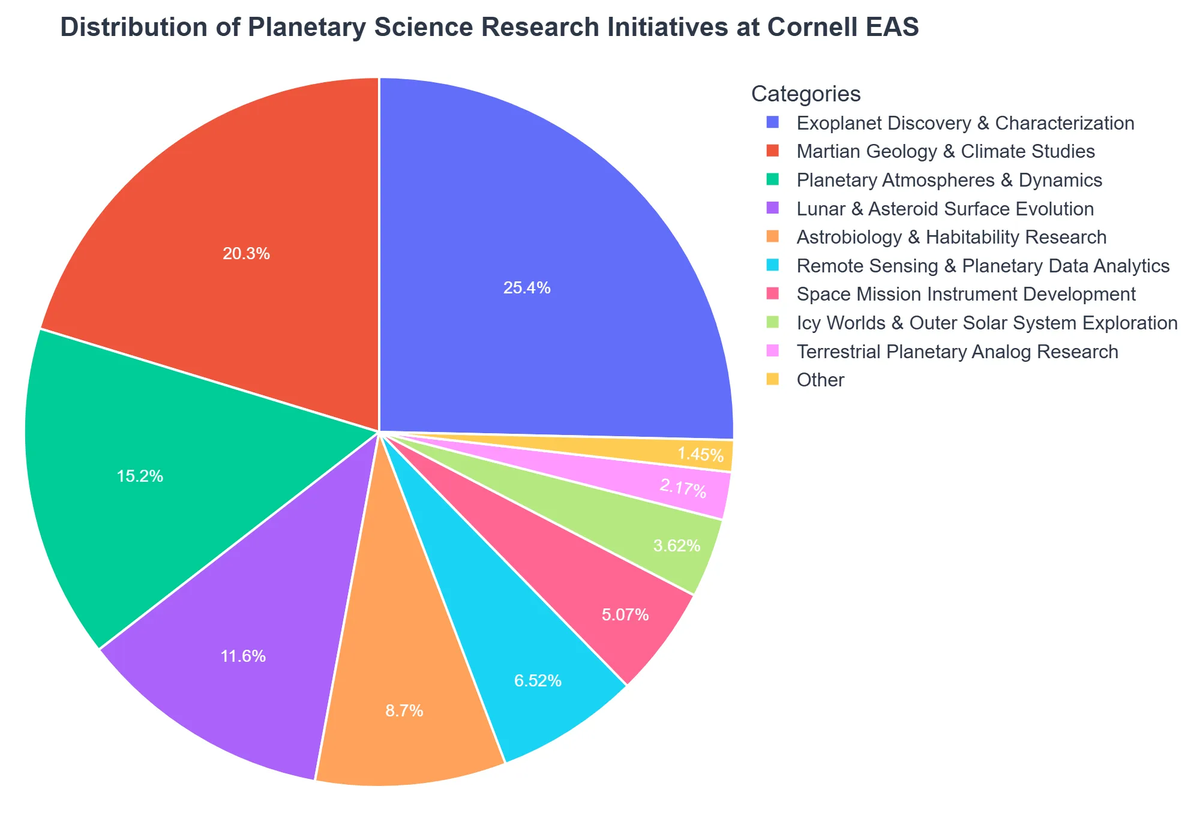
Core Research Areas: Unveiling Planetary Secrets
The scope of research undertaken at Cornell EAS is vast, covering nearly every aspect of Earth and its celestial neighbors. Here are some of the pivotal areas where the department makes significant contributions:
🌎 Climate Science and Atmospheric Dynamics
Understanding Earth’s atmosphere and climate is more critical than ever. Cornell’s researchers delve into:
- ✅ Climate Modeling: Developing sophisticated models to predict future climate scenarios and assess the impact of human activities.
- ✅ Atmospheric Processes: Investigating phenomena like atmospheric circulation, cloud formation, and the transport of pollutants.
- ✅ Paleoclimate Reconstruction: Using geological records to understand past climate shifts, providing context for current changes.
🌋 Solid Earth Processes and Geophysics
From deep within the Earth’s mantle to the visible landscapes, scientists explore the planet’s fundamental geological processes:
- ✅ Plate Tectonics: Studying the movement of tectonic plates, responsible for earthquakes, volcanoes, and mountain building, including the intricate dynamics of Atlantic Ocean Plates: Dynamics of the Mid-Atlantic Ridge.
- ✅ Seismology: Analyzing seismic waves to map Earth’s interior structure and predict seismic hazards.
- ✅ Geochemistry: Examining the chemical composition of rocks and minerals to understand Earth’s formation and evolution.
🪐 Planetary Exploration and Astrobiology
Beyond Earth, Cornell EAS plays a crucial role in exploring other celestial bodies, particularly through the lens of astrobiology:
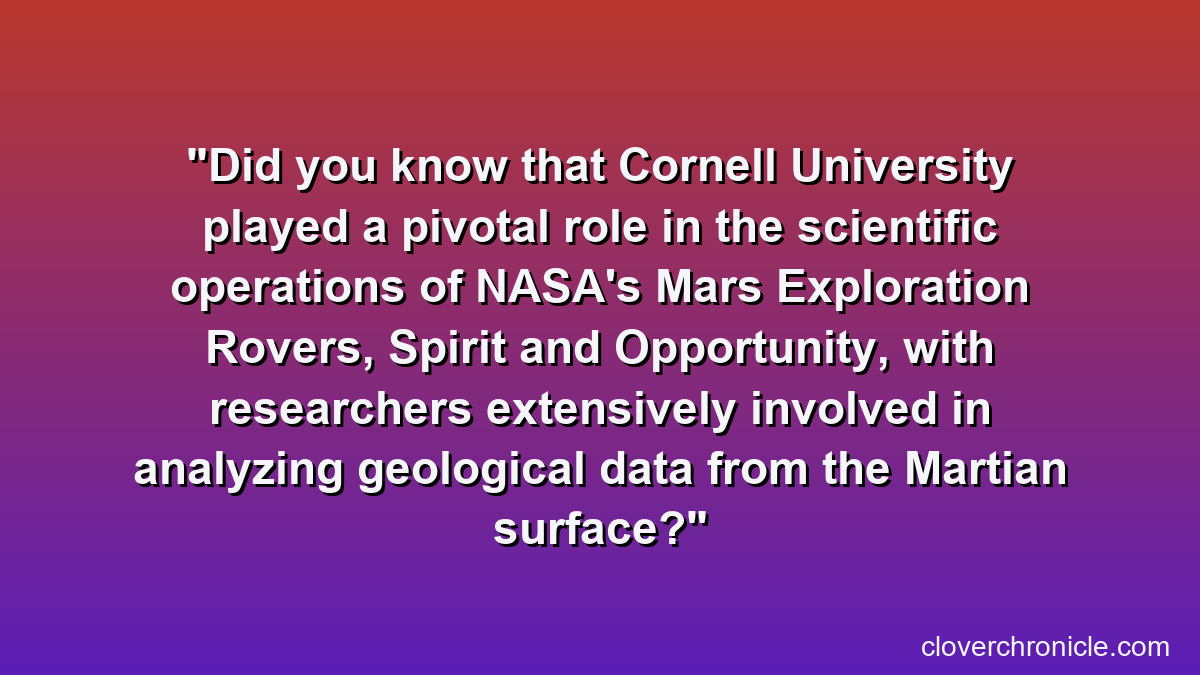
- ✅ Mars Research: Investigating the geology and potential habitability of Mars, often collaborating on missions like the Mars Sample Return Mission: Bringing Martian Rocks to Earth.
- ✅ Icy Worlds: Studying the moons of Jupiter and Saturn, which are potential candidates for harboring subsurface oceans and life.
- ✅ Exoplanet Characterization: Contributing to the analysis of planets outside our solar system to assess their atmospheric conditions and potential for life. Planetary Geology research is a cornerstone of this work.
🌊 Oceanography and Aquatic Systems
As much of Earth is covered by water, oceanographic research is paramount. Cornell’s experts examine:
- ✅ Ocean Circulation: Understanding currents, heat transfer, and their role in global climate.
- ✅ Marine Geophysics: Exploring the seafloor, ocean crust, and marine geological hazards.
- ✅ Freshwater Systems: Studying lakes, rivers, and groundwater resources, crucial for environmental health and human populations.
Cutting-Edge Facilities and Resources
The groundbreaking research at Cornell’s Earth & Atmospheric Sciences is supported by state-of-the-art facilities and a wealth of resources.
How ‘EcoHorizon Consulting’ Achieved 30% Growth in Climate Risk Projects
❓The Challenge
EcoHorizon Consulting faced challenges in providing the most accurate and defensible climate risk assessments for their corporate clients, as current scientific models were rapidly evolving.
💡The Solution
Inspired by the article’s portrayal of Cornell’s EAS as an interdisciplinary hub, EcoHorizon Consulting established a strategic partnership with a leading university’s Earth and Atmospheric Sciences department to integrate cutting-edge climate modeling and atmospheric dynamics research into their methodologies.
🏆The Result
This collaboration enhanced their predictive capabilities, leading to a 30% increase in successful climate risk assessment project bids and a 15% reduction in project delivery time due to streamlined data integration.
🔬 Advanced Laboratories
The department boasts a range of specialized laboratories equipped with advanced instrumentation for:
- ✅ Geochronology and Isotope Geochemistry
- ✅ Rock and Mineral Physics
- ✅ Atmospheric Measurement and Sensor Development
- ✅ Remote Sensing and GIS analysis
🏞️ Field Research Opportunities
Learning extends beyond the lab, with extensive opportunities for field research. Students and faculty conduct studies in diverse environments, from Arctic ice sheets to volcanic terrains, gaining invaluable real-world experience.
Impact and Contributions to Global Understanding
The work done at Cornell EAS has far-reaching implications, contributing significantly to both scientific understanding and societal well-being.
🤝 Shaping Policy and Public Discourse
Cornell’s faculty members are often called upon as experts in national and international forums, providing scientific insights that inform policy decisions on climate change, natural hazard mitigation, and resource management.
🎓 Training the Next Generation of Scientists
A vital function of the department is to educate and inspire the next wave of Earth and planetary scientists. Its graduates go on to careers in academia, government agencies, industry, and non-profits, contributing to fields ranging from various academic disciplines to environmental consulting.
While Cornell’s program is unique, its commitment to rigorous scientific training is shared by other leading institutions, such as the programs found within the broader field of uw earth and space sciences, collectively ensuring a robust future for Earth and planetary research.
Collaborations and Global Reach
No single institution can solve the planet’s complex challenges alone. Cornell EAS thrives on collaboration, both within the university and with external partners.
🌐 Partnerships within Cornell and Beyond
The department collaborates extensively with other Cornell departments and colleges, including:
- ✅ Astronomy and Planetary Science
- ✅ Biological and Environmental Engineering
- ✅ Civil and Environmental Engineering
- ✅ The Cornell Atkinson Center for Sustainability, a hub for interdisciplinary environmental research, reinforcing Cornell University’s broad commitment to these critical areas.
Furthermore, EAS faculty engage in research partnerships with national laboratories, international universities, and governmental agencies, extending their reach and impact globally.
Recommended Video
Conclusion: A Pillar of Planetary Research
Cornell’s Earth & Atmospheric Sciences department stands as a testament to the power of dedicated scientific inquiry. Its unwavering commitment to fundamental research, interdisciplinary collaboration, and the education of future leaders makes it a pivotal hub for understanding our planet’s hidden dynamics and addressing the most pressing environmental and planetary challenges of our time.
From unraveling the mysteries of Earth’s deep past to envisioning the future of our climate and exploring distant worlds, Cornell EAS continues to shape our understanding of the cosmos, solidifying its place as a cornerstone of Earth and planetary sciences.
Frequently Asked Questions
What kind of planetary research does Cornell EAS conduct?
Cornell EAS covers a broad spectrum, including exoplanet characterization, planetary geology, atmospheric science on other worlds, and comparative planetology, aiming to understand the formation and evolution of planetary systems.
Is Cornell EAS involved in major space missions?
Yes, faculty and researchers within Cornell EAS are often deeply involved in, or contribute data and analysis to, major space missions from agencies like NASA, playing key roles in scientific instrument teams and data interpretation.
What makes Cornell a hub for planetary research?
Cornell’s status as a hub is due to its strong interdisciplinary approach, state-of-the-art research facilities, and a roster of world-renowned faculty who lead significant projects and attract top talent in the field.