

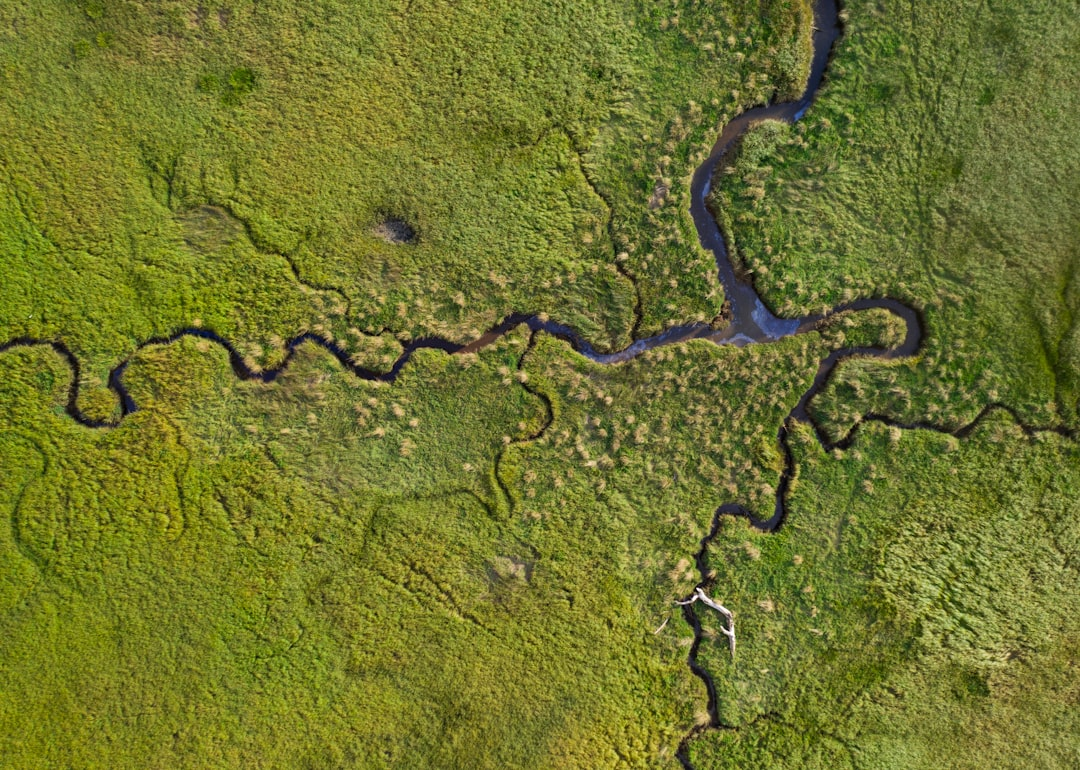
From the sprawling network of a river basin to the intricate frost patterns on a windowpane, nature exhibits a fascinating preference for branching designs. These ubiquitous formations, known as dendritic geology, are not random occurrences but rather highly efficient structures shaped by fundamental physical and chemical processes. As experts in Earth’s Unseen Forces: The Hidden Dynamics of Our Planet, we delve into the unseen forces that sculpt our world, and dendritic patterns stand out as a prime example of nature’s elegant engineering.
💡 Key Takeaways
- Understand the diverse geological processes that create dendritic patterns.
- Learn to identify dendritic formations in minerals, rocks, and landscapes.
- Appreciate the fractal nature and aesthetic beauty of Earth’s branching designs.
- Discover how these patterns provide insights into geological history and fluid flow.
“Dendritic patterns are profound fingerprints of geological history, often revealing the subtle dance between fluid dynamics and mineral growth, reflecting the very systems that shape our climate.”
— Marcus Sterling, Geophysical Explorer & Climate Dynamics Analyst
This comprehensive guide will explore the various manifestations of dendritic patterns in geology, from the grand scale of river systems to the microscopic world of mineral growth. We’ll uncover the science behind their formation and appreciate the profound implications they hold for understanding our planet’s dynamic processes.
In This Article
- — 💡 Key Takeaways
- → What Are Dendritic Patterns? A Universal Design Principle
- — 💡 Defining Dendritic Growth
- — 🌍 Where Do We See Them in Nature?
- → Dendritic River Systems: Nature’s Arteries
- — 💧 Formation and Characteristics
- → Mineral Dendrites: Intricate Crystalline Structures
- — 💎 How Mineral Dendrites Form
- → Beyond Rivers & Minerals: Other Geological Manifestations
- — ❄️ Ice Crystal Dendrites
- — ⚡ Lightning Discharge Patterns
- — 🌋 Magma Solidification & Intrusions
- → The Underlying Principles: Why Nature Prefers Branching
- — 🧪 Fluid Dynamics and Energy Efficiency
- → Conclusion
What Are Dendritic Patterns? A Universal Design Principle
At its core, a dendritic pattern is a branching, tree-like structure. The term “dendrite” comes from the Greek word “dendron,” meaning tree. These patterns emerge when a system grows or evolves outward from a central point or along a preferred pathway, constantly subdividing into smaller branches.

💡 Defining Dendritic Growth
- ✅ Efficiency: Dendritic patterns often represent the most efficient way to transport or dissipate energy or material within a given space.
- ✅ Self-Organization: They are typically formed through self-organizing processes, where simple rules at the local level lead to complex, ordered structures globally.
- ✅ Ubiquity: You’ll find them in diverse natural phenomena, from biological systems (like neurons and blood vessels) to atmospheric events (lightning) and, crucially, geological formations.
🌍 Where Do We See Them in Nature?
While our focus is on geology, understanding the broader context highlights the universality of these patterns:
- ➡️ River Basins: The most recognizable example, where countless tributaries merge into larger rivers.
- ➡️ Mineral Growth: Intricate crystal formations inside rocks.
- ➡️ Ice & Frost: The delicate, feathery patterns on cold surfaces.
- ➡️ Lightning Discharges: The branching paths electricity takes through the atmosphere.
- ➡️ Magma Solidification: Cooling patterns in igneous rocks.
This omnipresence suggests a deep, underlying principle governing growth and flow in nature. Indeed, the principles of dendritic design are seen as an archetype for growth patterns in nature, reflecting fundamental physical laws. For more on this broad concept, consider exploring Frontiers in Physics: Dendritic Design as an Archetype for Growth Patterns in Nature.
Dendritic River Systems: Nature’s Arteries
Perhaps the most iconic example of dendritic patterns in geology is the river system. A dendritic drainage pattern forms in areas where the underlying rock or sediment has a uniform resistance to erosion, and the topography has a gentle, consistent slope.

💧 Formation and Characteristics
- ✅ Erosion as the Sculptor: Water flows downhill, eroding the path of least resistance. Over time, smaller rills coalesce into gullies, which then develop into tributaries, and finally, into a main river channel.
- ✅ Branching Efficiency: This branching network is incredibly efficient at draining a large area, collecting surface runoff and channeling it towards a single exit point.
- ✅ Topographic Influence: Unlike other drainage patterns (like radial or trellis), dendritic systems are not strongly controlled by geological structures like faults or folds, but rather by the general slope of the land.
The intricate dance of water and land, constantly shaping and reshaping our world, is a testament to the power of these systems. To dive deeper into how water influences geological formations, explore our article on River Geology: Shaping Landscapes and Sediment Transport.
Mineral Dendrites: Intricate Crystalline Structures
Beyond the macroscopic scale of river networks, dendritic patterns also manifest beautifully within rocks and minerals. These mineral dendrites are typically thin, branching growths that resemble fossilized plants or trees, though they are purely inorganic.
💎 How Mineral Dendrites Form
- ✅ Fluid Migration: They form when mineral-rich water seeps through tiny cracks or fissures in rock.
- ✅ Rapid Crystallization: As the water evaporates or conditions change, minerals rapidly precipitate out of solution, growing outwards in a branching fashion.
- ✅ Oxidation and Deposition: The most common mineral dendrites are composed of manganese oxides (like psilomelane) or iron oxides, which are deposited as dark, branching patterns on lighter-colored host rocks, such as limestone, sandstone, or chalcedony.
These delicate geological features often trick the eye, appearing almost biological. They are a clear illustration of how even slow, patient geological processes can yield structures of stunning complexity. Understanding the deposition of minerals is key to comprehending phenomena like Supergene Enrichment: Enhancing Geology Ore Deposits, where mineral concentrations are dramatically altered by fluid interaction.
Dendritic Patterns in Geology: Analysis
Pros
- ✔Provides insights into fluid flow and transport mechanisms.
- ✔Crucial for understanding landscape evolution and drainage systems.
- ✔Reveals underlying geological structures and past environments.
- ✔Applicable across various geological disciplines.
Cons
- ✖Can be highly complex, making quantitative analysis challenging.
- ✖Interpretation may require extensive supplementary data.
- ✖Pattern formation is often influenced by multiple interacting variables.
- ✖Scale variations can complicate consistent analysis.
Beyond Rivers & Minerals: Other Geological Manifestations
The influence of dendritic patterns extends far beyond just river systems and mineral deposits, appearing in various other geological contexts, showcasing nature’s consistent design principles.
❄️ Ice Crystal Dendrites
Think of snowflakes or frost on a window. These are classic examples of dendritic growth. Ice crystals grow outward from a nucleus, adding new molecules most rapidly at the tips and corners, leading to complex, branching structures. While often fleeting, their formation process mirrors that of more permanent geological dendrites.
⚡ Lightning Discharge Patterns
When lightning strikes a surface, especially an insulating one like sand (creating fulgurites) or even the skin (Lichtenberg figures), the electrical discharge often leaves behind a branching, fractal pattern. This illustrates how energy seeks the path of least resistance, creating a dendritic network of ionized pathways.
EcoFlow Logistics: Branching Out for Peak Delivery Efficiency
❓The Challenge
EcoFlow Logistics faced challenges with their urban delivery routes, struggling with high fuel consumption and inconsistent on-time delivery rates due to rigid, pre-planned paths.
💡The Solution
Inspired by the article’s insights into dendritic patterns as nature’s most efficient branching designs, EcoFlow Logistics redesigned their last-mile routing software. Their new algorithm dynamically mimics river systems, allowing for self-organizing, efficient distribution paths that adapt to real-time conditions.
🏆The Result
This innovative, nature-inspired approach reduced average fuel consumption per route by 18% and boosted on-time delivery performance by 25% within six months.
🌋 Magma Solidification & Intrusions
Even within the fiery heart of Earth, dendritic patterns emerge during the cooling and solidification of magma. In some igneous intrusions, particularly those with rapid cooling or specific mineral compositions, crystals can grow in dendritic forms. For example, some Stock in Geology: Understanding Small Igneous Intrusions can display such textures. Additionally, cooling cracks in basaltic lavas can sometimes form patterns that, while not strictly dendritic, share a similar branching logic in their propagation.
The Underlying Principles: Why Nature Prefers Branching
The prevalence of dendritic patterns across such diverse natural systems is no mere coincidence. It points to fundamental physical and chemical principles that favor these shapes for efficiency and stability.
🧪 Fluid Dynamics and Energy Efficiency
Many dendritic formations are governed by processes involving the flow of fluids (water, magma, mineral solutions) or the dissipation of energy (heat, electricity). Branching allows for:

- ✅ Maximized Surface Area: Essential for efficient exchange processes, whether it’s collecting water over a landscape or crystallizing minerals from a solution.
- ✅ Optimized Transport: A branching network can efficiently distribute or collect resources across a wide area with minimal energy expenditure. Think of how blood vessels distribute nutrients throughout the body, or how a river system drains a continent.
- ✅ Path of Least Resistance: Growth often occurs along pathways that require the least energy, leading to a sprawling, efficient network.
These principles are beautifully illustrated across various scales in nature, from the microscopic to the macroscopic. For a broader perspective on patterns in nature, consider visiting the Wikipedia page on Patterns in Nature.
Recommended Video
Conclusion
Dendritic patterns are far more than just aesthetically pleasing designs; they are a fundamental language spoken by the Earth’s unseen forces. From the grand erosion of continents by branching river systems to the delicate, fern-like structures of mineral growths within ancient rocks, these patterns are a testament to nature’s relentless pursuit of efficiency and equilibrium.
Understanding these branching designs provides critical insight into geological processes, from hydrology and erosion to mineral formation and even the cooling of the Earth’s interior. They remind us that even the most complex geological features often emerge from simple, elegant principles, constantly shaping and reshaping our dynamic planet.
Frequently Asked Questions
What are dendritic patterns in geology?
Dendritic patterns are treelike, branching structures found in various geological contexts, formed by processes like crystallization, erosion, and fluid flow.
Where can dendritic patterns be found?
They appear in minerals (like pyrolusite), rock surfaces (dendrites), river networks, and even large-scale drainage basins across the globe.
How do dendritic patterns form?
Formation involves mineral precipitation in fractures, crystallization from solutions, or erosion by water, all leading to branching, fractal-like growth patterns.
Do dendritic patterns have any scientific significance?
Yes, they provide valuable insights into fluid pathways, mineral deposition, rock formation conditions, and geomorphological evolution, offering clues to Earth’s past processes.