Big Bang Theory: A Comprehensive Guide to the Universe’s Origin
Welcome to <a a="" and="" bang="" big="" by="" colloquial="" decades="" evidence="" framework="" href="Cosmic Queries: Probing the Mysteries of the Universe</a>, where we delve into the most profound questions about our existence. Among the myriad of cosmic puzzles, none is perhaps as fundamental and awe-inspiring as the origin of everything around us. This article serves as your definitive guide to the <strong>Big Bang Theory</strong>, the leading scientific model explaining the universe's beginning and its subsequent evolution. Far from being just a " in="" is="" model="" observational="" of="" p="" physics.
Understanding the Big Bang is crucial for anyone seeking to grasp the grand narrative of our cosmos. It’s the bedrock upon which much of modern cosmology is built, offering profound insights into the origins of the universe, the formation of galaxies, and the very elements that compose us. Join us as we explore the journey from an infinitely hot, dense state to the vast, complex universe we inhabit today.
In This Article
- → Big Bang Theory: A Comprehensive Guide to the Universe’s Origin
- → What is the Big Bang Theory?
- → Key Evidence Supporting the Big Bang
- — 🔭 Redshift of Galaxies (Hubble’s Law)
- — 🌟 Cosmic Microwave Background (CMB) Radiation
- — ⚛️ Abundance of Light Elements
- → The Big Bang Timeline: From Singularity to Structure
- — 🚀 The Planck Epoch & Cosmic Inflation
- — ⚛️ Formation of Fundamental Particles
- — 🌌 Nucleosynthesis & First Atoms
- — 🌠 Galaxy Formation & Stellar Evolution
- — 🔮 The Universe’s Ultimate Fate: After the Big Bang?
- → Understanding Cosmic Evolution Through the Big Bang Model
- → Why the Big Bang Theory Prevails
- → Conclusion
- — 💡 Key Takeaways
What is the Big Bang Theory?
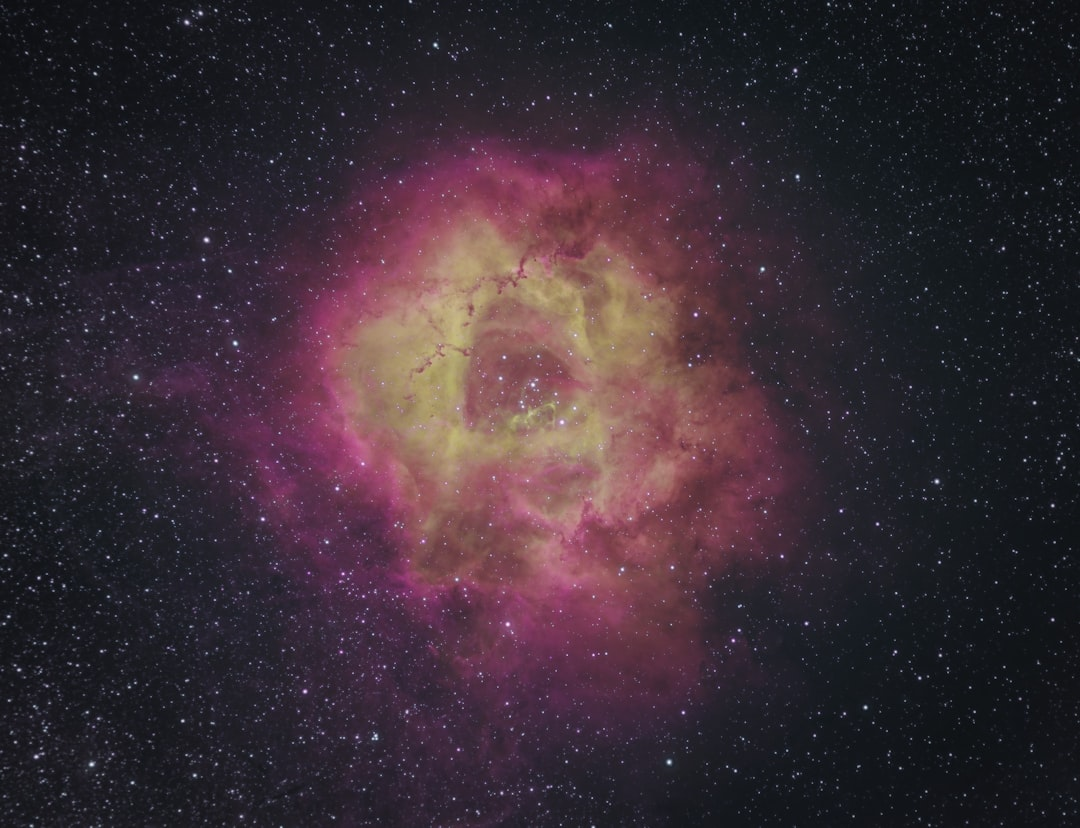
At its core, the Big Bang Theory is the prevailing cosmological model that describes the early development of the Universe. It postulates that the universe began from an extremely hot, dense point — a singularity — approximately 13.8 billion years ago, and has been expanding ever since. It’s not an explosion in space, but rather an expansion of space itself, carrying matter and energy along with it.
- ✅ Expansion of Space: The Big Bang describes how space itself stretched, carrying galaxies further apart.
- ➡️ Early Universe Conditions: It posits a universe initially characterized by extreme temperature and density.
- 💡 Cosmic Evolution: The theory details how, as the universe expanded and cooled, matter formed, leading to stars, galaxies, and eventually, life.
Key Evidence Supporting the Big Bang
The remarkable acceptance of the Big Bang Theory stems from a confluence of compelling observational data. These aren’t mere speculations but robust findings that consistently align with the model’s predictions.
🔭 Redshift of Galaxies (Hubble’s Law)
One of the earliest and most profound pieces of evidence came from Edwin Hubble’s observations in the 1920s. He noted that light from distant galaxies is redshifted, meaning its wavelength is stretched towards the red end of the spectrum. This phenomenon indicates that these galaxies are moving away from us. Furthermore, the more distant a galaxy, the faster it appears to be receding. This systematic recession is precisely what one would expect in an expanding universe.
🌟 Cosmic Microwave Background (CMB) Radiation
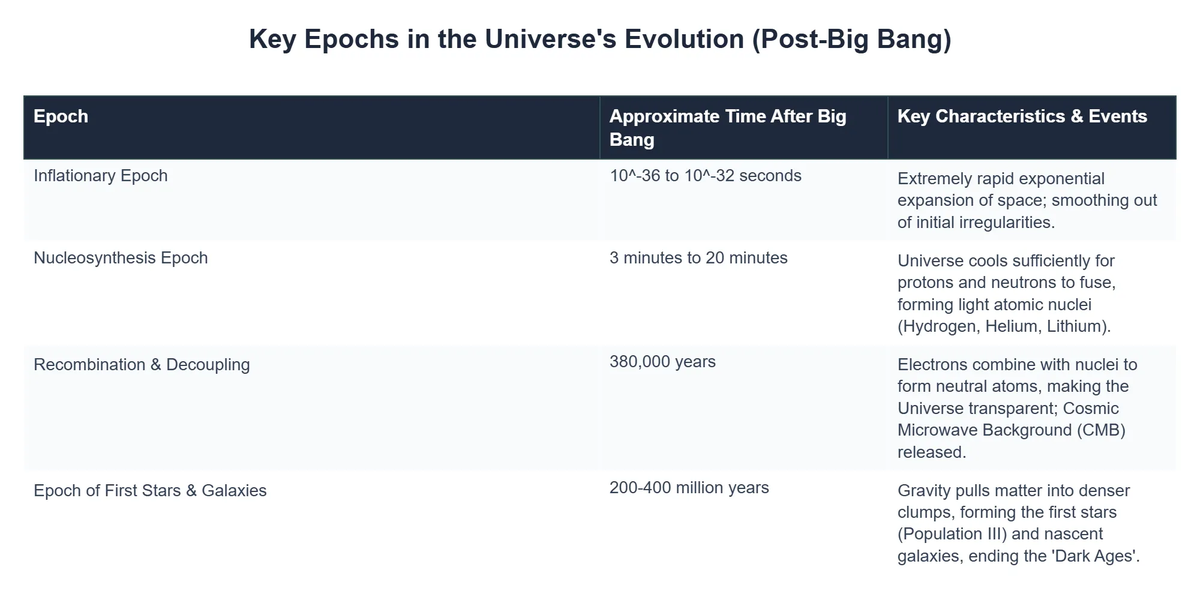
Perhaps the most compelling evidence for the Big Bang is the Cosmic Microwave Background (CMB) radiation. Discovered serendipitously by Arno Penzias and Robert Wilson in 1964, the CMB is a faint glow of uniform microwave radiation filling the entire universe. It is interpreted as the residual heat from the Big Bang – the “afterglow” from a time when the universe cooled sufficiently for atoms to form, allowing photons to travel freely. This ancient light, initially in the visible spectrum, has been redshifted over billions of years into the microwave range due to the universe’s expansion. Detailed maps of the CMB, famously produced by missions like COBE, WMAP, and Planck, align almost perfectly with theoretical predictions, providing a snapshot of the universe when it was only about 380,000 years old.
⚛️ Abundance of Light Elements
The Big Bang nucleosynthesis theory predicts the precise proportions of light elements (hydrogen, helium, and lithium) formed in the first few minutes after the Big Bang. The observed cosmic abundances of these elements—roughly 75% hydrogen, 25% helium, and trace amounts of lithium—match these theoretical predictions remarkably well. This concordance provides strong support for the extremely hot and dense conditions of the early universe as described by the Big Bang model. This is a fundamental concept often discussed in advanced cosmology textbooks.
The Big Bang Timeline: From Singularity to Structure
The big bang timeline offers a structured look at the universe’s incredible journey. From an initial state of unimaginable density and heat, the cosmos has undergone several distinct phases, each shaping its ultimate form.
🚀 The Planck Epoch & Cosmic Inflation
The story begins at a singularity, a point of infinite density and temperature. Immediately after, within the first tiny fraction of a second (10-43 seconds), the universe underwent a period known as the Planck Epoch. Following this, the theory of NASA publications delve into the intricacies of this early period.
⚛️ Formation of Fundamental Particles
As inflation ended, the universe was still incredibly hot and dense, but it had cooled enough for elementary particles like quarks, leptons (electrons, neutrinos), and their antiparticles to form from the primordial energy. These particles constantly collided and annihilated, creating a hot, dense “soup” of matter and antimatter.
🌌 Nucleosynthesis & First Atoms
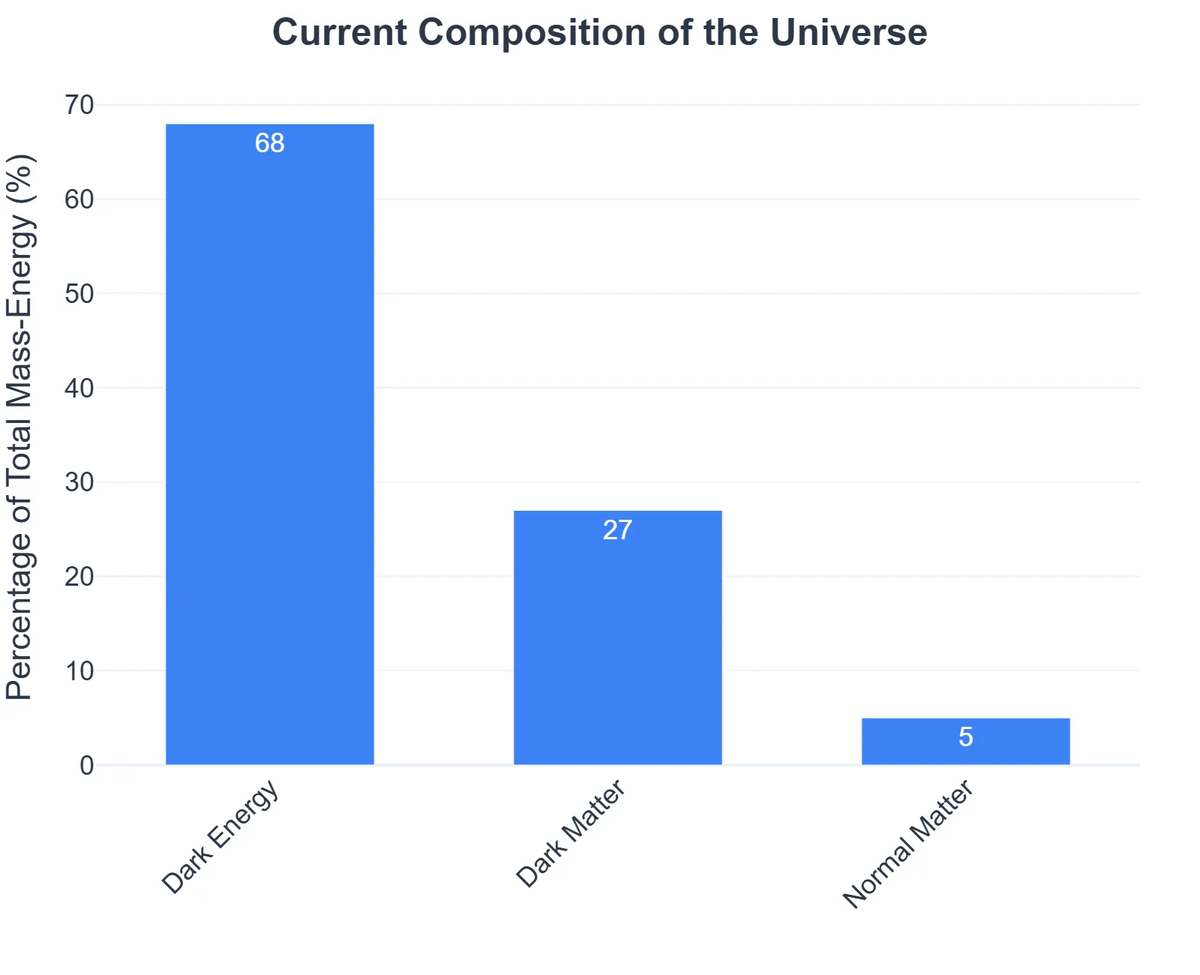
Within the first few minutes, as the universe continued to expand and cool, the temperature dropped sufficiently for quarks to bind together, forming protons and neutrons. Subsequently, during a period called Big Bang Nucleosynthesis, protons and neutrons fused to form the nuclei of light elements – primarily hydrogen and helium, with trace amounts of lithium. It took roughly 380,000 years for the universe to cool further, allowing electrons to combine with these nuclei, forming the first stable, neutral atoms. This event made the universe transparent, allowing the CMB photons to stream freely.
🌠 Galaxy Formation & Stellar Evolution
Over millions and billions of years, gravity began to pull together regions of slightly denser matter. These clumps grew, eventually forming the first stars and galaxies. Within these early galaxies, stars underwent stellar evolution, creating heavier elements through nuclear fusion and distributing them into space through supernova explosions. This ongoing process of cosmic evolution continues to shape the universe, forming new stars, planets, and even structures as vast as galaxy clusters. For a detailed exploration of the universe’s chronological development, see our article on the before the Big Bang, nor does it fully predict the ultimate fate of the universe <a bang"
The concept of “before the Big Bang” is one of the most challenging and debated areas in cosmology. The Big Bang model describes the evolution of space-time itself, suggesting that time, as we understand it, began at the singularity. Therefore, asking what “came before” might be akin to asking what is “north of the North Pole.” However, theoretical physicists are exploring various hypotheses, such as cyclical models (like the Big Bounce) or multiverses, which propose that our universe might be just one of many, or part of a continuous cycle of creation and destruction. These remain speculative, but active areas of research.
🔮 The Universe’s Ultimate Fate: After the Big Bang?
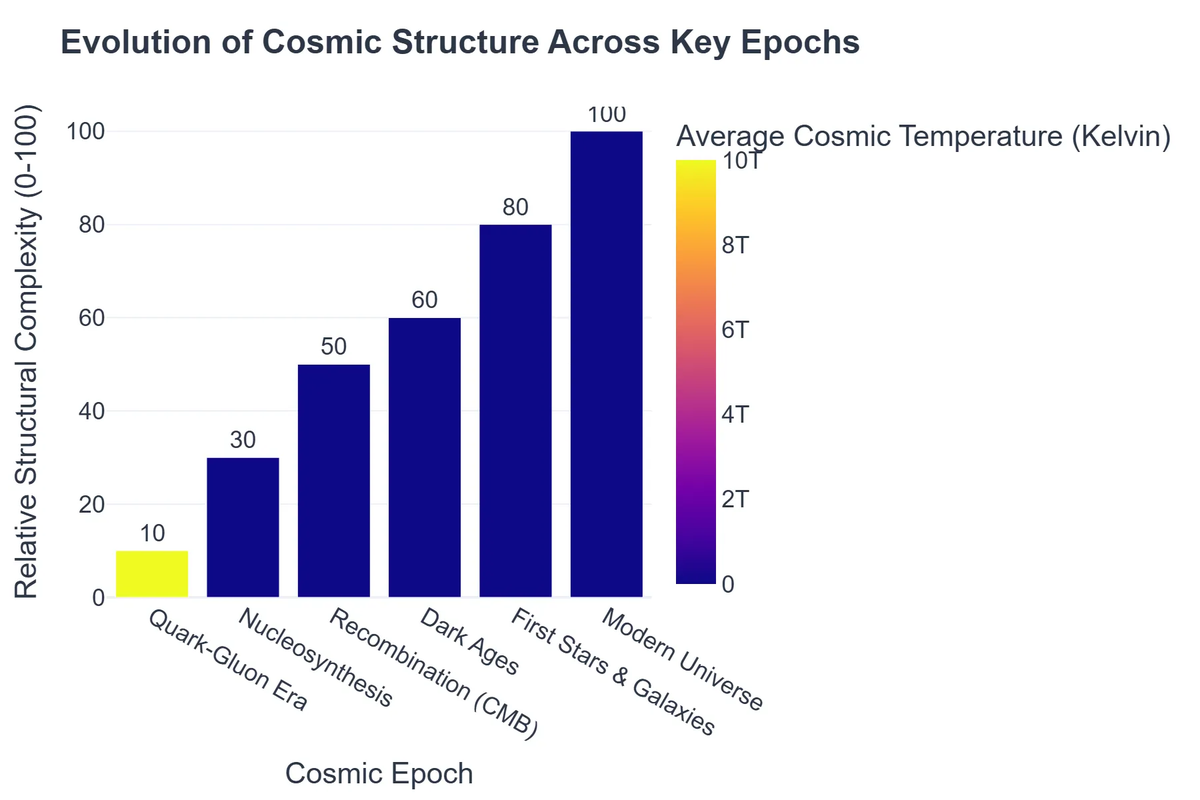
The universe’s ultimate destiny hinges primarily on the amount of dark energy and the overall geometry of space. Current observations suggest an accelerating expansion, driven by dark energy. This leads to several potential scenarios:
- ➡️ Big Freeze (Heat Death): If expansion continues indefinitely, the universe will cool, stars will burn out, and eventually, all matter will dissipate, leading to a cold, dark, empty void.
- ➡️ Big Rip: In an even more extreme scenario, the accelerating expansion could become so powerful that it tears apart galaxies, stars, planets, and even atoms themselves.
- ➡️ Big Crunch (Less Likely): If the universe contained enough matter and dark energy eventually reversed, gravity could halt the expansion and pull everything back into a singularity, resembling the Big Bang in reverse. Current data strongly disfavor this.
Understanding Cosmic Evolution Through the Big Bang Model
The Big Bang Theory is not just about a single event; it’s a comprehensive framework for understanding the ongoing <a href=”Universe Evolution: From Big Bang to Beyond</a>. It explains how the initial, uniform distribution of energy and matter evolved over billions of years into the complex structures we see today. From the formation of the first subatomic particles to the emergence of vast galaxy clusters, every stage of cosmic development is intrinsically linked to the principles outlined by this model. This deep understanding is continuously refined through global collaborations, like those involving data from the European Space Agency (ESA) and the extensive archival data provided by NASA, shaping modern cosmology.
Why the Big Bang Theory Prevails
Despite ongoing refinements and new discoveries, the Big Bang Theory remains the cornerstone of modern cosmology because of its explanatory power and consistent agreement with a wide array of empirical observations. It provides a coherent narrative for the universe’s origin and evolution that no other current model can match. While questions persist about the very earliest moments and the ultimate fate, the core principles of an expanding universe originating from a hot, dense state are exceptionally well-supported by evidence.
Recommended Video
Conclusion
The Big Bang Theory stands as one of humanity’s most remarkable intellectual achievements, a testament to our capacity to understand the vast and intricate workings of the cosmos. It paints a picture of a dynamic, evolving universe, born from extreme conditions and steadily expanding to form the galaxies, stars, and planets we observe today. As scientific instruments become more powerful and our theoretical models more refined, our understanding of the universe’s origin will only deepen, continuing the grand human endeavor of exploring the ‘Cosmic Queries’.
Frequently Asked Questions
What is the Big Bang Theory?
The Big Bang Theory is the leading scientific explanation for how the universe began. It posits that the universe originated approximately 13.8 billion years ago from an extremely hot, dense point and has been expanding and cooling ever since.
Is the Big Bang an explosion?
No, the Big Bang was not an explosion in space, but rather an expansion of space itself. It describes how the universe stretched out from an incredibly dense state, carrying matter and energy with it.
What are the main pieces of evidence for the Big Bang?
Primary evidence includes the cosmic microwave background (CMB) radiation, the observed redshift of distant galaxies (Hubble’s Law), and the measured abundance of light elements (hydrogen, helium, lithium) in the universe.
What came before the Big Bang?
Current scientific theories do not definitively address what, if anything, existed ‘before’ the Big Bang, as our understanding of time and space begins with this event. It remains a topic of active research and theoretical speculation.
💡 Key Takeaways
- The Big Bang Theory describes the universe’s expansion from an extremely hot, dense state, not an explosion in space.
- Key evidence includes cosmic microwave background radiation, the abundance of light elements, and the redshift of galaxies.
- Understanding the Big Bang helps explain the formation of stars, galaxies, and the large-scale structure of the cosmos.
- The theory continues to evolve with ongoing research into dark matter, dark energy, and the universe’s ultimate fate.
“The Big Bang isn’t just a moment in time; it’s the ongoing story of reality unfolding. It’s the grandest narrative we have, inspiring both scientific inquiry and the wildest realms of imagination.”
— Astrid Bellweather, Astrophysicist & Science Fiction Consultant