
Endpoint Cyber Security: Fortifying Your Network
In today’s interconnected digital landscape, organizations face an unprecedented array of cyber threats. As traditional network perimeters dissolve with the rise of remote work, cloud adoption, and mobile devices, the focus of defense has inevitably shifted. No longer is it enough to secure the network’s edge; every device connecting to your network represents a potential entry point for malicious actors. This is where endpoint cyber security becomes not just important, but absolutely critical for business continuity and data integrity. It’s the frontline defense against sophisticated attacks that bypass traditional perimeter controls.
💡 Key Takeaways
- Endpoint security is crucial for protecting all network entry points from cyber threats.
- Multi-layered defenses, combining various tools and practices, are essential for robust endpoint protection.
- Proactive monitoring and user education significantly bolster an organization’s endpoint resilience.
- Leveraging AI and automation enhances the speed and accuracy of threat detection and response at the endpoint.
“As our digital existence expands, the endpoint transforms from a mere device into a critical frontier of trust. Future-proof endpoint security isn’t just about firewalls; it’s about anticipating AI-driven threats and integrating ethics into our defense frameworks.”
— Kira Chen, Futurist & AI Ethics Advocate
This comprehensive guide delves into the essence of endpoint security, exploring why it’s indispensable, its core components, leading solutions, and best practices for implementation and ongoing management. Our goal is to equip you with the knowledge to fortify your network from the inside out, protecting your most valuable digital assets.
In This Article
- → Endpoint Cyber Security: Fortifying Your Network
- — 💡 Key Takeaways
- → What is Endpoint Cyber Security? Understanding the Foundation
- → The Evolving Threat Landscape: Why Endpoints are Prime Targets
- → Key Components of a Robust Endpoint Protection Strategy
- — Endpoint Protection Platform (EPP)
- — Endpoint Detection and Response (EDR)
- — Extended Detection and Response (XDR)
- — Data Loss Prevention (DLP)
- — Vulnerability Management
- — Patch Management
- — Encryption
- → Implementing and Managing Effective Endpoint Security
- → The Future of Endpoint Security: AI, Automation, and Zero Trust
- → Conclusion
What is Endpoint Cyber Security? Understanding the Foundation
At its core, endpoint cyber security refers to the process of protecting network endpoints – devices such as laptops, desktops, servers, mobile phones, tablets, and even IoT devices – from malicious activity. These endpoints are the final points of interaction between users and data, making them prime targets for cybercriminals.
Historically, cybersecurity strategies centered around protecting the network perimeter with firewalls and intrusion detection systems. However, with the proliferation of mobile workforces, cloud-based applications, and Bring-Your-Own-Device (BYOD) policies, the perimeter has become increasingly porous, if not entirely dissolved. A single compromised endpoint can serve as a beachhead for attackers to infiltrate an entire network, escalate privileges, and exfiltrate sensitive data.
Endpoint security solutions are designed to detect, prevent, and respond to threats at the device level, acting as the last line of defense before a threat can compromise an entire system or spread across the network. They provide visibility and control over what happens on each individual device, ensuring that even if a threat bypasses other security layers, it can be neutralized before causing significant damage.
The Evolving Threat Landscape: Why Endpoints are Prime Targets
The digital threat landscape is dynamic, with attackers constantly developing new methods to breach defenses. Endpoints, due to their direct interaction with users and data, are often the initial point of compromise. Understanding the common attack vectors targeting endpoints is crucial for building effective defenses:
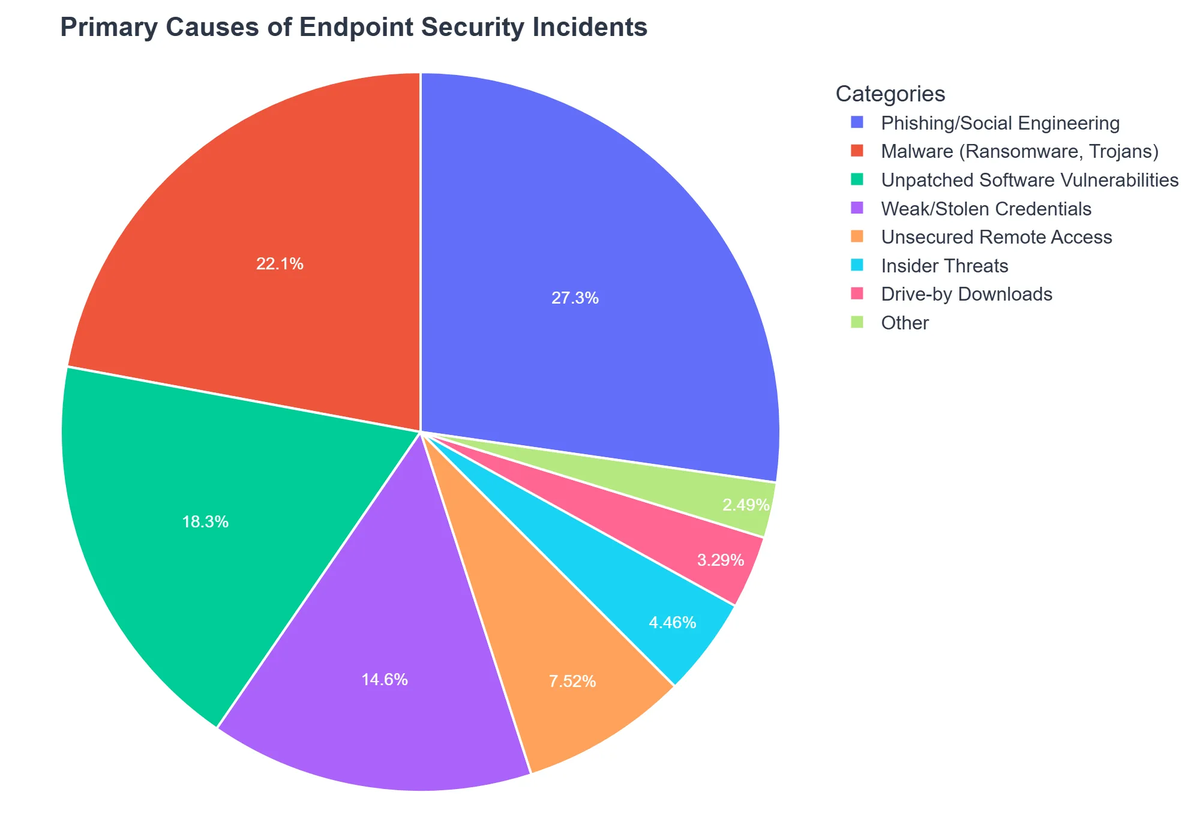
- Malware and Ransomware: Malicious software designed to damage, disable, or gain unauthorized access to computer systems. Ransomware, a particularly insidious form, encrypts data and demands payment for its release. Endpoints are often infected via email attachments, malicious downloads, or compromised websites.
- Phishing and Social Engineering: These attacks manipulate individuals into revealing sensitive information or executing malicious actions (like clicking a harmful link or downloading an infected file) on their endpoint devices.
- Zero-Day Exploits: Vulnerabilities in software or hardware that are unknown to the vendor or public, giving attackers a “zero day” to exploit them before a patch is available. Endpoints running unpatched software are highly susceptible.
- Advanced Persistent Threats (APTs): Long-term, targeted attacks that involve stealthy infiltration and persistent presence within a network, often leveraging compromised endpoints to move laterally and achieve their objectives.
- Insider Threats: Malicious or negligent actions by current or former employees, contractors, or business partners who have legitimate access to endpoints and sensitive data.
The rise of remote work and the expansion of the corporate network to home environments further complicates matters, making robust endpoint protection an absolute necessity. For a deeper dive into the broader strategies, consider reviewing resources on Cyber Threat Protection: Essential Strategies for Digital Security.
Key Components of a Robust Endpoint Protection Strategy
Modern endpoint protection goes far beyond traditional antivirus software. A comprehensive strategy integrates multiple layers of defense to provide a holistic security posture. Here are the critical components:
Endpoint Protection Platform (EPP)
EPP serves as the foundational layer of endpoint security. It’s designed to prevent various types of malware and cyber threats from executing on an endpoint. Key functionalities typically include:
- Antivirus/Anti-malware: Signature-based and heuristic detection to identify and quarantine known and suspicious threats.
- Personal Firewall: Monitors and controls incoming and outgoing network traffic on the endpoint.
- Device Control: Manages and restricts the use of peripheral devices (e.g., USB drives) to prevent data leakage or malware introduction.
- Application Control: Dictates which applications are allowed to run on an endpoint, preventing unauthorized software.
Endpoint Detection and Response (EDR)
While EPP focuses on prevention, EDR specializes in detection and response. It collects and analyzes security-related events from endpoints in real-time, providing visibility into activity that might evade traditional EPPs. EDR solutions enable security teams to:
Leading EDR solutions on the market include:
- CrowdStrike Falcon: Known for its cloud-native architecture, AI-powered threat detection, and robust EDR capabilities. It focuses on preventing breaches with real-time visibility and proactive threat hunting.
- SentinelOne Singularity: Offers a unified platform combining EPP, EDR, IoT security, and cloud workload protection. It leverages AI and machine learning for autonomous threat prevention, detection, and response across diverse endpoints.
- Microsoft Defender for Endpoint: Integrated into the Microsoft 365 ecosystem, it provides comprehensive endpoint security for Windows, macOS, Linux, Android, and iOS devices. It offers robust EDR, vulnerability management, and automated investigation and remediation capabilities, often leveraging Microsoft’s vast threat intelligence.
Extended Detection and Response (XDR)
Building on EDR, XDR extends visibility beyond just endpoints to include network, cloud, identity, and application data. It correlates alerts from multiple security layers to provide a more comprehensive view of an attack, enhancing detection and response capabilities across the entire IT environment.
Architek Designs Fortifies Defenses, Slashes Security Incidents by 85%
❓The Challenge
With a growing remote workforce and reliance on sensitive CAD files, Architek Designs faced increasing vulnerability to sophisticated cyber threats targeting individual workstations and mobile devices, risking critical project data.
💡The Solution
Following the core tenets of endpoint cyber security, Architek Designs deployed a robust endpoint protection solution across all company and BYOD devices, establishing a frontline defense to detect, prevent, and respond to threats at the device level.
🏆The Result
The firm saw an 85% reduction in endpoint-related security incidents and achieved an estimated $40,000 annual saving by preventing data breaches and minimizing downtime.
Data Loss Prevention (DLP)
DLP solutions monitor, identify, and protect sensitive data across endpoints, networks, and storage locations. They prevent unauthorized transfer of data, whether accidental or malicious, helping organizations comply with data protection regulations.
Vulnerability Management
This involves continuously identifying, assessing, and prioritizing vulnerabilities in endpoint operating systems and applications. It’s a proactive measure to reduce the attack surface before exploits can occur.
Patch Management
Ensuring that all software and operating systems on endpoints are regularly updated with the latest security patches is fundamental. Unpatched vulnerabilities are a common entry point for attackers.
Encryption
Encrypting data at rest (on disk) and in transit (over the network) on endpoint devices adds a critical layer of protection. Even if an endpoint is compromised, encrypted data remains unreadable without the proper keys.
Implementing and Managing Effective Endpoint Security
Deploying endpoint security solutions is only the first step. Effective management and continuous improvement are essential. Consider these best practices:
- Adopt a Layered Security Approach: Relying on a single security solution is insufficient. Combine EPP, EDR, DLP, and other controls to create multiple defensive layers.
- Regular Security Audits and Penetration Testing: Periodically assess your endpoint security posture through audits and ethical hacking exercises to identify weaknesses before attackers do.
- Employee Training and Awareness: Human error remains a significant vulnerability. Regular training on phishing awareness, strong password practices, and safe browsing habits empowers employees to be the first line of defense.
- Develop an Incident Response Plan: Define clear procedures for detecting, containing, eradicating, and recovering from security incidents involving endpoints. A well-rehearsed plan minimizes damage and downtime.
- Continuous Monitoring and Threat Hunting: Actively monitor endpoint activity for anomalies. Leverage EDR tools for proactive threat hunting, searching for signs of advanced attacks that may have slipped past automated defenses.
- Segmentation and Least Privilege: Implement network segmentation to isolate critical assets and limit lateral movement if an endpoint is compromised. Apply the principle of least privilege, ensuring users and applications only have the necessary access to perform their tasks.
The specific requirements for endpoint security can vary significantly by industry. For instance, the stringent regulations and sensitive data involved in healthcare necessitate specialized considerations, as highlighted in discussions around Healthcare Cyber Security: Protecting Patient Data.

Building a robust defense for your endpoints requires a strategic approach, integrating advanced technologies with proactive measures and continuous vigilance. For more insights on fortifying your overall network, you might find valuable information from resources like Fortinet, a global leader in cybersecurity solutions.
The Future of Endpoint Security: AI, Automation, and Zero Trust
The trajectory of endpoint security is heavily influenced by advancements in artificial intelligence (AI), machine learning (ML), and automation. These technologies are transforming how threats are detected and responded to:
- AI and Machine Learning: AI-powered endpoint solutions are becoming increasingly adept at identifying sophisticated, never-before-seen threats by analyzing behavioral patterns rather than relying solely on signatures. This allows for proactive detection of zero-day exploits and polymorphic malware.
- Automation: Automated response capabilities within EDR and XDR platforms are crucial for containing threats rapidly. This includes automatic isolation of compromised devices, termination of malicious processes, and rollbacks, significantly reducing the dwell time of attackers.
- Zero Trust Architecture: A core principle of future cybersecurity, Zero Trust mandates that no user, device, or application should be trusted by default, regardless of whether they are inside or outside the network perimeter. Every access request is authenticated and authorized. For endpoints, this means continuous verification of user identity, device posture, and application permissions before granting access to resources. This paradigm shift aligns perfectly with the dissolution of traditional network boundaries and is a key component of charting the Course of Tomorrow’s Technology.
As digital environments become more complex and distributed, the emphasis on intelligent, autonomous, and identity-driven endpoint security will only grow. The goal is to create self-defending, self-healing endpoints that can largely operate without human intervention in the face of common threats, freeing up security teams to focus on more complex, targeted attacks.
Recommended Video
Conclusion
In an era where every device is a potential entry point, robust endpoint protection is no longer a luxury but a fundamental requirement for any organization. It forms the bedrock of a resilient cybersecurity strategy, protecting sensitive data, intellectual property, and operational continuity.
By understanding the evolving threat landscape, implementing comprehensive solutions like EPP and EDR (with leaders such as CrowdStrike Falcon, SentinelOne Singularity, and Microsoft Defender for Endpoint), and adhering to best practices like employee training and incident response planning, businesses can significantly reduce their risk profile. The future of cybersecurity points towards intelligent, automated, and Zero Trust-driven endpoint defenses, ensuring that your network remains fortified against the relentless tide of cyber threats.
Frequently Asked Questions
What is endpoint cyber security?
Endpoint cyber security focuses on protecting individual devices like laptops, smartphones, and servers from cyber threats when they connect to a network, acting as the first line of defense.
Why is endpoint security important for businesses?
It’s crucial because endpoints are common entry points for attacks. Securing them prevents data breaches, malware infections, and unauthorized access to sensitive company information, safeguarding business continuity.
What are common endpoint security solutions?
Common solutions include antivirus software, Endpoint Detection and Response (EDR), firewalls, data encryption, and identity and access management (IAM) tools, often integrated into a unified platform.
How often should endpoint security be updated?
Endpoint security solutions should be updated regularly, ideally automatically and continuously, to ensure they can defend against the latest evolving threats, vulnerabilities, and zero-day exploits.