


Future Internet Technology: Exploring Web3 and Beyond
The internet as we know it is constantly evolving, transforming from a static collection of pages to an interactive, dynamic, and increasingly decentralized network. We stand at the precipice of a new era, one defined by unprecedented connectivity, data ownership, and immersive digital experiences. This deep dive explores the exciting landscape of future internet technology, focusing on the foundational shift of Web3 and the myriad of innovations emerging alongside it, shaping what many are calling the next phase of the internet of value.
💡 Key Takeaways
- Web3 emphasizes decentralization, user ownership, and enhanced privacy, moving away from centralized control.
- Blockchain technology is fundamental to Web3, enabling secure, transparent, and immutable transactions and data storage.
- The convergence of AI, IoT, and metaverse concepts will significantly shape the future iterations of the internet.
- Understanding Web3 is crucial for navigating the next phase of digital interaction and economic models.
“The true potential of the future internet isn’t just faster speeds or prettier interfaces; it’s about reshaping our relationship with data, empowering individual agency, and ensuring technology serves humanity with ethical foresight.”
— Kira Chen, Futurist & AI Ethics Advocate
In This Article
- → Future Internet Technology: Exploring Web3 and Beyond
- — 💡 Key Takeaways
- → Understanding Web3: The Decentralized Revolution
- → Key Pillars of Web3: Building the Future Internet
- — ⛓️ Blockchain Technology: The Foundation
- — 💰 Cryptocurrencies & Digital Assets
- — 🗳️ Decentralized Autonomous Organizations (DAOs)
- — 🌐 Interoperability: Connecting the Dots
- → Beyond Web3: Emerging Technologies Shaping Tomorrow’s Internet
- — 🧠 Artificial Intelligence (AI) & Machine Learning (ML)
- — 📡 Internet of Things (IoT) & Edge Computing
- — 🌌 Metaverse & Spatial Computing
- — ⚛️ Quantum Computing (Long-Term Potential)
- → Challenges and Opportunities in the Future Internet Landscape
- — 🚧 Navigating the Hurdles
- — 🌟 Unlocking New Possibilities
- → The Impact of Future Internet on Industries and Daily Life
- — 🏢 Transformation of Business Models
- — 🔒 Data Ownership and Digital Identity
- — 🎮 New Forms of Entertainment and Social Interaction
- — ⚕️ Revolutionizing Healthcare and Education
- → Navigating the Road Ahead: Embracing the Future Internet
- → Conclusion
Understanding Web3: The Decentralized Revolution
To truly grasp the future, we must first understand its foundations. The internet has progressed through distinct phases:
- ✅ Web1 (The Static Web): Primarily read-only, where users consumed information from static websites. Think of it as a vast digital library.
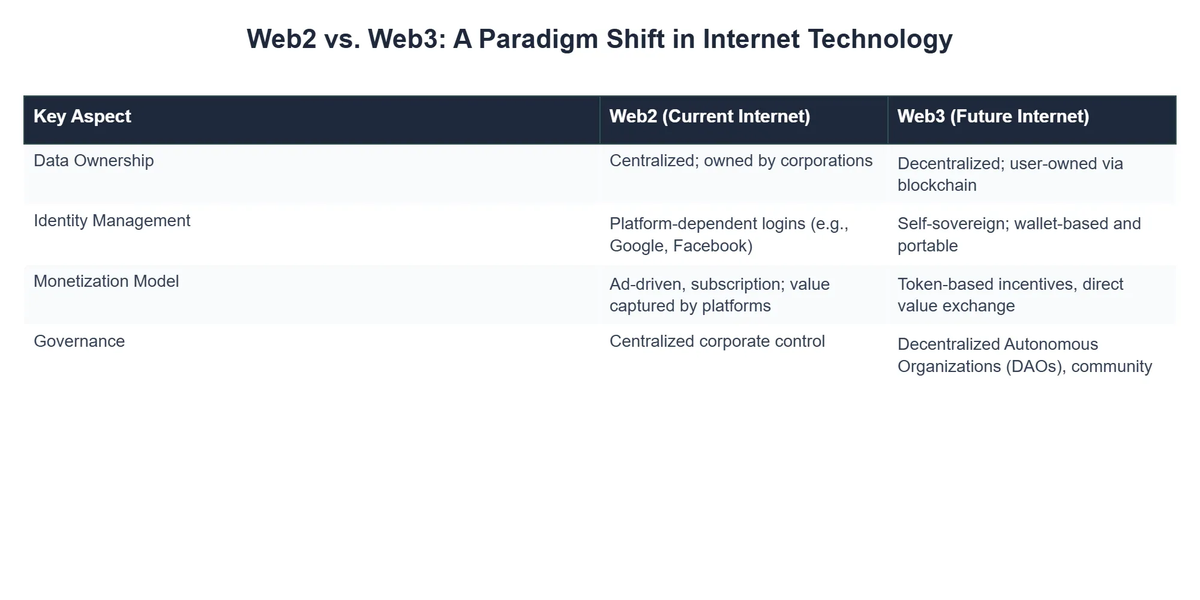
- ✅ Web2 (The Social Web): Characterized by interactivity and user-generated content, powered by centralized platforms like Facebook, Google, and Twitter. Users could create and share, but data and control remained with the platforms.
- ✅ Web3 (The Decentralized Web): The next evolution, aiming to create a more democratic, secure, and user-centric internet. It’s built on decentralized technologies, primarily blockchain, empowering users with greater control over their data and digital identities.
The core promise of Web3 is to shift power from large corporations back to individual users, fostering an environment where value and data can be exchanged peer-to-peer without intermediaries.
Key Pillars of Web3: Building the Future Internet
⛓️ Blockchain Technology: The Foundation
At the heart of Web3 lies blockchain technology, a decentralized, distributed ledger that records transactions across many computers. Its inherent immutability and transparency make it ideal for creating trustless systems. For a comprehensive understanding of this foundational technology, refer to our guide on Blockchain Technology: A Comprehensive Guide.
💰 Cryptocurrencies & Digital Assets
Cryptocurrencies like Ethereum (which powers many Web3 applications) and Bitcoin are integral to the Web3 economy, facilitating transactions and incentivizing network participation. Beyond currencies, Web3 introduces new forms of digital assets:
- ➡️ Non-Fungible Tokens (NFTs): Unique digital assets that represent ownership of an item, whether it’s art, music, or virtual land, on a blockchain.
- ➡️ Decentralized Finance (DeFi): An ecosystem of financial applications built on blockchain that aims to offer traditional financial services (lending, borrowing, trading) without intermediaries like banks.
🗳️ Decentralized Autonomous Organizations (DAOs)
DAOs are blockchain-governed organizations managed by their members, typically through the ownership of governance tokens. Decisions are made by proposals and voting, eliminating the need for central authority. This model fosters community-driven initiatives and shared ownership of projects.
🌐 Interoperability: Connecting the Dots
A crucial aspect of the future internet is the ability for different blockchain networks and applications to communicate seamlessly. Projects are actively working on solutions to enable cross-chain transactions and data exchange, paving the way for a truly interconnected digital ecosystem.
Beyond Web3: Emerging Technologies Shaping Tomorrow’s Internet
While Web3 forms a significant part of the future internet, other groundbreaking technologies are converging to create an even more expansive and immersive digital landscape. For a broader look at these advancements, consider our exploration of Future Innovations: Exploring Promising Technologies.
🧠 Artificial Intelligence (AI) & Machine Learning (ML)
AI will continue to enhance the internet experience through:
- 💡 Personalization: More tailored content and services.
- 💡 Automation: Streamlining tasks and processes.
- 💡 Advanced Search: More intuitive and context-aware information retrieval.
- 💡 AI-driven Content Creation: Generative AI tools transforming digital media.
📡 Internet of Things (IoT) & Edge Computing
The proliferation of interconnected devices (IoT) will merge the physical and digital worlds. Edge computing, processing data closer to its source, will reduce latency and enable real-time interactions, critical for smart cities, autonomous vehicles, and industrial automation.
🌌 Metaverse & Spatial Computing
The concept of the metaverse, an immersive, persistent digital world, promises a new frontier for social interaction, commerce, and entertainment. Spatial computing technologies, including Augmented Reality (AR) and Virtual Reality (VR), are key enablers, blurring the lines between our physical and digital realities. As explored by UC Berkeley Executive Education, these technologies, including Web3, AI, and IoT, are critical for emerging tech strategies. Source: Emerging Tech Strategies: Harnessing AI, IoT, Web3, and Beyond.
⚛️ Quantum Computing (Long-Term Potential)
While still in its nascent stages, quantum computing has the potential to revolutionize data processing and encryption, impacting internet security and capabilities in the distant future. It presents both incredible opportunities and potential challenges for existing cryptographic methods.
Challenges and Opportunities in the Future Internet Landscape
🚧 Navigating the Hurdles
The journey to a truly decentralized and advanced internet is not without its obstacles:
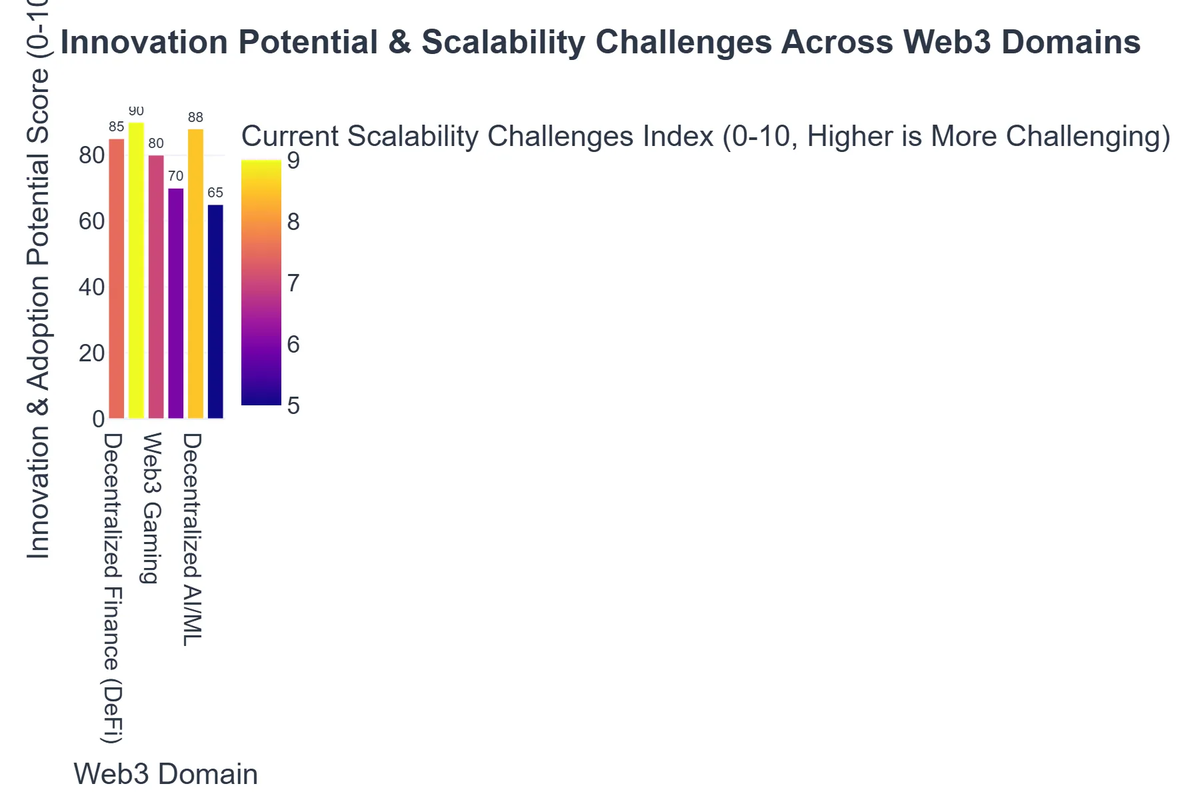
- ➡️ Scalability: Current blockchain networks often struggle with transaction throughput, limiting widespread adoption.
- ➡️ Security: While blockchain is inherently secure, vulnerabilities can arise from smart contract bugs, user error, or centralized points of failure within the broader ecosystem. Understanding a security perspective on the Web3 paradigm is crucial for its development. Source: A Security Perspective on the Web3 Paradigm | CSRC.
- ➡️ Regulation: Governments worldwide are grappling with how to regulate decentralized technologies, leading to uncertainty.
- ➡️ Environmental Impact: The energy consumption of some blockchain consensus mechanisms (e.g., Proof of Work) is a significant concern.
- ➡️ User Experience: Web3 applications often have a steep learning curve, hindering mass adoption.
🌟 Unlocking New Possibilities
Despite the challenges, the opportunities are immense:
- ✅ True Data Ownership: Users gain control over their personal data, moving away from centralized data silos.
- ✅ New Economic Models: Creator economies, play-to-earn games, and fractional ownership models redefine value creation and distribution.
- ✅ Enhanced Privacy & Security: Cryptographic security and pseudonymous identities can offer greater user protection.
- ✅ Global Inclusivity: Decentralized systems can offer financial services and digital participation to underserved populations worldwide.
The Impact of Future Internet on Industries and Daily Life
The evolution of internet technology is not just about new applications; it’s about a fundamental reshaping of society. Our article on Technological Revolutions: Impact on Society’s Future delves deeper into these broad societal shifts.
🏢 Transformation of Business Models
From finance (DeFi) to supply chains (blockchain traceability) and gaming (NFTs, play-to-earn), nearly every industry stands to be disrupted. Businesses will increasingly need to adapt to decentralized models, engaging with communities and empowering users.
🔒 Data Ownership and Digital Identity
Users will own their digital identities and data, porting it across various platforms without permission from centralized entities. This shift could lead to more secure, verifiable, and user-controlled online presences.
🎮 New Forms of Entertainment and Social Interaction
The metaverse, combined with NFTs and decentralized social media, promises highly immersive and ownership-driven entertainment experiences. Social interactions could move beyond static profiles to persistent virtual worlds and shared digital spaces.
⚕️ Revolutionizing Healthcare and Education
Secure, decentralized patient records, AI-driven diagnostics, and immersive VR/AR training environments could transform healthcare. Similarly, education could see new models of credentialing, personalized learning paths, and global access through decentralized platforms.
Navigating the Road Ahead: Embracing the Future Internet
As we chart the course of tomorrow’s technology, understanding and adapting to these changes will be paramount. This journey into the future of the internet is a core component of Future Perfect?: Charting the Course of Tomorrow’s Technology, our comprehensive exploration of what’s next.
- ➡️ Education and Adoption: Simplifying Web3 concepts and improving user experience are critical for mass adoption. Initiatives to educate the public on digital literacy and self-custody of assets will be vital.
- ➡️ Developer Ecosystem: Continued innovation relies on a robust and growing community of developers building new applications and infrastructure on these emerging technologies.
- ➡️ Policy and Governance: Proactive and thoughtful policy-making is essential to foster innovation while protecting users and ensuring a fair digital environment. Collaboration between technologists, policymakers, and communities will define the internet’s future trajectory.
Recommended Video
Frequently Asked Questions
What is the primary difference between Web2 and Web3?
Web2 is characterized by centralized platforms and user-generated content, while Web3 aims for decentralization, user ownership of data, and blockchain-powered applications.
How does blockchain technology relate to Web3?
Blockchain is the foundational technology for Web3, providing the decentralized ledger for secure transactions, smart contracts, and verifiable ownership of digital assets.
Will the metaverse be part of the future internet?
Yes, the metaverse is envisioned as a persistent, interactive virtual world that integrates closely with Web3 principles, offering immersive experiences and new forms of digital interaction.
What ethical challenges does Web3 face?
Key ethical challenges include ensuring equitable access, addressing potential for misuse in decentralized autonomous organizations (DAOs), and navigating privacy in a transparent blockchain environment.