

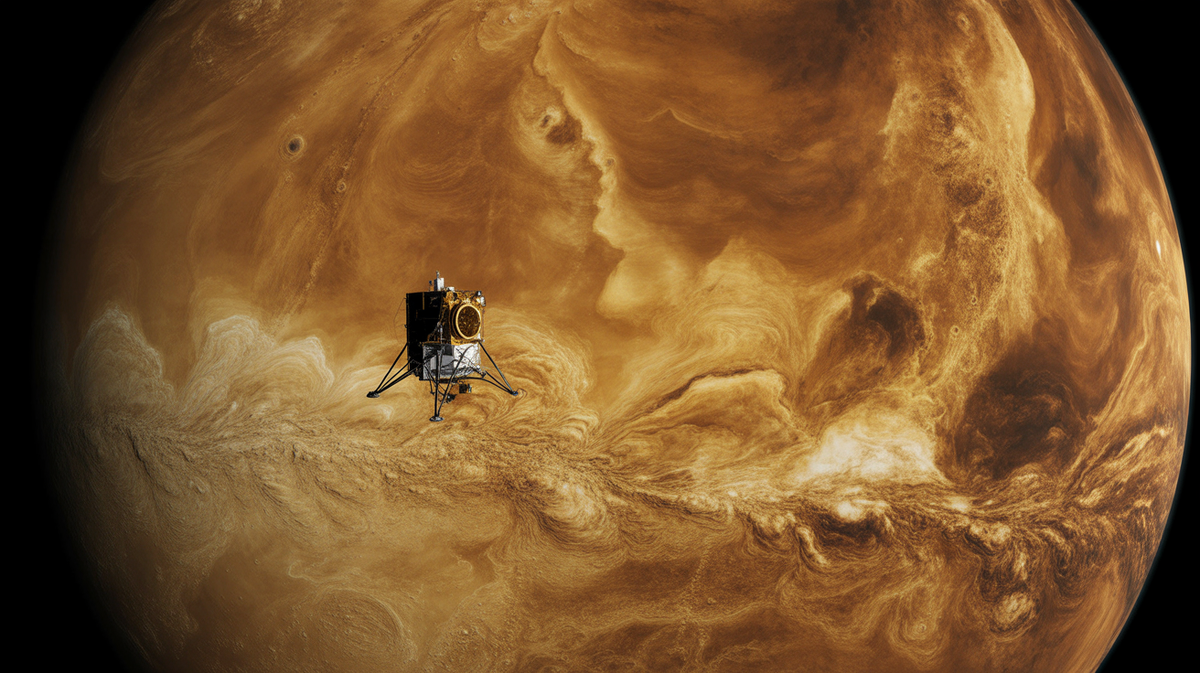
Why Venus Matters: Unveiling Earth’s Scorching Sister
Often dubbed Earth’s “twin,” Venus holds profound significance in our understanding of planetary evolution. Despite similar size and mass, its runaway greenhouse effect has transformed it into a hellish world, with surface temperatures hot enough to melt lead and an atmosphere crushing more than 90 times Earth’s pressure. Understanding Venus isn’t just about exploring another planet; it’s about gaining critical insights into what could go wrong with an Earth-like world, providing a crucial comparative study for our own planet’s future and the habitability of exoplanets.
💡 Key Takeaways
- NASA’s upcoming DAVINCI+ and VERITAS missions aim to unravel Venus’s atmospheric and geological secrets.
- Venus, despite its similarities in size to Earth, possesses an extreme greenhouse effect making it uninhabitable.
- Understanding Venus’s past and present conditions can provide crucial insights into Earth’s climate future.
- Early Soviet and American probes paved the way for current sophisticated Venus exploration efforts.
“Venus is a profound paradox: so similar in size to Earth, yet a stark warning of runaway climate. NASA’s renewed focus on Venus will unlock secrets not just about our planetary neighbor, but potentially about Earth’s own destiny.”
— Astrid Bellweather, Astrophysicist & Science Communicator
For decades, NASA Venus missions have been at the forefront of this challenging exploration, battling extreme conditions to peel back the planet’s thick, sulfuric acid clouds. These expeditions seek to answer fundamental questions: How did Venus become so drastically different from Earth? What secrets does its volcanic surface hold? And could there ever have been life on this enigmatic world?
In This Article
- → Why Venus Matters: Unveiling Earth’s Scorching Sister
- — 💡 Key Takeaways
- → Early Expeditions: Pioneers of Venus Exploration
- — ➡️ The Venera Program: Soviet Triumphs
- — 💡 NASA’s Pioneer Venus Mission: A Dual Approach
- → Unveiling the Veil: Radar Mapping and Atmospheric Probing
- — 🛰️ Magellan: The Radar Visionary
- — 🌍 Venus Express and Akatsuki: Global Views
- → Future Frontiers: UpcomingNASA VenusMissions
- — 🔬 DAVINCI+: Deep Atmosphere Venus Investigation of Noble Gases, Chemistry, and Imaging
- — 🔭 VERITAS: Venus Emissivity, Radio Science, InSAR, Topography, and Spectroscopy
- → What We’ve Learned: Lessons from Our Scorching Sister
Early Expeditions: Pioneers of Venus Exploration
The journey to unveil Venus began long before sophisticated orbiters and landers. Early attempts, primarily by the Soviet Union and NASA, laid the groundwork, pushing the boundaries of space engineering in incredibly harsh environments. These pioneering missions provided our first glimpses beyond the thick cloud deck.
➡️ The Venera Program: Soviet Triumphs
- First Interplanetary Landings: Between 1961 and 1984, the Soviet Union’s Venera program achieved remarkable firsts, including the first atmospheric entry probe (Venera 4) and the first successful soft landing on another planet (Venera 7) in 1970.
- Surface Images: Venera 9 and 10 sent back the first black-and-white images of the Venusian surface, revealing a rocky, desolate landscape.
- Atmospheric Data: Numerous Venera probes provided invaluable data on Venus’s extremely dense and hot atmosphere, including its composition and pressure.
💡 NASA’s Pioneer Venus Mission: A Dual Approach
In the late 1970s, NASA launched its own ambitious two-part mission to Venus, known as Pioneer Venus. This innovative approach allowed for simultaneous studies of different aspects of the planet.
- Pioneer Venus Orbiter (1978): This spacecraft spent over a decade mapping the planet’s surface using radar and studying its upper atmosphere, ionosphere, and interactions with the solar wind.
- Pioneer Venus Multiprobe (1978): This mission deployed a large probe and three smaller probes into Venus’s atmosphere at different locations. These probes measured temperature, pressure, and chemical composition as they descended, providing a crucial vertical profile of the atmosphere.
- Key Findings: Pioneer Venus confirmed the extreme surface conditions and provided detailed atmospheric profiles, identifying distinct cloud layers and strong zonal winds.
Unveiling the Veil: Radar Mapping and Atmospheric Probing
The dense, opaque clouds of Venus make optical observation of its surface impossible from orbit. To overcome this, space agencies turned to radar technology, allowing scientists to “see” through the clouds and map the planet’s geological features.
🛰️ Magellan: The Radar Visionary
The NASA Magellan mission (1989-1994) revolutionized our understanding of the Venus planet. Equipped with a sophisticated synthetic aperture radar (SAR), Magellan mapped over 98% of Venus’s surface at high resolution, far surpassing any previous attempts.
- Detailed Topography: Magellan revealed a world dominated by volcanic features, including vast lava plains, shield volcanoes, and unique pancake domes. It also identified evidence of extensive tectonic activity, though different from Earth’s plate tectonics.
- Impact Craters: The distribution of impact craters suggested that Venus’s surface is relatively young, possibly having undergone a global resurfacing event around 300 to 800 million years ago.
- Gravitational Field: Data from Magellan helped scientists infer details about Venus’s interior structure and the thickness of its crust.
🌍 Venus Express and Akatsuki: Global Views
While not purely NASA Venus missions, the European Space Agency’s (ESA) Venus Express (2006-2014) and Japan’s Akatsuki (2010-present) continued the legacy of atmospheric and climate studies, complementing NASA’s efforts.
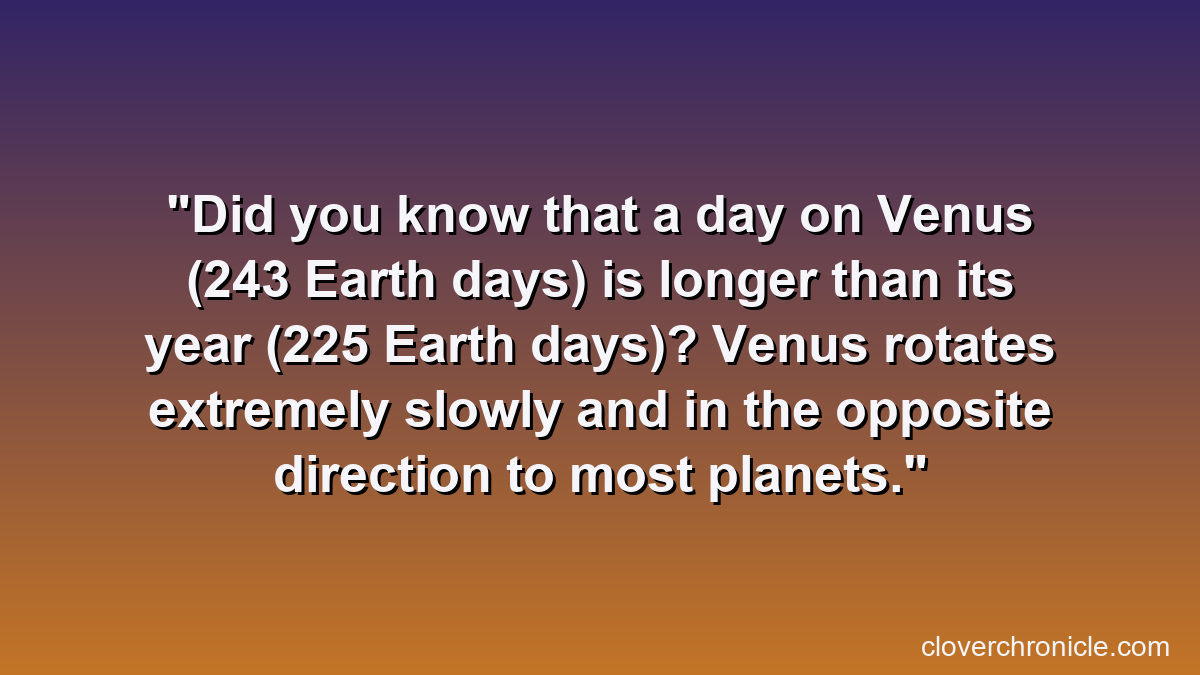
- Atmospheric Dynamics: Venus Express provided detailed insights into the dynamics of Venus’s super-rotating atmosphere, including its powerful winds and complex cloud patterns.
- Atmospheric Composition: Akatsuki focuses on observing the atmospheric circulation and cloud morphology at multiple wavelengths, revealing the planet’s atmospheric super-rotation and weather phenomena.
For more on how different space agencies contribute to our understanding of the cosmos, explore our comprehensive resource on Cosmic Queries: Probing the Mysteries of the Universe.
Future Frontiers: Upcoming NASA Venus Missions
The enigmatic nature of Venus continues to beckon, and NASA is preparing for a new generation of missions designed to delve even deeper into its mysteries. These upcoming expeditions promise to bring unprecedented detail to our understanding of this extreme world.
🔬 DAVINCI+: Deep Atmosphere Venus Investigation of Noble Gases, Chemistry, and Imaging
DAVINCI+ (Deep Atmosphere Venus Investigation of Noble gases, Chemistry, and Imaging) is set to be the first U.S.-led mission to send a probe into Venus’s atmosphere in over 40 years. Its primary goal is to study the atmospheric composition and trace its evolution. The probe will descend through the atmosphere, taking measurements and high-resolution images of the surface features (tesserae) that are thought to be ancient highlands, potentially hinting at past oceans or active volcanism. Learn more about DAVINCI+ and its objectives directly from NASA.
- Atmospheric Origins: A key objective is to determine whether Venus ever had oceans and if it was habitable in its early history, by measuring noble gases and other trace gases.
- Geological Insight: High-resolution images during descent will reveal the composition and topography of the tesserae, which are crucial for understanding Venus’s geological past.
🔭 VERITAS: Venus Emissivity, Radio Science, InSAR, Topography, and Spectroscopy
VERITAS is an orbiter mission that will use a new generation of radar and spectral instruments to map Venus’s surface and gravitational field with unprecedented precision. It aims to understand the planet’s geological history, volcanic activity, and the processes that shaped its surface. The insights gained here could also inform our understanding of Mars Colonization: Challenges of Settling the Red Planet by providing comparative planetary geology.
- Surface Topography: VERITAS will create a 3D global map of Venus’s surface, helping to identify active volcanoes and tectonic features.
- Compositional Mapping: Using spectroscopy, it will search for signs of past or present water activity and identify different rock types.
- Internal Structure: Precise gravity measurements will provide clues about Venus’s interior and how it generates heat.
These missions are part of NASA’s broader commitment to understanding our solar system, much like the precision planning involved in NASA DART Mission: Defending Earth from Asteroids.
Recommended Video
What We’ve Learned: Lessons from Our Scorching Sister
Decades of NASA Venus expeditions have transformed our view of this enigmatic world from a featureless cloud ball to a dynamically active, albeit hostile, planet. The wealth of data gathered has provided critical lessons:
- Runaway Greenhouse Effect: Venus serves as a stark warning of the potential consequences of a runaway greenhouse effect, where increasing temperatures lead to more atmospheric CO2, trapping even more heat.
- Geological Activity: While lacking Earth’s plate tectonics, Venus exhibits extensive volcanism and surface deformation, suggesting active geological processes are still at play.
- Atmospheric Complexity: The planet’s super-rotating atmosphere and sulfuric acid clouds present a complex and still not fully understood meteorological system, vastly different from Earth’s.
- Planetary Divergence: Despite their similar starting points, Venus and Earth followed dramatically different evolutionary paths. Studying this divergence helps us refine models of planetary formation and evolution, especially for the numerous exoplanets being discovered. As a primary target for NASA’s solar system exploration, Venus offers a unique natural laboratory for these studies.
The journey to understand Venus is far from over. With new technologies and ambitious missions on the horizon, we stand on the precipice of even greater discoveries about Earth’s scorching sister and the profound mysteries she holds.
Why is Venus so hot?
Venus’s extreme heat is due to a runaway greenhouse effect caused by its dense carbon dioxide atmosphere, which traps solar radiation.
What are NASA’s upcoming Venus missions?
NASA’s next missions to Venus are DAVINCI+ (Deep Atmosphere Venus Investigation of Noble gases, Chemistry, and Imaging) and VERITAS (Venus Emissivity, Radio Science, InSAR, Topography, and Spectroscopy).
Could life exist on Venus?
While the surface of Venus is far too hot for life as we know it, some scientists speculate about the possibility of microbial life existing in the cooler, upper layers of its atmosphere.
How is Venus similar to Earth?
Venus is often called Earth’s ‘sister planet’ because of their similar size, mass, and bulk composition, though their atmospheric conditions are vastly different.