


Humanity has always gazed at the stars, driven by an insatiable curiosity about what lies beyond our terrestrial confines. This innate drive has propelled us to design, build, and launch incredible machines that have transformed our understanding of the cosmos. These pioneering vessels, the historic spacecraft, represent humanity’s boldest ventures into the unknown, each mission pushing the boundaries of technology and knowledge.
💡 Key Takeaways
- Early missions like Sputnik and Vostok laid foundational steps for spaceflight and orbital mechanics.
- The Apollo program marked humanity’s pinnacle of lunar exploration, demonstrating unprecedented engineering and courage.
- Unmanned probes such as Voyager, Pioneer, and Viking continue to expand our knowledge of the outer solar system and beyond.
- These historic spacecraft collectively demonstrate humanity’s persistent quest for scientific discovery, technological advancement, and understanding our place in the universe.
“These spacecraft aren’t just feats of engineering; they are monuments to humanity’s boundless curiosity, each launch a ripple that expands the very fabric of our understanding of the universe, pushing the boundaries of the known into the realm of the possible.”
— Astrid Bellweather, Astrophysicist & Science Fiction Consultant
From the first artificial satellite to complex interstellar probes, these trailblazers have not only opened new frontiers but have also redefined what is possible. Their journeys have laid the groundwork for all subsequent endeavors in space, shaping the very course of space exploration history. Join us as we delve into the remarkable stories of the machines that dared to reach for the stars, forever altering our perspective on the universe. For a deeper understanding of our cosmic journey, explore Cosmic Queries: Probing the Mysteries of the Universe.
In This Article
- — 💡 Key Takeaways
- → The Dawn of the Space Age: Sputnik and Vostok
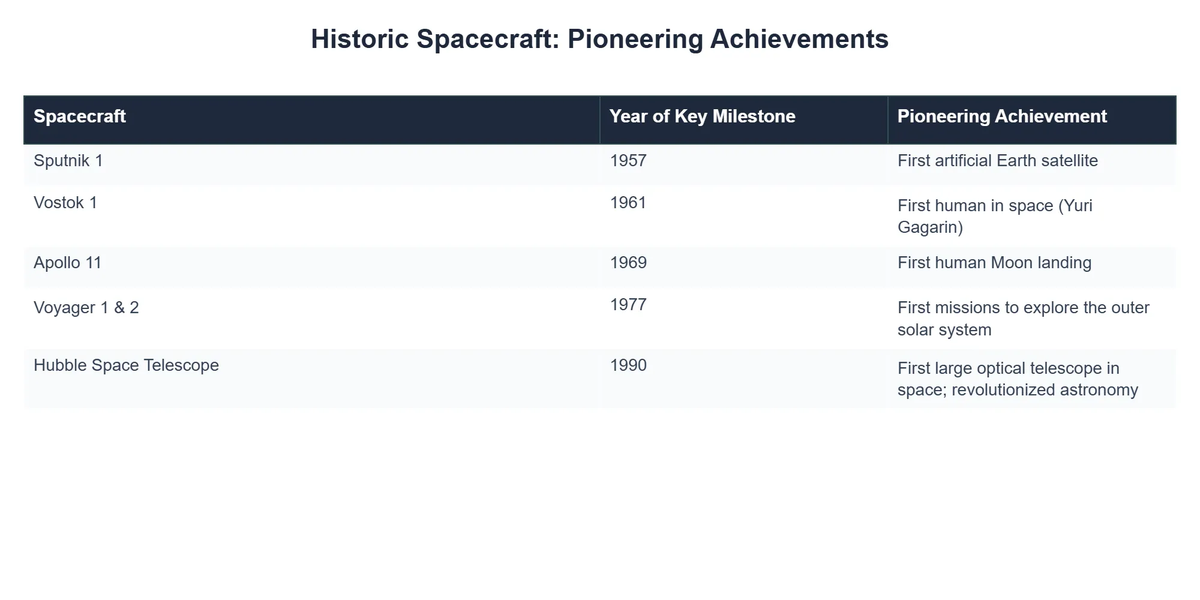
- — 🚀 Sputnik 1: Humanity’s First Orbit
- — 🧑🚀 Vostok Program: Sending Humans to Space
- → The Race to the Moon: Project Apollo
- — 🌕 Apollo 11: A Giant Leap for Mankind
- — 🛠️ Apollo Missions’ Lasting Legacy
- → Unveiling the Cosmos: The Hubble Space Telescope
- — 🔭 A Window to the Universe
- — ✨ Hubble’s Transformative Discoveries
- → Robotic Explorers: Voyagers, Mars Rovers, and Beyond
- — 🪐 The Grand Tour: Voyager 1 and 2
- — 🚶♂️ Red Planet Pioneers: Mars Rovers
- — ➡️ Broader Impact of Uncrewed Missions
- → The Future Forged by the Past: Orion and Beyond
- — 🌟 Building on Historic Foundations
- — 🌌 Looking Towards Deep Space
- → Conclusion: The Enduring Legacy of Space Exploration
The Dawn of the Space Age: Sputnik and Vostok
The mid-20th century marked the beginning of a new era – the Space Age. Fueled by technological advancements and geopolitical rivalry, the first satellites and human-crewed spacecraft shattered previous limitations, proving that leaving Earth’s embrace was no longer a dream but a tangible reality.
🚀 Sputnik 1: Humanity’s First Orbit
- ✅ Launch Date: October 4, 1957.
- ➡️ Origin: Soviet Union.
- 💡 Significance: Sputnik 1 was the first artificial satellite to orbit Earth. Its simple “beep-beep-beep” signal, audible to amateur radio operators worldwide, dramatically demonstrated the Soviet Union’s capabilities and ignited the “Space Race.” This seemingly small sphere ushered in an unprecedented era of scientific and technological competition.
🧑🚀 Vostok Program: Sending Humans to Space
- ✅ Yuri Gagarin (Vostok 1): On April 12, 1961, Yuri Gagarin became the first human in space, completing a single orbit of Earth aboard Vostok 1. This monumental achievement cemented the Soviet Union’s early lead in the Space Race and captivated the world.
- ➡️ Valentina Tereshkova (Vostok 6): On June 16, 1963, Valentina Tereshkova made history as the first woman in space, also part of the Vostok program. Her flight further underscored the capabilities of Soviet spacecraft technology.
- 💡 Impact: The Vostok missions proved human survivability in space, paving the way for longer missions and complex rendezvous operations. For more on the evolution of multi-crew missions, explore the story of the Voskhod Spacecraft: Pioneering Multi-Crew Space Missions.
The Race to the Moon: Project Apollo
No endeavor in space exploration has captured the human imagination quite like the Apollo program. Driven by President John F. Kennedy’s audacious goal to land a man on the Moon and return him safely to Earth before the end of the 1960s, Project Apollo pushed the boundaries of engineering, teamwork, and human courage.
🌕 Apollo 11: A Giant Leap for Mankind
- ✅ Date: July 20, 1969.
- ➡️ Crew: Neil Armstrong, Buzz Aldrin, Michael Collins.
- 💡 Achievement: Armstrong and Aldrin became the first humans to walk on the lunar surface, a monumental feat watched by an estimated 600 million people worldwide. The “one small step for man, one giant leap for mankind” resonated globally, symbolizing humanity’s boundless ambition.
🛠️ Apollo Missions’ Lasting Legacy
The Apollo program, beyond its iconic moon landings, delivered immense scientific returns and technological advancements:
- ✅ Scientific Data: Astronauts collected hundreds of pounds of lunar samples, providing invaluable insights into the Moon’s formation, geology, and history.
- ➡️ Technological Innovations: Thousands of new technologies developed for Apollo found applications in everyday life, from computing to medical devices.
- 💡 Inspiration: Apollo inspired a generation of scientists, engineers, and dreamers, firmly establishing the United States as a leader in space exploration. Read more about the broader context of this era in The History of the Space Race by National Geographic.
Unveiling the Cosmos: The Hubble Space Telescope
While human missions grabbed headlines, uncrewed spacecraft quietly revolutionized our ability to observe the universe. Among them, the Hubble Space Telescope stands as a testament to the power of robotic exploration to unlock cosmic secrets.
🔭 A Window to the Universe
- ✅ Launch Date: April 24, 1990.
- ➡️ Purpose: To provide clear, unhindered views of the universe, free from the distortions of Earth’s atmosphere.
- 💡 Initial Challenges & Repairs: Despite an initial flaw in its primary mirror, a daring Shuttle servicing mission in 1993 corrected its vision, transforming Hubble into the most prolific space observatory in history. Learn more about its journey in NASA Hubble Telescope: A Cosmic Legacy.
✨ Hubble’s Transformative Discoveries
Hubble has delivered breathtaking images and profound scientific breakthroughs, fundamentally altering our understanding of the universe:
- ✅ Age of the Universe: Precisely refined the age of the universe to approximately 13.8 billion years.
- ➡️ Exoplanets: Provided critical data that helped confirm the existence and properties of exoplanets.
- 💡 Dark Energy & Black Holes: Contributed to the discovery of dark energy, the mysterious force accelerating the universe’s expansion, and provided unprecedented views of supermassive black holes at the centers of galaxies. Dive deeper into this aspect with Hubble Space Telescope and Black Holes: Unveiling Cosmic Secrets.
Robotic Explorers: Voyagers, Mars Rovers, and Beyond
Beyond the iconic missions of human spaceflight, a fleet of robotic explorers has silently ventured further, longer, and into more extreme environments than any human could endure, collecting invaluable data about our solar system and beyond.
🪐 The Grand Tour: Voyager 1 and 2
- ✅ Launch Dates: Voyager 2 (August 20, 1977), Voyager 1 (September 5, 1977).
- ➡️ Mission: Took advantage of a rare planetary alignment to conduct a “Grand Tour” of the outer solar system, providing the first close-up images and data of Jupiter, Saturn, Uranus, and Neptune and their moons.
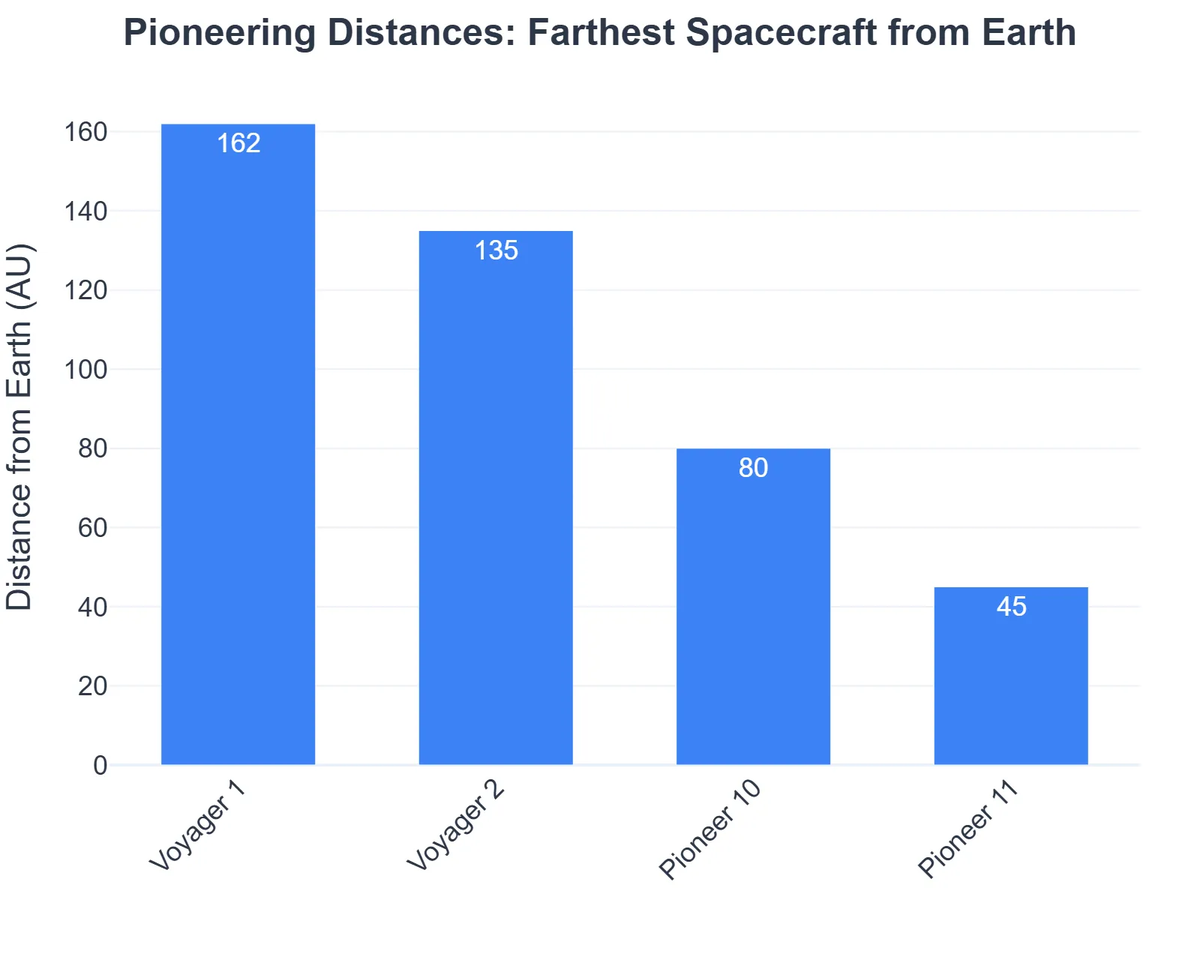
- 💡 Interstellar Journey: Both Voyagers are now in interstellar space, continuing to transmit data, making them the most distant human-made objects ever.
🚶♂️ Red Planet Pioneers: Mars Rovers
- ✅ Spirit & Opportunity: Launched in 2003, these rovers explored Martian geology and found definitive evidence of past water activity. Opportunity operated for an astonishing 15 years.
- ➡️ Curiosity & Perseverance: Launched in 2011 and 2020 respectively, these more advanced rovers are exploring Martian habitability, seeking signs of ancient microbial life, and collecting samples for future return to Earth.
- 💡 Impact: Mars rovers have transformed our understanding of the Red Planet, making future human missions a more tangible prospect.
➡️ Broader Impact of Uncrewed Missions
From deep-space probes like New Horizons (Pluto flyby) and Cassini (Saturn orbiter) to the ongoing Mars missions, uncrewed historic spacecraft have:
Historic Spacecraft: The Pioneers of Space Exploration – Pros & Cons
Pros
- ✔Laid the foundational groundwork for all subsequent space missions.
- ✔Provided unprecedented scientific data and discoveries about space.
- ✔Inspired global interest in science, technology, and engineering.
- ✔Demonstrated significant human ingenuity and technological advancement.
Cons
- ✖Involved extremely high development and operational costs.
- ✖Limited technological capabilities compared to modern spacecraft.
- ✖High risk of mission failure due to unproven technologies.
- ✖Contributed to the growing problem of space debris.
- ✅ Expanded Knowledge: Provided the vast majority of our current data about other planets, moons, asteroids, and comets.
- ➡️ Paved the Way: Tested technologies and gathered critical information necessary for future human expeditions.
- 💡 Cost-Effectiveness: Allowed for prolonged missions in harsh environments without risk to human life. For a comprehensive overview, consider this Brief History of Space Exploration from The Aerospace Corporation. You can also explore a broader list of iconic launches in Spacecraft Missions: A Comprehensive List of Iconic Launches.
The Future Forged by the Past: Orion and Beyond
The lessons learned and technologies developed from these pioneering spacecraft are not just relics of the past; they are the bedrock upon which the next generation of space exploration is built. Every new mission stands on the shoulders of these giants.
🌟 Building on Historic Foundations
- ✅ Design Principles: Modern spacecraft benefit from decades of lessons in propulsion, life support, materials science, and mission operations refined by Apollo, Shuttle, and robotic probe programs.
- ➡️ Data & Experience: The wealth of data from past missions, from lunar soil properties to radiation levels in deep space, directly informs the design and safety protocols for future human endeavors.
- 💡 Continuity: Programs like NASA’s Artemis, aiming for a sustained human presence on the Moon and eventual journey to Mars, utilize spacecraft like the Orion Spacecraft: Deep Space Human Exploration, which is a direct descendant of Apollo’s crew capsules in its purpose and capabilities.
🌌 Looking Towards Deep Space
The vision for future space exploration history is ambitious, driven by the legacy of our pioneers:
- ✅ Artemis Program: Aims to return humans to the Moon, including the first woman and person of color, establish a lunar base, and prepare for Mars missions.
- ➡️ Gateway: A planned lunar orbiting outpost that will serve as a staging point for lunar and deep-space missions.
- 💡 Next-Generation Telescopes: Instruments like the upcoming Roman Space Telescope (WFIRST): A New View of the Cosmos will continue Hubble’s legacy, exploring dark energy, exoplanets, and more, pushing the frontiers of observational astronomy. For more on the future of our cosmic journey, read about NASA Missions: The Future of Space Exploration.
Recommended Video
Conclusion: The Enduring Legacy of Space Exploration
The journeys of these historic spacecraft are more than just a chronological list of technological triumphs; they are a testament to humanity’s unyielding spirit of discovery. From the humble beeps of Sputnik to the breathtaking images from the Hubble Space Telescope and the distant whispers from the Voyager probes, each mission has etched an indelible mark on our collective consciousness.
These pioneers of space exploration have not only expanded our scientific knowledge but have also provided a unique perspective on our place in the universe. They remind us that the sky is not the limit, but merely the beginning. As we continue to gaze skyward, inspired by the bold ventures of the past, the legacy of these magnificent machines will continue to guide our path to the stars, fueling the next chapter in the extraordinary saga of space exploration.
Frequently Asked Questions
What was the first spacecraft to orbit Earth?
Sputnik 1, launched by the Soviet Union on October 4, 1957, was the first artificial satellite to orbit Earth, marking the dawn of the Space Age.
Which spacecraft visited all four gas giants?
Voyager 2 is the only spacecraft to have visited all four outer gas giant planets: Jupiter, Saturn, Uranus, and Neptune, providing unprecedented close-up data and images.
What was the primary goal of the Apollo program?
The primary goal of the Apollo program was to land humans on the Moon and return them safely to Earth, successfully achieved with Apollo 11 in July 1969.
How far have the Voyager spacecraft traveled?
Both Voyager 1 and Voyager 2 have traveled billions of miles and have entered interstellar space, the region between star systems, making them the farthest human-made objects from Earth.