


M60-UCD1: Unraveling the Mysteries of the Universe’s Densest Galaxy
In the vast expanse of the cosmos, where galaxies stretch across billions of light-years, some objects defy conventional understanding. Among them is M60-UCD1, an astronomical enigma that challenges our very notions of what a galaxy can be. This ultra-compact dwarf galaxy, located roughly 54 million light-years away within the Virgo Cluster, stands out not for its sprawling size, but for its astounding density—making it one of the most tightly packed collections of stars known to exist. Its peculiar characteristics offer an unparalleled window into extreme galactic environments and the co-evolution of galaxies and their central supermassive black holes.
💡 Key Takeaways
- M60-UCD1 is the densest known galaxy, challenging existing galactic formation theories with its extreme compactness.
- Its unique properties suggest it might be the stripped-down core of a much larger galaxy, rather than a typical dwarf galaxy.
- The galaxy harbors a supermassive black hole disproportionately large for its size, hinting at complex evolutionary paths.
- Studying M60-UCD1 offers crucial insights into galaxy evolution, dark matter distribution, and the role of black holes in the universe.
“M60-UCD1 is more than just a cosmic anomaly; it’s a living laboratory. Its extreme density not only pushes the boundaries of astrophysical understanding but also sparks the imagination, hinting at a universe far stranger and more wonderful than we can currently comprehend—a perfect playground for both science and speculative fiction.”
— Astrid Bellweather, Astrophysicist & Science Fiction Consultant
Join us as we embark on a cosmic journey to unravel the profound mysteries surrounding M60-UCD1, exploring its discovery, unique properties, and the groundbreaking insights it provides into the universe’s most fundamental processes.
In This Article
- → M60-UCD1: Unraveling the Mysteries of the Universe’s Densest Galaxy
- — 💡 Key Takeaways
- → What is M60-UCD1? Defining an Ultra-Compact Dwarf Galaxy
- — 🌌 A Galactic Anomaly
- — 📏 Size vs. Density: A Cosmic Paradox
- → The Discovery and Initial Observations
- — 🔭 The Role of Hubble and Chandra
- — 📍 Locating M60-UCD1 in the Virgo Cluster
- → The Supermassive Black Hole at Its Heart
- — ⚖️ Unprecedented Black Hole Mass Fraction
- — 🤯 Implications for Black Hole Growth
- → Theories on M60-UCD1’s Formation and Evolution
- — 🌠 Stripped Spiral Galaxy Remnant Theory
- — 💡 Primordial Origin Hypothesis
- → Why M60-UCD1 Matters: Unraveling Cosmic Mysteries
- — ➡️ Insights into Galaxy Formation
- — 🔭 Probing Black Hole-Galaxy Co-evolution
- — 🌟 A Window to the Early Universe
- → The Future of M60-UCD1 Research
- — 🚀 Next-Generation Telescopes
- — 🔬 Ongoing Investigations
- → Conclusion: M60-UCD1 – A Cosmic Gem for Discovery
What is M60-UCD1? Defining an Ultra-Compact Dwarf Galaxy
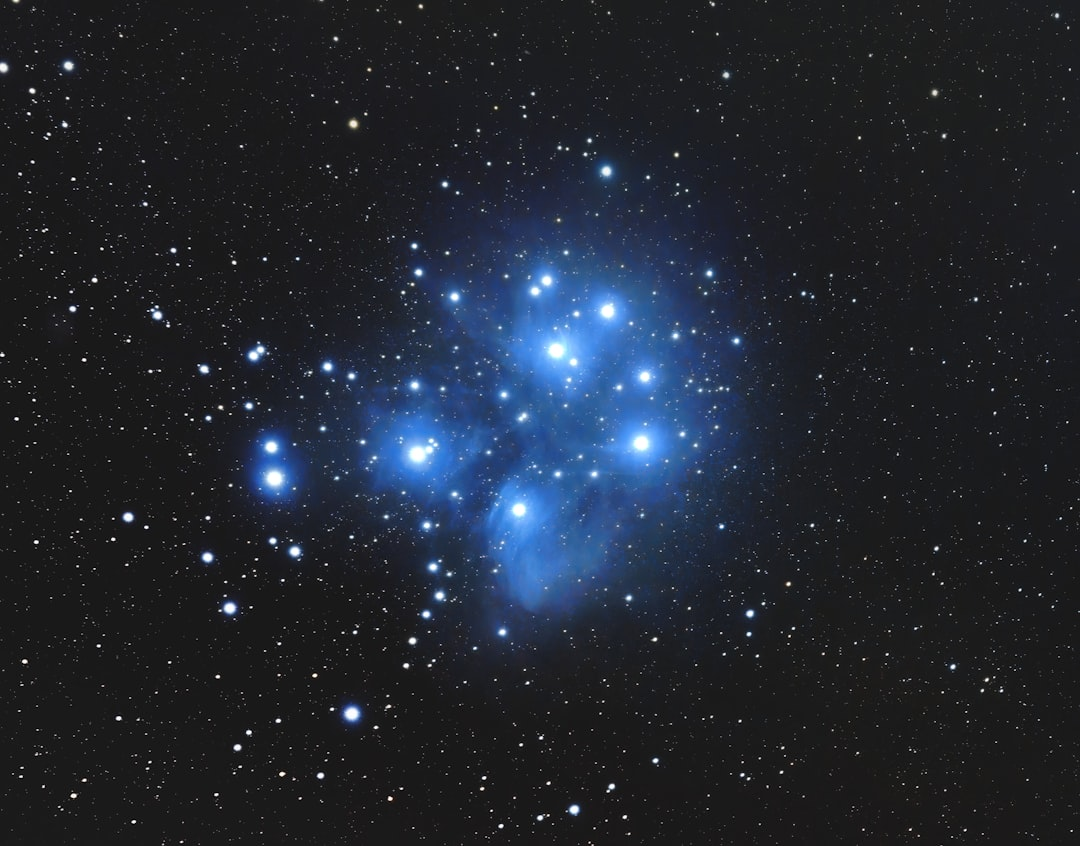
M60-UCD1 isn’t just any galaxy; it’s a prime example of an ultra-compact dwarf galaxy (UCD). These celestial bodies are small, typically only a few hundred light-years across, yet they harbor an extraordinary number of stars, making them incredibly dense.
🌌 A Galactic Anomaly
Imagine a galaxy with roughly 200 million stars, all packed into a spherical region only about 160 light-years in diameter. That’s M60-UCD1. To put this into perspective, if you were in M60-UCD1, the night sky would be dazzlingly bright, with stars appearing much closer and more numerous than they do from Earth. Its luminosity is equivalent to that of the densest globular clusters, yet it’s orders of magnitude more massive.
📏 Size vs. Density: A Cosmic Paradox
The defining characteristic of M60-UCD1 is its extreme density. While much smaller than our own Milky Way, its stellar population is concentrated to an astonishing degree. This extreme compaction suggests a violent past and offers clues about processes that might prune larger galaxies into these compact remnants. Understanding such objects is crucial for a comprehensive view of Cosmology Defined: The Study of the Universe’s Origins, Evolution, and Fate.
The Discovery and Initial Observations
The identification and detailed study of M60-UCD1 were made possible by the cutting-edge capabilities of some of the world’s most powerful telescopes, pushing the boundaries of astronomical observation.
M60-UCD1: Insights and Challenges in Astrophysical Research
Pros
- ✔Provides unique insights into galaxy formation and evolution due to its extreme density.
- ✔Offers a rare laboratory for studying supermassive black holes in unusually compact host environments.
- ✔Challenges existing astrophysical models, pushing the boundaries of scientific understanding.
- ✔Enables investigation into stellar populations under extreme gravitational conditions.
Cons
- ✖Its vast distance presents significant observational challenges for detailed study.
- ✖Extreme compactness makes resolving individual features or stars exceedingly difficult.
- ✖Data interpretation can be complex due to the unique and extreme conditions within the galaxy.
- ✖Findings may not be broadly applicable to all galaxy types, limiting generalizability.
🔭 The Role of Hubble and Chandra
The initial observations of M60-UCD1 were conducted using the Hubble Space Telescope, which provided the high-resolution optical data necessary to discern its compact nature. Complementing Hubble’s observations, the Chandra X-ray Observatory played a critical role by detecting an incredibly bright X-ray source at the galaxy’s center. This X-ray emission was a strong indicator of an active supermassive black hole lurking within.
The synergy between these advanced observatories allowed astronomers to piece together the first comprehensive picture of this unusual galaxy. For more on Hubble’s significant contributions, you can explore [Hubble’s greatest discoveries – RocketSTEM](https://www.rocketstem.org/2015/04/20/greatest-discoveries-of-hubble-space-telescope/).
📍 Locating M60-UCD1 in the Virgo Cluster
M60-UCD1 is gravitationally bound to the massive elliptical galaxy M60 (NGC 4649) within the Virgo Cluster, a vast assemblage of thousands of galaxies. Its proximity to a giant galaxy is a key factor in some of the leading theories about its formation, suggesting it may be a remnant of a much larger galaxy that underwent significant tidal stripping.
The Supermassive Black Hole at Its Heart
Perhaps the most astonishing discovery about M60-UCD1 is the gargantuan supermassive black hole (SMBH) residing at its core—a revelation that sent ripples through the astrophysical community.
⚖️ Unprecedented Black Hole Mass Fraction
Astronomers, led by Dr. Anil Seth, estimated the black hole’s mass to be about 20 million times the mass of our Sun. While this is a formidable size for a black hole, what truly sets M60-UCD1 apart is the proportion of the black hole’s mass relative to its host galaxy. This single black hole accounts for an astounding 15% of the galaxy’s total mass! This ratio is significantly higher than typically observed in larger galaxies like the Milky Way, where the central black hole usually constitutes a mere fraction of a percent of the galaxy’s total stellar mass.
This discovery profoundly impacts our understanding of black hole growth and their interplay with galactic evolution. For a deeper dive into these cosmic behemoths, explore our guide on Black Holes: Unveiling the Mysteries – A Comprehensive Guide and learn about Mega Black Holes: Unveiling the Universe’s Largest Giants.
Cosmic Insights: Unpacking Dense Market Data for ‘Quantum Innovations’
❓The Challenge
Quantum Innovations, a rapidly growing tech firm, was struggling to make sense of the overwhelming volume of competitive and consumer data, leading to diffused strategies and missed opportunities.
💡The Solution
Inspired by the precise methodologies used to unravel the mysteries of M60-UCD1’s extreme density, ‘Cosmic Compass’ deployed advanced AI analytics as ‘digital telescopes,’ pinpointing the ‘ultra-compact’ yet incredibly potent market signals hidden within the vast data universe, revealing overlooked growth segments.
🏆The Result
This focused approach led to the optimization of Quantum Innovations’ product roadmap, resulting in a 25% increase in market penetration within the newly identified high-density customer segments and a 15% reduction in unfocused marketing spend.
🤯 Implications for Black Hole Growth
The enormous black hole in M60-UCD1 suggests that SMBHs might grow to disproportionately large sizes in certain galactic environments or through specific evolutionary pathways. It raises questions about whether this black hole grew within the UCD itself, or if the UCD was once a much larger galaxy that was stripped of its outer layers, leaving behind a dense core with an already massive black hole.
Theories on M60-UCD1’s Formation and Evolution
The unique properties of M60-UCD1 have fueled intense debate and led to several compelling theories regarding its origin and evolution.
🌠 Stripped Spiral Galaxy Remnant Theory
The leading hypothesis suggests that M60-UCD1 was once a much larger spiral galaxy, perhaps with a mass similar to the Milky Way’s Small Magellanic Cloud. As it orbited the much more massive galaxy M60, strong gravitational tidal forces stripped away its outer stars, gas, and dark matter, leaving behind only the dense, compact core and its massive central black hole. This “tidal stripping” process is a well-known mechanism in galactic interactions.
💡 Primordial Origin Hypothesis
An alternative theory proposes that M60-UCD1 could be a genuinely primordial ultra-compact galaxy, meaning it formed in the early universe as a naturally dense system. However, the presence of such a massive black hole within such a small galaxy makes this scenario less likely without additional, rapid growth mechanisms for the black hole itself.
Why M60-UCD1 Matters: Unraveling Cosmic Mysteries
The study of M60-UCD1 is far more than an academic exercise; it provides crucial data points that help refine our understanding of the universe’s grand narrative.
➡️ Insights into Galaxy Formation
M60-UCD1 offers a natural laboratory for studying extreme galaxy evolution. By understanding how such dense, black-hole-dominated systems form, astronomers can gain insights into the various pathways galaxies take from their birth to their current forms, especially in crowded galactic clusters.
🔭 Probing Black Hole-Galaxy Co-evolution
The disproportionate black hole in M60-UCD1 challenges existing models of black hole-galaxy co-evolution. It suggests that the relationship between a black hole’s mass and its host galaxy’s properties might not be as universally fixed as previously thought, particularly for very compact or tidally stripped galaxies. This provides important data for future observations with telescopes like the JWST NASA: Unlocking the Universe’s Deepest Secrets.
🌟 A Window to the Early Universe
If the stripped spiral galaxy theory holds true, UCDs like M60-UCD1 could be remnants of the dense cores of early universe galaxies. Studying them could therefore offer indirect clues about the conditions and processes that shaped galaxies in the universe’s infancy.
The Future of M60-UCD1 Research
The mysteries of M60-UCD1 are far from fully unraveled, and future observations with advanced astronomical instruments promise to yield even more profound discoveries.
🚀 Next-Generation Telescopes
Upcoming telescopes, such as the James Webb Space Telescope (JWST) and future ground-based observatories with adaptive optics, will provide unprecedented resolution and sensitivity. These tools will enable astronomers to probe the stellar populations of M60-UCD1 in greater detail, analyze its chemical composition, and potentially detect direct evidence of tidal stripping or other formation mechanisms.
🔬 Ongoing Investigations
Researchers continue to model the dynamics of UCDs and their interactions with larger galaxies, using simulations to test the validity of the stripped spiral galaxy theory. Continued observations of the black hole’s accretion disk and its immediate environment will also provide more precise measurements of its mass and activity.
Recommended Video
Conclusion: M60-UCD1 – A Cosmic Gem for Discovery
M60-UCD1 is more than just an incredibly dense galaxy; it’s a cosmic anomaly that forces us to re-evaluate our understanding of galaxy formation, evolution, and the intricate relationship between galaxies and their supermassive black holes. Its extreme properties make it a unique laboratory for testing astrophysical theories under conditions not found elsewhere in the local universe. As technology advances and our observational capabilities grow, M60-UCD1 will undoubtedly continue to be a focal point for research, promising to unlock further secrets of the universe’s most profound mysteries. For more explorations into the cosmos, delve into Cosmic Queries: Probing the Mysteries of the Universe.
Frequently Asked Questions
What is M60-UCD1?
M60-UCD1 is an ultracompact dwarf galaxy located within the Virgo Cluster, renowned for being the densest known galaxy in the observable universe.
Why is M60-UCD1 considered so dense?
Despite its small physical size (approximately 200 light-years across), M60-UCD1 contains over 200 million stars, resulting in a stellar density roughly 15,000 times greater than that found in the vicinity of our Sun within the Milky Way.
Does M60-UCD1 have a black hole?
Yes, M60-UCD1 hosts a supermassive black hole at its core, estimated to be around 20 million times the mass of our Sun, which is an exceptionally large black hole for such a small galaxy.
How might M60-UCD1 have formed?
The leading theory suggests that M60-UCD1 is the remnant core of a much larger galaxy (perhaps ten times its current mass) that had its outer stars stripped away through intense gravitational interactions with neighboring massive galaxies within the dense Virgo Cluster.