Unraveling Mélange Geology: What Are These Chaotic Rock Units?
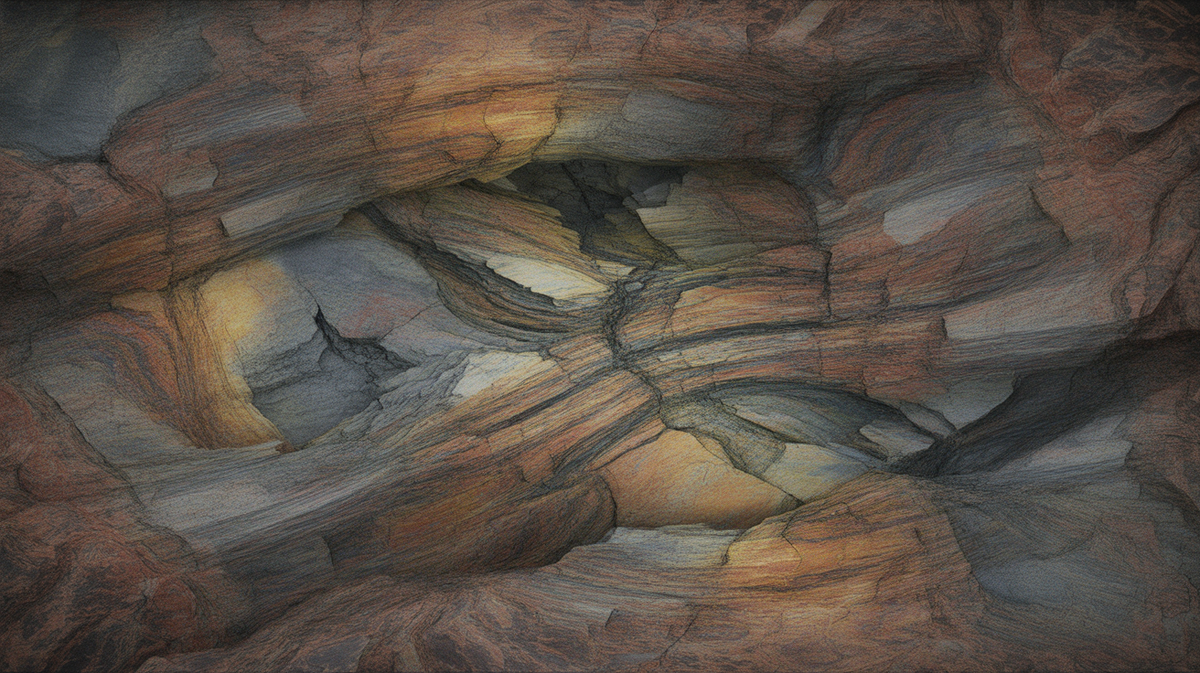
In the vast and dynamic realm of Earth’s Unseen Forces: The Hidden Dynamics of Our Planet, few geological formations capture the essence of planetary chaos and immense tectonic power quite like mélange geology. Derived from the French word for “mixture,” a mélange is a large-scale body of rocks characterized by a chaotic internal fabric, where blocks of varying sizes and lithologies are embedded within a finer-grained, sheared matrix. These enigmatic formations are a testament to the extreme forces at play within Earth’s crust, particularly in active subduction zones.
💡 Key Takeaways
- Mélanges are chaotic rock mixtures formed in high-strain tectonic settings, often at subduction zones.
- Accretionary wedges are massive piles of deformed sediments scraped off the subducting plate.
- Understanding mélanges and wedges provides crucial insights into plate boundary processes and crustal recycling.
- Their chaotic nature makes them challenging but vital for deciphering Earth’s deep geological history.
“Mélanges are Earth’s chaotic diaries, recording the immense, grinding forces of planetary subduction. They aren’t just jumbled rocks; they’re the tangible evidence of crustal recycling and the dynamic life of a planet.”
— Dr. Marcus Sterling, PhD, Planetary Geoscientist & Climatologist
Far from being a simple jumble of rocks, mélanges provide critical insights into the processes of crustal accretion, fluid flow, and the mechanics of fault zones. Understanding these complex geological structures is essential for deciphering the history of mountain building, plate tectonics, and even the localization of mineral resources.
In This Article
- → Unraveling Mélange Geology: What Are These Chaotic Rock Units?
- — 💡 Key Takeaways
- → Formation of Mélanges and Accretionary Wedges
- — ➡️ The Role of Subduction Zones
- — ⚙️ Mechanisms of Mélange Formation
- → Characteristics and Types of Mélanges
- — 🔍 Key Characteristics
- — 분류Types of Mélanges
- → Significance of Mélanges in Geology
- — 🌍 Tectonic Reconstruction
- — 💲 Resource Exploration and Geohazards
- → Identifying and Studying Mélanges in the Field
- — 🛠️ Field Identification Techniques
- — 🔬 Advanced Analytical Methods
Formation of Mélanges and Accretionary Wedges
Mélanges are predominantly formed in zones of intense tectonic deformation, most notably within accretionary wedges at convergent plate boundaries. An accretionary wedge is a prism of intensely deformed sediments and oceanic crustal rocks scraped off the subducting plate and accreted onto the overriding plate.
➡️ The Role of Subduction Zones
- ✅ Scraping and Stacking: As an oceanic plate dives beneath another plate (either oceanic or continental), the overlying sediments and parts of the oceanic crust are not entirely carried down. Instead, they are ” scraped off” and accumulate, forming a wedge-shaped mass.
- ✅ High Strain Environment: This scraping process, coupled with continuous compressional forces, creates an environment of extreme shear stress and strain. The rocks are pulverized, mixed, and deformed, leading to the characteristic chaotic fabric of a mélange.
- ✅ Fluid Presence: The presence of water and other fluids trapped within the sediments plays a crucial role. These fluids reduce friction, allowing for more extensive deformation and mixing, and can lead to hydrofracturing, further aiding block disaggregation. For a deeper understanding of fluid dynamics in geological processes, consider exploring how Mineralization in Geology: Formation of Precious Deposits is influenced by fluid flow.
⚙️ Mechanisms of Mélange Formation
Several processes contribute to the creation of mélanges within accretionary wedges:
- 💡 Tectonic Shearing: This is the primary mechanism, where intense, pervasive shearing breaks down coherent rock masses into smaller blocks and creates a pervasive matrix. This process is similar to how mylonites form, albeit on a much larger, more chaotic scale. You can learn more about this by reading our article on Mylonite Geology: Understanding Rocks Formed by Extreme Shear.
- 💡 Soft-Sediment Deformation: Unconsolidated or semi-consolidated sediments can deform plastically and mix before full lithification, especially under high fluid pressures.
- 💡 Diapirism and Mud Volcanism: Overpressured muds and sediments can rise buoyantly through denser overlying rocks, creating chaotic mixtures.
- 💡 Gravity Sliding and Slumping: Large blocks of rock can detach from unstable slopes within the accretionary wedge and slide or slump downslope, mixing with existing material.
The resulting rock unit, often termed a tectonic mélange, is a complex tapestry of rocks that were once miles apart, brought together and thoroughly intermingled by the planet’s relentless tectonic machinery. To explore the mechanics of deep accretionary wedges, refer to this detailed study: The rise and demise of deep accretionary wedges: A long-term field …
Characteristics and Types of Mélanges
While all mélanges share a chaotic nature, their specific characteristics can vary based on their origin and the dominant processes involved in their formation.
How GeoStructure Insights Inc. Stabilized Tunneling Projects by Deciphering Chaotic Geology
❓The Challenge
GeoStructure Insights Inc. faced persistent delays and cost overruns in a critical infrastructure tunneling project due to highly unpredictable and unstable ground conditions.
💡The Solution
By applying the principles of mélange geology, their expert team re-evaluated the subsurface, shifting from conventional models to recognize the ‘chaotic internal fabric’ of the rock masses, identifying key zones of intense shearing and fluid flow.
🏆The Result
This deeper understanding led to a 25% reduction in unforeseen ground control issues and optimized resource allocation, ultimately cutting project-related costs by 15%.
🔍 Key Characteristics
- ✅ Chaotic Fabric: The most defining characteristic is the absence of continuous bedding or internal layering. Instead, angular to sub-rounded blocks of widely disparate rock types “float” within a highly deformed, finer-grained matrix.
- ✅ Varying Lithologies: Blocks can include remnants of oceanic crust (basalt, gabbro, chert), deep-sea sediments (shale, sandstone), metamorphic rocks, and even continental fragments.
- ✅ Sheared Matrix: The matrix typically consists of intensely sheared mudstone, shale, or serpentinite, often showing scaly fabric and intense foliation around the blocks.
- ✅ Scale Variability: Mélanges can range in size from small localized zones to vast regions spanning hundreds of kilometers, such as those found along the circum-Pacific subduction zones.
분류Types of Mélanges
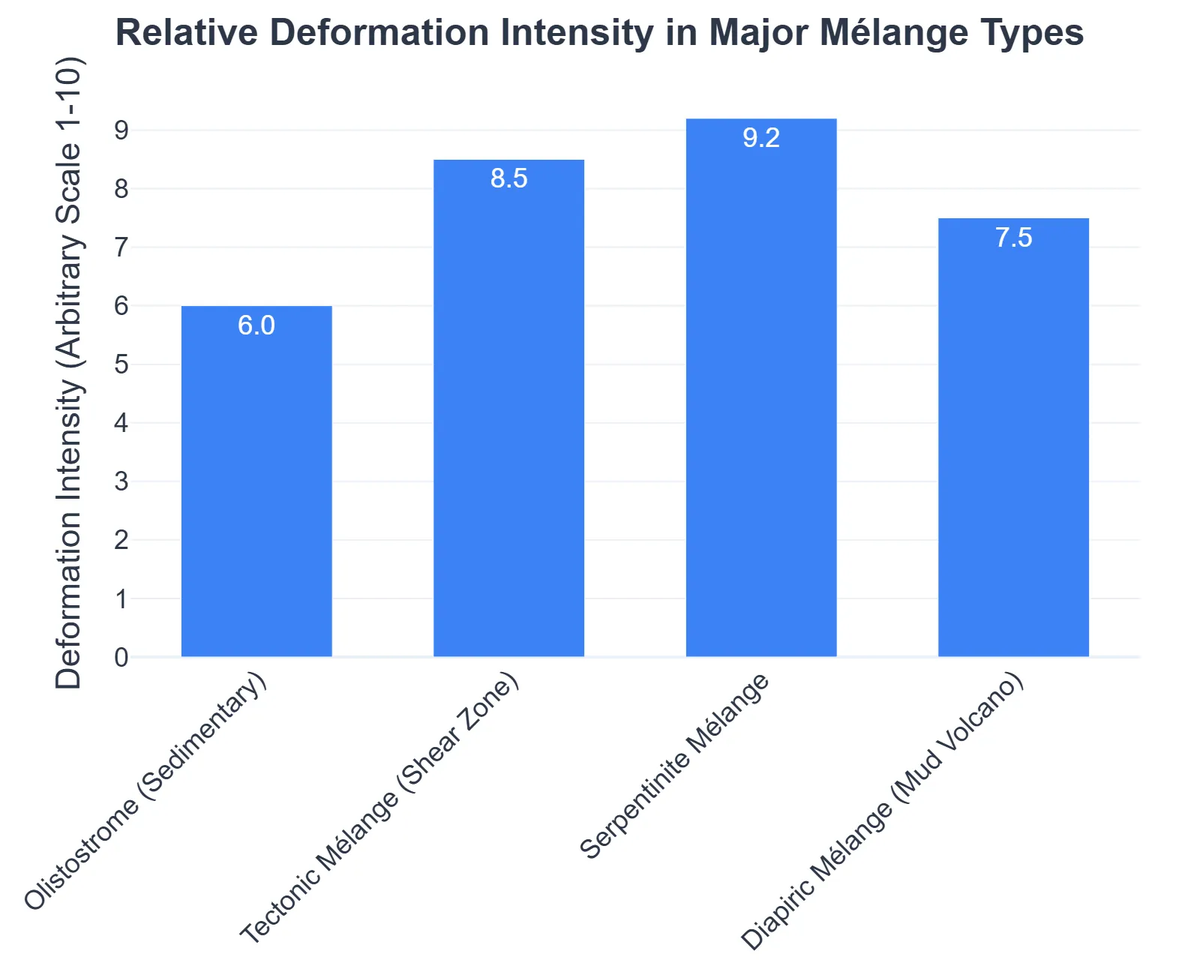
Geologists often classify mélanges based on their dominant formation mechanism:
- ➡️ Tectonic Mélange: Formed primarily by intense shearing and faulting in active plate boundaries, particularly subduction zones. These are the most common type associated with accretionary wedges.
- ➡️ Olistostromes: While similar in appearance, olistostromes are formed by sedimentary processes, specifically large-scale submarine landslides or slumping of unconsolidated sediments. They are essentially ancient debris flows.
- ➡️ Diapiric Mélange: Resulting from the buoyant ascent of low-density, often overpressured, fluid-rich materials (like mud or serpentinite) through overlying rock sequences.
- ➡️ Impact Mélange: A rare type formed by meteorite impacts, where the immense energy shatters and mixes rock units chaotically.
Distinguishing between these types can be critical for accurately reconstructing the geological history of a region. For example, understanding how Exfoliation Geology: How Rocks Peel Away Like Onion Layers might occur on the surface, while mélanges are forming deep below, highlights the diverse processes shaping our planet.
Significance of Mélanges in Geology
Despite their complexity, mélanges are invaluable geological archives, offering profound insights into Earth’s dynamic processes.
🌍 Tectonic Reconstruction
- ✅ Subduction Zone Proxies: Mélanges are direct evidence of past or present subduction zones, marking the boundaries where oceanic crust was consumed. Their presence helps identify ancient plate margins.
- ✅ Paleogeographic Indicators: The diverse lithologies within a mélange can provide clues about the types of rocks and environments that existed in the subducting oceanic basin and the overriding plate.
- ✅ Deformation History: The internal fabric and structures within a mélange record the intense deformational history, including strain rates, stress orientations, and fluid pathways during tectonic events.
💲 Resource Exploration and Geohazards
- 💡 Mineral Deposits: Mélanges can host significant mineral deposits, particularly those related to hydrothermal activity and fluid flow in subduction zones. Examples include gold, copper, and base metal deposits.
- 💡 Hydrocarbon Traps: While often highly deformed, some mélange-related structures can form traps for oil and gas, although they are generally considered high-risk exploration targets due to their complexity.
- 💡 Geotechnical Challenges: The chaotic, sheared, and often weak nature of mélange rock units poses significant challenges for engineering projects like tunnel construction, dam building, and road infrastructure. Their unpredictable internal structure can lead to slope instability and landslides.
Recent research continues to enhance our understanding of these complex units, including how oceanic plate stratigraphy can be reconstructed from them: Reconstructing Ocean‐Plate Stratigraphy (OPS) to Understand …
Recommended Video
Identifying and Studying Mélanges in the Field
Identifying a mélange in the field requires keen observation and an understanding of its diagnostic features. Geologists look for specific characteristics that distinguish mélanges from other brecciated or fragmented rock units.
🛠️ Field Identification Techniques
- ✅ Lack of Continuity: The absence of continuous bedding or recognizable stratigraphic sequence is a primary indicator.
- ✅ “Floating” Blocks: Blocks of varying sizes and lithologies, seemingly isolated and suspended within a matrix, are a hallmark.
- ✅ Sheared Matrix Texture: The matrix often exhibits a distinct “scaly” or “schistose” fabric, indicating intense shearing. This can be particularly evident in finer-grained materials like shales or serpentinites.
- ✅ Veining and Alteration: Fluid flow within mélanges can lead to extensive veining, often filled with quartz, calcite, or other minerals, and significant alteration of the matrix and blocks.
- ✅ Structural Mapping: Detailed mapping of structural elements (faults, folds, fabrics) at various scales is crucial to decipher the internal architecture and deformational history of the mélange.
🔬 Advanced Analytical Methods
- ➡️ Petrography: Microscopic analysis of thin sections reveals mineralogy, fabric development, and evidence of deformation processes at the grain scale.
- ➡️ Geochronology: Dating of different components (e.g., blocks, matrix minerals) can help constrain the timing of mélange formation and subsequent tectonic events.
- ➡️ Geochemistry: Chemical analysis can determine the provenance of blocks and matrix, linking them to specific tectonic settings.
- ➡️ Seismic Imaging: Geophysical methods, particularly seismic reflection, are used to image the large-scale architecture of accretionary wedges and the distribution of mélanges in the subsurface.
Studying melange geology is an ongoing effort that continuously refines our understanding of Earth’s most dynamic geological processes. These chaotic yet informative rock units remain central to piecing together the complex history of plate tectonics and mountain building across our planet.
What is a geological mélange?
A geological mélange is a body of rock mapping that is characterized by the mixture of fragments of different rock types, often of varying sizes, within a finer-grained matrix, typically formed in zones of intense tectonic deformation like subduction zones.
How do accretionary wedges form?
Accretionary wedges form at convergent plate boundaries where oceanic crust subducts beneath another plate. Sediments and volcanic rocks from the downgoing plate are scraped off and accumulate, forming a deformed wedge-shaped mass.
What is the primary difference between mélange and breccia?
While both contain fragmented rocks, breccia is formed by fracturing and faulting, often locally, whereas mélange implies intense tectonic mixing and shearing over large areas, commonly incorporating exotic blocks from deep within the subduction zone.