


Understanding ClimateWatch: A Vital Tool for Environmental Monitoring
In an era defined by rapid planetary shifts, understanding and tracking environmental changes has never been more crucial. This is where initiatives like ClimateWatch come into play. ClimateWatch, broadly defined, encompasses the collective efforts and systems dedicated to comprehensive environmental monitoring. It’s a critical framework for observing, analyzing, and reporting on the myriad of changes affecting our planet’s climate and biodiversity.
💡 Key Takeaways
- ClimateWatch integrates diverse data sources to provide a holistic view of environmental shifts and their impact on biodiversity.
- The platform’s insights are crucial for developing targeted conservation strategies and informing climate action.
- Understanding the intricate interconnections between climate and biodiversity is key to ensuring planetary health for future generations.
- Citizen science contributions significantly enhance the scope and accuracy of ClimateWatch’s global monitoring efforts.
“ClimateWatch isn’t just about data; it’s about translating complex planetary shifts into actionable insights, revealing the subtle yet profound impacts on our delicate ecosystems and guiding our collective response.”
— Dr. Marcus Sterling, PhD, Planetary Geoscientist & Climatologist
The overarching goal of environmental monitoring through platforms like ClimateWatch is to provide actionable data. This data serves as the bedrock for informed decision-making, guiding everything from scientific research and policy formulation to conservation strategies and public awareness campaigns. Without precise, continuous monitoring, our ability to comprehend the magnitude of environmental challenges – and thus, to respond effectively – would be severely limited.
The intricate relationship between climate and biodiversity forms the core focus of such monitoring. Climate change directly impacts ecosystems, leading to habitat loss, species migration, and extinctions, while biodiversity loss can, in turn, reduce an ecosystem’s resilience to climate impacts. Therefore, a holistic approach that integrates both climate and biodiversity data is essential for a true picture of Earth’s health. For a deeper understanding of these fundamental connections, explore our guide on Earth’s Unseen Forces: The Hidden Dynamics of Our Planet.
In This Article
- → Understanding ClimateWatch: A Vital Tool for Environmental Monitoring
- — 💡 Key Takeaways
- → Key Pillars of Environmental Change Monitoring
- — Global Climate Data & Indicators
- — Biodiversity Tracking & Ecosystem Health
- → Technologies & Methodologies Driving ClimateWatch Initiatives
- — 📡 Satellite Remote Sensing
- — 📊 Ground-Based Sensors & Networks
- — 🧪 Genomic & Biological Monitoring
- — 💻 Data Analytics & Predictive Modeling
- → The Impact and Future of ClimateWatch for Conservation
- — Informing Policy & Action
- — Empowering Citizen Science & Public Awareness
- — Protecting Biodiversity & Ecosystem Services
Key Pillars of Environmental Change Monitoring
Effective environmental monitoring relies on a multi-faceted approach, combining various data streams to paint a comprehensive picture of our planet’s condition.
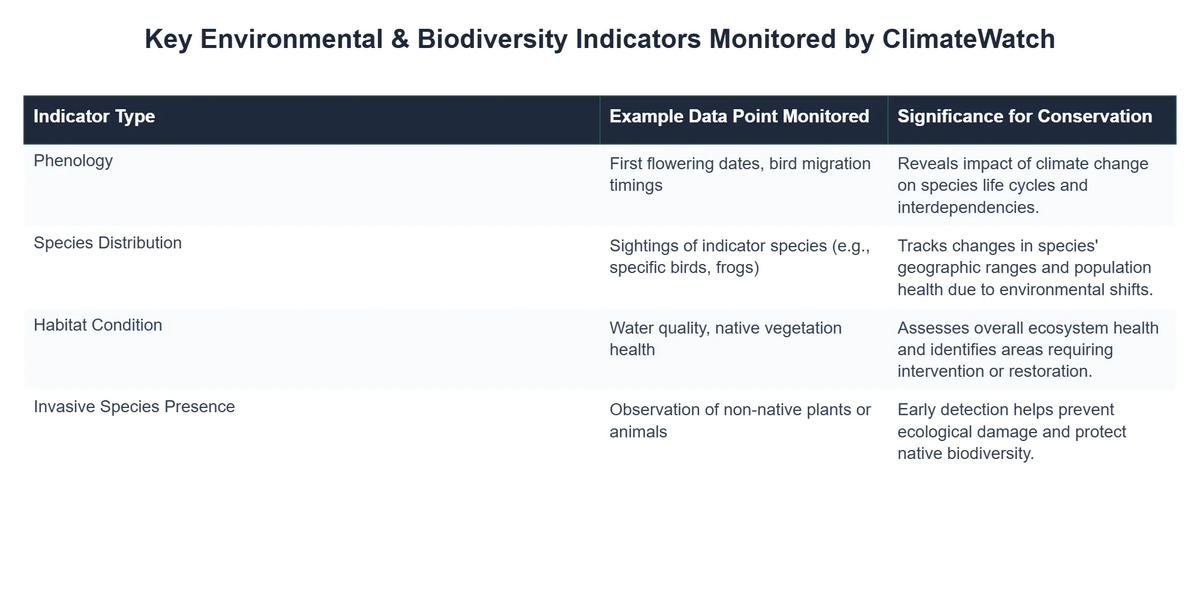
Global Climate Data & Indicators
Tracking fundamental climate indicators is the cornerstone of any robust environmental monitoring system. These indicators provide insights into long-term trends and immediate anomalies.
- ✅ Temperature Trends: Monitoring global average temperatures, both atmospheric and oceanic, helps identify warming patterns.
- ✅ Sea-Level Rise: Measuring the increase in sea levels provides critical data on glacial melt and thermal expansion.
- ✅ Greenhouse Gas Concentrations: Atmospheric concentrations of CO2, methane, and other greenhouse gases are direct indicators of human impact.
- ✅ Extreme Weather Events: Tracking the frequency and intensity of events like heatwaves, droughts, floods, and storms.
Organizations like NASA and ESA play pivotal roles in collecting this data through advanced satellite missions. NASA’s comprehensive climate change resources provide valuable insights into these global shifts. For more information, you can visit NASA Science: Climate Change.
Biodiversity Tracking & Ecosystem Health
Beyond climate, the health of Earth’s living systems is a direct reflection of environmental stability. Monitoring biodiversity offers crucial insights into ecosystem resilience and degradation.
- ➡️ Species Populations: Tracking the numbers and distribution of key species, especially those identified as indicators of ecosystem health.
- ➡️ Habitat Loss and Fragmentation: Satellite imagery and ground surveys monitor changes in critical habitats like forests, wetlands, and coral reefs.
- ➡️ Ecosystem Services: Assessing the vital services ecosystems provide, such as clean water, pollination, and carbon sequestration.
- ➡️ Genetic Diversity: Understanding the genetic variability within species, which is crucial for adaptation to changing conditions.
Understanding why this data is important is key; for more on this topic, refer to Biodiversity: Why It Matters for Planet Earth. The interconnectedness of living systems is explored further in Biosphere, Biodiversity & Ecosystem Stability: An Interconnected Web.
ClimateWatch: Monitoring Environmental Change & Biodiversity – Pros & Cons
Pros
- ✔Provides critical data for scientific research and policy making.
- ✔Increases public engagement and environmental awareness through citizen science.
- ✔Facilitates early detection of environmental changes and threats.
- ✔Supports targeted conservation strategies and biodiversity protection.
Cons
- ✖Data quality and consistency can vary due to reliance on citizen input.
- ✖Requires substantial ongoing funding and volunteer commitment for sustainability.
- ✖Potential for limited geographical coverage in less accessible or populated areas.
- ✖Raw data interpretation and analysis often require specialized expertise.
Technologies & Methodologies Driving ClimateWatch Initiatives
The sophistication of environmental monitoring has grown exponentially, thanks to advancements in technology and scientific methodologies.
📡 Satellite Remote Sensing
Satellites provide a global perspective, enabling continuous observation of vast and often inaccessible areas.
- 💡 Land Use and Land Cover Change: Mapping deforestation, urbanization, and agricultural expansion.
- 💡 Cryosphere Monitoring: Tracking melting glaciers, ice sheets, and Arctic/Antarctic sea ice.
- 💡 Oceanic Parameters: Measuring sea surface temperature, ocean currents, and chlorophyll concentrations (indicating marine life).
- 💡 Atmospheric Composition: Monitoring aerosols, ozone, and greenhouse gas distribution in the atmosphere.
📊 Ground-Based Sensors & Networks
While satellites offer a macro view, ground-based systems provide granular, localized data critical for detailed analysis.
- ✅ Weather Stations: Providing localized temperature, precipitation, and wind data.
- ✅ Air Quality Monitors: Detecting pollutants and particulate matter in urban and industrial areas.
- ✅ Hydrological Stations: Measuring river flows, lake levels, and groundwater tables.
- ✅ Flux Towers: Measuring exchanges of greenhouse gases between ecosystems and the atmosphere.
🧪 Genomic & Biological Monitoring
New frontiers in biology are revolutionizing biodiversity tracking.
Eco-Adventures Boost Guest Satisfaction by 30% with ClimateWatch Data
❓The Challenge
Green Horizon Eco-Adventures faced increasing unpredictability in their natural tour locations, such as coral bleaching or shifting bird migration patterns, leading to unexpected tour disruptions and declining guest satisfaction.
💡The Solution
Inspired by the ClimateWatch framework, Green Horizon implemented a localized environmental monitoring program, tracking key biodiversity indicators and micro-climate patterns. This actionable data, combined with broader ClimateWatch global indicators, allowed them to dynamically adjust tour itineraries, proactively communicate environmental changes to guests, and focus conservation efforts.
🏆The Result
Within 12 months, Green Horizon reduced tour cancellations due to environmental surprises by 25% and increased their post-tour guest satisfaction scores by 30%, directly attributing the improvement to their data-informed adaptive strategies.
- ➡️ eDNA (Environmental DNA): Analyzing DNA traces in water or soil to detect the presence of species without direct observation.
- ➡️ Bioindicators: Using specific species or communities (e.g., lichens, aquatic insects) whose presence or absence indicates environmental health.
- ➡️ Camera Trapping & Acoustic Monitoring: Non-invasive methods for observing wildlife behavior and population dynamics.
💻 Data Analytics & Predictive Modeling
Raw data is transformed into actionable insights through advanced computational tools.
- 💡 Big Data Platforms: Managing and integrating massive datasets from diverse sources.
- 💡 Artificial Intelligence (AI) & Machine Learning (ML): Identifying patterns, anomalies, and making predictions about future environmental trends.
- 💡 Geographic Information Systems (GIS): Visualizing spatial data and understanding geographical relationships.
Organizations like Climate Watch are at the forefront of compiling and making this data accessible for global action. Visit Climate Data for Action | Climate Watch for examples of how this data is utilized.
The Impact and Future of ClimateWatch for Conservation
The data and insights gleaned from comprehensive environmental monitoring are not merely academic; they are essential for driving real-world change and fostering a sustainable future.
Informing Policy & Action
Monitoring data forms the empirical basis for environmental policies and international agreements.
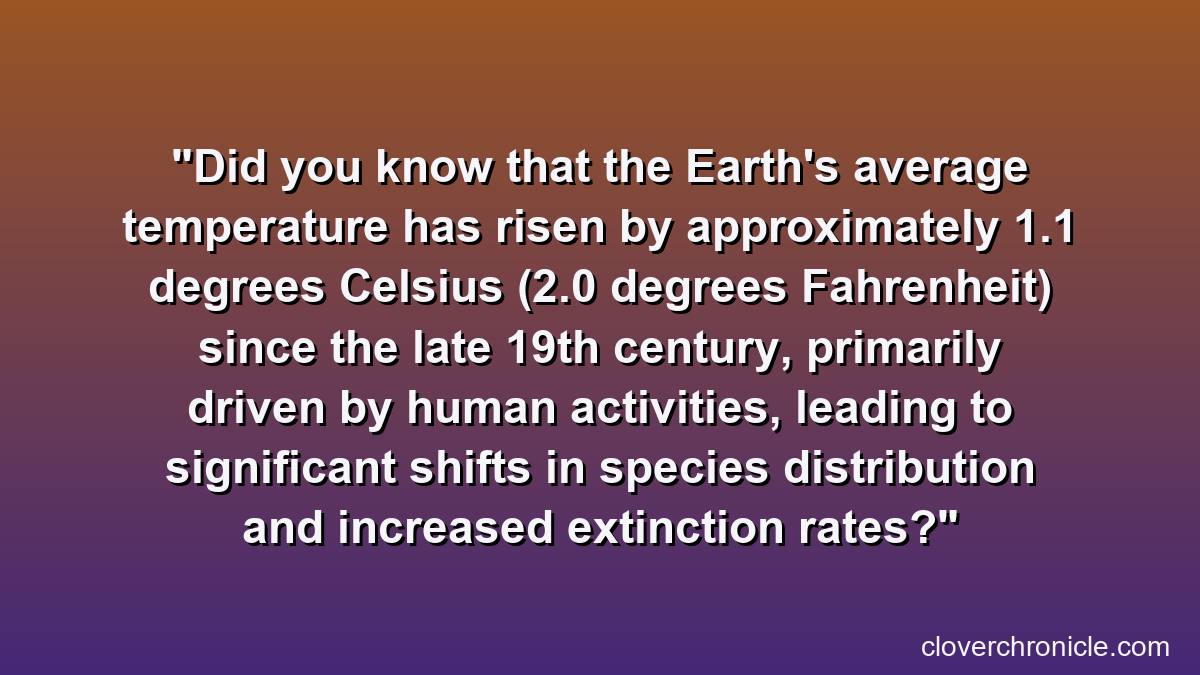
- ✅ Policy Development: Governments use monitoring data to set emissions targets, implement conservation laws, and allocate resources.
- ✅ International Cooperation: Data supports global initiatives like the Paris Agreement and discussions at COP (Conference of the Parties) meetings, where nations negotiate collective responses to climate change.
- ✅ Accountability: Monitoring helps track progress against environmental goals and holds nations and industries accountable for their commitments.
The understanding of Climate Change: Impacts, Causes, and Societal Implications is directly informed by this continuous monitoring.
Empowering Citizen Science & Public Awareness
ClimateWatch initiatives aren’t just for scientists and policymakers; they also engage the public, fostering a sense of shared responsibility.
- ➡️ Citizen Science Platforms: Individuals can contribute data on local biodiversity, weather patterns, and pollution, enriching scientific datasets.
- ➡️ Educational Outreach: Data is translated into accessible formats to raise public awareness about environmental challenges and solutions.
- ➡️ Behavioral Change: Informed citizens are more likely to adopt sustainable practices and advocate for environmental protection.
Engaging communities, particularly younger generations, is vital. Explore how to foster this in Cultivating Biodiversity in Schools: Fostering Environmental Awareness.
Protecting Biodiversity & Ecosystem Services
Ultimately, the goal of ClimateWatch and environmental monitoring is to safeguard Earth’s natural heritage.
- 💡 Targeted Conservation: Identifying biodiversity hotspots and vulnerable ecosystems to prioritize conservation efforts.
- 💡 Restoration Projects: Guiding efforts to restore degraded habitats and reintroduce native species.
- 💡 Sustainable Resource Management: Informing practices in forestry, fisheries, and agriculture to minimize environmental impact.
- 💡 Early Warning Systems: Detecting emerging threats like invasive species or disease outbreaks that could devastate ecosystems.
By providing a clear, evidence-based understanding of environmental change, ClimateWatch empowers us to act decisively, protecting not only nature but also the foundational systems that support human well-being.
Recommended Video
What is ClimateWatch?
ClimateWatch is an initiative dedicated to monitoring and understanding environmental changes, with a specific focus on their impact on global biodiversity and ecosystems.
How does ClimateWatch monitor biodiversity?
It utilizes a comprehensive approach combining satellite imagery, sensor networks, on-ground observations, and citizen science data to track species migration, habitat changes, and overall ecosystem health.
Why is environmental monitoring important?
Environmental monitoring provides critical, data-driven insights that help identify long-term trends, predict future impacts, and inform effective policy decisions for climate action and biodiversity conservation.
Who contributes to ClimateWatch data?
Data is collected from a wide range of sources, including scientific institutions, government agencies, remote sensing technologies, and a global network of citizen scientists.