


Natural Selection: Darwin’s Theory of Evolution Explained
In the vast tapestry of life, few concepts have revolutionized our understanding more profoundly than Charles Darwin’s theory of evolution by natural selection. This foundational principle isn’t just a historical scientific idea; it’s a dynamic, ongoing process that shapes every living organism on Earth, driving the incredible biodiversity we observe.
💡 Key Takeaways
- Natural selection is the primary mechanism for evolutionary change.
- It operates on heritable variations within a population.
- Environmental pressures favor individuals with advantageous traits, increasing their survival and reproduction.
- Over generations, this leads to populations becoming better adapted to their environment.
“Natural selection isn’t just a historical concept; it’s an ongoing, dynamic process fundamentally shaping life on Earth right now, driving both subtle adaptations and the emergence of entirely new forms.”
— Julian Aris, Evolutionary Biologist & Geneticist
But what exactly is natural selection, and how does it work? Far from being a random event, it’s a powerful mechanism where nature “selects” individuals best suited to their environment, ensuring their traits are passed on to the next generation. Understanding this cornerstone of biology unlocks insights into everything from human origins to the spread of antibiotic resistance.
This comprehensive guide will unpack Darwin’s revolutionary insights, explain the core principles of nature’s selection, and illustrate its impact with compelling examples. By the end, you’ll have a clear and confident grasp of this fundamental biological concept.
In This Article
- → Natural Selection: Darwin’s Theory of Evolution Explained
- — 💡 Key Takeaways
- → The Genesis of an Idea: Who Was Charles Darwin?
- — 🌱 Early Life and Influences
- — 🚢 The Voyage of the HMS Beagle
- → Unpacking the Core Principles of Natural Selection
- — 1. 🧬 Variation
- — 2. 👨👩👧👦 Inheritance
- — 3. ⬆️ Overproduction & Struggle for Existence
- — 4. 📈 Differential Survival and Reproduction
- → How Natural Selection Drives Evolution
- — Adaptation Over Time
- — Speciation
- → Key Examples of Natural Selection in Action
- — 🦋 Peppered Moths (Industrial Melanism)
- — 🦠 Antibiotic Resistance
- — 🐦 Darwin’s Finches
- → Misconceptions About Darwinian Natural Selection
- — 🗣️ “Survival of the Fittest” Misinterpretation
- — 🎲 Directional vs. Random
- — 🎯 Not a Goal-Oriented Process
- → The Modern Relevance of Darwin’s Theory
- — 🔬 Medical Advancements
- — 🌾 Agriculture and Biotechnology
- — 🌍 Conservation Biology
- → Conclusion: The Enduring Legacy of Natural Selection
The Genesis of an Idea: Who Was Charles Darwin?

To truly appreciate Darwin’s natural selection, we must first understand the man behind the monumental idea. Charles Darwin was an English naturalist whose meticulous observations and groundbreaking deductions forever changed the course of biological science.
🌱 Early Life and Influences
Born in 1809, Darwin initially pursued medicine and theology, but his passion for the natural world was undeniable. He was deeply influenced by geologists like Charles Lyell, who proposed that Earth’s geological features were formed by slow, continuous processes over vast periods – a concept that challenged prevailing beliefs about a young Earth and laid conceptual groundwork for slow biological change.
Natural Selection: Strengths and Limitations of Darwin’s Theory
Pros
- ✔Provides a unifying scientific explanation for the diversity and adaptation of life.
- ✔Supported by a vast body of empirical evidence from genetics, fossil records, and comparative anatomy.
- ✔Offers a testable and falsifiable framework for understanding biological change.
- ✔Forms the foundational principle for modern evolutionary biology.
Cons
- ✖Does not explain the initial origin of life, only its subsequent diversification.
- ✖Historically debated in its ability to fully account for the evolution of highly complex biological structures.
- ✖Does not encompass all mechanisms of evolution (e.g., genetic drift, gene flow), though these complement it.
- ✖Its emphasis on gradual change was initially challenged by observations of rapid evolutionary events.
🚢 The Voyage of the HMS Beagle
The turning point in Darwin’s life, and arguably in scientific history, was his five-year voyage aboard the HMS Beagle (1831-1836). As the ship’s naturalist, Darwin explored diverse ecosystems across South America, Australia, and most famously, the Galápagos Islands. Here, he observed unique species – particularly the finches, with their distinct beak variations – that seemed perfectly adapted to their specific island environments. These observations sparked the initial thoughts that would evolve into his theory.
Unpacking the Core Principles of Natural Selection
The natural selection theory is elegantly simple, yet profoundly powerful. It rests upon four core principles, which Darwin meticulously outlined in his seminal work, “On the Origin of Species” (1859). When we describe the theory of natural selection, these four pillars are essential:
1. 🧬 Variation
- ✅ Individuals within a population exhibit diverse traits. No two individuals are exactly alike (except identical twins).
- ➡️ This variation can involve physical characteristics (e.g., fur color, beak shape, size) or behaviors.
- 💡 Variation arises primarily from random mutations in DNA and genetic recombination during sexual reproduction.
2. 👨👩👧👦 Inheritance
- ✅ Many of these variations are heritable, meaning they can be passed down from parents to their offspring.
- ➡️ While Darwin understood this principle, the exact mechanisms of heredity (genetics) were unknown to him at the time.
- 💡 Today, we know that genes carry these heritable traits.
3. ⬆️ Overproduction & Struggle for Existence
- ✅ Most species produce more offspring than the environment can support.
- ➡️ This leads to competition for limited resources like food, water, shelter, and mates.
- 💡 Not all offspring survive to reproduce, creating a “struggle for existence.”
4. 📈 Differential Survival and Reproduction
- ✅ Individuals with traits better suited to their environment are more likely to survive and reproduce.
- ➡️ These “favorable” traits give them an advantage in the struggle for existence.
- 💡 Consequently, these advantageous traits become more common in the population over generations. This is the very essence of nature’s selection.
How Natural Selection Drives Evolution
The continuous operation of these four principles over vast stretches of time results in evolution – the change in the heritable characteristics of biological populations over successive generations. This is how the concept of natural selection underpins all biological change.
Adaptation Over Time
As advantageous traits become more prevalent, populations become better “adapted” to their environment. This doesn’t mean organisms consciously try to adapt; rather, those born with beneficial variations simply have a higher chance of thriving and passing those traits on. For a broader understanding of this process, explore our guide on Evolution Explained: A Comprehensive Guide.
Speciation
Over extended periods, if populations of a species become geographically or reproductively isolated and face different environmental pressures, they can diverge so significantly that they are no longer able to interbreed. This process, driven by darwinian natural selection, leads to the formation of new species.
Key Examples of Natural Selection in Action
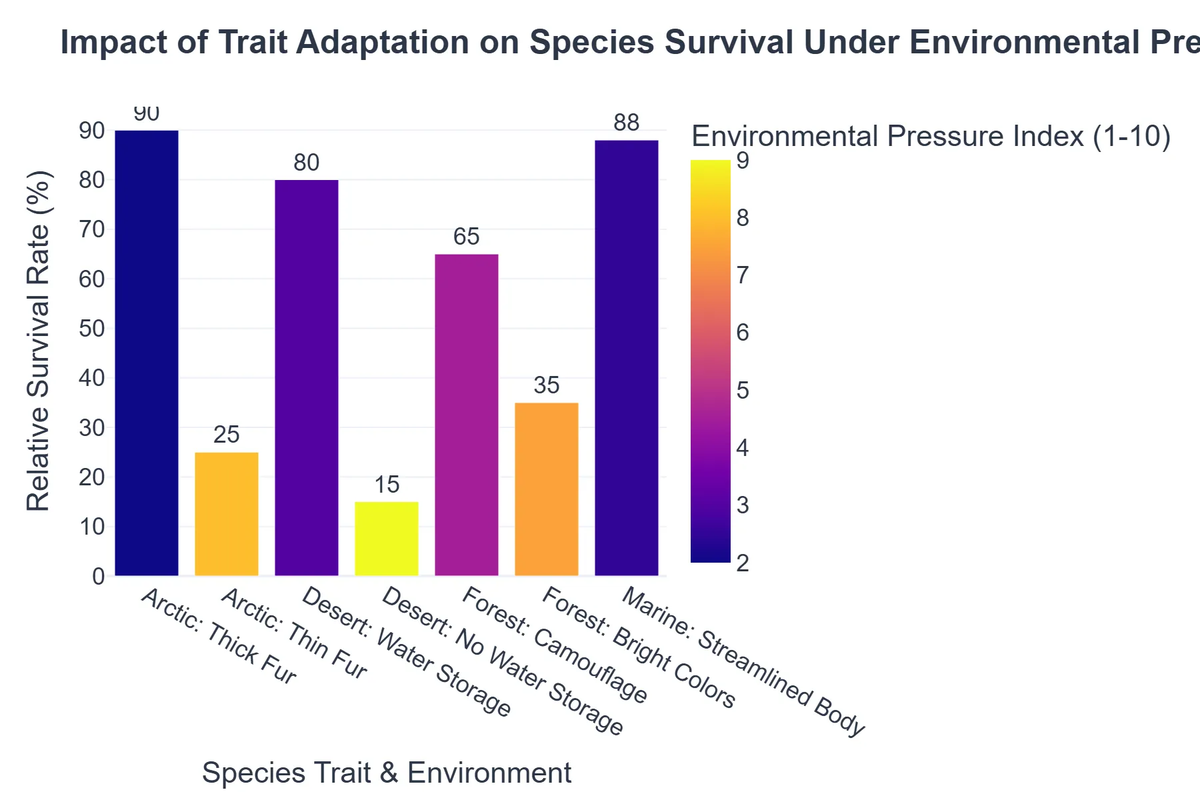
The beauty of natural selection is that it’s not just a theoretical construct; it’s observable and quantifiable in numerous real-world scenarios. For more detailed examples, check out our article on Evolution Examples: 10 Cases of Natural Selection.
🦋 Peppered Moths (Industrial Melanism)
A classic example from England. Before the Industrial Revolution, light-colored peppered moths blended with lichen-covered trees and were common. Darker moths, being more visible, were rare. As industrial pollution blackened tree trunks with soot, the dark moths suddenly had an advantage, becoming camouflaged. Light moths, now conspicuous, were preyed upon more. Over a few generations, the population shifted dramatically towards dark moths – a clear case of simulating natural selection in a changing environment.
🦠 Antibiotic Resistance
One of the most pressing modern examples. When antibiotics are used, they kill most bacteria. However, a few bacteria might have a random mutation that confers resistance to the antibiotic. These resistant bacteria survive, reproduce rapidly (since their competition is eliminated), and pass on their resistance genes. This accelerates the evolution of “superbugs,” demonstrating nature’s selection at an alarming pace.
🐦 Darwin’s Finches
The iconic inspiration for Darwin’s theory. On the Galápagos Islands, different finch species have distinct beak shapes and sizes, perfectly suited for the specific food sources available on their respective islands. Finches with beaks optimized for cracking hard seeds thrived on islands with such seeds, while those with beaks suited for probing flowers flourished elsewhere. This illustrates how varied environmental pressures lead to diverse adaptations through natural selection.
Misconceptions About Darwinian Natural Selection
Despite its widespread acceptance in the scientific community, the concept of natural selection is often misunderstood. Clarifying these common misconceptions is crucial for a complete understanding.
🗣️ “Survival of the Fittest” Misinterpretation
- ✅ This phrase, coined by Herbert Spencer, is often misconstrued as promoting aggression or individual strength.
- ➡️ In biological terms, “fitness” refers to an organism’s reproductive success – its ability to survive and pass on its genes.
- 💡 The “fittest” are simply those best adapted to their environment who produce the most viable offspring.
🎲 Directional vs. Random
- ✅ Natural selection itself is NOT random. It’s a directional process where favorable traits are systematically selected for.
- ➡️ The variations upon which selection acts (mutations) ARE random. Natural selection then acts on these random variations.
- 💡 Think of it like this: A random deck of cards is dealt (mutation), but the best hand wins (selection).
🎯 Not a Goal-Oriented Process
- ✅ Natural selection does not work towards a predetermined goal or perfect organism.
- ➡️ It simply favors traits that are advantageous in the current environment. If the environment changes, different traits might become favorable.
- 💡 Evolution is a continuous adaptation to changing conditions, not a ladder of progress towards “perfection.” For a deeper dive into the broader theory, explore Darwin’s Theory of Evolution: A Cornerstone of Modern Biology.
The Modern Relevance of Darwin’s Theory
More than 160 years after its publication, Darwin’s theory remains the bedrock of modern biology. The principles of darwinian natural selection are applied across numerous scientific fields, proving its enduring power and explanatory scope.
🔬 Medical Advancements
Understanding natural selection is critical in medicine. It helps us comprehend the evolution of diseases (e.g., drug-resistant bacteria and viruses like influenza or HIV), informing vaccine development and treatment strategies. It also explains human genetic predispositions to certain conditions.
🌾 Agriculture and Biotechnology
Farmers have, for millennia, implicitly used a form of selection (artificial selection) to breed desired traits in crops and livestock. Modern biotechnology, informed by evolutionary principles, allows for targeted genetic modifications and breeding programs to enhance yields, disease resistance, and nutritional value, essentially simulating natural selection with human intervention.
🌍 Conservation Biology
Conservation efforts rely heavily on understanding how populations evolve. Recognizing the importance of genetic variation, scientists aim to preserve biodiversity to ensure species have the raw material for adaptation in the face of climate change, habitat loss, and new diseases. This awareness is crucial for protecting the fragile web of life.
Recommended Video
Conclusion: The Enduring Legacy of Natural Selection
Charles Darwin’s theory of natural selection stands as one of the most significant intellectual achievements in human history. It provides a robust, evidence-based explanation for the diversity and adaptation of life on Earth, transforming biology from a descriptive science into an explanatory one.
From the microscopic world of bacteria developing antibiotic resistance to the macroscopic elegance of a gazelle escaping a predator, nature’s selection is a relentless, ever-present force. It’s a reminder that life is not static but a dynamic, ever-changing process, continuously sculpted by the interplay between organisms and their environment. Understanding this fundamental principle is not just key to biology; it’s essential to understanding life itself and our place within The Code of Life: Decoding Genetics, Evolution, and Existence.
The more we explore, the more we appreciate the profound insights offered by Darwin’s concept of natural selection, solidifying its status as an indispensable pillar of modern scientific thought. To learn more about this process, refer to resources like National Geographic’s explanation of Natural Selection and Khan Academy’s article on Darwin, evolution, & natural selection.
Frequently Asked Questions
What is natural selection?
Natural selection is the process where organisms better adapted to their environment tend to survive and produce more offspring, passing on their advantageous traits.
Who proposed the theory of natural selection?
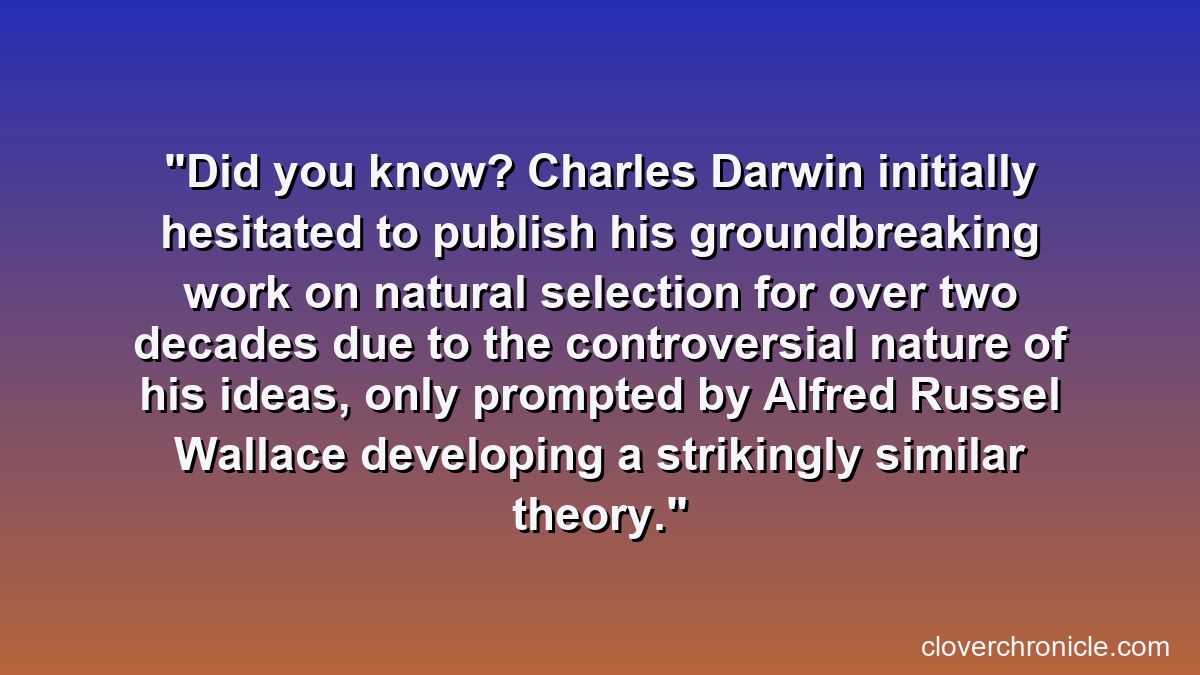
Charles Darwin, alongside Alfred Russel Wallace, independently conceived and proposed the theory of natural selection.
How does natural selection lead to evolution?
It causes advantageous heritable traits to become more common in a population over successive generations, leading to gradual changes and the development of new species.
Can humans still undergo natural selection?
Yes, humans are still subject to natural selection, evident in adaptations to local environmental pressures, disease resistance, and shifts in gene frequencies over time.