


Public vs. Private Blockchains: Choosing the Right Ledger
In the rapidly evolving landscape of distributed ledger technology, navigating the distinctions between various blockchain implementations is crucial. As we chart the course of tomorrow’s technology, understanding the fundamental differences between public blockchains and their private counterparts becomes paramount for any enterprise or individual looking to leverage this revolutionary innovation. This guide will serve as your definitive resource, helping you discern which type of blockchain best aligns with your specific needs and strategic objectives.
💡 Key Takeaways
- Public blockchains offer unparalleled decentralization and transparency, but may lack privacy and scalability for enterprise use.
- Private blockchains prioritize control, speed, and privacy, making them ideal for businesses and consortia, though often at the cost of true decentralization.
- The choice between public and private hinges on your project’s specific needs for trust models, data privacy, transaction throughput, and participant access.
- Hybrid blockchain solutions are emerging to combine the best aspects of both public and private systems, offering flexible design options.
“The dichotomy between public and private blockchains isn’t just about technology; it’s a reflection of our societal values – transparency versus control, open access versus curated trust. The future of DLT lies in discerning where each truly serves humanity’s complex needs.”
— Kira Chen, Futurist & AI Ethics Advocate
The journey into distributed ledgers is a core aspect of Future Perfect?: Charting the Course of Tomorrow’s Technology, and making an informed decision here can profoundly impact scalability, security, and operational efficiency.
In This Article
- → Public vs. Private Blockchains: Choosing the Right Ledger
- — 💡 Key Takeaways
- → Understanding the Core: What is a Blockchain?
- → The World of Public Blockchains: Open and Transparent
- — ⚙️ Characteristics of Public Blockchains
- — ✅ Advantages of Public Blockchains
- — ⚠️ Disadvantages of Public Blockchains
- → The Realm of Private Blockchains: Controlled and Efficient
- — ⚙️ Characteristics of Private Blockchains
- — ✅ Advantages of Private Blockchains
- — ⚠️ Disadvantages of Private Blockchains
- → Public vs. Private: A Head-to-Head Comparison of Different Blockchains
- → Choosing the Right Ledger: When to Opt for Which
- — ➡️ When Public Blockchains Excel
- — ➡️ When Private Blockchains are Preferred
- → Conclusion: Charting Your Course in the Blockchain Landscape
Understanding the Core: What is a Blockchain?

Before diving into the specifics of public versus private, let’s briefly define what a blockchain is at its essence. A blockchain is a decentralized, distributed, and immutable ledger. It’s a chain of blocks, where each block contains a timestamped batch of valid transactions, and each block links back to the previous one, forming an unbreakable chain. This structure ensures:
- ✅ Decentralization: No single entity controls the entire network.
- ✅ Immutability: Once data is recorded, it’s incredibly difficult to alter or remove.
- ✅ Security: Cryptographic principles protect the integrity of the data.
- ✅ Transparency: All participants can verify transactions (though the level of transparency varies).
These core tenets are present in all blockchain variations, but their implementation and implications differ significantly based on whether the network is public or private.
The World of Public Blockchains: Open and Transparent
Public blockchains are what most people envision when they hear the term “blockchain.” They are permissionless networks, meaning anyone can join, participate in, and validate transactions without needing approval from a central authority.
⚙️ Characteristics of Public Blockchains
- ✅ Permissionless Access: Anyone can read, write, and participate in the network.
- ✅ Full Decentralization: Maintained by a large, distributed network of nodes, making them highly resilient to attacks.
- ✅ Pseudonymous Transparency: Transactions are visible to all, but user identities are typically pseudonymous (wallet addresses).
- ✅ Consensus Mechanisms: Rely on mechanisms like Proof of Work (PoW) or Proof of Stake (PoS) to validate transactions and maintain security.
- ✅ Native Cryptocurrency: Often incentivize participation through native tokens (e.g., Ether on Ethereum).
✅ Advantages of Public Blockchains
- 💡 Trustlessness: No need to trust a central party; trust is distributed across the network.
- 💡 Censorship Resistance: Extremely difficult for any single entity to control or censor transactions.
- 💡 Network Effects: Can attract a large number of participants and developers, fostering innovation.
- 💡 High Security: The sheer number of participants makes them robust against malicious attacks.
⚠️ Disadvantages of Public Blockchains
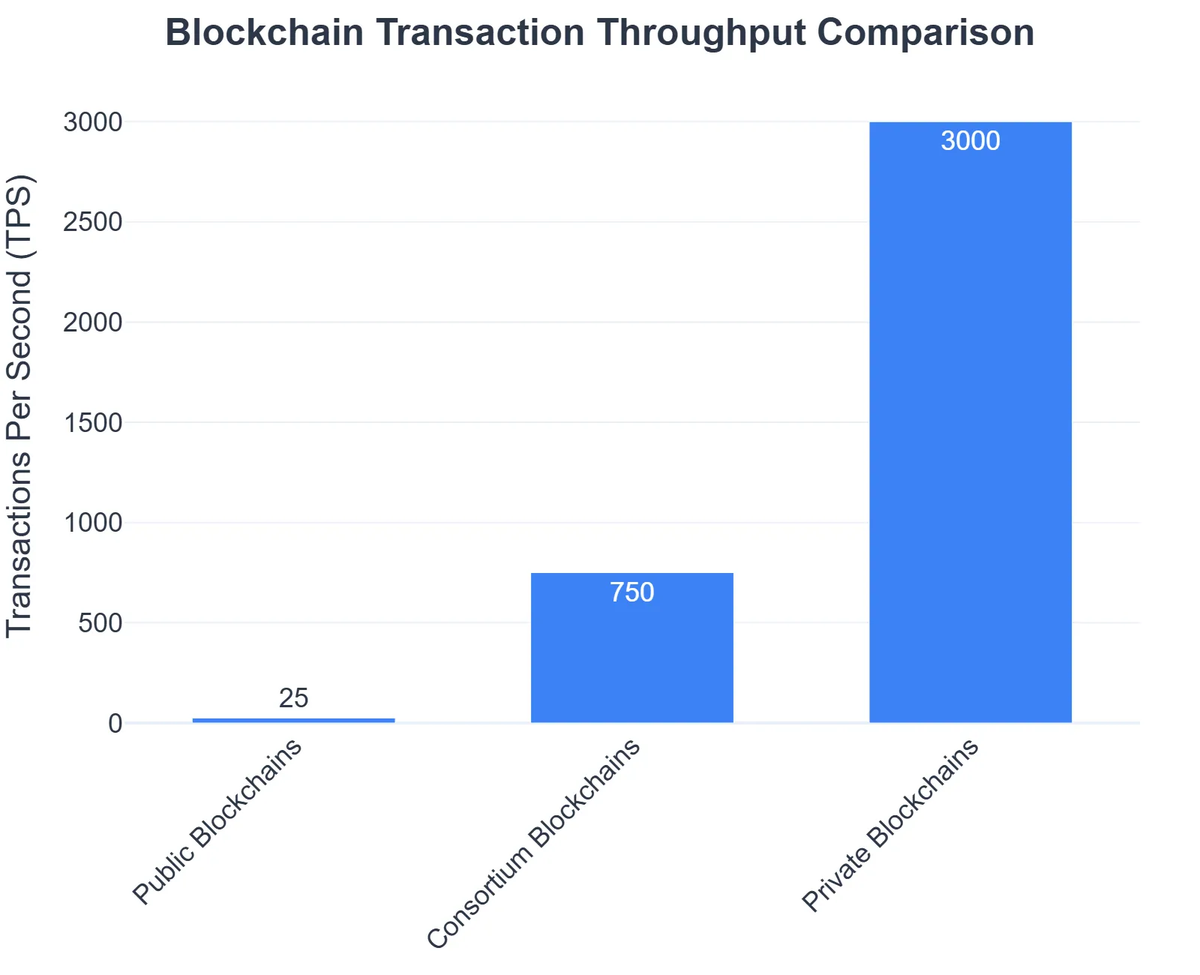
- ➡️ Scalability Issues: Can be slower due to the extensive validation required across many nodes (e.g., often a trade-off for decentralization).
- ➡️ Energy Consumption: PoW systems (like early Bitcoin) require significant energy.
- ➡️ Privacy Concerns: While pseudonymous, transaction data is publicly viewable.
- ➡️ Regulatory Uncertainty: The decentralized nature can make regulation challenging.
The most prominent example of a public blockchain is Ethereum, which not only facilitates cryptocurrency transactions but also serves as a platform for decentralized applications (dApps) and smart contracts. For building decentralized web applications, public blockchains often integrate with technologies like IPFS Blockchain: Decentralizing Web3 Data Storage for robust data handling.
The Realm of Private Blockchains: Controlled and Efficient
In contrast to public networks, private blockchains are permissioned, meaning participation is restricted. A single organization or a consortium of organizations controls access and maintains the network.
⚙️ Characteristics of Private Blockchains
- ✅ Permissioned Access: Participants must be invited and validated by a central authority or pre-defined rules.
- ✅ Centralized/Consortium Control: Often managed by a single entity or a group of known entities (a consortium).
- ✅ Enhanced Privacy: Transaction visibility is restricted to authorized participants.
- ✅ Flexible Consensus: Can use more efficient consensus mechanisms, as trust is established beforehand.
- ✅ No Native Cryptocurrency: Transactions typically don’t require a public cryptocurrency.
✅ Advantages of Private Blockchains
- 💡 High Performance & Scalability: Fewer nodes lead to faster transaction speeds and higher throughput.
- 💡 Data Privacy: Crucial for sensitive corporate or personal data, as access is controlled.
- 💡 Regulatory Compliance: Easier to integrate with existing regulatory frameworks due to centralized control.
- 💡 Lower Transaction Costs: Reduced computational overhead and no need for competitive mining.
- 💡 Easier Upgrades & Maintenance: Network changes and bug fixes can be implemented more smoothly.
⚠️ Disadvantages of Private Blockchains
- ➡️ Less Decentralized: Control by a few entities reduces the core blockchain benefit of decentralization.
- ➡️ Potential for Censorship: The controlling entity/consortium can potentially censor or revert transactions.
- ➡️ Less Trustless: Requires a degree of trust in the managing entity or consortium. For more on this, consider insights from Public vs. Private Ledger – Lexology.
- ➡️ Lower Network Effects: Limited participation can restrict growth and innovation compared to public chains.
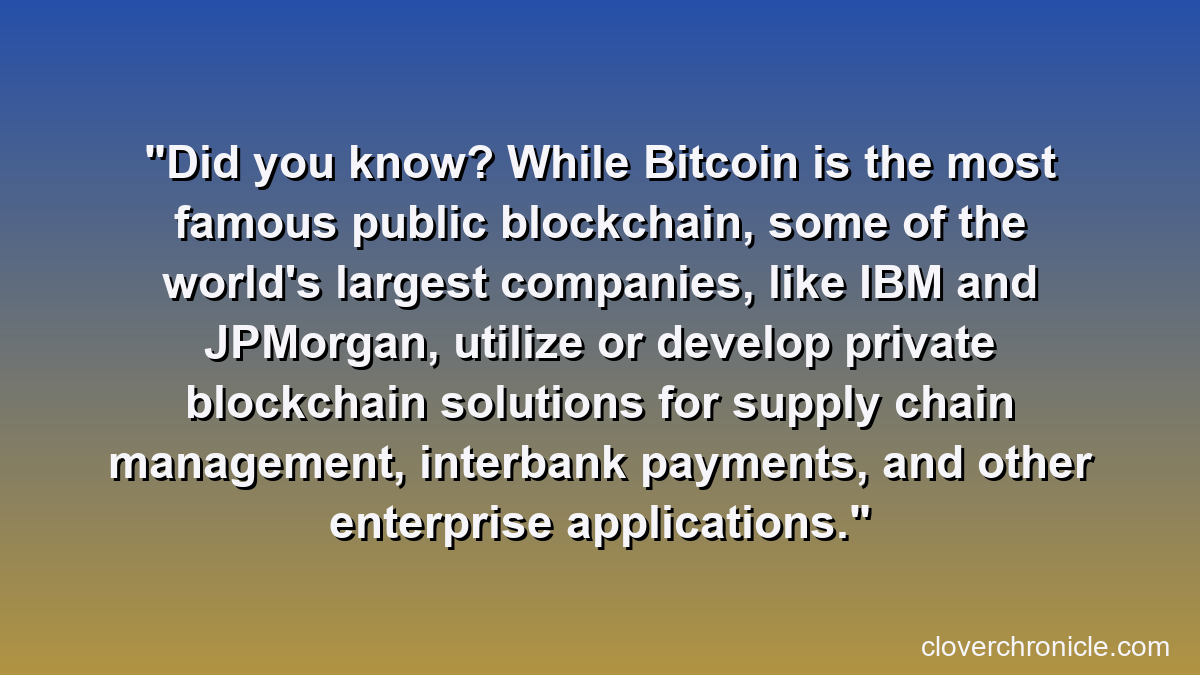
Key examples of private or consortium blockchain platforms include Hyperledger Fabric (a project from the Linux Foundation) and Corda (developed by R3). These platforms are widely adopted in enterprise settings for solutions like supply chain management and inter-company settlements. Businesses leveraging such technologies include those exploring SAP Blockchain: Revolutionizing Business with Distributed Ledgers or large-scale initiatives like TradeLens and Maersk: Revolutionizing Global Shipping with Blockchain.
Public vs. Private Blockchains: A Comparative Review
Pros
- ✔Public: High transparency and immutable records.
- ✔Public: Open access and strong decentralization.
- ✔Private: Enhanced privacy and granular access control.
- ✔Private: Faster transaction processing and higher scalability.
Cons
- ✖Public: Slower transaction speeds and scalability limitations.
- ✖Public: Lack of transaction privacy for participants.
- ✖Private: Centralization risks and potential for less trust.
- ✖Private: Higher setup costs and potential vendor lock-in.
Public vs. Private: A Head-to-Head Comparison of Different Blockchains
To summarize the key distinctions and help you choose between these different blockchains, here’s a side-by-side comparison:
| Feature | Public Blockchain | Private Blockchain |
|---|---|---|
| Access/Permission | Permissionless (anyone can join) | Permissioned (invite-only) |
| Decentralization | Highly Decentralized | Centralized or Semi-Centralized (Consortium) |
| Speed/Scalability | Lower (due to extensive validation) | Higher (fewer nodes, faster consensus) |
| Privacy | Pseudonymous (all transactions public) | Restricted (transactions visible only to authorized parties) |
| Consensus Mechanism | Proof of Work, Proof of Stake, etc. (resource-intensive) | BFT, PBFT, Raft, etc. (more efficient) |
| Cost | Higher transaction fees (depends on network congestion) | Lower transaction fees (or none) |
| Transparency | Full (all data publicly verifiable) | Configurable (only authorized parties see data) |
| Control | No central authority | Controlled by a single entity or consortium |
Choosing the Right Ledger: When to Opt for Which
The choice between a public and private blockchain isn’t about one being inherently “better” than the other. It’s about aligning the technology’s strengths with your project’s specific requirements, especially concerning trust, performance, and data privacy.
➡️ When Public Blockchains Excel
Opt for a public blockchain when your primary concerns are:
- 💡 Absolute Trustlessness: You need a system where no single entity can exert control or manipulate data.
- 💡 Censorship Resistance: The application must be immune to external interference or shutdowns.
- 💡 Public Verification: Transactions or data need to be publicly verifiable by anyone.
- 💡 Decentralized Applications: Building applications that operate without central points of failure or control.
- 💡 Open Participation: You want to enable anyone to join and contribute to the network.
Ideal Use Cases: Cryptocurrencies (Bitcoin, Ethereum), decentralized finance (DeFi), non-fungible tokens (NFTs), public registries (e.g., land records, identity management for public good), truly open data sharing initiatives.
➡️ When Private Blockchains are Preferred
Consider a private blockchain when your priorities lean towards:
- 💡 Performance & Scalability: You need high transaction throughput and low latency for enterprise operations.
- 💡 Data Privacy & Confidentiality: Sensitive business data or personal information must be kept private among authorized parties.
- 💡 Regulatory Compliance: The need to comply with specific industry regulations and audits.
- 💡 Identified Participants: All network participants are known and vetted entities.
- 💡 Cost Efficiency: Lower operating costs due to fewer nodes and optimized consensus.
Ideal Use Cases: Supply chain management (tracking goods, provenance), inter-bank transfers and settlements, healthcare data management (patient records), loyalty programs, internal corporate record-keeping, permissioned data sharing between business partners.
Recommended Video
Conclusion: Charting Your Course in the Blockchain Landscape
The choice between public and private blockchains is a strategic one, shaping the future of your technological implementation. There’s no one-size-fits-all answer; the optimal ledger depends entirely on your project’s specific requirements for decentralization, privacy, performance, and governance.
By carefully evaluating the trade-offs, leveraging the strengths of platforms like Ethereum for open, trustless systems, or embracing Hyperledger Fabric and Corda for controlled, efficient enterprise solutions, you can confidently choose the right ledger to power your innovations. As the blockchain landscape continues to evolve, staying informed about these different blockchains and their capabilities will be key to unlocking their full potential for your organization.
Frequently Asked Questions
What is the main distinction between public and private blockchains?
Public blockchains are permissionless, open to anyone to participate and validate transactions (like Bitcoin), offering high decentralization. Private blockchains are permissioned, controlled by an entity or consortium, and restrict participation, providing more privacy and faster transactions for specific organizations.
Are private blockchains truly decentralized?
While they utilize distributed ledger technology (DLT), private blockchains are not decentralized in the same way public ones are. They operate within a controlled network, meaning a central authority or consortium manages participants and validates transactions, limiting broad decentralization.
When should an organization choose a public blockchain?
Organizations should opt for a public blockchain when transparency, immutability, censorship resistance, and broad, permissionless participation are paramount, such as for cryptocurrencies, open-source projects, or public record-keeping where trust is distributed across a vast network.
Can public and private blockchains interact?
Yes, through various mechanisms like sidechains, cross-chain bridges, or hybrid blockchain architectures, it’s possible for public and private blockchains to interact, allowing for selective data sharing or asset transfers between different networks.