


The field of archaeology is in a perpetual state of flux, constantly being redefined by new discoveries that challenge preconceived notions about our past. Far from a static discipline, modern archaeology thrives on the continuous stream of archeology latest finds, each one offering a tantalizing glimpse into forgotten worlds and the incredible lives of our ancestors. These groundbreaking revelations are not just about unearthing relics; they are about rewriting history, understanding the origins of civilizations, and piecing together the intricate tapestry of human experience.
💡 Key Takeaways
- Recent archaeological digs are constantly challenging and rewriting our understanding of early human societies.
- Advancements in technology, like lidar, are revealing hidden ancient structures previously impossible to detect.
- Many significant finds involve interdisciplinary collaboration, combining archaeology with geology, anthropology, and genetics.
- Protecting archaeological sites from climate change and human impact is crucial for future discoveries.
“Every new find isn’t just about digging up old objects; it’s about uncovering a new piece of the human story, challenging our perceptions and connecting us directly to those who came before.”
— Sebastian Thorne, Historian & Field Archaeologist
From ancient cities reclaimed by the jungle to submerged settlements revealing maritime trade routes, the pace of discovery has accelerated thanks to sophisticated methodologies and a global network of dedicated researchers. Every shovel-full of earth, every drone scan, and every ancient text deciphered contributes to an ever-expanding narrative of humanity.
In This Article
- — 💡 Key Takeaways
- → The Resurgence of Discovery: Why Archaeology is Thriving
- → Groundbreaking Discoveries Reshaping Ancient Narratives
- — 🗺️ Unearthing Hidden Civilizations and Settlements
- — 🏺 Revealing Ancient Rites and Burials
- → The Digital Revolution: Archaeology’s Latest Technology Trends
- — 💻 Advanced Remote Sensing & Mapping
- — 🧬 Bioarchaeology and Genetic Insights
- → Beyond Excavation: Interpreting, Preserving, and Engaging
- — 🔬 Post-Excavation Analysis and Interpretation
- — 🏛️ Conservation and Heritage Management
- — 📢 Public Engagement and Education
The Resurgence of Discovery: Why Archaeology is Thriving
Modern archaeology is experiencing a renaissance, driven by both persistent fieldwork and paradigm-shifting technological advancements. This isn’t just about digging; it’s a multidisciplinary endeavor that integrates geology, anthropology, history, and cutting-edge science. The sheer volume of `archeology latest finds` underscores a renewed global interest in understanding our collective heritage.
What drives this surge in discovery?
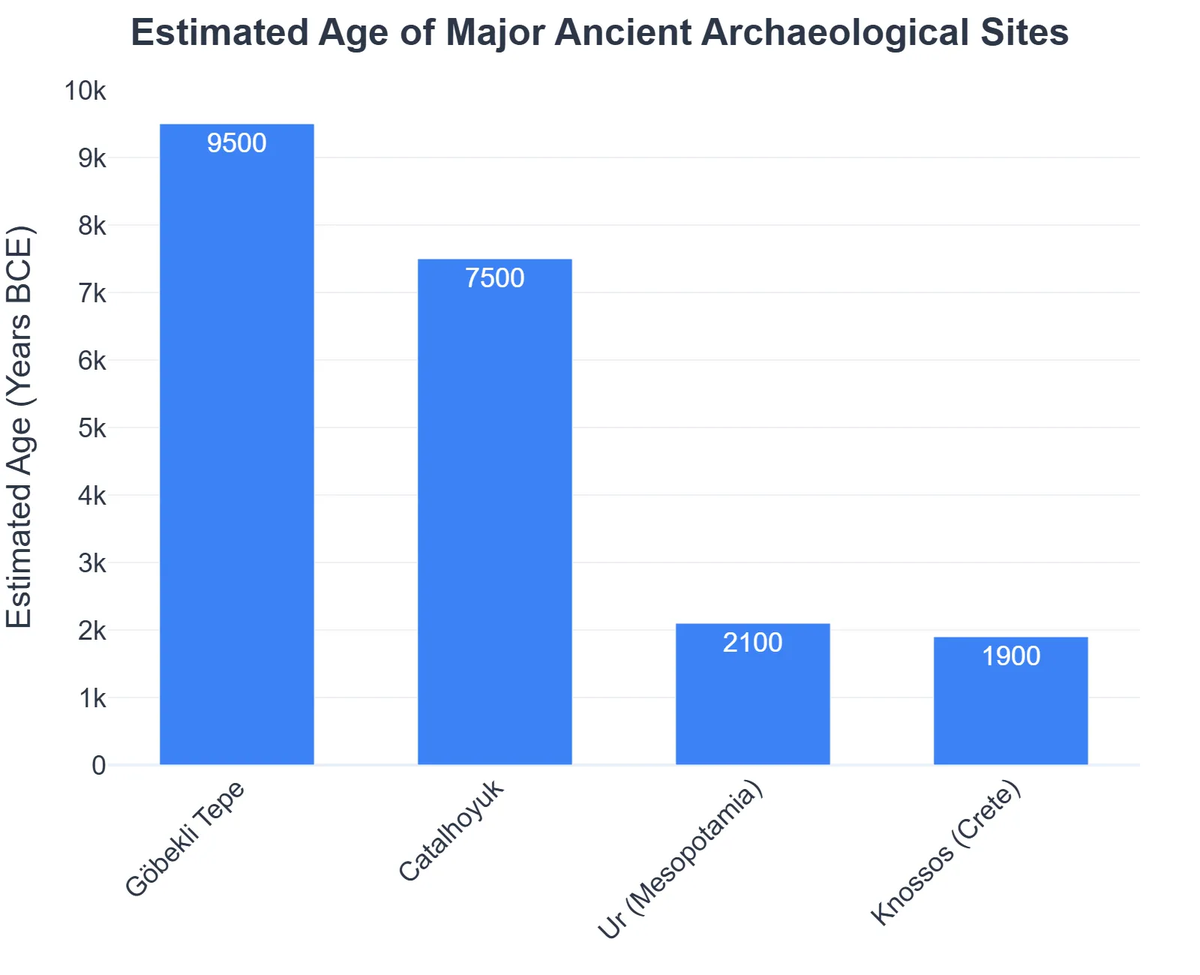
- ✅ Technological Advancements: Non-invasive methods like LiDAR and GPR allow for mapping vast areas quickly and efficiently.
- ✅ Global Collaboration: International teams bring diverse expertise and resources to complex sites.
- ✅ Citizen Science: Public engagement and awareness contribute to protecting sites and sometimes even reporting new ones.
- ✅ Climate Change Impact: While devastating, receding glaciers or changing coastlines sometimes reveal previously inaccessible sites.
Groundbreaking Discoveries Reshaping Ancient Narratives
Each year brings forth a wealth of archaeological insights, challenging long-held assumptions and adding incredible detail to the historical record. These `archeology latest finds` range from monumental architectural marvels to intimate personal effects, each providing crucial pieces to the puzzle of human civilization.
🗺️ Unearthing Hidden Civilizations and Settlements
Recent decades have seen incredible progress in identifying and understanding previously unknown, or poorly understood, ancient urban centers and settlements. Technologies have allowed archaeologists to map entire cities beneath dense vegetation or desert sands without ever breaking ground.
- 💡 Maya Discoveries: Extensive LiDAR scans in Central America have revealed vast, interconnected Maya urban landscapes, complete with sophisticated agricultural systems and defensive structures, far exceeding previous population estimates. This work is fundamentally changing our understanding of Maya societal complexity and scale. For a deeper understanding of this ancient civilization, explore our article on Unearthing Ancient Mysteries – CSUDH Magazine.
- 💡 Teotihuacan’s Secrets: Ongoing excavations at sites like Teotihuacan continue to reveal hidden tunnels and chambers beneath monumental pyramids, offering new insights into the spiritual beliefs and political structures of this enigmatic ancient city. Read more about these fascinating discoveries in Unearthing the Mysteries of Teotihuacan | UCR Magazine.
🏺 Revealing Ancient Rites and Burials
Burial sites and ritualistic spaces are time capsules, preserving invaluable information about social structures, belief systems, and daily lives. New finds are continuously shedding light on the spiritual dimensions of ancient cultures.
- ➡️ Egyptian Tombs: The discovery of previously undisturbed tombs near Luxor continues to provide a wealth of artifacts, mummies, and inscriptions, deepening our knowledge of pharaonic funerary practices and the lives of ancient Egyptians. This includes recent finds like those detailed in Three ancient Egyptian tombs unearthed near Luxor reveal secrets.
- ➡️ Pompeii’s Frescoes: Ongoing excavations in Pompeii, despite centuries of work, still yield breathtaking discoveries, such as remarkably preserved frescoes depicting mythological scenes and daily life, offering vivid glimpses into Roman culture and art. A notable example is the Rare Dionysian fresco unearthed in Pompeii depicts rituals.
To dive deeper into the broader context of archaeological breakthroughs, consider our comprehensive guide on Archaeology: Unearthing the Past and Lost Civilizations.
Archaeological Finds: Unearthing Ancient Mysteries
Pros
- ✔Expands understanding of human history and cultures.
- ✔Preserves valuable cultural heritage for future generations.
- ✔Drives advancements in scientific and dating technologies.
- ✔Can stimulate local tourism and economies.
Cons
- ✖Risk of irreversible damage to artifacts during excavation.
- ✖Raises complex ethical questions regarding ownership and repatriation.
- ✖Requires high costs and extensive time commitment.
- ✖Vulnerability to looting and illicit trade.
The Digital Revolution: Archaeology’s Latest Technology Trends
The pace of `archeology latest finds` is inextricably linked to the rapid advancement of technology. Modern archaeology embraces an array of sophisticated tools and methods, transforming it from a purely manual endeavor to a highly data-driven science. These `latest technology trends` are not just improving efficiency but are enabling discoveries previously unimaginable.
💻 Advanced Remote Sensing & Mapping
Remote sensing techniques are at the forefront of `new technology trends` in archaeology, allowing for non-invasive surveys of vast and often inaccessible terrains.
- ✅ LiDAR (Light Detection and Ranging): Revolutionizing jungle archaeology, LiDAR penetrates dense canopies to map hidden structures on the forest floor, revealing complex urban planning and agricultural systems where only wilderness was perceived.
- ✅ Ground-Penetrating Radar (GPR): Essential for urban and historical archaeology, GPR can detect subsurface anomalies like walls, foundations, and burials without excavation, guiding precise digging efforts.
- ✅ Satellite Imagery & Drone Mapping: High-resolution satellite data and drone photogrammetry enable large-scale site identification, change detection, and 3D modeling of landscapes and structures.
- ✅ AI and Machine Learning: Emerging `latest technologies and trends` include AI algorithms being trained to analyze vast datasets from surveys, identifying patterns and potential archaeological features more rapidly than human analysts.
🧬 Bioarchaeology and Genetic Insights
Advances in genetic analysis and isotopic studies are unlocking biological secrets from ancient remains, offering unprecedented detail about ancient populations.
- ➡️ Ancient DNA (aDNA): The study of aDNA provides insights into migration patterns, familial relationships, diets, diseases, and even the appearance of ancient peoples. This is particularly relevant for understanding human evolution, as explored in Hominid Evolution: Unearthing Our Ancestors.
- ➡️ Isotopic Analysis: By analyzing isotopes in teeth and bones, archaeologists can reconstruct ancient diets, mobility patterns, and environmental conditions, shedding light on how people lived and interacted with their surroundings.
These technological leaps mean that the `archeology latest finds` are often just the tip of the iceberg, with vast amounts of data yet to be analyzed and understood. The synergy between traditional fieldwork and these advanced tools is pushing the boundaries of what’s possible in unearthing our past.
Recommended Video
Beyond Excavation: Interpreting, Preserving, and Engaging
The journey of an archaeological find doesn’t end with its unearthing. In fact, that’s often just the beginning. The subsequent phases of interpretation, conservation, and public engagement are crucial for the `archeology latest finds` to truly contribute to human knowledge and be accessible to all.
🔬 Post-Excavation Analysis and Interpretation
Once artifacts and data are collected from the field, rigorous laboratory work begins. This involves:
- 💡 Cleaning and Cataloging: Meticulous processes to prepare artifacts for study and ensure proper record-keeping.
- 💡 Dating Techniques: Methods like radiocarbon dating, dendrochronology, and thermoluminescence provide chronological frameworks.
- 💡 Material Analysis: Scientific analyses determine the composition, origin, and manufacturing techniques of artifacts, revealing ancient technologies and trade networks.
- 💡 Contextualization: Integrating all data points – from stratigraphy to artifact distribution – to reconstruct the past activities and environment of the site.
🏛️ Conservation and Heritage Management
Preserving the `archeology latest finds` for future generations is a paramount ethical responsibility. Conservation efforts aim to stabilize, restore, and protect artifacts and sites from degradation.
- ➡️ On-site Conservation: Protecting exposed structures from environmental damage.
- ➡️ Laboratory Conservation: Treating delicate artifacts to prevent further decay.
- ➡️ Digital Preservation: Creating 3D models and digital archives of sites and artifacts ensures their survival even if physical remains are lost.
- ➡️ Sustainable Heritage Management: Balancing research, conservation, and tourism to ensure sites remain intact and accessible.
📢 Public Engagement and Education
Archaeology is not just for academics; its findings belong to everyone. Sharing the `archeology latest finds` with the public is vital for fostering appreciation for cultural heritage.
- ✅ Museum Exhibitions: Curating displays that bring ancient worlds to life.
- ✅ Digital Platforms: Websites, documentaries, and social media provide virtual access to discoveries.
- ✅ Educational Programs: Outreach initiatives for schools and communities, inspiring the next generation of archaeologists and historians.
The future of archaeology continues to be bright, with ongoing investigations and the promise of even more significant `archeology latest finds`. To delve deeper into the rich tapestry of our past, explore topics like Lost Worlds & Forgotten Histories: Unearthing the Past’s Greatest Riddles and stay tuned for the latest updates.
What are some of the most significant recent archaeological discoveries?
Recent breakthroughs include new insights into Gobekli Tepe’s builders, newly mapped Amazonian cities, and more definitive evidence of early human migration routes.
How do archaeologists determine the age of ancient artifacts?
Archaeologists use various methods like radiocarbon dating for organic materials, stratigraphy to determine relative age, and thermoluminescence for pottery and burnt flint.
Where are the most active archaeological sites currently located?
Currently active regions with ongoing major discoveries include the Middle East (e.g., Turkey, Egypt), Central and South America (e.g., Peru, Mexico), and parts of East Asia.
How can I learn more about archaeological discoveries?
You can learn more by following reputable science news sites, subscribing to archaeological journals, visiting museum exhibits, and exploring online databases from universities and research institutions.