


Aurora Borealis vs. Aurora Australis: A Comprehensive Comparison
The celestial ballet of the auroras paints the polar skies with ethereal glows, captivating observers worldwide. While many are familiar with the famed northern lights and southern lights, often referred to as the Aurora Borealis, fewer distinguish between these two magnificent polar phenomena. Are they merely geographical opposites, or do intrinsic differences set them apart? This article delves deep into the science, visibility, and unique characteristics of the Aurora Borealis and Aurora Australis, providing an authoritative comparison for both aspiring aurora chasers and seasoned sky-gazers.
💡 Key Takeaways
- Both auroras are caused by charged particles interacting with Earth’s magnetic field, exciting atmospheric gases.
- Their primary difference lies in their geographical location and visibility from their respective hemispheres.
- Optimal viewing times for both typically align with their hemisphere’s darkest, coldest months (winter).
- While visually similar, their appearance can be influenced by local atmospheric conditions and the strength of the solar wind.
“While seemingly mirror images, the subtle dance of magnetic field lines and solar winds imbues each aurora with its own unique cosmic fingerprint, a beautiful testament to our planet’s interaction with the solar system.”
— Astrid Bellweather, Astrophysicist & Science Fiction Consultant
Understanding these cosmic spectacles not only enhances our appreciation for Earth’s natural wonders but also offers insights into our planet’s interaction with the vastness of space. For those fascinated by the universe’s grand designs and cosmic queries, exploring such phenomena is a journey into the heart of scientific discovery.
In This Article
- → Aurora Borealis vs. Aurora Australis: A Comprehensive Comparison
- — 💡 Key Takeaways
- → What Are the Auroras? A Brief Scientific Overview
- — The Fundamental Mechanism
- — The Role of the Sun and Earth’s Magnetosphere
- → Aurora Borealis: The Northern Spectacle
- — Geographic Visibility and Best Locations
- — Seasonal Viewing Considerations
- → Aurora Australis: The Southern Counterpart
- — Geographic Visibility and Best Locations
- — Seasonal Viewing Considerations
- → Key Differences Between the Northern and Southern Lights
- — Location and Accessibility
- — Timing and Peak Seasons
- — Intensity and Frequency
- — Observer Base and Tourism Infrastructure
- → Similarities: Two Sides of the Same Cosmic Coin
- — Underlying Physics
- — Common Colors and Forms
- — Connection to Solar Activity
- → Planning Your Aurora Chase: Tips for Both Hemispheres
- — Understanding Kp-Index and Forecasts
- — Essential Gear and Preparedness
- — The Value of Polar Travel Guides
- → Beyond Earth: Auroras in the Solar System
- → Conclusion
What Are the Auroras? A Brief Scientific Overview
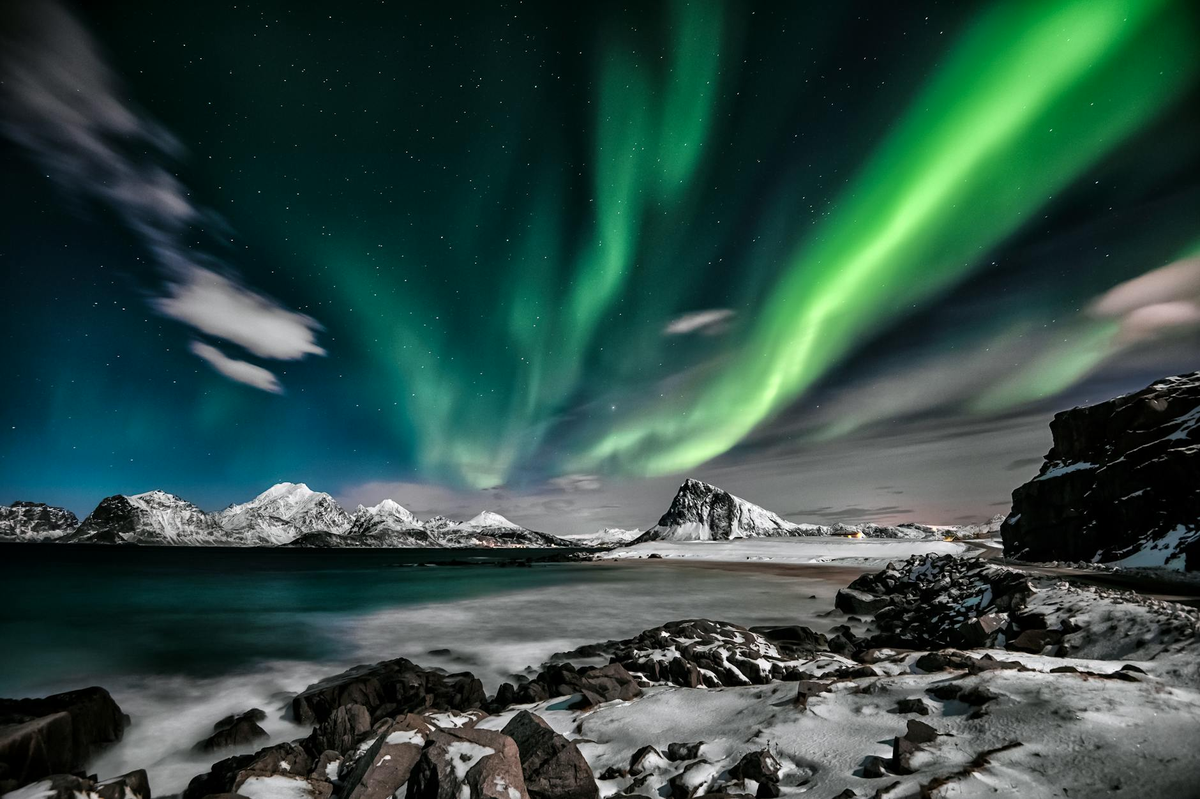
At their core, both the Aurora Borealis and Aurora Australis are manifestations of charged particles from the sun colliding with gases in Earth’s atmosphere. This fundamental mechanism underpins all aurora activity, regardless of the hemisphere.
The Fundamental Mechanism
The process begins with the sun, which constantly emits a stream of charged particles known as the solar wind. During solar flares or coronal mass ejections (CMEs), these emissions intensify, sending a surge of electrons and protons hurtling towards Earth. Upon reaching our planet, these particles encounter Earth’s magnetic field, which acts as a protective shield, deflecting most of the solar wind.
However, at the magnetic poles, the field lines converge, creating ‘funnels’ through which some of these charged particles can penetrate the upper atmosphere. As these high-energy particles collide with atoms and molecules of gases like oxygen and nitrogen, they excite these atmospheric particles. When the excited particles de-excite, they release energy in the form of light, creating the stunning auroral displays we observe. The specific colors depend on the type of gas atom hit and the altitude of the collision:
- Green: Oxygen atoms, typically at altitudes of 100-250 km. This is the most common aurora color.
- Red: Higher-altitude oxygen, above 250 km, or lower-altitude nitrogen.
- Blue/Purple: Nitrogen molecules, usually at lower altitudes (below 100 km).
For a more in-depth look into the physics behind these celestial lights, consider exploring resources like the Wikipedia page on Aurora, which provides a comprehensive scientific overview.
The Role of the Sun and Earth’s Magnetosphere
The intensity and frequency of both the northern lights southern lights are intrinsically linked to solar activity. Periods of increased solar flares and CMEs, particularly during the solar maximum phase of the sun’s approximately 11-year cycle, lead to more frequent and spectacular auroral displays. These solar events directly influence the strength of the solar wind and the number of charged particles reaching Earth’s magnetosphere. The dynamic interplay between these cosmic forces is a constant source of fascination and study.

Aurora Borealis: The Northern Spectacle
The Aurora Borealis, or northern lights, is perhaps the more widely recognized of the two auroral phenomena, largely due to its greater accessibility for a significant portion of the global population. This stunning light show illuminates the skies of the Northern Hemisphere, enchanting millions annually.
Geographic Visibility and Best Locations
The Aurora Borealis is visible in a region known as the “auroral oval,” which encircles the magnetic North Pole. Key regions for viewing include:
- Scandinavia: Norway (Tromsø, Lofoten, North Cape), Sweden (Abisko), Finland (Lapland).
- North America: Canada (Yukon, Northwest Territories, Manitoba), Alaska (Fairbanks, Anchorage).
- Other Northern Regions: Iceland, Greenland, Russia (Murmansk, Siberia).
These locations fall within latitudes roughly between 60 and 75 degrees North, offering optimal chances for viewing. The infrastructure for aurora tourism in these areas is highly developed, making it relatively straightforward for visitors to plan trips. For a deeper dive into the specific characteristics and viewing tips, you might find our article on Aurora Borealis: Understanding the Northern Lights particularly useful.
Seasonal Viewing Considerations
The best time to see the Aurora Borealis is during the long, dark nights of winter, typically from late August to April. The darker the sky, the more vibrant the aurora appears. While solar activity drives the aurora, clear skies and minimal light pollution are crucial for visibility. Peak months often fall between September/October and February/March, offering a balance of dark nights and more manageable weather conditions compared to the deepest winter months.
Aurora Australis: The Southern Counterpart
The Aurora Australis, or southern lights, is the less-frequently observed but equally breathtaking counterpart to the northern aurora. It graces the skies around the magnetic South Pole, offering a unique spectacle for those who venture to the Earth’s remote southern reaches.
Geographic Visibility and Best Locations
Like its northern twin, the Aurora Australis appears within an auroral oval, this one surrounding the magnetic South Pole. Due to the sparse landmasses in the Southern Hemisphere at high latitudes, viewing opportunities are more limited. Primary viewing locations include:
- Antarctica: The continent itself offers the most spectacular and frequent views, but is largely inaccessible to general tourists. Scientific research stations regularly report stunning displays.
- Southern Oceania: Tasmania (Australia), South Island (New Zealand).
- Sub-Antarctic Islands: South Georgia, Falkland Islands.
- Extreme Southern Latitudes: Parts of Chile and Argentina, though sightings here are less frequent and typically require strong solar activity.
The remoteness of these locations contributes to the mystique of the southern lights. Travelers must often embark on specialized expeditions or live in specific regions to witness this phenomenon.
Seasonal Viewing Considerations
The optimal viewing season for the Aurora Australis mirrors that of the north, but due to the opposite seasons in the hemispheres, it is best seen during the Southern Hemisphere’s winter, typically from March to September. The peak months often align with June, July, and August, when nights are longest and darkest in the southern latitudes. Similar to the northern lights, clear, dark skies are paramount for a good viewing experience.
Key Differences Between the Northern and Southern Lights
While sharing a common scientific origin, the Aurora Borealis and Aurora Australis exhibit several distinct differences that impact their accessibility and overall viewing experience.
Location and Accessibility
This is arguably the most significant practical difference. The Northern Hemisphere boasts a greater landmass at high latitudes, including populous nations and established tourism industries. This makes it far easier for people to travel to and stay in prime viewing locations for the aurora borealis. In contrast, the Southern Hemisphere’s high latitudes are predominantly ocean, with Antarctica at its center. This geographical reality makes the Aurora Australis inherently more challenging to witness.
- Northern Hemisphere: Accessible via well-developed road networks, airports, and tourist facilities in places like Norway, Iceland, Canada, and Alaska.
- Southern Hemisphere: Primarily accessible via expedition cruises to Antarctica, or from the southern tips of Australia and New Zealand, where sightings are less frequent and often require clearer conditions and higher solar activity.
Timing and Peak Seasons
As discussed, the seasons are inverted. When it’s winter (and thus prime aurora viewing) in the Northern Hemisphere, it’s summer in the Southern Hemisphere, and vice versa. This means:
- Aurora Borealis: Best seen from late August to April.
- Aurora Australis: Best seen from March to September.
This inversion means that if you miss the northern lights during one part of the year, you can potentially catch the southern lights during your next travel window, provided you’re willing to make the journey south.
Intensity and Frequency
The common misconception that one aurora is inherently “better” or more intense than the other is largely unfounded. Both the southern and northern lights are powered by the same solar phenomena and display similar intensities and colors when observed under optimal conditions. The perceived difference in frequency is often due to the differing observation points:
- Perceived Frequency: The Aurora Borealis appears more frequently to more people simply because there are more observation points (cities, towns, research stations) within its auroral oval.
- Actual Frequency: Both magnetic poles experience auroras with roughly equal frequency and intensity, provided solar activity is consistent. What changes is the human ability to observe them.
Observer Base and Tourism Infrastructure
The extensive landmass and established populations in the North have led to a highly developed aurora tourism industry. There are numerous polar travel guides, tour operators, and specialized accommodations dedicated to northern lights viewing. This infrastructure supports a large base of aurora chasers.
Northern vs. Southern Lights: A Comparative Overview
Pros
- ✔Aurora Borealis: More numerous and accessible land-based viewing locations with established tourism.
- ✔Aurora Borealis: Extensive infrastructure for tours and accommodations in popular northern regions.
- ✔Aurora Australis: Offers a more remote and less crowded viewing experience for those who can reach it.
- ✔Aurora Australis: Unique viewing opportunities from Antarctica or southern island nations.
Cons
- ✖Aurora Borealis: Popular viewing spots can become very crowded, detracting from the experience.
- ✖Aurora Borealis: Generally higher travel and tour costs due to established tourist demand.
- ✖Aurora Australis: Significantly fewer easily accessible land-based viewing locations.
- ✖Aurora Australis: Reaching prime southern observation points often requires more challenging and expensive travel.
For the Aurora Australis, the observer base is significantly smaller. While there are niche polar travel guides and expeditions, particularly to Antarctica, the sheer volume and variety of tours are fewer. This makes the Aurora Australis a more exclusive, and often more challenging, pursuit.
Similarities: Two Sides of the Same Cosmic Coin
Despite their geographical separation and differences in accessibility, the Aurora Borealis and Aurora Australis are fundamentally identical phenomena, sharing common underlying physics and visual characteristics.
Underlying Physics
As previously detailed, the mechanism of formation is identical: charged particles from the sun interacting with Earth’s magnetic field and atmosphere. This fundamental physical process ensures that the light production, the types of gases involved, and the energy transformations are precisely the same for both the southern and northern lights.
Common Colors and Forms
The colors of the aurora (green, red, blue, purple) are determined by the specific gases in the atmosphere (oxygen, nitrogen) and the altitude at which collisions occur, not by the hemisphere. Therefore, both auroras display the same palette of colors. Similarly, the forms they take – arcs, bands, rays, coronas, and diffuse glows – are universal and depend on the intensity of the solar wind and the magnetic field’s configuration at the time of the display.
Connection to Solar Activity
Both aurora borealis and aurora australis are directly influenced by solar storms and the sun’s 11-year solar cycle. A strong solar flare or coronal mass ejection hitting Earth’s magnetosphere will cause spectacular displays in both hemispheres simultaneously. For more on this crucial connection, read our article Northern Lights and Solar Storms: A Cosmic Connection.
Planning Your Aurora Chase: Tips for Both Hemispheres
Whether you’re aiming for the northern or southern lights, meticulous planning significantly increases your chances of a successful sighting. Expert advice and preparedness are key to witnessing these elusive wonders.
Understanding Kp-Index and Forecasts
The Kp-index is a scale that measures geomagnetic activity on a scale from 0 to 9. A higher Kp-index indicates stronger geomagnetic activity and thus a higher likelihood of an aurora. While a Kp of 3 or higher can often produce visible auroras in prime locations, a Kp of 5 or higher (a G1-storm) can expand the auroral oval, making the lights visible at lower latitudes. Various online resources provide real-time Kp forecasts, which are invaluable for planning your viewing nights.
Essential Gear and Preparedness
Chasing the aurora often involves spending hours outdoors in cold, dark conditions. Proper gear is non-negotiable:
- Warm Clothing: Layering is crucial. Include thermal base layers, a warm mid-layer, and a waterproof/windproof outer shell. Don’t forget insulated boots, thick socks, gloves, and a hat.
- Camera Equipment: A DSLR or mirrorless camera with a wide-angle lens (f/2.8 or faster) and a sturdy tripod are essential for capturing stunning aurora photos.
- Red-Light Headlamp: Preserves night vision.
- Hot Drinks and Snacks: To stay warm and energized.
- Patience: The aurora is unpredictable. Be prepared to wait, and enjoy the starry sky even if the lights don’t appear immediately.
The Value of Polar Travel Guides
For first-time aurora chasers or those seeking a hassle-free experience, engaging with specialized polar travel guides can be invaluable. These guides and tour operators offer:
- Expert Knowledge: They know the best viewing locations, local weather patterns, and can interpret aurora forecasts.
- Logistical Support: Arranging transport, accommodation, and often providing warm gear.
- Safety: Navigating remote, cold environments requires expertise that guides provide.
- Enhanced Experience: Many tours include cultural insights, photography tips, and other activities like dog sledding or ice fishing, enriching your trip even if the aurora is shy.
Whether you opt for a package tour or self-plan, consulting reliable polar travel guides and resources is paramount to making your dream of witnessing the lights a reality. These guides often provide insights into what to expect from both the Northern Lights and Southern Lights.
Beyond Earth: Auroras in the Solar System
The phenomenon of auroras is not unique to Earth. Other planets in our solar system that possess strong magnetic fields and atmospheres also exhibit auroral displays. Gas giants like Jupiter, Saturn, Uranus, and Neptune all showcase their own versions of these celestial lights, often on scales far grander than Earth’s. Saturn, for instance, has particularly vibrant and dynamic auroras, offering a fascinating parallel to our own. You can explore more about these extraterrestrial light shows in our article on Saturn Auroras: Majestic Lights Beyond Earth, which delves into the unique characteristics of auroras beyond our home planet.
Recommended Video
Conclusion
The Aurora Borealis and Aurora Australis are truly two sides of the same cosmic coin. While identical in their breathtaking beauty and underlying scientific principles, their geographical locations create distinct challenges and opportunities for observation. The northern lights, with their easier accessibility, have charmed a wider audience and fostered a robust tourism industry. The southern lights, though more elusive, offer an equally profound and often more exclusive experience for those who make the journey to the Earth’s remote southern frontiers.
Whether you dream of witnessing the vibrant green curtains dancing over a frozen Nordic landscape or the subtle glows above an Antarctic ice sheet, understanding these magnificent phenomena enriches the experience. Both the northern lights and southern lights stand as powerful reminders of the intricate and dynamic relationship between our sun, Earth’s magnetic field, and its atmosphere – a celestial wonder that continues to inspire awe and curiosity across the globe. As we continue to probe the mysteries of the universe, such natural wonders remind us of the boundless beauty that surrounds us, connecting us to the grand cosmic queries that define human exploration.
Frequently Asked Questions
What causes the Aurora Borealis and Aurora Australis?
Both auroras are caused by solar wind charged particles (electrons and protons) colliding with atoms and molecules in Earth’s upper atmosphere, exciting them and causing them to emit light.
Are the colors of the Northern and Southern Lights different?
No, the colors are generally the same (greens, reds, purples) as they depend on the type of gas atoms (oxygen, nitrogen) and the altitude of the collisions, not the hemisphere.
When is the best time to see each aurora?
The Aurora Borealis is best seen during the northern winter (September-March), and the Aurora Australis during the southern winter (March-September), primarily due to longer hours of darkness.
Can you see both auroras from the equator?
No, auroras are concentrated around the Earth’s magnetic poles and are rarely visible from equatorial regions, except during exceptionally strong solar storms that extend the auroral oval.