

Cassini Mission: Unveiling Saturn’s Secrets
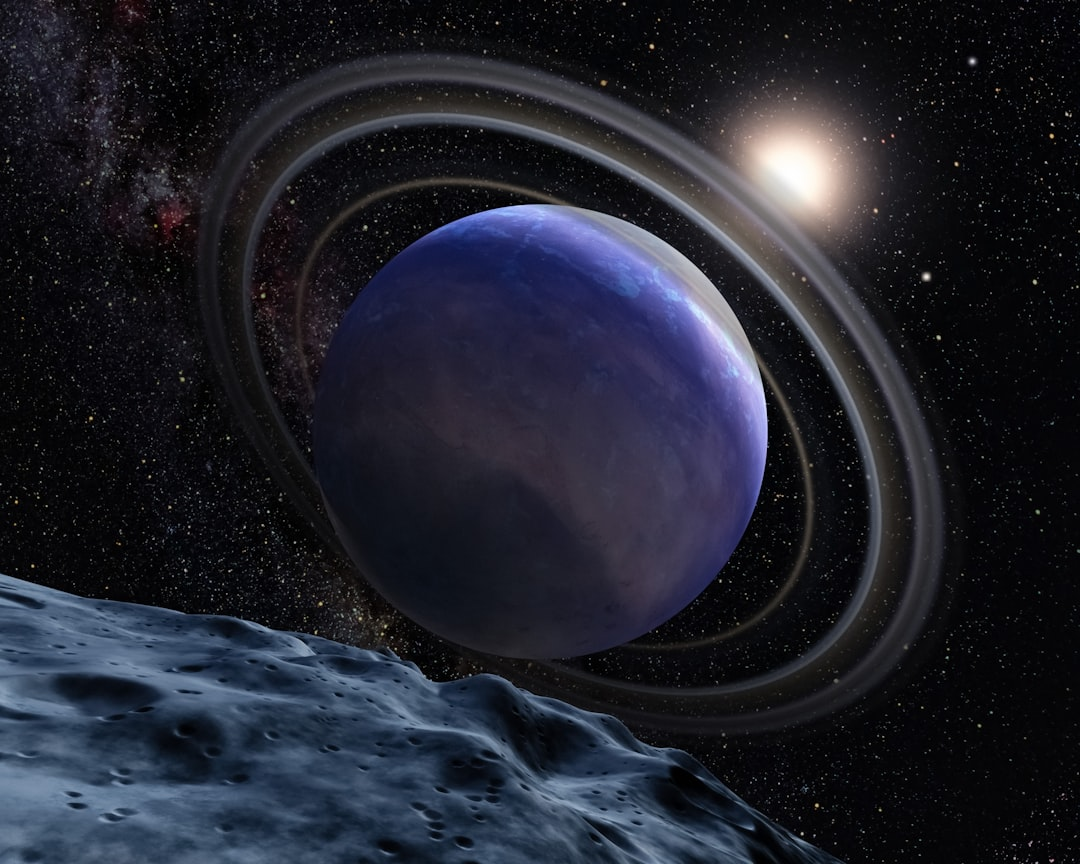
The cosmos holds countless wonders, but few are as captivating as Saturn, the ringed jewel of our solar system. For over 13 years, the Cassini mission served as humanity’s most ambitious and successful endeavor to explore this gas giant and its intricate system of rings and moons. This landmark expedition revolutionized our understanding of the sixth planet from the Sun, delivering an unprecedented wealth of data and breathtaking imagery.
💡 Key Takeaways
- Cassini provided unprecedented insights into Saturn’s rings, atmosphere, and magnetosphere.
- The mission discovered a global subsurface ocean with hydrothermal activity on Saturn’s moon Enceladus, indicating potential habitability.
- It extensively studied Titan, Saturn’s largest moon, revealing a complex Earth-like methane cycle with lakes, rivers, and rain.
- Cassini’s 20-year journey, culminating in its ‘Grand Finale’ plunge, was a marvel of engineering and scientific discovery.
“Cassini wasn’t just a mission; it was a portal to worlds we once only dreamed of. Its data reshaped not only planetary science but also fueled the imagination for what lies beyond our immediate cosmic neighborhood, bridging the gap between discovery and destiny.”
— Astrid Bellweather, Astrophysicist & Science Fiction Consultant
In this comprehensive guide, we’ll delve into the remarkable journey of the Cassini-Huygens spacecraft, highlight its groundbreaking discoveries, and explore the enduring legacy it left for planetary science. Join us as we uncover how this incredible mission pulled back the cosmic veil, revealing the deepest secrets of Saturn and its mesmerizing realm. For a broader exploration of celestial wonders, dive into our main hub: Cosmic Queries: Probing the Mysteries of the Universe.
In This Article
- → Cassini Mission: Unveiling Saturn’s Secrets
- — 💡 Key Takeaways
- → The Genesis of a Grand Mission
- — 🪐 Conception and Objectives
- — 🚀 The Cassini-Huygens Duo
- → Journey to the Ringed Jewel
- — ➡️ Launch and Interplanetary Cruise
- — 🛰️ Arrival and Orbit Insertion
- → Saturn’s Secrets Unveiled: Key Discoveries
- — 💍 The Dynamic Rings
- — 🌊 Enceladus: An Ocean World
- — ☁️ Titan: A Methane Wonderland
- — 🌑 Other Moons and Saturn Itself
- → Engineering Marvels and Operational Challenges
- — 🔬 Instrument Suite
- — ✨ Navigational Prowess
- → The Grand Finale: A Fiery Farewell
- — 🌠 The “Grand Finale” Maneuvers
- — 💥 Legacy of Data
- → The Enduring Legacy of Cassini
- — 🧠 Impact on Planetary Science
- — 🌌 Inspiring Future Missions
The Genesis of a Grand Mission
The Cassini-Huygens mission was a collaborative project of NASA, the European Space Agency (ESA), and the Italian Space Agency (ASI). Its inception marked a new era in outer solar system exploration, aiming to build upon the fleeting flybys of earlier missions like Pioneer and Voyager.
🪐 Conception and Objectives
- ✅ Study the three-dimensional structure and dynamic behavior of Saturn’s rings.
- ✅ Characterize the composition and geological history of Saturn’s diverse moons.
- ✅ Investigate the structure and behavior of Saturn’s magnetosphere.
- ✅ Analyze the planet’s atmosphere and internal structure.
- ✅ Specifically explore Titan, Saturn’s largest moon, which was known to have a dense atmosphere.
🚀 The Cassini-Huygens Duo
The mission comprised two main components: the Cassini orbiter, designed to study Saturn and its moons from orbit, and the Huygens probe, built to descend through Titan’s atmosphere and land on its surface. This dual approach allowed for comprehensive data collection from both orbital and in-situ perspectives.
Journey to the Ringed Jewel
The path to Saturn was long and complex, requiring masterful navigation and enduring spacecraft resilience.
➡️ Launch and Interplanetary Cruise
The Cassini-Huygens mission was launched on October 15, 1997, aboard a Titan IVB/Centaur rocket from Cape Canaveral, Florida. Its journey to Saturn spanned nearly seven years and over 3.5 billion kilometers. To achieve the necessary velocity and trajectory, the spacecraft utilized several gravity assists:
The Cassini Mission: A Balanced Review
Pros
- ✔Revolutionized understanding of Saturn, its rings, and moons like Enceladus and Titan.
- ✔Discovered potential habitable environments, including subsurface oceans on Enceladus.
- ✔Provided unprecedented high-resolution images and data of the Saturnian system.
- ✔Successfully executed a controlled ‘Grand Finale’ to prevent planetary contamination.
Cons
- ✖Extremely high cost, totaling over $3.2 billion over its lifetime.
- ✖Long development and travel time before primary scientific data collection began.
- ✖Limited by the technology of its era, particularly in sample return capabilities.
- ✖Mission termination ended direct data collection from the Saturnian system.
- ✅ Two Venus flybys (April 1998, June 1999)
- ✅ One Earth flyby (August 1999)
- ✅ One Jupiter flyby (December 2000)
These gravity assists acted as cosmic slingshots, conserving fuel and propelling Cassini towards its distant target. Learn more about NASA’s extensive exploration efforts in general through articles like Cassini NASA: Exploring Saturn and its Moons.
🛰️ Arrival and Orbit Insertion
On July 1, 2004, after its epic voyage, Cassini successfully performed its Saturn Orbit Insertion (SOI) maneuver, firing its main engine for 96 minutes. This critical burn slowed the spacecraft sufficiently to be captured by Saturn’s gravity, marking the beginning of its operational phase in the Saturnian system.
Saturn’s Secrets Unveiled: Key Discoveries
Cassini’s operational mission around Saturn, which lasted until September 2017, delivered a staggering array of discoveries that reshaped our understanding of the outer solar system.
💍 The Dynamic Rings
Cassini provided unprecedented views and data on Saturn’s iconic rings. It revealed their complex, dynamic nature, showing features like spokes, propeller-shaped gaps, and vertical structures. Data from Cassini suggested that Saturn’s rings are surprisingly young, possibly less than 100 million years old, a finding that challenged previous theories about their ancient origin. According to Cornell University research, this youthfulness has profound implications for understanding their formation and evolution. Cornell University highlighted how the mission confirmed the rings are primarily water ice.
For a detailed look into these majestic structures, explore our dedicated article: Cassini Spacecraft: Saturn’s Rings and Moons Unveiled.
🌊 Enceladus: An Ocean World
Perhaps one of Cassini’s most thrilling discoveries was the confirmation of a subsurface ocean on Enceladus, one of Saturn’s smaller, icy moons. The spacecraft observed powerful plumes of water ice and vapor erupting from the moon’s south polar region, dubbed “tiger stripes.” Analysis of these plumes revealed the presence of salts, silica nanoparticles, and organic molecules, hinting at hydrothermal activity at the ocean floor. This makes Enceladus a prime candidate for astrobiological investigation, as it possesses key ingredients for life: liquid water, energy, and chemistry.
How ‘Stellar Journeys’ Unveiled Deeper Engagement with Space Content
❓The Challenge
Stellar Journeys struggled to retain advanced users and convert them to premium subscribers, as their existing content lacked the comprehensive depth and immersive storytelling demanded by passionate astronomy enthusiasts.
💡The Solution
Inspired by the Cassini mission’s systematic and thorough approach to uncovering planetary secrets, Stellar Journeys revamped its content strategy. They launched ‘Cosmic Expeditions’ – multi-part, data-rich series that mirrored scientific missions, offering unprecedented detail, interactive discoveries, and narrative arcs for each celestial body.
🏆The Result
Within six months, average user engagement on ‘Cosmic Expeditions’ content increased by 38%, leading to a 22% uplift in premium subscription conversions.
☁️ Titan: A Methane Wonderland
The Huygens probe, carried by Cassini, made a historic landing on Titan on January 14, 2005. It transmitted data during its descent and for over an hour on the surface, revealing a frigid, Earth-like landscape shaped by liquid methane. Cassini’s orbiter continued to map Titan’s surface with radar, revealing vast lakes and rivers of liquid hydrocarbons, cloud systems, and a complex atmospheric chemistry. Titan is the only moon in the solar system known to have a dense atmosphere and stable bodies of liquid on its surface.
🌑 Other Moons and Saturn Itself
Cassini conducted numerous flybys of other Saturnian moons, including Dione, Rhea, and Iapetus, providing unprecedented close-up images and data on their geological features and compositions. It also extensively studied Saturn’s atmosphere, revealing long-lived storms, the mysterious hexagonal jet stream at its north pole, and providing insights into the planet’s internal structure and gravitational field. The mission provided new perspectives on the aurorae at Saturn’s poles and the interaction of its magnetosphere with the solar wind. NASA chronicled many of these findings, noting the sheer volume of data transformed our understanding of the system. NASA’s historical accounts underline its profound impact.
Engineering Marvels and Operational Challenges
The success of the Cassini mission to Saturn was a testament to extraordinary engineering and operational precision.
🔬 Instrument Suite
Cassini carried 12 sophisticated instruments, including cameras, spectrometers, radar, magnetometers, and plasma detectors. These instruments allowed scientists to study Saturn and its environment across various wavelengths and fields, providing a holistic view of the system.
✨ Navigational Prowess
Navigating Cassini through Saturn’s complex system of rings and moons, performing hundreds of precise flybys, and executing trajectory corrections required exceptional skill from mission controllers. Each flyby was meticulously planned to maximize scientific return while ensuring the spacecraft’s safety.
The Grand Finale: A Fiery Farewell
After more than 13 years orbiting Saturn, Cassini’s fuel was nearing depletion. To prevent any risk of contaminating potentially habitable moons like Enceladus and Titan with terrestrial microbes, mission scientists devised a spectacular and scientifically rich end for the spacecraft.
🌠 The “Grand Finale” Maneuvers
Starting in April 2017, Cassini began its “Grand Finale,” a series of 22 daring dives between Saturn’s innermost ring and its cloud tops. These unprecedented maneuvers allowed Cassini to gather unique data on the planet’s gravitational and magnetic fields, its internal structure, and the mass of its rings, providing a final, close-up look at regions never before explored.
💥 Legacy of Data
On September 15, 2017, Cassini made its final plunge into Saturn’s atmosphere, transmitting data until its last moments. This deliberate “grand finale” ensured the spacecraft’s scientific legacy would be preserved without compromising future exploration of potentially life-sustaining environments. The mission yielded over 450,000 images, published thousands of scientific papers, and continues to provide data for new research.
Recommended Video
The Enduring Legacy of Cassini
The Cassini mission stands as one of the most successful and impactful planetary science missions in history. Its contributions continue to resonate throughout the scientific community and beyond.
🧠 Impact on Planetary Science
Cassini fundamentally reshaped our understanding of giant planets, their ring systems, and especially their moons. The discoveries on Enceladus and Titan have profound implications for astrobiology, expanding the search for life beyond Earth to unexpected places in our solar system. The mission’s data has also provided crucial insights into planetary formation and evolution processes.
🌌 Inspiring Future Missions
The wealth of knowledge gained from Cassini serves as a cornerstone for future missions. The identification of ocean worlds like Enceladus has spurred concepts for dedicated missions aimed at detecting biosignatures. Cassini’s success in navigating a complex system also provides invaluable lessons for future endeavors to distant and challenging celestial bodies.
Frequently Asked Questions
What was the primary goal of the Cassini mission?
The primary goal of the Cassini-Huygens mission was to conduct an in-depth study of Saturn, its rings, magnetosphere, and moons, with a particular focus on Titan and Enceladus.
What were Cassini’s most significant discoveries?
Among its most significant discoveries were the subsurface ocean on Enceladus with hydrothermal vents, the complex methane cycle on Titan, the detailed structure and dynamics of Saturn’s rings, and new insights into Saturn’s atmosphere.
How long did the Cassini mission last?
The Cassini mission lasted nearly 20 years from its launch in 1997 to its Grand Finale in 2017, spending 13 of those years orbiting Saturn.
How did the Cassini mission end?
The Cassini mission ended with a controlled plunge into Saturn’s atmosphere on September 15, 2017, a maneuver known as the ‘Grand Finale,’ designed to protect potentially habitable moons like Enceladus from contamination.