

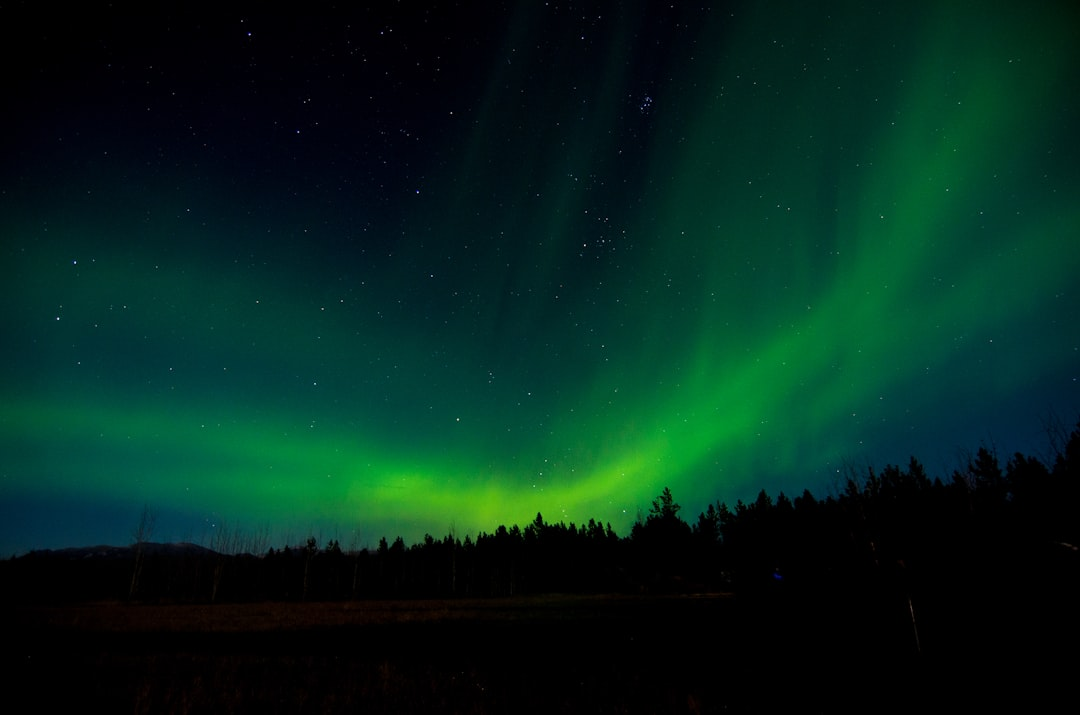
Saturn, the ringed jewel of our solar system, captivates us with its majestic beauty. Beyond its iconic rings, however, lies another breathtaking phenomenon: its own dazzling auroras. Much like Earth’s famous Northern and Southern Lights, these ethereal glows dance above Saturn’s poles, painting its atmosphere with energetic light.
💡 Key Takeaways
- Saturn’s auroras are generated by interactions between solar winds, the planet’s magnetic field, and its atmosphere.
- Unlike Earth’s, Saturn’s auroras are often observed in ultraviolet and infrared light, not just visible.
- Studying these auroras helps scientists understand Saturn’s internal structure and atmospheric dynamics.
- Missions like Cassini have provided unprecedented views and data on these majestic light shows.
“Saturn’s auroras are not just breathtaking cosmic art; they are powerful probes into the planet’s very core, revealing the complex interplay of its magnetic field, internal dynamo, and the distant sun’s influence. To understand them is to understand the soul of a gas giant.”
— Astrid Bellweather, Astrophysicist & Science Fiction Consultant
Understanding these distant light shows offers profound insights into planetary magnetospheres, atmospheric compositions, and the intricate dance between solar winds and celestial bodies. While we are familiar with the aurora borealis on Earth, the aurora borealis on Saturn presents a far grander and more complex spectacle, fueled by different mechanisms and manifesting in unique ways. In this comprehensive guide, we’ll delve into the science behind Saturn’s auroras, how we observe them, and what they tell us about the distant gas giant.
In This Article
- — 💡 Key Takeaways
- → ✨ What Are Auroras, Universally Speaking?
- — ➡️ The Basics of Planetary Auroras
- — 🌎 Earth’s Familiar Display
- → 🌌 The Unique Science Behind Saturn’s Auroras
- — 🧲 Saturn’s Magnetic Field and Atmosphere
- — ⚡ Sources of Energetic Particles
- — 💡 X-Ray and Infrared Auroras
- → 🔭 How Do We Observe Saturn’s Auroras?
- — 🛰️ The Cassini-Huygens Mission’s Contributions
- — 🚀 Hubble Space Telescope and Other Observatories
- → ↔️ Differences Between Earth and Saturn Auroras
- — 🧭 Magnetic Field Strength and Orientation
- — 🌈 Atmospheric Composition and Color
- — ⏱️ Variability and Drivers
- → 🔬 Why Study Saturn’s Auroras?
- — 🌐 Understanding Planetary Magnetospheres
- — 💡 Clues to Saturn’s Interior and Dynamics
- — 🚀 Broader Implications for Exoplanets
- → Conclusion: A Cosmic Light Show Unveiled
✨ What Are Auroras, Universally Speaking?
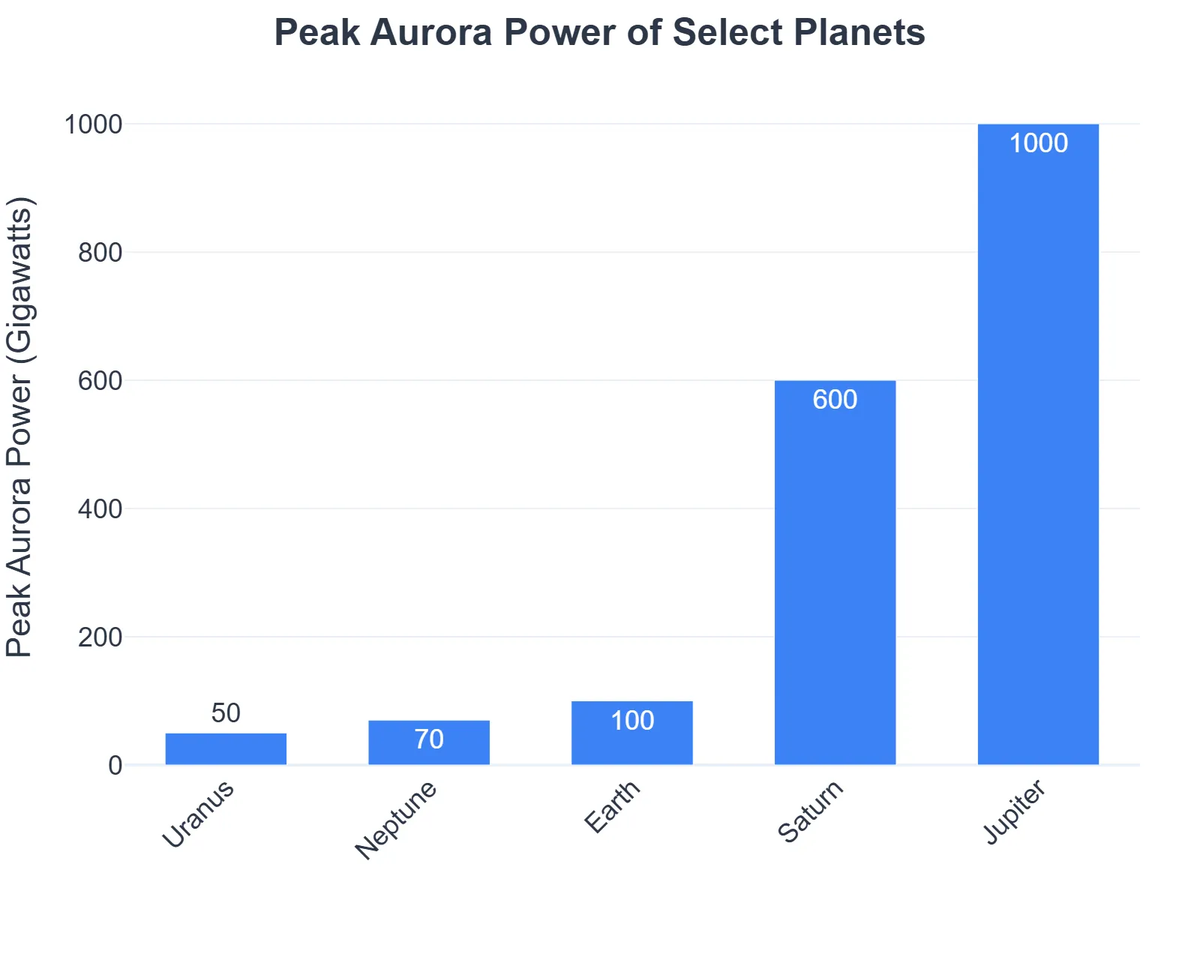
Before diving deep into Saturn’s specific auroral displays, it’s essential to grasp the fundamental physics behind these cosmic light shows. Auroras are not unique to Earth; they are a widespread phenomenon across our solar system and likely beyond, wherever planets possess both an atmosphere and a magnetic field. Indeed, scientists have observed auroras on other planets including Jupiter, Uranus, and Neptune.
➡️ The Basics of Planetary Auroras
- ✅ Energetic Particles: Auroras begin with energetic, charged particles—primarily electrons and protons—originating from various sources, such as the solar wind or a planet’s magnetosphere.
- ✅ Magnetic Fields: These particles are guided by a planet’s magnetic field lines, which act like an invisible funnel, directing them towards the magnetic poles.
- ✅ Atmospheric Collision: As these particles collide with atoms and molecules in the planet’s upper atmosphere, they excite the atmospheric gases.
- ✅ Light Emission: When the excited atoms and molecules de-excite, they release photons of light, creating the glowing curtains, arcs, and spirals we perceive as auroras. The color of the aurora depends on the type of gas being excited and the energy of the particles.
🌎 Earth’s Familiar Display
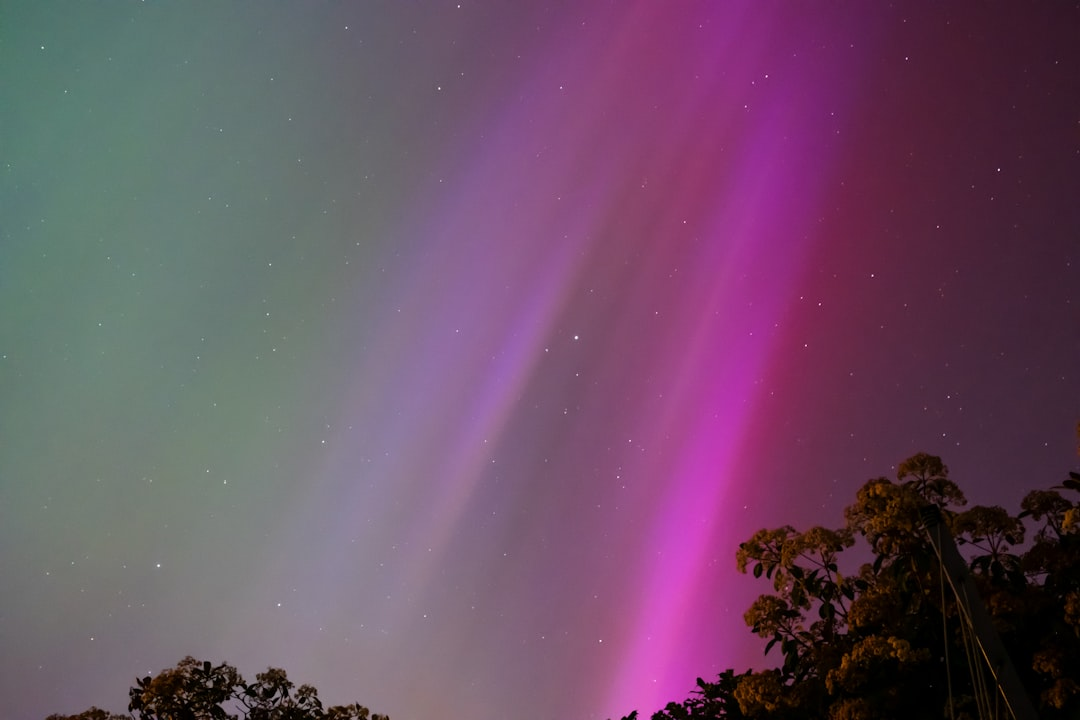
On Earth, our familiar Northern Lights (aurora borealis) and Southern Lights (aurora australis) are predominantly caused by particles from the solar wind hitting oxygen and nitrogen atoms. This interaction results in vibrant greens, reds, and purples. For a comprehensive look at Earth’s displays, explore our article on Aurora Borealis: Understanding the Northern Lights.
🌌 The Unique Science Behind Saturn’s Auroras
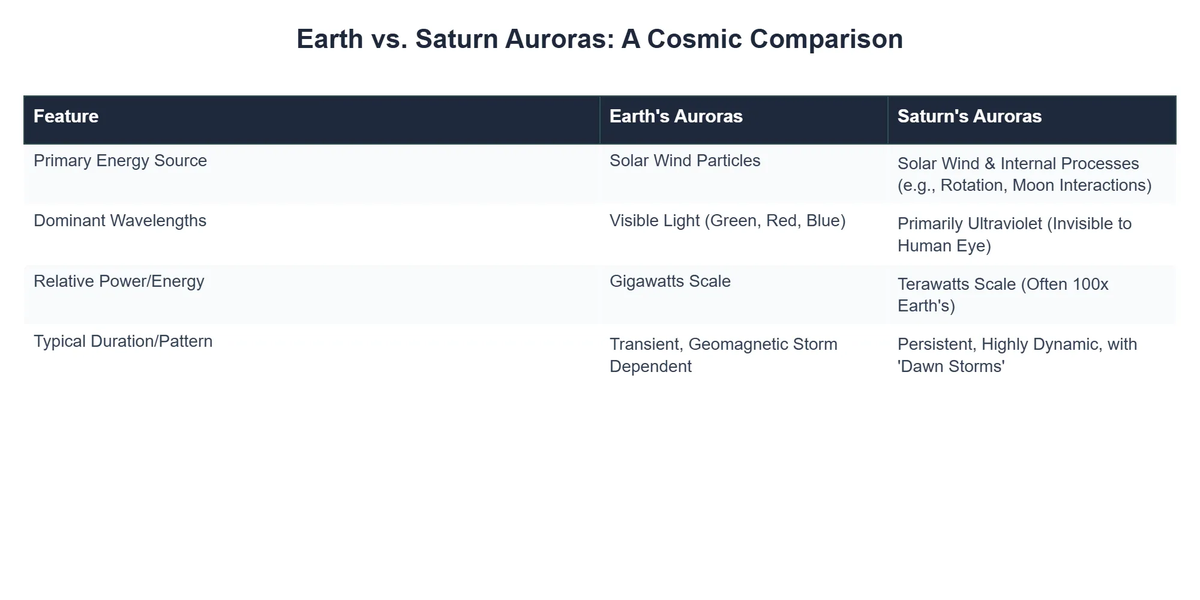
While sharing the same basic principles as Earth’s auroras, the Saturn auroras are vastly different in scale, appearance, and the primary drivers of their creation. Saturn’s immense size, unique magnetic field, and hydrogen-rich atmosphere combine to produce a truly distinct spectacle.
🧲 Saturn’s Magnetic Field and Atmosphere
- ✅ Magnetic Field Alignment: Unlike Earth’s tilted magnetic field, Saturn’s magnetic field is almost perfectly aligned with its rotational axis. This surprising alignment influences where and how its auroras form, typically in tight, bright rings around its poles.
- ✅ Hydrogen-Rich Atmosphere: Saturn’s atmosphere is primarily composed of hydrogen (H2) and helium (He), with trace amounts of methane and ammonia. When energetic particles collide with hydrogen, they primarily emit ultraviolet (UV) light, which is invisible to the human eye but detectable by specialized spacecraft.
- ✅ Powerful Magnetosphere: Saturn possesses a colossal magnetosphere, second only to Jupiter’s in the solar system. This vast magnetic bubble traps and accelerates particles, contributing significantly to the auroral activity.
⚡ Sources of Energetic Particles
While the solar wind plays a role, Saturn’s auroras are also significantly driven by internal processes:
- ✅ Solar Wind: Particles from the Sun’s constant outflow interact with Saturn’s magnetosphere, energizing trapped particles and sometimes causing direct precipitation into the atmosphere.
- ✅ Internal Plasma Generation: Saturn’s moon Enceladus, with its geysers of water ice, ejects material into Saturn’s magnetosphere, creating a vast torus of plasma. This plasma can be accelerated along magnetic field lines towards the poles, fueling some of the auroral displays.
- ✅ Planetary Rotation: The rapid rotation of Saturn itself (a “day” on Saturn is only about 10.7 Earth hours) twists and distorts its magnetic field, generating powerful electric currents that can accelerate particles to auroral energies.
💡 X-Ray and Infrared Auroras
Beyond the primary UV emissions, Saturn also exhibits auroras in other wavelengths:
- ✅ X-Ray Auroras: Discovered by the Chandra X-ray Observatory, Saturn’s X-ray auroras are thought to be caused by highly energetic ions (like oxygen and carbon ions) from the solar wind or perhaps even its rings, hitting the atmosphere.
- ✅ Infrared Auroras: While not as prominent as UV, infrared emissions also occur, providing insights into the temperature and composition of the upper atmosphere.
🔭 How Do We Observe Saturn’s Auroras?
Observing aurora borealis Saturn from Earth is challenging due to their UV nature and Saturn’s immense distance. Our understanding comes primarily from sophisticated spacecraft and space telescopes.
🛰️ The Cassini-Huygens Mission’s Contributions
The Cassini-Huygens mission, a joint endeavor by NASA, ESA, and ASI, was an unparalleled success in exploring the Saturnian system. From 2004 to 2017, the Cassini orbiter provided an unprecedented view of Saturn’s auroras:
- ✅ Ultraviolet Imaging Spectrograph (UVIS): Cassini’s UVIS instrument was crucial for capturing the invisible UV light of Saturn’s auroras, revealing their structure, intensity, and variability over time.
- ✅ Radio and Plasma Wave Science (RPWS): This instrument measured the plasma environment and radio emissions associated with the auroras, helping scientists understand the particle acceleration processes.
- ✅ Long-Term Monitoring: Cassini’s prolonged presence allowed scientists to study how Saturn’s auroras responded to solar storms, seasonal changes, and internal magnetospheric dynamics.
🚀 Hubble Space Telescope and Other Observatories
Before and after Cassini, other powerful instruments have contributed:
- ✅ Hubble Space Telescope (HST): HST’s Space Telescope Imaging Spectrograph (STIS) and Advanced Camera for Surveys (ACS) have provided spectacular UV images of Saturn’s auroras from Earth orbit, offering wide-field views and long-term context.
- ✅ Chandra X-ray Observatory: This X-ray telescope detected Saturn’s X-ray auroras, adding another layer to our understanding of the high-energy processes occurring in its magnetosphere.
- ✅ Ground-Based Telescopes: While less direct for UV, powerful ground-based observatories contribute to understanding the broader atmospheric conditions and magnetic field properties that influence auroras.
The use of advanced Orbiter Spacecraft: Eyes and Ears in Planetary Exploration has been fundamental in extending our senses far beyond Earth to uncover these celestial wonders.
↔️ Differences Between Earth and Saturn Auroras
While both Earth and Saturn host auroras, their distinct characteristics highlight the diversity of planetary environments.
🧭 Magnetic Field Strength and Orientation
- ✅ Earth: Tilted magnetic axis (about 11 degrees from rotational axis) leads to auroral ovals shifted away from the geographic poles.
- ✅ Saturn: Nearly perfectly aligned magnetic axis, resulting in auroral rings tightly centered around the magnetic poles. Saturn’s magnetic field is also significantly stronger, leading to a much larger magnetosphere.
🌈 Atmospheric Composition and Color
- ✅ Earth: Oxygen (green, red) and Nitrogen (pink, blue, purple) produce visible light.
- ✅ Saturn: Primarily Hydrogen (UV emissions) means the main auroral display is invisible to the naked eye. While there might be some visible light from trace elements or very high energy interactions, the dominant glow is in the ultraviolet.
⏱️ Variability and Drivers
- ✅ Earth: Primarily driven by solar wind activity (coronal mass ejections, high-speed streams).
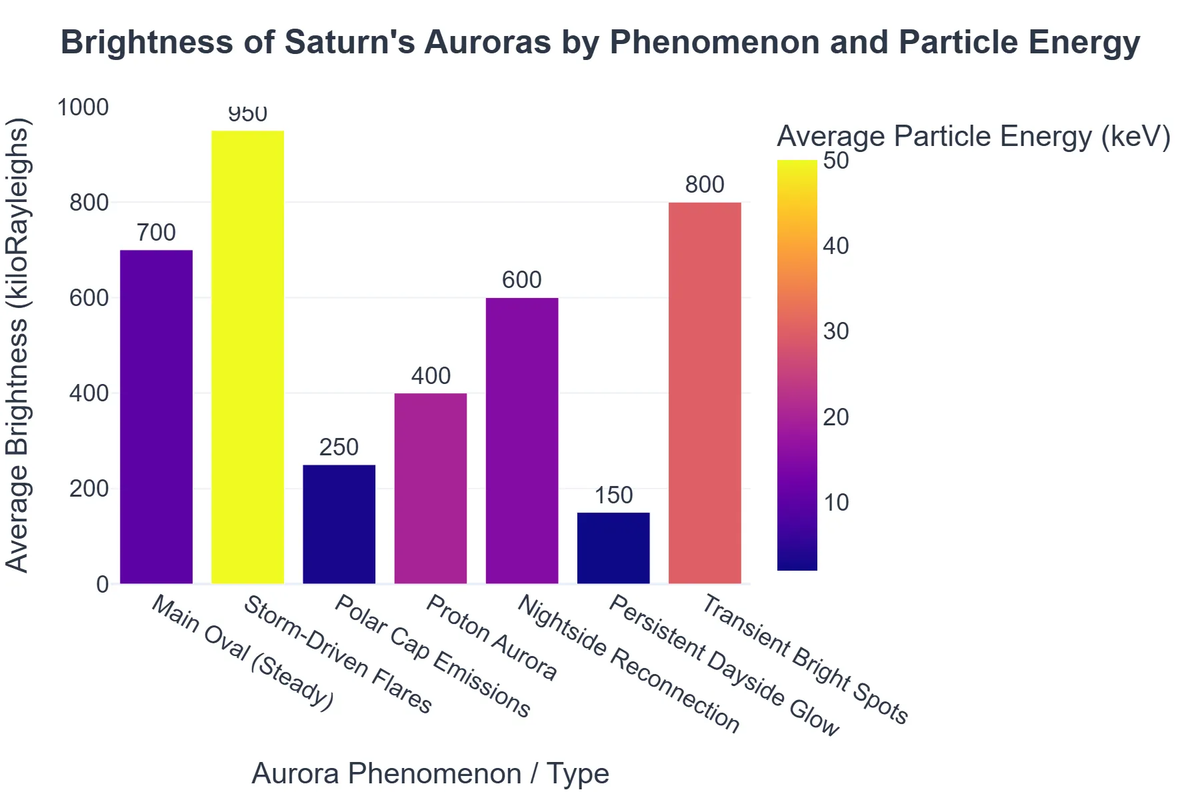
- ✅ Saturn: Influenced by the solar wind, but also significantly by internal magnetospheric dynamics, including the interaction with its moon Enceladus and the planet’s rapid rotation. Saturn’s auroras can be “fainter” for weeks, then suddenly brighten dramatically due to these internal processes.
🔬 Why Study Saturn’s Auroras?
The study of saturn auroras is not merely an exercise in appreciating cosmic beauty; it’s a critical component of understanding planetary science and the broader universe.
🌐 Understanding Planetary Magnetospheres
- ✅ Complex Systems: Auroras serve as a diagnostic tool for planetary magnetospheres, revealing how magnetic fields interact with charged particles and how energy is transferred throughout these vast regions.
- ✅ Comparative Planetology: By comparing Saturn’s magnetosphere and auroras to Earth’s and Jupiter’s, scientists gain a more complete picture of the universal processes that govern these fundamental planetary features.
💡 Clues to Saturn’s Interior and Dynamics
- ✅ Core Insights: The precise alignment of Saturn’s magnetic field with its rotational axis is a puzzling anomaly. Studying the auroras helps refine models of the planet’s interior, particularly its deep metallic hydrogen core, where the magnetic field is generated.
- ✅ Atmospheric Energy Balance: Auroral heating plays a role in the energy balance of Saturn’s upper atmosphere, influencing its temperature and dynamics.
🚀 Broader Implications for Exoplanets
What we learn from our own solar system’s gas giants, including Saturn, has profound implications for the search for and understanding of exoplanets.
- ✅ Exoplanet Magnetospheres: Identifying and characterizing auroras on distant exoplanets could one day be a way to infer the presence and strength of their magnetic fields, a key factor in planetary habitability and atmospheric retention.
- ✅ Atmospheric Characterization: Auroral signatures could provide clues about the atmospheric composition of exoplanets, aiding in the ongoing search for <a alone="" are="" dynamic_link].
Recommended Video
Conclusion: A Cosmic Light Show Unveiled
Saturn’s auroras are a testament to the dynamic and complex processes at play within our solar system’s most magnificent gas giant. From their vibrant, albeit invisible, ultraviolet glows to the intricate interplay of solar winds, internal plasma, and a unique magnetic field, these auroras on other planets offer a dazzling window into the universe.
Thanks to missions like Cassini and the keen eyes of space telescopes, we continue to unravel the mysteries of these distant light shows, expanding our understanding of planetary science, magnetospheric physics, and the conditions that shape worlds far beyond our own. As we continue on our journey of Cosmic Queries: Probing the Mysteries of the Universe, Saturn’s auroras will undoubtedly remain a focal point of scientific exploration, promising more revelations about the majestic lights beyond Earth.
Frequently Asked Questions
What causes Saturn’s auroras?
Saturn’s auroras are caused by charged particles from the sun and Saturn’s moons interacting with its powerful magnetic field and atmosphere.
How are Saturn’s auroras different from Earth’s?
Saturn’s auroras are vastly more powerful, can occur at higher altitudes, and are often best viewed in ultraviolet and infrared light, unlike Earth’s predominantly visible light displays.
Can we see Saturn’s auroras from Earth?
No, Saturn’s auroras are too faint and distant to be seen with amateur telescopes from Earth. They are primarily observed by space telescopes like Hubble or spacecraft like Cassini.
What do Saturn’s auroras tell scientists?
Studying Saturn’s auroras helps scientists understand the planet’s magnetic field, internal structure, atmospheric composition, and how it interacts with the solar wind and its moons.