


Humanity’s relentless drive to explore the unknown reached its zenith with the Apollo missions, a monumental undertaking that forever altered our perception of what’s possible. Orchestrated by NASA, this ambitious program transported humans beyond Earth’s gravitational pull, culminating in a series of historic moon landing events that captivated the globe.
💡 Key Takeaways
- The Apollo program successfully landed 12 astronauts on the Moon between 1969 and 1972.
- Key missions like Apollo 11, 13, and 17 demonstrated human resilience, ingenuity, and scientific ambition.
- Apollo missions brought back invaluable lunar samples, providing critical insights into the Moon’s geology and origin.
- The program spurred significant technological advancements, influencing fields from computing to materials science.
“The Apollo missions were more than a scientific endeavor; they were a profound narrative, proof that humanity, driven by a shared vision, could transcend its terrestrial bounds and touch another world. It was the moment science became epic poetry.”
— Astrid Bellweather, Astrophysicist & Science Fiction Consultant
This comprehensive guide delves into the intricate details of the Apollo program, from its ambitious origins to its profound and lasting legacy. We’ll explore the engineering marvels that made lunar travel a reality, recount the pivotal moments of humanity’s first steps on the Moon, and examine the scientific breakthroughs achieved. Join us as we journey through one of the most remarkable chapters in human history.
In This Article
- — 💡 Key Takeaways
- → The Dawn of the Apollo Program: A Race Against Time
- — Origins and Objectives: The Cold War Space Race
- — Early Missions and Learning Lessons: Paving the Way
- → Engineering Marvels: The Apollo Spacecraft and Lunar Module
- — Command/Service Module (CSM): The Orbital Home
- — Lunar Module (LM): Humanity’s Lunar Lander
- — Saturn V Rocket: The Lunar Launch Vehicle
- → Apollo 11: Humanity’s First Steps on the Moon
- — The Crew and Mission: A Historic Trio
- — The Historic Moon Landing: Tranquility Base
- — Lunar Exploration and Return: A Giant Leap
- → Beyond Apollo 11: Subsequent Moon Landings and Scientific Discoveries
- — Apollo 12, 14, 15, 16, 17: Expanding Our Knowledge
- — Scientific Payoffs: Unlocking Lunar Secrets
- → The Apollo Missions’ Lasting Legacy and Influence
- — Technological Advancements: Spin-offs for Earth
- — Inspiration for Future Generations: Guiding Artemis
- — Cultural Impact and Preservation: A Timeless Achievement
- → Conclusion: A Monument to Human Endeavor
The Dawn of the Apollo Program: A Race Against Time
The Apollo program emerged from a unique crucible of Cold War geopolitical tension and scientific ambition. It was a testament to the collective will of a nation focused on achieving an unprecedented goal.
Origins and Objectives: The Cold War Space Race
➡️ The call to action came directly from President John F. Kennedy in 1961, challenging the United States to land a man on the Moon and return him safely to Earth before the decade was out. This audacious goal was a direct response to the Soviet Union’s early successes in space, particularly the launch of Sputnik and the orbital flight of Yuri Gagarin.
➡️ Beyond political rivalry, the Apollo program aimed to demonstrate technological prowess, foster scientific discovery, and inspire a new generation.
Early Missions and Learning Lessons: Paving the Way
💡 Before the lunar landings, a series of preparatory missions laid crucial groundwork. The Mercury program proved that humans could survive in space, while the Gemini Missions: NASA’s Stepping Stone to the Moon developed vital techniques like orbital rendezvous, docking, and long-duration spaceflight, all essential for a lunar journey.
🚨 The program also faced tragedy with Apollo 1 in January 1967, where a fire during a launch rehearsal killed astronauts Gus Grissom, Ed White, and Roger Chaffee. This devastating incident led to significant design improvements and stringent safety protocols, ultimately making the subsequent missions safer and more robust.
Engineering Marvels: The Apollo Spacecraft and Lunar Module
The success of the apollo program hinged on groundbreaking engineering. The three primary components of the Apollo system—the Command/Service Module, the lunar module, and the Saturn V rocket—represented an unparalleled feat of human ingenuity.
Command/Service Module (CSM): The Orbital Home
✅ The Command Module (CM) was the crew’s living quarters during the journey to and from the Moon, and the only part that returned to Earth. It housed the astronauts, navigation, communication, and environmental control systems.
✅ The Service Module (SM) provided propulsion, electrical power, and storage for consumables. It was jettisoned just before re-entry into Earth’s atmosphere.
For more details on its design and capabilities, explore our article on the Apollo Spacecraft: Journey to the Moon and Beyond.
Lunar Module (LM): Humanity’s Lunar Lander
⚙️ The LM was a two-stage spacecraft specifically designed to land on the Moon’s surface and then lift off again. Its unique, insect-like appearance was a result of its specialized purpose, optimized for the vacuum of space, not aerodynamics.
- ➡️ Descent Stage: Contained the landing gear, fuel, and supplies for the lunar surface stay. It served as the launch platform for the ascent stage.
- ➡️ Ascent Stage: Housed the crew compartment, controls, and the engine for the journey back to the Command Module in lunar orbit.
Saturn V Rocket: The Lunar Launch Vehicle
🚀 The colossal Saturn V was, and remains, one of the most powerful rockets ever built. Standing over 363 feet tall (111 meters), it generated 7.5 million pounds of thrust at launch, necessary to propel the massive Apollo spacecraft towards the Moon. It was composed of three stages, each firing sequentially to achieve Earth orbit and then the trans-lunar injection burn.
Apollo 11: Humanity’s First Steps on the Moon
The culmination of years of tireless effort, training, and innovation arrived with Apollo 11, the mission that etched itself into the annals of human history.
The Crew and Mission: A Historic Trio
On July 16, 1969, a crew of three remarkable astronauts embarked on this epic journey: Commander Neil Armstrong, Lunar Module Pilot Buzz Aldrin, and Command Module Pilot Michael Collins. The world watched with bated breath as they journeyed towards their lunar destination. For a detailed account of their monumental achievement, you can refer to the extensive information available from Britannica’s Apollo 11 overview.
How ‘Vanguard Digital’ Mastered a ‘Moonshot’ Campaign
❓The Challenge
Vanguard Digital faced the monumental task of launching a global, multi-phase digital campaign for a complex B2B SaaS product, targeting an unprecedented market share within 12 months.
💡The Solution
Inspired by the Apollo program’s methodical ‘stepping stone’ approach, Vanguard meticulously planned the campaign in distinct, iterative phases, from pilot tests to global scaling. They embraced early ‘failures’ and data from initial deployments as crucial lessons, continuously refining their strategy and ‘engineering’ for optimal performance.
🏆The Result
This systematic approach led to a 40% increase in qualified leads within the first six months and enabled the client to exceed their 12-month market share target by 15%.
The Historic Moon Landing: Tranquility Base
On July 20, 1969, the Lunar Module “Eagle” carrying Armstrong and Aldrin successfully touched down on the Moon’s Sea of Tranquility. Armstrong’s iconic words, “Houston, Tranquility Base here. The Eagle has landed,” signaled humanity’s triumphant arrival.
Lunar Exploration and Return: A Giant Leap
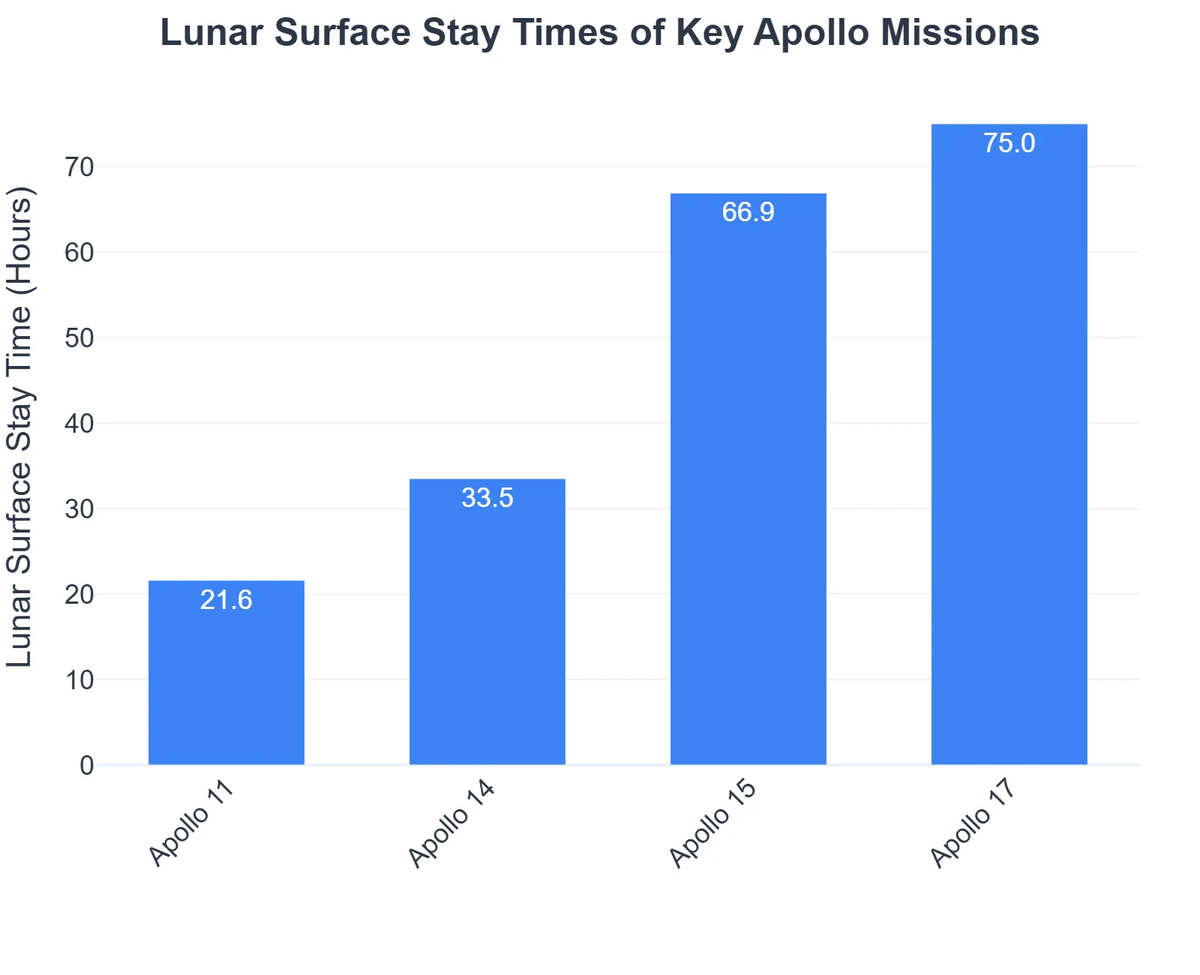
Hours later, Neil Armstrong became the first human to walk on another celestial body, followed shortly by Buzz Aldrin. Their time on the surface involved planting the American flag, collecting lunar samples, and deploying scientific instruments. After approximately 21.5 hours on the lunar surface, they rendezvoused with Collins in orbit, returning safely to Earth on July 24, 1969. The Apollo Program, as a whole, is extensively documented by NASA.
Beyond Apollo 11: Subsequent Moon Landings and Scientific Discoveries
Apollo 11 was just the beginning. Five more successful lunar landing missions followed, each pushing the boundaries of lunar exploration and yielding invaluable scientific data.
Apollo 12, 14, 15, 16, 17: Expanding Our Knowledge
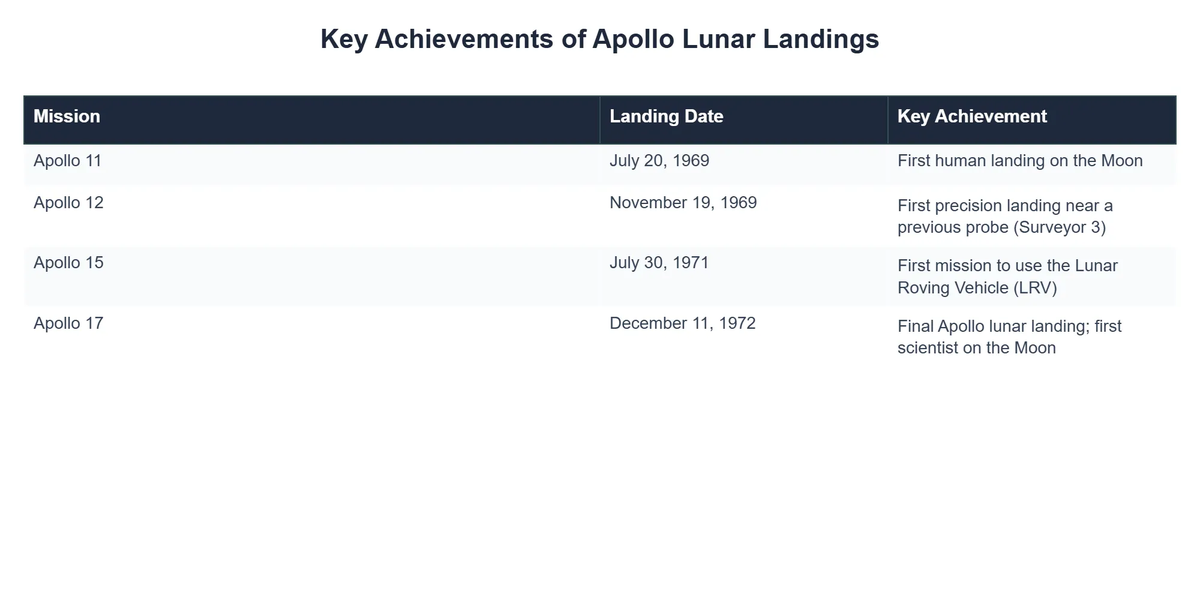
Each subsequent mission built upon the last, exploring new geological regions and conducting more complex experiments. Astronauts spent longer periods on the surface, covered greater distances with the Lunar Roving Vehicle (first used on Apollo 15), and brought back a more diverse collection of lunar samples. For insights into the specific locations and significance of these expeditions, delve into Apollo Landing Sites: Exploring the Historic Lunar Landings.
- ✅ Apollo 12: Precision landing near Surveyor 3 probe.
- ✅ Apollo 14: Explored Fra Mauro formation, a highland region.
- ✅ Apollo 15: First mission with the Lunar Roving Vehicle, explored Hadley Rille.
- ✅ Apollo 16: Landed in a highlands region, Descartes, to study volcanic activity (later disproven).
- ✅ Apollo 17: The final human mission to the Moon, carrying the first scientist (geologist Harrison Schmitt). Learn more about its unique contributions in Apollo 17: The Last Moon Landing and its Legacy.
Scientific Payoffs: Unlocking Lunar Secrets
The Apollo missions brought back 382 kilograms (842 pounds) of lunar rocks, core samples, pebbles, dust, and soil. Analysis of these samples, along with data from deployed seismometers and other instruments, revolutionized our understanding of the Moon’s origin, composition, and geological history. It confirmed the “Giant Impact Hypothesis” as the leading theory for the Moon’s formation.

The Apollo Missions’ Lasting Legacy and Influence
The impact of the Apollo program extends far beyond simply putting humans on the Moon. It fundamentally reshaped technology, inspired generations, and laid the groundwork for future space endeavors.
Technological Advancements: Spin-offs for Earth
💡 The immense challenges of Apollo spurred innovation across countless fields. Miniaturization of electronics, advanced computing (including the guidance computer), new materials science, and medical monitoring systems are just a few examples of technologies developed or significantly advanced during the program that found widespread application on Earth.
Inspiration for Future Generations: Guiding Artemis
🌌 The Apollo era remains a powerful symbol of human ambition and collaboration. It continues to inspire new generations of scientists, engineers, and explorers. Today, NASA‘s Artemis program aims to return humans to the Moon, including the first woman and person of color, paving the way for sustainable lunar presence and eventual missions to Mars. The artifacts and stories preserved at institutions like the Smithsonian National Air and Space Museum ensure this legacy endures.
Cultural Impact and Preservation: A Timeless Achievement
The iconic imagery and stories of Apollo are deeply woven into global culture. From popular media to educational curricula, the moon landings represent a shared human achievement. Efforts to preserve the historical data, physical artifacts, and personal accounts ensure that the lessons and triumphs of Apollo will continue to inform and inspire for centuries to come.
Recommended Video
Conclusion: A Monument to Human Endeavor
The Apollo missions represent an unparalleled triumph of human ingenuity, determination, and collaborative spirit. From the initial bold challenge to the final footsteps on the lunar surface, this ambitious undertaking pushed the boundaries of science, engineering, and human endurance. It not only fulfilled a monumental political goal but also yielded invaluable scientific knowledge and left an indelible mark on our collective consciousness.
As we look to the future of space exploration, the legacy of the apollo program continues to serve as a beacon, reminding us that with vision and perseverance, humanity can achieve the seemingly impossible. For more insights into the vastness of space and the mysteries it holds, continue exploring Cosmic Queries: Probing the Mysteries of the Universe.
Frequently Asked Questions
How many Apollo missions landed on the Moon?
Six Apollo missions successfully landed humans on the Moon: Apollo 11, 12, 14, 15, 16, and 17.
Who was the first person to walk on the Moon?
Neil Armstrong was the first person to walk on the Moon, as part of the Apollo 11 mission on July 20, 1969.
What was the primary goal of the Apollo program?
The primary goal of the Apollo program, initiated by President John F. Kennedy, was to land a man on the Moon and return him safely to Earth before the end of the 1960s.
How long did the Apollo missions last?
The Apollo program officially ran from 1961 to 1972. The crewed lunar missions occurred between 1968 and 1972.