

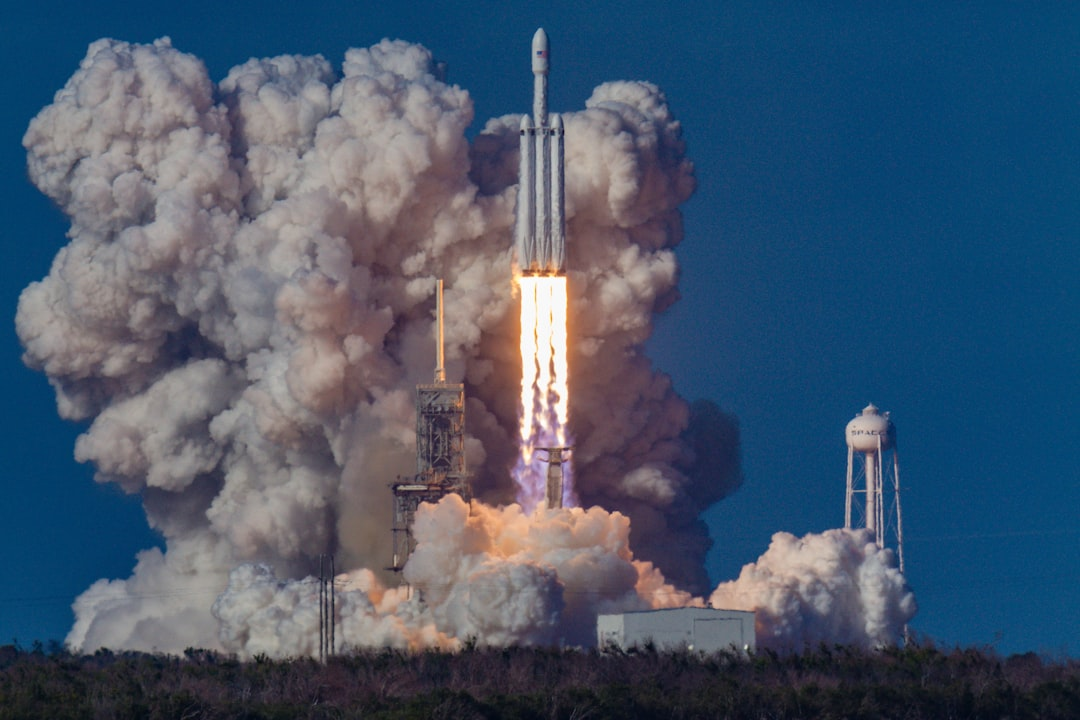
The Dawn of Commercial Space Travel: SpaceX’s Vision
For decades, space travel was the exclusive domain of national governments and their elite astronaut corps. Missions were meticulously planned, incredibly expensive, and largely driven by scientific discovery or geopolitical ambition. However, a seismic shift has begun, spearheaded by private companies like SpaceX. Founded by Elon Musk, SpaceX has not only disrupted the launch industry but is also actively charting a course towards making space travel a viable option for private citizens, aiming to redefine what a SpaceX commercial flight truly means.
💡 Key Takeaways
- SpaceX’s Starship aims to drastically reduce the cost of space access.
- Initial commercial flights will cater to high-net-worth individuals and research missions.
- True ‘space travel for everyone’ is still decades away, requiring significant infrastructure and safety advancements.
- Regulation and ethical considerations will be crucial as space tourism expands.
“While SpaceX pushes the boundaries of orbital access, we must simultaneously strategize for the ethical implications and equitable distribution of this new frontier. Access without foresight creates new divides.”
— Kira Chen, Futurist & AI Ethics Analyst
The vision is audacious: to make humanity a multi-planetary species. While that ultimate goal remains distant, the incremental steps are bringing commercial spaceflight closer to reality for a broader range of individuals, moving beyond just professional astronauts. This article explores how SpaceX is leading this charge, examining its current capabilities, future aspirations, and the pivotal question of whether space will truly become accessible to everyone.
In This Article
- → The Dawn of Commercial Space Travel: SpaceX’s Vision
- — 💡 Key Takeaways
- → From Government Contracts to Civilian Missions
- → The Vehicles: Crew Dragon and Starship’s Promise
- — 🚀 Crew Dragon: The Current Workhorse
- — ✨ Starship: The Future of Mass Space Travel?
- → Accessibility and Affordability: Space Travel for Everyone?
- → Challenges and the Road Ahead
From Government Contracts to Civilian Missions
SpaceX’s journey into commercial human spaceflight began with critical partnerships with NASA. Their Falcon 9 rockets and Dragon capsules revolutionized cargo resupply to the International Space Station (ISS), proving the reliability and cost-effectiveness of private industry in space. This success paved the way for the Crew Dragon program, which restored America’s human spaceflight launch capability after the Space Shuttle’s retirement.
- ✅ Cargo Resupply Services (CRS): Early contracts demonstrated SpaceX’s ability to deliver essential supplies to the ISS.
- ➡️ Commercial Crew Program: NASA entrusted SpaceX with transporting astronauts to the ISS, marking the first time a private company had launched humans into orbit. This program has been a monumental success, safely transporting numerous crews. For a deeper look into these pioneering efforts, see our article on SpaceX Crew Missions: Pioneering Commercial Human Spaceflight.
- 💡 Inspiration4: In 2021, SpaceX made history with Inspiration4, the world’s first all-civilian orbital mission. Financed by billionaire Jared Isaacman, this mission showcased the potential for private individuals to embark on multi-day orbital journeys, not just suborbital hops.
- ➡️ Axiom Space Missions: Furthering the concept of a SpaceX civilian flight, SpaceX partners with companies like Axiom Space to facilitate private astronaut missions to the ISS. These missions allow private citizens, researchers, and even tourists to visit the orbiting laboratory, demonstrating a growing market for private access to space. Axiom Space plans further missions, such as Axiom Mission 4, expanding opportunities for private individuals. You can learn more about these endeavors on the Axiom Space website.
These milestones illustrate a clear trajectory from government reliance to private initiatives, with SpaceX at the forefront of opening space to non-professional astronauts.
SpaceX Commercial Flights: Pros & Cons
Pros
- ✔Expands access to space beyond traditional government programs.
- ✔Drives rapid innovation in reusable rocket technology and spacecraft.
- ✔Stimulates economic growth and job creation in the burgeoning space industry.
- ✔Opens new avenues for private scientific research and commercial ventures in orbit.
Cons
- ✖Exorbitant costs make it exclusive to the ultra-wealthy, not accessible for ‘everyone’.
- ✖Inherent safety risks and the potential for catastrophic accidents remain significant concerns.
- ✖Environmental impact from rocket emissions and contribution to orbital debris are growing issues.
- ✖Raises complex ethical and regulatory questions regarding space traffic and resource utilization.
The Vehicles: Crew Dragon and Starship’s Promise
SpaceX’s ambition for widespread space travel hinges on the capabilities of its rapidly evolving fleet of spacecraft. Each vehicle plays a distinct role in their strategy to lower costs and increase access.
🚀 Crew Dragon: The Current Workhorse
The Crew Dragon capsule is currently the only operational spacecraft in the world capable of ferrying both NASA astronauts and private citizens to and from orbit. It’s a testament to rigorous engineering and safety protocols.
- ✅ Proven Reliability: Multiple successful missions to the ISS, including both NASA and private astronaut flights, highlight its robust design.
- ⚙️ Automated Docking: Crew Dragon boasts autonomous docking capabilities with the ISS, simplifying operations and enhancing safety.
- ➡️ Capacity: Designed to carry up to 7 passengers, though for most long-duration missions, 4 is the standard to accommodate supplies.
- 💡 Versatility: Used for both professional crew transport and private orbital missions, demonstrating its adaptability.
✨ Starship: The Future of Mass Space Travel?
While Crew Dragon handles today’s orbital flights, Starship is the centerpiece of SpaceX’s long-term vision for mass human space travel and interplanetary colonization. It represents a paradigm shift in rocket design and reusability.
- 🚀 Full Reusability: Starship and its Super Heavy booster are designed to be fully and rapidly reusable, a key factor in drastically reducing launch costs. This innovative approach aligns with our broader exploration of Future Perfect?: Charting the Course of Tomorrow’s Technology.
- 💡 Massive Capacity: With the potential to carry over 100 passengers or 100+ tons of cargo to orbit, Starship is envisioned for lunar missions, Mars colonization, and even point-to-point travel on Earth.
- ➡️ Development in Progress: Starship is still in its extensive testing phase, with prototypes undergoing flights and static fire tests at SpaceX’s Starbase facility. This iterative development process is crucial for such a complex system.
The sheer scale and reusability of Starship are intended to drive down the per-person cost of space travel to unprecedented levels, a concept that could even impact the deployment of Small Spacecraft: Revolutionizing Space Exploration by offering high-volume launch capabilities.

Accessibility and Affordability: Space Travel for Everyone?
The core question remains: will a SpaceX commercial flight truly make space travel for everyone? Currently, the answer is a resounding “not yet.” The price tag for a seat on a Crew Dragon mission remains in the tens of millions of dollars, making it accessible only to the ultra-wealthy or those sponsored by well-funded organizations.
However, SpaceX’s business model is fundamentally geared towards cost reduction:
- ⚙️ Reusability: By making rockets and spacecraft fully reusable, SpaceX eliminates the need to build new hardware for every launch. This is analogous to how airplanes made global travel affordable by being reusable, rather than single-use.
- 📈 Increased Launch Cadence: The ability to launch more frequently further amortizes development costs over a larger number of flights, reducing the per-flight cost.
- 🛠️ Mass Production Techniques: SpaceX aims to produce Starships at a rapid rate, leveraging manufacturing principles more akin to the automotive industry than traditional aerospace.
While the initial phase of commercial space travel caters to a niche market, the long-term vision is clear: as technology matures, reusability becomes routine, and production scales, the cost of a ticket to orbit is projected to fall dramatically. Elon Musk himself has spoken about a future where a trip to Mars could eventually cost less than a house. This ambitious goal is fundamental to the very concept of widespread access, as highlighted on the official SpaceX website.
Challenges and the Road Ahead
Despite the remarkable progress, the path to making space travel truly ubiquitous is fraught with significant challenges.
- ⚠️ Safety & Reliability: While SpaceX has an impressive safety record, human spaceflight inherently carries risks. Ensuring continued reliability across hundreds or thousands of future flights is paramount.
- ⚖️ Regulatory Framework: As commercial space activity expands, new international and national regulations are needed to govern traffic, debris, and liability.
- 💰 Economic Viability: Beyond the initial high-net-worth market, developing sustainable business models for mass space tourism, manufacturing, or resource extraction requires significant innovation and market development.
- 🌍 Environmental Impact: The environmental footprint of frequent rocket launches, even with reusable systems, is a growing concern that needs careful management and technological solutions.
- ⏳ Infrastructure: For routine space travel, infrastructure beyond launch pads will be needed, including orbital waystations, lunar bases, and potentially even space hotels.
Recommended Video
SpaceX’s journey to enable everyday SpaceX commercial flight and widespread spacex civilian flight is an ongoing saga of engineering marvels, ambitious goals, and iterative development. While “everyone” might still be decades away, the trajectory is set, and the commercial space industry is accelerating towards a future where space is no longer just for astronauts.
What is the primary goal of SpaceX’s commercial flights?
The primary goal is to make space travel and cargo delivery significantly more accessible and affordable, eventually enabling human colonization of Mars and other celestial bodies.
When can the average person expect to travel to space with SpaceX?
While costs are decreasing, widespread space travel for the average person is likely decades away, depending on further technological advancements, safety protocols, and significant price reductions.
What kind of missions will SpaceX’s Starship undertake initially?
Initially, Starship will focus on satellite deployment, lunar missions (e.g., Artemis program), Mars missions, and high-profile private space tourism flights for select individuals.