

Beneath our feet, the Earth is anything but static. Far from being a solid, unmoving sphere, our planet’s outer shell is a dynamic mosaic of colossal pieces, constantly in motion. This incredible phenomenon, known as tectonic plate motion, is the fundamental engine driving many of the Earth’s most dramatic geological processes, from the towering peaks of mountain ranges to the devastating power of earthquakes and volcanoes.
💡 Key Takeaways
- Earth’s lithosphere is divided into massive plates constantly moving across the mantle.
- This motion is primarily driven by convection currents within the mantle, aided by ridge push and slab pull.
- Plate interactions at boundaries are responsible for major geological events like earthquakes, volcanoes, and mountain building.
- Tectonic activity plays a crucial role in shaping Earth’s surface and influencing long-term climate patterns.
“The intricate dance of tectonic plates is a testament to Earth’s profound internal dynamics. Understanding these movements is key to deciphering our planet’s geological past, predicting future hazards, and even grasping long-term climate shifts.”
— Marcus Sterling, Geophysical Explorer & Climate Dynamics Analyst
Understanding these hidden dynamics is crucial to comprehending the very architecture of our world and its profound influence on life. In this comprehensive guide, we’ll decode Earth’s engine, exploring what powers these immense movements, how they manifest on the surface, and their far-reaching implications for our planet’s past, present, and future. For a broader understanding of the forces at play, delve into the overarching concept of Earth’s Unseen Forces: The Hidden Dynamics of Our Planet.
In This Article
- — 💡 Key Takeaways
- → What is Tectonic Plate Motion? Defining Earth’s Dynamics
- — The Concept of Plate Tectonics
- — Historical Context: From Continental Drift to Plate Tectonics
- → The Driving Forces Behind Plate Motion: Earth’s Internal Engine
- — ♨️ Mantle Convection: The Primary Driver
- — Ridge Push and Slab Pull: Supplementary Forces
- → Types of Plate Boundaries and Their Movements
- — Divergent Boundaries: Spreading Apart
- — Convergent Boundaries: Colliding Giants
- — Transform Boundaries: Sliding Sideways
- → Measuring and Monitoring Plate Movement
- — 🛰️ GPS and Satellite Geodesy
- — Paleomagnetism and Geological Evidence
- → Impact of Tectonic Plate Motion on Earth’s Surface
- — Shaping Continents and Ocean Basins
- — Triggering Earthquakes and Volcanic Activity
- — Influence on Climate and Life
- → The Future of Earth’s Tectonic Landscape
- — Predicting Future Continental Configurations
- — Ongoing Research and New Discoveries
- → Conclusion: Earth’s Ever-Shifting Canvas
What is Tectonic Plate Motion? Defining Earth’s Dynamics
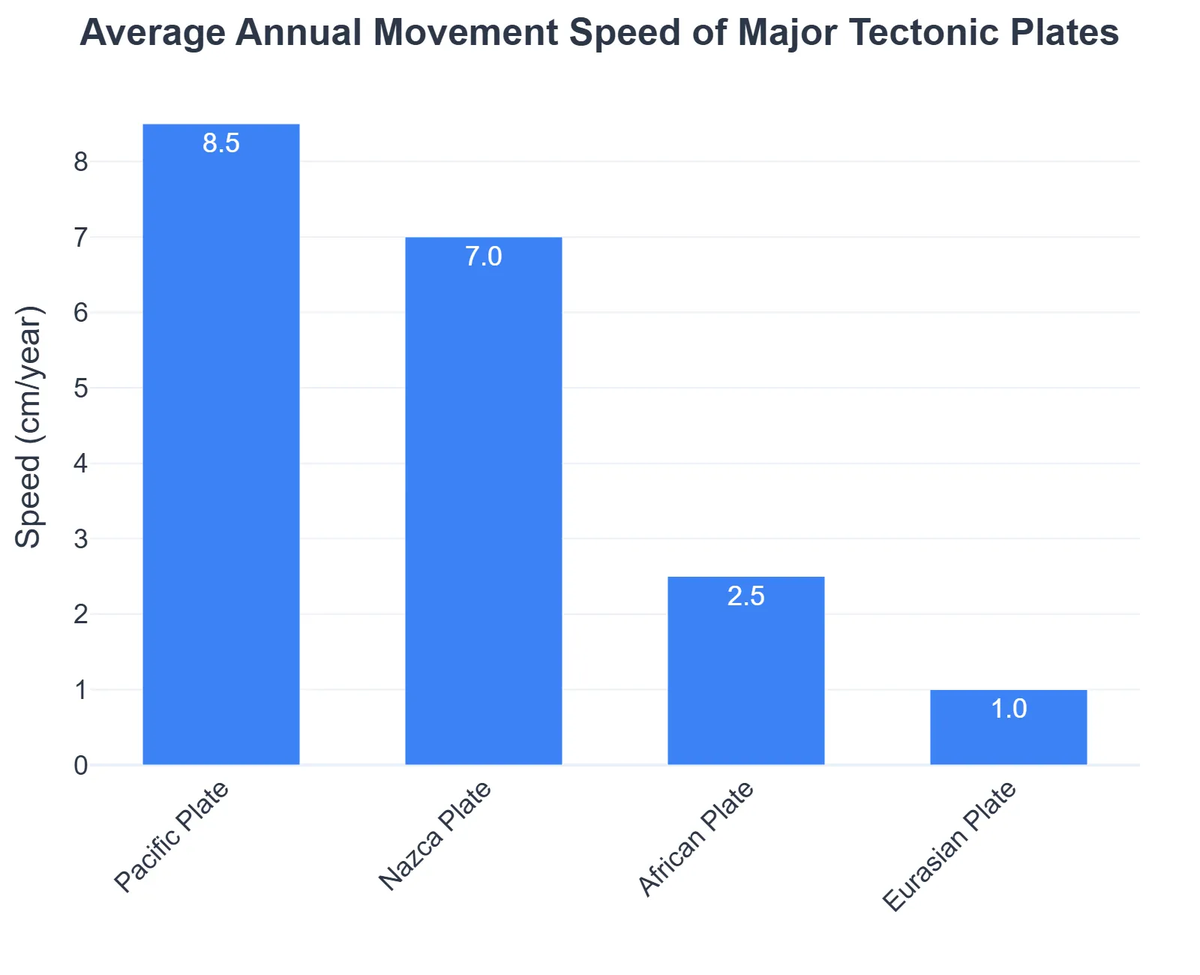
At its core, plate motion refers to the large-scale movement of Earth’s lithosphere, which is broken into numerous segments called tectonic plates. These plates, comprising both continental and oceanic crust, glide over the semi-fluid asthenosphere beneath them, albeit at speeds comparable to the growth of a fingernail.
The Concept of Plate Tectonics
Plate tectonics is the unifying theory in geology that explains the structure of Earth’s crust and many associated phenomena as a result of the interaction of these rigid lithospheric plates. It’s a grand ballet of geological forces, constantly reshaping our planet’s surface.
- ✅ The lithosphere is Earth’s rigid outermost layer, including the crust and the uppermost part of the mantle.
- ✅ The asthenosphere is the ductile, flowing layer of the upper mantle upon which the lithospheric plates move.
- ✅ There are about 15-20 major and minor tectonic plates, each moving independently. You can learn more about them in our guide on Tectonic Plates: A Comprehensive Guide to Earth’s Dynamic Surface.
Historical Context: From Continental Drift to Plate Tectonics
The concept of a dynamic Earth wasn’t always accepted. For centuries, the prevailing view was that continents were fixed. It was Alfred Wegener in the early 20th century who proposed the theory of “Continental Drift,” suggesting that continents had once been joined and drifted apart. While initially met with skepticism, advancements in seismology, ocean floor mapping, and paleomagnetism in the mid-20th century provided overwhelming evidence, leading to the development and widespread acceptance of the theory of plate tectonics.
- ➡️ 1912: Alfred Wegener proposes Continental Drift.
- ➡️ 1950s-60s: Discovery of mid-ocean ridges, seafloor spreading, and subduction zones provides crucial evidence.
- ➡️ 1960s: The theory of plate tectonics fully emerges, explaining the mechanisms behind continental drift.
The Driving Forces Behind Plate Motion: Earth’s Internal Engine
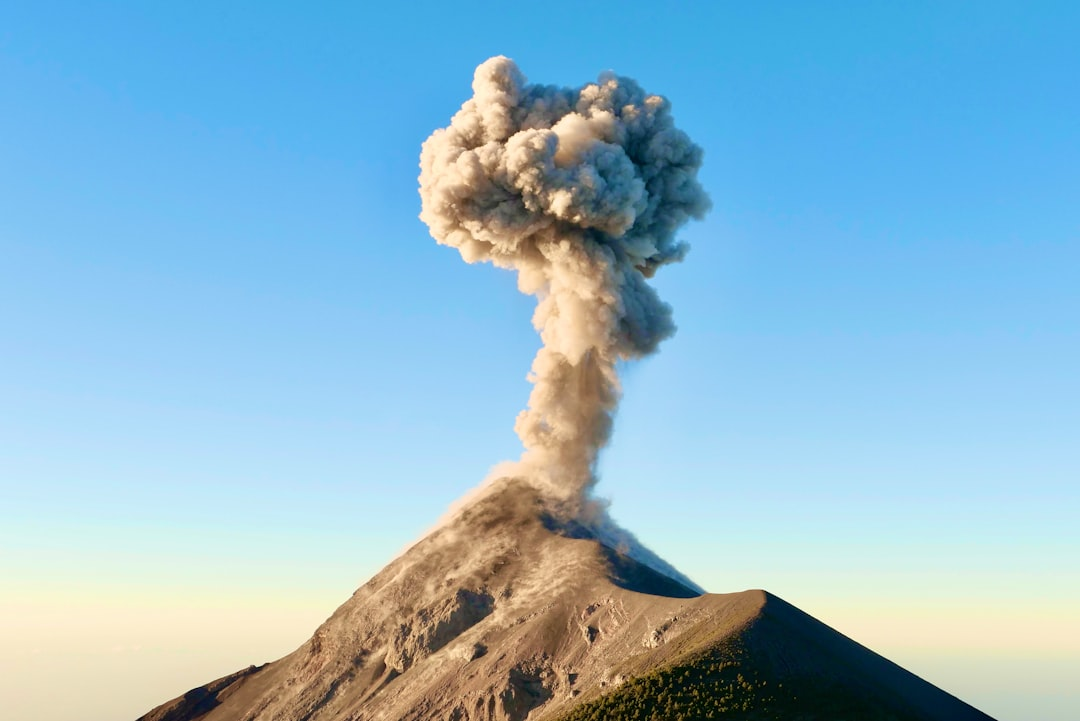
What powers these colossal movements? The energy for plate motion originates deep within Earth’s interior, primarily from its primordial heat and the decay of radioactive elements. This internal heat drives a powerful convection system that acts as the planet’s engine.
♨️ Mantle Convection: The Primary Driver
The mantle, a thick layer of solid rock beneath the crust, behaves like a viscous fluid over geological timescales. Heated material near the core rises, cools as it approaches the surface, and then sinks back down, creating slow-moving convection currents. These currents exert drag on the overlying tectonic plates, setting them in motion.
- 💡 Think of it like a pot of boiling water: hotter, less dense water rises, cools at the surface, and then sinks, creating a continuous circulation.
- 💡 Research into Earth’s deep interior continues to reveal how fundamental these processes are to the planet’s very habitability, as explored in studies like those by academic.oup.com.
Ridge Push and Slab Pull: Supplementary Forces
While mantle convection provides the underlying force, two additional mechanisms contribute significantly to plate motion:
- ➡️ Ridge Push: At mid-ocean ridges (divergent plate boundaries), newly formed oceanic crust is hot and elevated. As it cools and becomes denser, it slides down the gentle slope away from the ridge under the force of gravity, pushing the entire plate ahead of it.
- ➡️ Slab Pull: This is considered the most significant driving force. When an oceanic plate subducts (sinks) into the mantle at convergent boundaries, its increasing density as it cools and descends pulls the rest of the plate along with it. This downward pull acts like a heavy anchor.
Types of Plate Boundaries and Their Movements
The interactions between moving plates are most dramatic at their boundaries. These zones are geological hotspots, responsible for most of Earth’s seismic and volcanic activity. For an in-depth exploration, refer to our comprehensive guide on Tectonic Plate Boundaries: A Comprehensive Guide.
Divergent Boundaries: Spreading Apart
At divergent boundaries, plates move away from each other. This process allows magma from the mantle to rise, creating new crustal material.
- 🌊 Mid-Ocean Ridges: The most common type, where new oceanic crust is formed through seafloor spreading (e.g., the Mid-Atlantic Ridge).
- 🌍 Rift Valleys: On continents, divergence can lead to continental rifting, forming rift valleys (e.g., the East African Rift Valley).
- ➡️ Resulting Phenomena: Volcanic activity, shallow earthquakes, creation of new land.
Convergent Boundaries: Colliding Giants
Here, plates move towards each other, leading to collisions that often involve one plate sliding beneath another (subduction) or both crumpling together.
- 🏔️ Oceanic-Continental Convergence: Denser oceanic plate subducts beneath the continental plate, forming volcanic mountain ranges and trenches (e.g., Andes Mountains, Peru-Chile Trench).
- 🌋 Oceanic-Oceanic Convergence: One oceanic plate subducts beneath another, forming volcanic island arcs and trenches (e.g., Mariana Trench, Japanese Islands).
- 💥 Continental-Continental Convergence: Neither plate subducts significantly; instead, they collide and buckle, forming immense mountain ranges (e.g., Himalayas, Alps).
- ➡️ Resulting Phenomena: Powerful earthquakes, volcanoes, mountain building, ocean trenches.
Transform Boundaries: Sliding Sideways
At transform boundaries, plates slide horizontally past each other. Crust is neither created nor destroyed here.
Unlocking Stability: How GeoDynamics Expedited Critical Infrastructure Projects
❓The Challenge
GeoDynamics’ clients, often involved in large-scale infrastructure projects, struggled with unpredictable ground stability assessments, leading to significant project delays and budget overruns in seismically active regions.
💡The Solution
By applying a comprehensive understanding of ‘tectonic plate motion’ and ‘Earth’s hidden dynamics’ detailed in the article, GeoDynamics implemented advanced subsurface modeling. This allowed them to precisely forecast long-term geological stability and identify optimal, low-risk construction zones.
🏆The Result
This deeper insight into Earth’s engine enabled their clients to expedite regulatory approvals by an average of 35% and reduce unforeseen geological contingency costs by 20%.
- ↔️ Fault Zones: These boundaries are characterized by large fault systems (e.g., San Andreas Fault in California).
- ➡️ Resulting Phenomena: Frequent, often strong, shallow earthquakes. Volcanic activity is rare.
Measuring and Monitoring Plate Movement
While imperceptibly slow to human observers, the movement of tectonic plates can be precisely measured using various advanced technologies and geological evidence.
🛰️ GPS and Satellite Geodesy
Global Positioning System (GPS) technology and other satellite-based geodetic techniques have revolutionized our ability to track plate movements in real-time. Ground stations equipped with GPS receivers continuously record their precise positions, and by analyzing changes over time, scientists can determine the direction and speed of plate motion with millimeter accuracy.
- ✅ Millimeter-level precision for tracking crustal deformation.
- ✅ Provides direct measurements of ongoing plate motion.
- ✅ Helps in understanding strain accumulation along fault lines.
Paleomagnetism and Geological Evidence
Beyond modern satellite data, scientists also rely on historical geological records:
- 🔬 Paleomagnetism: The study of ancient magnetic fields preserved in rocks. As new oceanic crust forms at mid-ocean ridges, magnetic minerals align with Earth’s current magnetic field. Reversals in the Earth’s magnetic field, recorded as stripes on the ocean floor, provide a chronological record of seafloor spreading and plate movement.
- ⛰️ Rock Formations and Fossil Distribution: The distribution of certain rock types, mountain ranges, and fossil evidence across continents supports the idea of once-connected landmasses and subsequent plate separation.
Impact of Tectonic Plate Motion on Earth’s Surface
The continuous churn of plate motion has profoundly shaped our planet, leading to the features we observe today and driving critical geological processes. To understand the wider implications, consider Tectonic Processes: Understanding Earthquakes and Plate Tectonics.
Shaping Continents and Ocean Basins
The relentless movement of plates has sculpted the Earth’s surface over billions of years:
- 🌍 Continental Drift: The supercontinent Pangaea broke apart, and its fragments drifted to their current positions, forming our present-day continents.
- 🌊 Ocean Basin Formation: Divergent boundaries create new oceanic crust, forming vast ocean basins.
- 🏔️ Mountain Building: Convergent boundaries lead to the uplift of colossal mountain ranges like the Himalayas and the Alps.
Triggering Earthquakes and Volcanic Activity
The interactions at plate boundaries are the primary cause of most geological hazards:
- ➡️ Earthquakes: The friction and stress build-up as plates grind past each other release sudden bursts of energy, causing earthquakes.
- 🔥 Volcanoes: Magma generated at subduction zones or rising at divergent boundaries fuels volcanic eruptions, contributing to the Earth’s atmosphere and shaping landscapes.
Influence on Climate and Life
The effects of plate motion extend beyond geology, influencing climate and the evolution of life:
- 🌬️ Climate Regulation: Volcanic outgassing releases greenhouse gases that can influence long-term climate. The formation of mountain ranges alters atmospheric circulation patterns.
- 🌱 Biodiversity and Evolution: The separation of continents isolates populations, leading to unique evolutionary pathways and biodiversity. Conversely, the formation of land bridges can facilitate species migration.
- 💡 Plate tectonics is considered a critical factor in Earth’s long-term habitability, distinguishing it from many other planets, as discussed by Stanford University.
The Future of Earth’s Tectonic Landscape
Given that plate motion is an ongoing process, our planet’s surface will continue to evolve over geological timescales. While we cannot predict precise events, the general trends of plate movement offer a glimpse into Earth’s distant future.
Predicting Future Continental Configurations
Geologists use current plate motion rates and directions to project future continental arrangements. While speculative, models suggest the eventual formation of new supercontinents, millions of years from now, as existing continents collide or separate further.
- ✅ Ongoing subduction will continue to consume oceanic crust.
- ✅ Continents like Africa and Eurasia are set to collide further, while the Americas may merge with Asia.
Ongoing Research and New Discoveries
Our understanding of plate tectonics is constantly evolving. New technologies and research continue to refine models of mantle convection, discover previously unknown plate fragments (like the recently found Pontus plate, as reported by The Brighter Side), and better predict geological hazards. The Earth’s engine continues to reveal its secrets.
Recommended Video
Conclusion: Earth’s Ever-Shifting Canvas
The intricate dance of tectonic plate motion is truly the engine of our planet, a slow yet immensely powerful force that has sculpted continents, opened oceans, and shaped the very conditions for life. From the deep currents of the mantle to the dramatic collisions at plate boundaries, understanding this fundamental geological process is key to appreciating the dynamic nature of Earth.
While the movements are imperceptible in our daily lives, their long-term impact is undeniable. As research continues to unravel the complexities of our planet’s hidden dynamics, we gain a deeper appreciation for the Earth’s remarkable, ever-shifting canvas.
Frequently Asked Questions
What drives tectonic plate motion?
Tectonic plate motion is primarily driven by convection currents within Earth’s mantle, where heat from the core causes hot material to rise and cooler material to sink, creating a slow but powerful flow.
How do tectonic plates cause earthquakes?
Earthquakes occur when stress builds up at plate boundaries due to friction as plates attempt to move past each other. When this stress exceeds the strength of the rocks, the plates suddenly slip, releasing seismic energy.
What are the main types of plate boundaries?
The three main types are divergent boundaries (plates move apart, creating new crust), convergent boundaries (plates move together, resulting in subduction or mountain building), and transform boundaries (plates slide horizontally past each other).
Can tectonic plate movement be predicted?
While the general direction and average rates of plate movement are well-understood, precisely predicting the timing and magnitude of specific seismic events (like earthquakes) remains a significant scientific challenge due to the complex nature of stress accumulation and release.