


Defining what constitutes a “species” is one of the most fundamental yet enduring challenges in biology. While seemingly straightforward, the boundaries between distinct life forms blur as we delve into the intricate processes of evolution. This is where concepts like the Evolutionary Species Concept emerge, offering a powerful framework to understand and categorize the diversity of life on Earth.
💡 Key Takeaways
- The Evolutionary Species Concept defines species as distinct lineages evolving separately.
- It emphasizes a species’ unique historical and evolutionary trajectory.
- This concept helps clarify species boundaries, especially for fossil records and asexual organisms.
- Understanding this concept is crucial for accurate classification and conservation strategies.
“The Evolutionary Species Concept elegantly captures the dynamic nature of life, reminding us that species aren’t static points in time, but continuously evolving segments of a genealogical tree. It’s fundamental to tracing the very blueprints of diversity.”
— Julian Aris, Evolutionary Biologist & Geneticist
Unlike some definitions that focus solely on present-day characteristics, the Evolutionary Species Concept emphasizes the historical and future evolutionary fate of a group of organisms. It provides a dynamic lens through which to view `species evolution`, recognizing that life is not static but constantly adapting and diverging. This article will explore the nuances of this concept, its strengths, limitations, and its vital role in modern `taxonomy` and conservation efforts, ultimately helping us to better understand The Code of Life: Decoding Genetics, Evolution, and Existence.
In This Article
- — 💡 Key Takeaways
- → What is the Evolutionary Species Concept (ESC)?
- — ⚙️ Tracing Evolutionary Trajectories
- → Key Principles Defining an Evolutionary Species
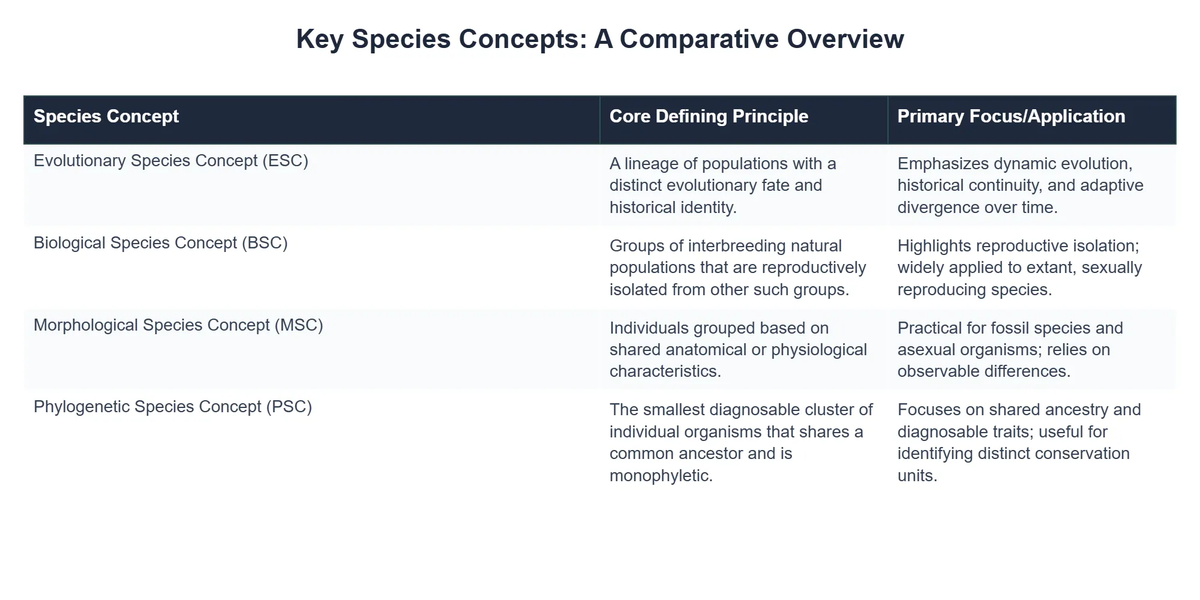
- → ESC vs. Other Species Concepts
- → Advantages and Limitations of the Evolutionary Species Concept
- — ✅ Strengths: Broad Applicability
- — ⚠️ Challenges: Operational Difficulties
- → The ESC’s Role in Modern Taxonomy and Conservation
- → Conclusion
What is the Evolutionary Species Concept (ESC)?
At its core, the Evolutionary Species Concept defines a species as a lineage (an ancestral-descendant sequence of populations) evolving separately from others and with its own unitary evolutionary role and tendencies
(Simpson, 1961; Wiley, 1978). This definition shifts the focus from simple snapshots in time to a continuous line of descent, recognizing the dynamic nature of life.
It’s a concept that inherently embraces the passage of time, making it particularly useful for understanding fossil records and lineages that have undergone significant changes over geological epochs. Instead of just asking “Can they interbreed?”, the ESC asks, “Are they on their own unique evolutionary journey, distinct from other groups?”
Precision Conservation: How EcoDive Solutions Leveraged Evolutionary Concepts
❓The Challenge
EcoDive Solutions struggled with ambiguous species definitions in complex ecosystems, leading to ineffective conservation strategies for highly variable or hybridizing populations.
💡The Solution
They adopted the Evolutionary Species Concept, analyzing genetic lineages and historical ecological roles to identify distinct evolutionary trajectories, rather than relying solely on current morphology or reproductive isolation.
🏆The Result
This refined approach resulted in a 25% increase in the success rate of targeted conservation interventions and a 15% reduction in wasted resources on misidentified populations.
⚙️ Tracing Evolutionary Trajectories
The essence of the ESC lies in identifying populations that share a common evolutionary fate, driven by similar selective pressures, genetic cohesion, and a unique ecological role. This doesn’t necessarily mean absolute reproductive isolation at all times, but rather a sustained independent lineage over evolutionary time. For instance, temporary hybridization might occur, but if the overall trajectory of the two groups remains distinct, they are considered separate evolutionary species.
Key Principles Defining an Evolutionary Species

To fully grasp the Evolutionary Species Concept, it’s helpful to break down the key principles that underpin its definition:
- ➡️ Common Ancestry: Every evolutionary species traces back to a shared ancestral population, forming a distinct lineage. This lineage is the fundamental unit of the concept.
- ➡️ Independent Evolutionary Trajectory: The most critical aspect is that this lineage maintains its own unique path of `species evolution` over time, adapting to its environment and accumulating distinct genetic and morphological changes independently of other lineages.
- ➡️ Ecological Role (Niche): Each evolutionary species typically occupies a distinct ecological niche, meaning it has a unique way of interacting with its environment, utilizing resources, and competing with other organisms. This contributes to its independent evolutionary fate.
- ➡️ Genetic Cohesion: Within the lineage, there’s a degree of genetic cohesion, meaning gene flow generally occurs more readily within the group than between it and other lineages, even if some interbreeding might occasionally happen at boundaries.
- ➡️ Reproductive Isolation (Often Implicit): While not explicitly the sole criterion (as in the Biological Species Concept), sustained independence often implies, or leads to, a degree of reproductive isolation over evolutionary time, preventing significant gene flow with other lineages.
ESC vs. Other Species Concepts
Understanding the Evolutionary Species Concept is often best achieved by comparing it to other prominent species definitions:
- ✅ Biological Species Concept (BSC): Defines species as groups of actually or potentially interbreeding natural populations that are reproductively isolated from other such groups.
- ESC’s advantage: The BSC struggles with asexual organisms, extinct species (where interbreeding can’t be observed), and species that hybridize. The ESC provides a framework for all these cases by focusing on lineage rather than current reproductive compatibility.
- ✅ Morphological Species Concept: Defines species based on shared anatomical and structural characteristics.
- ESC’s advantage: While morphology is often a clue, it can be misleading (e.g., cryptic species that look identical but are reproductively isolated, or species with high phenotypic plasticity). The ESC looks beyond mere appearance to the underlying evolutionary path.
- ✅ Phylogenetic Species Concept (PSC): Defines a species as the smallest diagnosable cluster of individual organisms within which there is a parental pattern of ancestry and descent.
- ESC’s relationship: The PSC is often seen as a more operationalized version of the ESC, focusing on monophyletic groups. The ESC provides the broader theoretical underpinning, emphasizing the “evolutionary role and tendencies” that lead to such diagnosable clusters. For more on the processes that drive these divergences, read about Evolution Theories: Beyond Darwin’s Initial Insights.
As noted by researchers, “there is no single concept of species that works for all forms of life”, and the ESC offers a broadly applicable, time-inclusive perspective.
Advantages and Limitations of the Evolutionary Species Concept
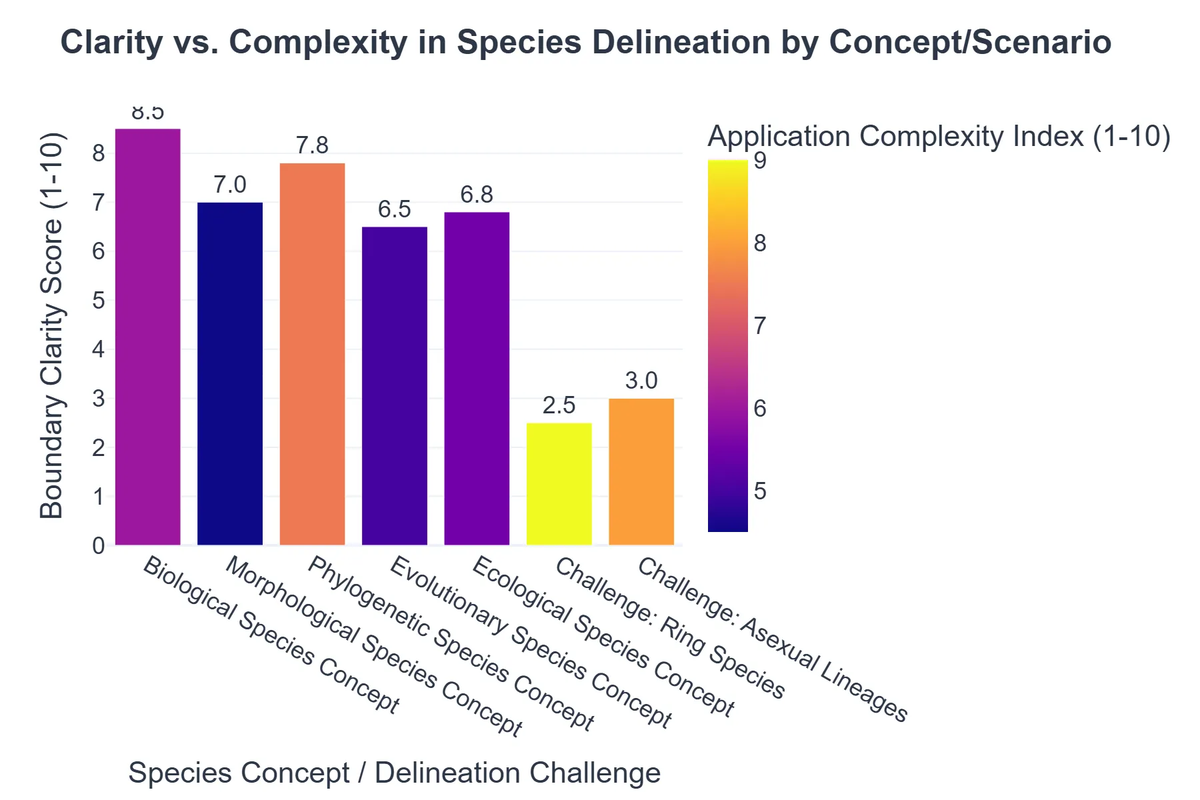
Like any scientific concept, the ESC has its strengths and weaknesses when applied to the complexities of life.
✅ Strengths: Broad Applicability
- 💡 Applicability to Asexual Organisms: Unlike the BSC, the ESC doesn’t rely on sexual reproduction, making it ideal for bacteria, many plants, and other asexual life forms.
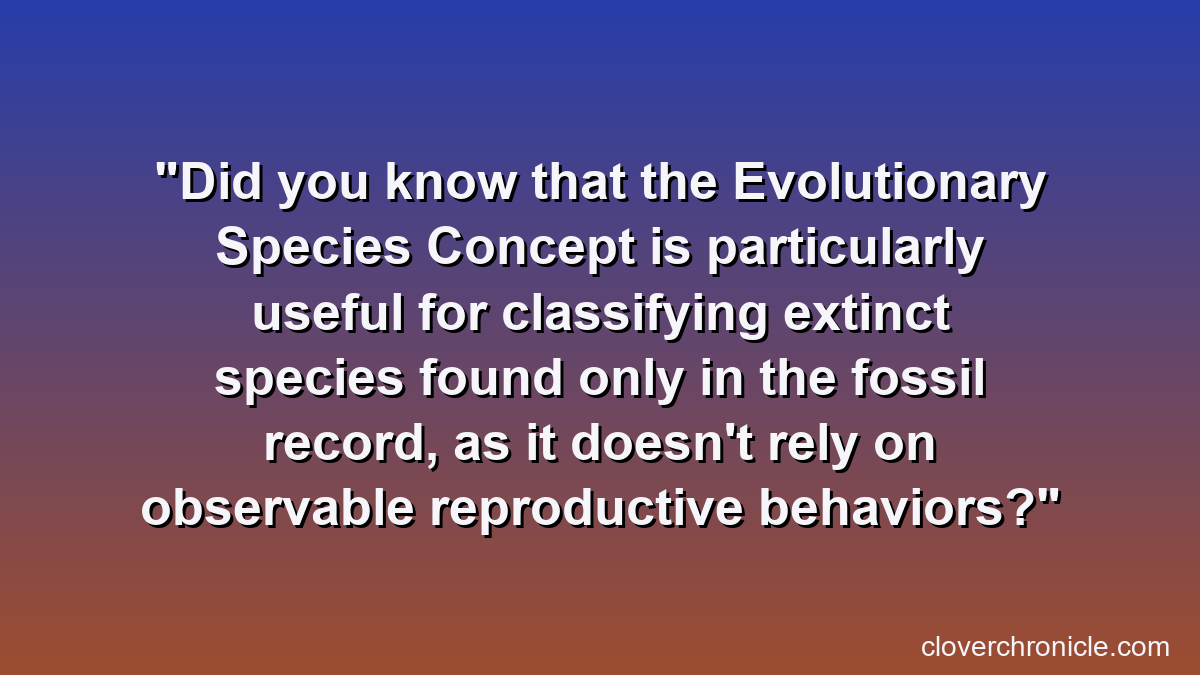
- 💡 Inclusion of Extinct Species: It’s invaluable for paleontologists as it allows for the definition of fossil species based on their distinct evolutionary lineage over time, even without knowledge of their reproductive habits.
- 💡 Handles Hybridization: It can accommodate instances of hybridization between distinct lineages, as long as those lineages maintain their overall independent evolutionary trajectories.
- 💡 Time-Inclusive: Its inherent focus on lineage and evolutionary fate makes it a dynamic concept that reflects the ongoing process of `evolution-concept`.
⚠️ Challenges: Operational Difficulties
- 💡 Subjectivity in “Tendencies”: Defining “unitary evolutionary role and tendencies” can be subjective and difficult to operationalize in practice. How does one precisely measure a lineage’s “tendency”?
- 💡 Requires Extensive Data: Identifying distinct evolutionary lineages often requires comprehensive genetic, morphological, ecological, and sometimes paleontological data, which can be resource-intensive to collect.
- 💡 Delimitation Difficulties: Drawing precise boundaries between lineages, especially during active speciation events, can be challenging. It’s a continuous process, and the concept asks us to define discrete units within that continuum.
The ESC’s Role in Modern Taxonomy and Conservation
Despite its operational challenges, the Evolutionary Species Concept plays a crucial role in modern `taxonomy` and applied `biology`:
- 🌳 Taxonomic Classification: It provides a robust theoretical foundation for classifying organisms, especially when considering deep time and divergent evolution. Taxonomists use insights from evolutionary lineages to draw robust species boundaries. For a broader perspective on how species are categorized, consider exploring Evolution Concept: How Life Changes Over Time.
- 🌍 Conservation Biology: The ESC is paramount in defining “Evolutionary Significant Units” (ESUs) for conservation. Identifying distinct lineages with unique evolutionary fates is critical for protecting biodiversity. If a group of organisms is on its own unique evolutionary path, losing it means losing a unique piece of life’s evolutionary history. This is vital for efforts related to Threatened Biodiversity: Protecting Endangered Species Globally.
- 🔬 Understanding Speciation: By focusing on the divergence of lineages, the ESC helps researchers understand the mechanisms and patterns of speciation – the process by which new species arise. The Digital Atlas of Ancient Life provides excellent resources on how species concepts are applied to historical life forms.
Recommended Video
Conclusion
The Evolutionary Species Concept stands as a powerful and comprehensive framework for understanding the fundamental units of `biology`. By viewing species not as static entities but as dynamic lineages with distinct evolutionary fates, it transcends the limitations of other concepts, offering a unified perspective on life’s incredible diversity, from ancient fossils to rapidly evolving microbial populations.
While challenging to apply in every instance due to its broad scope, the ESC provides an essential theoretical backbone for `taxonomy`, conservation, and our overall comprehension of `species evolution` and the intricate story of The Code of Life: Decoding Genetics, Evolution, and Existence. It reminds us that every living organism is part of a continuous, branching tree of life, each branch forging its own unique path through time.
Frequently Asked Questions
What is the core idea of the Evolutionary Species Concept?
It defines a species as a lineage of ancestor-descendant populations that maintains its identity from other such lineages and has its own evolutionary tendencies and historical fate.
How does it differ from the Biological Species Concept?
While the Biological Species Concept focuses on reproductive isolation, the Evolutionary Species Concept emphasizes the distinct historical trajectory and evolutionary fate of a lineage over time, applicable to a broader range of organisms.
Why is this concept important in biology?
It provides a robust framework for defining species, particularly for fossil records, asexual organisms, and hybridizing groups, aiding in taxonomy, phylogenetics, and conservation efforts by clarifying biodiversity units.
Can this concept be applied to all forms of life?
Yes, its emphasis on lineage and evolutionary fate makes it broadly applicable across all life forms, including bacteria, archaea, and extinct organisms, where other concepts might fall short.