
SAP Blockchain: Revolutionizing Business with Distributed Ledgers
In the rapidly evolving landscape of enterprise technology, one name consistently stands out for its foundational role in global business operations: SAP. As companies increasingly seek ways to enhance transparency, security, and efficiency, the promise of blockchain technology has emerged as a game-changer. This article delves into how SAP Blockchain is not just experimenting with this transformative technology, but actively integrating it to revolutionize core business processes.
💡 Key Takeaways
- SAP Blockchain integrates DLT into core enterprise solutions to enhance business processes.
- It significantly improves transparency, security, and efficiency in areas like supply chain management and finance.
- Key benefits include immutable data records, streamlined operations, and enhanced trust among participants.
- SAP’s blockchain initiatives are driving significant digital transformation and new business models across industries.
“SAP Blockchain isn’t just a technological upgrade; it’s a foundational shift towards a future where trust is decentralized, and every transaction becomes an immutable, verifiable truth, enabling unprecedented collaboration and ethical data use.”
— Kira Chen, Futurist & AI Ethics Advocate
From supply chain management to financial transactions, distributed ledgers offer a new paradigm for secure, verifiable, and immutable record-keeping. SAP, leveraging its vast expertise in enterprise resource planning (ERP) and business software, is at the forefront of bringing these capabilities to a wide array of industries, enabling a future where trust and efficiency are built directly into digital interactions.
In This Article
- → SAP Blockchain: Revolutionizing Business with Distributed Ledgers
- — 💡 Key Takeaways
- → What is SAP Blockchain and Why Does It Matter?
- — The Core Concept of Distributed Ledgers
- — SAP’s Strategic Vision for Blockchain
- → Key SAP Blockchain Offerings and Solutions
- — ⚙️ SAP Cloud Platform Blockchain
- — 💡 SAP Blockchain Business Services
- — 🔗 SAP Logistics Business Network
- → How SAP Blockchain Revolutionizes Business Processes
- — Enhanced Transparency and Trust
- — Streamlined Supply Chains
- — Improved Data Integrity and Security
- — New Business Models and Efficiencies
- → Use Cases and Real-World Applications
- — ✅ Supply Chain Traceability
- — ➡️ Pharma and Healthcare
- — 💸 Financial Services and Payments
- → Challenges and the Path Forward for Enterprise Blockchain
- — Scalability and Interoperability
- — Regulatory and Legal Considerations
- — Adoption and Integration Complexities
- → Conclusion
What is SAP Blockchain and Why Does It Matter?

At its core, SAP’s venture into blockchain is about extending the capabilities of its enterprise software suite to harness the unique benefits of distributed ledger technology (DLT). It’s not about creating a new cryptocurrency, but rather about providing a secure, transparent, and immutable foundation for business-critical operations.
The Core Concept of Distributed Ledgers
- ✅ Decentralization: Unlike traditional centralized databases, DLTs operate across a network of computers, eliminating single points of failure and control.
- ➡️ Immutability: Once a transaction is recorded on a blockchain, it cannot be altered or deleted, ensuring a verifiable history of all activities.
- 💡 Transparency (Controlled): Participants in a private or consortium blockchain can view relevant transactions, fostering trust and reducing disputes.
- ⚙️ Consensus Mechanisms: All participants must agree on the validity of transactions before they are added to the ledger, ensuring data integrity.
For a more in-depth understanding of the underlying principles, explore our comprehensive guide on Distributed Ledger Technology (DLT): Beyond Blockchain.
SAP’s Strategic Vision for Blockchain
SAP recognizes blockchain as a critical component for the intelligent enterprise, aiming to solve complex business challenges through enhanced collaboration and data integrity. Their strategy focuses on enterprise-grade solutions that can seamlessly integrate with existing SAP systems, enabling businesses to:
- 🚀 Automate complex processes across organizations.
- 🔒 Build unbreakable trust among business partners.
- 📈 Gain unprecedented transparency into multi-party transactions.
- 💡 Create new business models based on shared, trusted data.
Key SAP Blockchain Offerings and Solutions
SAP has developed a suite of offerings designed to help enterprises adopt and leverage blockchain technology within their existing ecosystems. These solutions are built to integrate with SAP’s extensive portfolio, ensuring a smooth transition and maximum utility.
⚙️ SAP Cloud Platform Blockchain
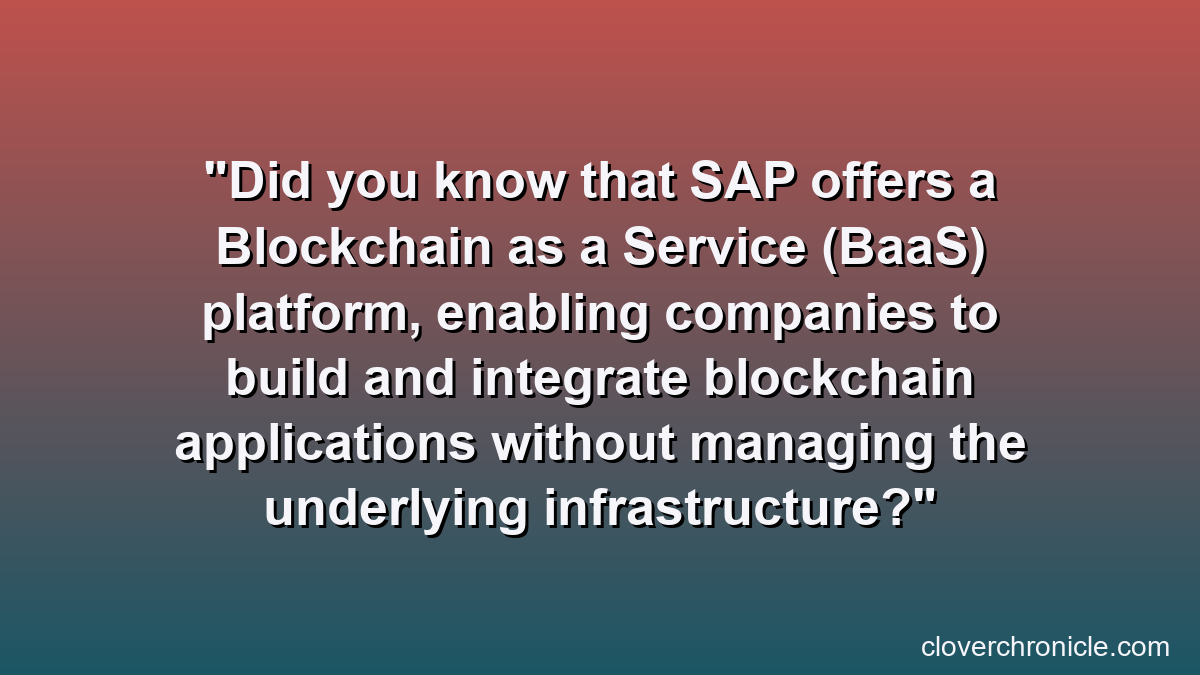
This is the foundational platform for building and running blockchain applications on SAP’s cloud infrastructure. It provides a managed blockchain-as-a-service (BaaS) offering, supporting leading blockchain protocols like Hyperledger Fabric and MultiChain. Businesses can use the SAP Cloud Platform Blockchain to:
- 🛠️ Rapidly prototype and develop blockchain applications.
- ☁️ Leverage the scalability and security of SAP’s cloud environment.
- 🔗 Integrate blockchain solutions with existing SAP S/4HANA or other enterprise systems.
- 🔄 Manage nodes, monitor performance, and deploy smart contracts with ease.
💡 SAP Blockchain Business Services
Beyond the platform, SAP offers specific, pre-built blockchain business services tailored for common enterprise use cases. These services abstract much of the complexity of blockchain development, allowing companies to focus on their business logic. Examples of what SAP Blockchain Business Services can enable include:
- ✅ Asset traceability and provenance.
- ➡️ Supply chain visibility and collaboration.
- 🔒 Enhanced contract management and dispute resolution.
- 💰 Digital payments and financial settlements.
These services accelerate the adoption of blockchain for tangible business value, providing ready-to-use solutions that address specific industry needs.
🔗 SAP Logistics Business Network
A prime example of SAP’s practical application of blockchain is within its supply chain solutions. The SAP Logistics Business Network leverages blockchain to enhance transparency and collaboration across complex logistics ecosystems. It allows participants to share and verify information about freight, assets, and orders in a secure and immutable manner. This leads to:
- 🚚 Real-time tracking of goods and shipments.
- 🧾 Automated freight invoice reconciliation.
- 🌐 Improved visibility for all stakeholders in a supply chain.
- 📉 Reduced disputes and errors due to a single, trusted source of truth.
This network highlights how blockchain can effectively transform traditionally opaque and fragmented supply chains into highly efficient, transparent, and collaborative networks. For more insights on how DLT is being applied across various sectors, consider reading about Blockchain Solutions for Real-World Business.
How SAP Blockchain Revolutionizes Business Processes
The integration of blockchain into SAP’s enterprise solutions brings several profound shifts to traditional business operations, promising enhanced efficiency, security, and trust.
Enhanced Transparency and Trust
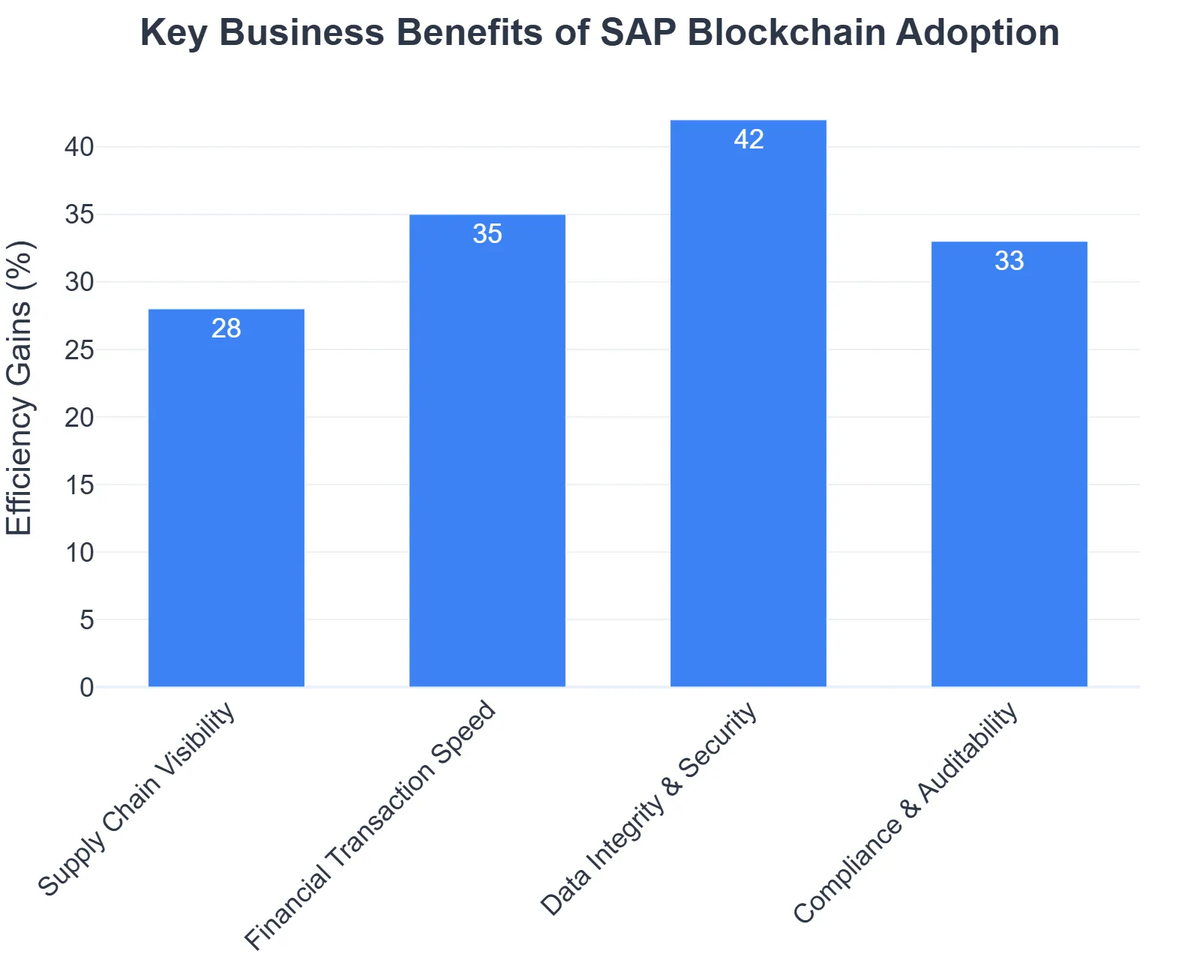
Blockchain creates an immutable audit trail for every transaction. This inherent transparency (for authorized participants) fosters trust among disparate parties who may not inherently trust each other. This is crucial for multi-party business processes where data verification and reconciliation are often time-consuming and prone to error.
Streamlined Supply Chains
From manufacturing to delivery, complex supply chains involve numerous participants, making end-to-end visibility challenging. SAP Blockchain facilitates a shared, verifiable ledger of events, enabling real-time tracking of goods, conditions, and ownership transfers. This reduces delays, combats counterfeiting, and improves overall efficiency.
Improved Data Integrity and Security
The cryptographic nature of blockchain ensures that data, once recorded, cannot be tampered with. This significantly enhances data integrity and reduces the risk of fraud or unauthorized modifications. For enterprises handling sensitive information, this layer of security is invaluable.
New Business Models and Efficiencies
By enabling secure, automated, and transparent interactions, SAP Blockchain can unlock entirely new business models. This includes everything from automated contract execution (smart contracts) to new forms of asset tokenization, leading to previously unimaginable efficiencies and revenue streams. As Oracle notes, blockchain is truly “poised to revolutionize business” beyond its cryptocurrency origins. (Source: Oracle Blogs)
Use Cases and Real-World Applications
SAP Blockchain isn’t just theoretical; it’s actively being applied across various industries to solve tangible business problems.
✅ Supply Chain Traceability
Ensuring the authenticity and origin of products is paramount in industries like food & beverage, pharmaceuticals, and luxury goods. SAP Blockchain enables end-to-end traceability, allowing consumers and regulators to verify product journeys from source to shelf. This combats counterfeiting and enhances consumer trust.
➡️ Pharma and Healthcare
In highly regulated industries like pharmaceuticals, ensuring drug authenticity and preventing counterfeits is a matter of public health. SAP Blockchain can track drug shipments, verify compliance, and secure patient data, improving safety and regulatory adherence.
💸 Financial Services and Payments
While SAP’s focus isn’t on cryptocurrencies, blockchain’s underlying principles are highly relevant for inter-company payments, trade finance, and asset management. SAP Blockchain can streamline reconciliation processes, reduce settlement times, and lower transaction costs for complex financial instruments.
The potential for blockchain to revolutionize international trade itself is also a topic of significant discussion, as highlighted by the World Trade Organization. (Source: WTO)
Challenges and the Path Forward for Enterprise Blockchain
Despite its immense potential, the widespread adoption of enterprise blockchain, including SAP’s initiatives, faces several challenges that need to be addressed for true mainstream integration.
Scalability and Interoperability
Enterprise-grade solutions require the ability to handle massive volumes of transactions. While significant progress has been made, ensuring blockchains can scale to meet the demands of global business, and interoperate seamlessly with different DLTs and traditional systems, remains a key focus.
Regulatory and Legal Considerations
The legal and regulatory frameworks surrounding blockchain are still evolving. Issues like data privacy (e.g., GDPR), jurisdiction for disputes, and the legal status of smart contracts need clearer definitions to foster widespread confidence and adoption.
Adoption and Integration Complexities
Implementing blockchain requires not just technological integration but also significant organizational change. Businesses need to re-evaluate existing processes, train personnel, and adapt their operational models to fully leverage DLT. The shift from centralized to distributed thinking is a significant hurdle.
Recommended Video
Conclusion
SAP’s commitment to blockchain technology signifies a pivotal moment in the evolution of enterprise software. By providing robust platforms like SAP Cloud Platform Blockchain and specialized services like SAP Blockchain Business Services, alongside industry-specific solutions such as the SAP Logistics Business Network, SAP is paving the way for businesses to harness the power of distributed ledgers.
The journey to a fully integrated blockchain-powered enterprise is ongoing, with challenges in scalability, regulation, and adoption still to navigate. However, the foundational work done by SAP in integrating this technology into critical business processes promises a future of enhanced trust, unparalleled transparency, and significant operational efficiencies. As we chart the course of tomorrow’s technology, SAP’s role in the Future Perfect?: Charting the Course of Tomorrow’s Technology for enterprise blockchain will undoubtedly be a defining one.
Frequently Asked Questions
What is SAP Blockchain?
SAP Blockchain refers to the integration of distributed ledger technology (DLT) like Hyperledger Fabric and Ethereum with SAP’s enterprise resource planning (ERP) systems and other business applications to create secure, transparent, and traceable transaction networks.
How does SAP Blockchain benefit businesses?
It enhances transparency, traceability, and security in various business processes, particularly in supply chain management, finance, and asset tracking, by providing an immutable record of transactions, reducing fraud, and streamlining operations.
What industries are adopting SAP Blockchain?
Industries such as manufacturing, retail, logistics, pharmaceuticals, and consumer goods are actively adopting SAP Blockchain for use cases including supply chain visibility, product provenance, digital asset management, and inter-company reconciliation.
Is SAP Blockchain secure?
Yes, leveraging blockchain’s inherent cryptographic security, immutability, and distributed nature, SAP Blockchain solutions offer a high degree of data integrity, resilience, and protection against unauthorized alterations.