
In the rapidly evolving landscape of emerging technologies, few concepts have captured as much attention as distributed ledger technology (DLT). While often synonymous with “blockchain,” DLT is, in fact, a broader category, encompassing a diverse array of decentralized record-keeping systems that promise to revolutionize industries from finance to healthcare, and beyond. This article will chart the course of tomorrow’s technology, delving deep into DLT, exploring its foundational principles, venturing beyond traditional blockchain structures, and illuminating its transformative potential.
💡 Key Takeaways
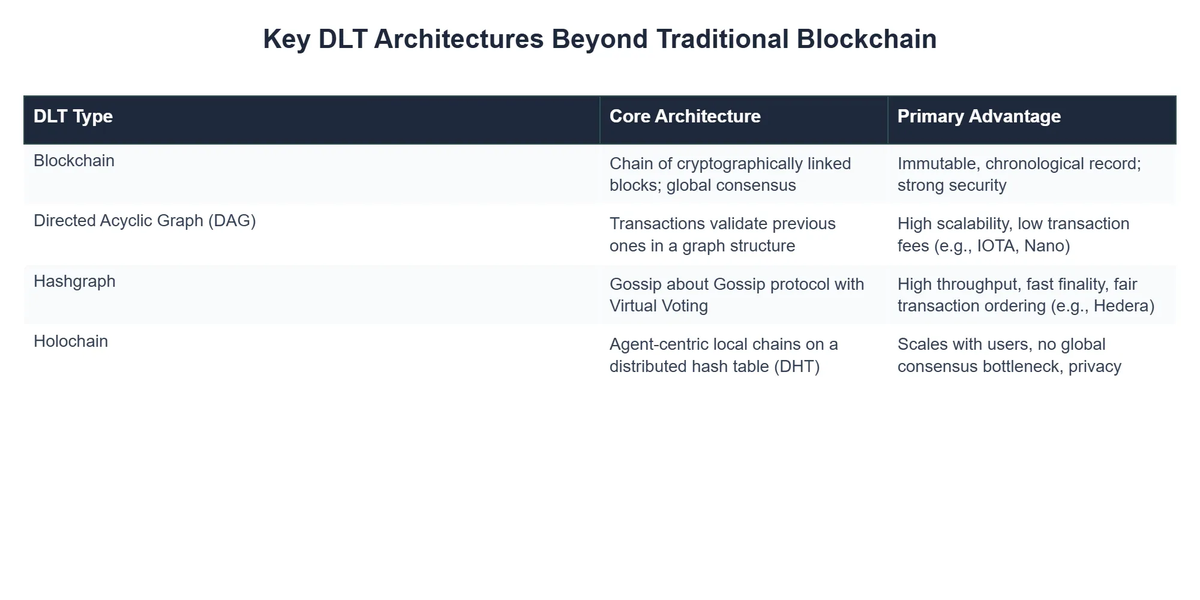
- DLT is an umbrella term, with blockchain being just one type among many, including Directed Acyclic Graphs (DAGs) and Hashgraph.
- Beyond cryptocurrencies, DLT offers robust solutions for data integrity, supply chain management, and secure digital identity.
- Key advantages of DLT include enhanced security, transparency, and efficiency for record-keeping and transactions.
- The future of decentralized systems extends beyond public blockchains, with private and permissioned DLTs driving enterprise adoption.
“DLT’s true revolution isn’t just in decentralizing currency, but in decentralizing truth itself. As a futurist, I see DLT enabling new paradigms of digital trust and ethical data governance, moving beyond the binary constraints of traditional ledgers and setting the stage for truly autonomous, fair systems.”
— Kira Chen, Futurist & AI Ethics Advocate
As we stand at the precipice of a new technological era, understanding DLT is no longer optional but essential for anyone looking to navigate the complex yet exciting world of decentralized innovation. We aim to provide the most comprehensive and useful resource on the internet for this topic, guiding you through its intricacies with clarity and practical insight, echoing the visionary scope of our overarching discussion: Future Perfect?: Charting the Course of Tomorrow’s Technology.
In This Article
- — 💡 Key Takeaways
- → Understanding Blockchain: The Foundational DLT
- — ⚙️ How Blockchain Works
- → Beyond Blockchain: Exploring Other Distributed Ledger Technologies
- — ➡️ Directed Acyclic Graphs (DAGs)
- — ➡️ Other Innovative DLT Architectures
- → Key Features and Advantages of DLT
- → Real-World Applications and Use Cases
- — ✨ Financial Services
- — 📦 Supply Chain Management
- — ⚡ Energy Sector
- — 🏥 Healthcare
- — 🏛️ Government and Public Sector
- → Navigating the Future: Challenges and Opportunities
- — 📈 Opportunities for Growth
- → Conclusion: Charting Tomorrow’s Technological Course
Understanding Blockchain: The Foundational DLT
At its core, a blockchain is a specific type of distributed ledger. It’s a decentralized, immutable, and cryptographically secured chain of blocks, where each block contains a batch of transactions. Once a block is added, it cannot be altered, creating a highly secure and transparent record.
⚙️ How Blockchain Works
- ✅ Decentralization: No single entity controls the network; instead, it’s maintained by a peer-to-peer network of computers (nodes).
- ✅ Immutability: Once data is recorded on the blockchain, it cannot be changed or deleted. This creates an unalterable audit trail.
- ✅ Transparency (Pseudonymous): While identities are often pseudonymous, all transactions are publicly visible on the ledger.
- ✅ Consensus Mechanisms: Participants agree on the validity of transactions through mechanisms like Proof of Work (PoW) or Proof of Stake (PoS).
- ✅ Cryptography: Advanced encryption techniques secure transactions and link blocks.
The innovation of blockchain, first popularized by Bitcoin, lies in its ability to create trust in a trustless environment, eliminating the need for central intermediaries.
Beyond Blockchain: Exploring Other Distributed Ledger Technologies
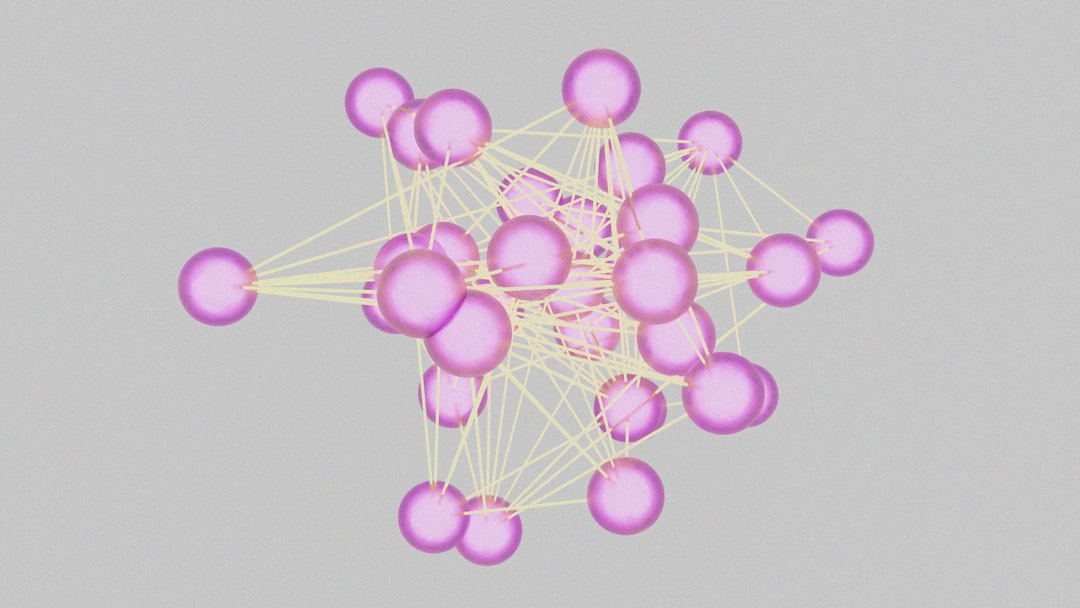
While blockchain remains the most widely known DLT, the field is rapidly evolving, giving rise to alternative structures that address some of blockchain’s inherent limitations, such as scalability and transaction speed. These alternative DLTs often deviate from the linear, block-based structure.
➡️ Directed Acyclic Graphs (DAGs)
DAGs represent a significant departure from traditional blockchain. Instead of blocks, DAGs are composed of individual transactions that directly reference previous transactions, forming a graph-like structure rather than a linear chain. This allows for parallel processing and can potentially achieve higher transaction throughput.
Distributed Ledger Technology (DLT) Beyond Blockchain: Pros and Cons
Pros
- ✔Improved scalability and transaction throughput compared to traditional blockchains.
- ✔Potential for lower transaction costs and faster finality.
- ✔Greater flexibility for privacy and permissioned access in enterprise applications.
- ✔Reduced energy consumption compared to proof-of-work blockchains.
Cons
- ✖Less mature ecosystems and limited developer tools for newer DLTs.
- ✖Increased complexity in understanding and implementing diverse DLT architectures.
- ✖Potential for centralization in practical deployments, especially permissioned networks.
- ✖Newer technologies with less battle-tested security compared to established blockchains.
- 💡 IOTA: Uses a DAG called the “Tangle” to enable feeless microtransactions, primarily for the Internet of Things (IoT).
- 💡 Nano: Focuses on instant, feeless transactions for digital payments, using a “block-lattice” architecture, a specific type of DAG.
- 💡 Hedera Hashgraph: Employs a unique gossip-about-gossip protocol and virtual voting to achieve high throughput and fairness, distinct from traditional blockchain and even some DAGs.
➡️ Other Innovative DLT Architectures
Beyond DAGs, other DLTs are experimenting with different data structures and consensus mechanisms to optimize for specific use cases:
- 💡 Holochain: Operates on an agent-centric model where each user maintains their own chain (a “hApp”), and data is shared and verified across a distributed hash table. It focuses on scalability and peer-to-peer applications without a global ledger.
- 💡 Tempo (Radix DLT): Employs a sharded ledger that processes transactions in parallel across multiple shards, aiming for massive scalability for decentralized finance (DeFi).
These innovations highlight a growing recognition that a single DLT architecture may not fit all purposes, paving the way for specialized solutions.
Key Features and Advantages of DLT
Regardless of their underlying structure, all DLTs share core characteristics that drive their immense potential:
AgriChain Innovations: Revolutionizing Farm-to-Fork Transparency with DLT
❓The Challenge
AgriChain Innovations struggled with transparency and trust across their complex agricultural supply chain, leading to frequent disputes over produce quality, spoilage, and delayed payment cycles.
💡The Solution
Inspired by the transformative potential of Distributed Ledger Technology (DLT) outlined in this article, AgriChain Innovations implemented a tailored DLT platform. This decentralized system provided immutable, real-time tracking of every product batch from farm to retail, fostering unprecedented trust and clarity among all partners.
🏆The Result
The DLT integration led to a 35% reduction in product spoilage, accelerated payment reconciliations by 50%, and improved overall supply chain efficiency, cutting operational costs by 20%.
- ✅ Enhanced Security: Cryptographic principles and decentralization make DLTs highly resistant to tampering and fraud.
- ✅ Increased Transparency: Transaction records are immutable and often publicly verifiable, fostering trust and accountability.
- ✅ Greater Efficiency: By removing intermediaries and automating processes, DLT can streamline operations, reduce costs, and accelerate transaction times.
- ✅ Improved Data Integrity: The distributed nature ensures data consistency and resilience against single points of failure.
- ✅ Decentralization: Eliminates reliance on central authorities, reducing censorship risk and fostering more equitable systems.
As the UK Government’s Chief Scientific Adviser noted in a 2016 report, DLT has the potential to redefine how we interact with data, governance, and trust itself. For more details, refer to the Distributed Ledger Technology: beyond block chain report.
Real-World Applications and Use Cases
The versatility of DLT extends across numerous industries, offering solutions to long-standing problems and creating entirely new possibilities.
✨ Financial Services
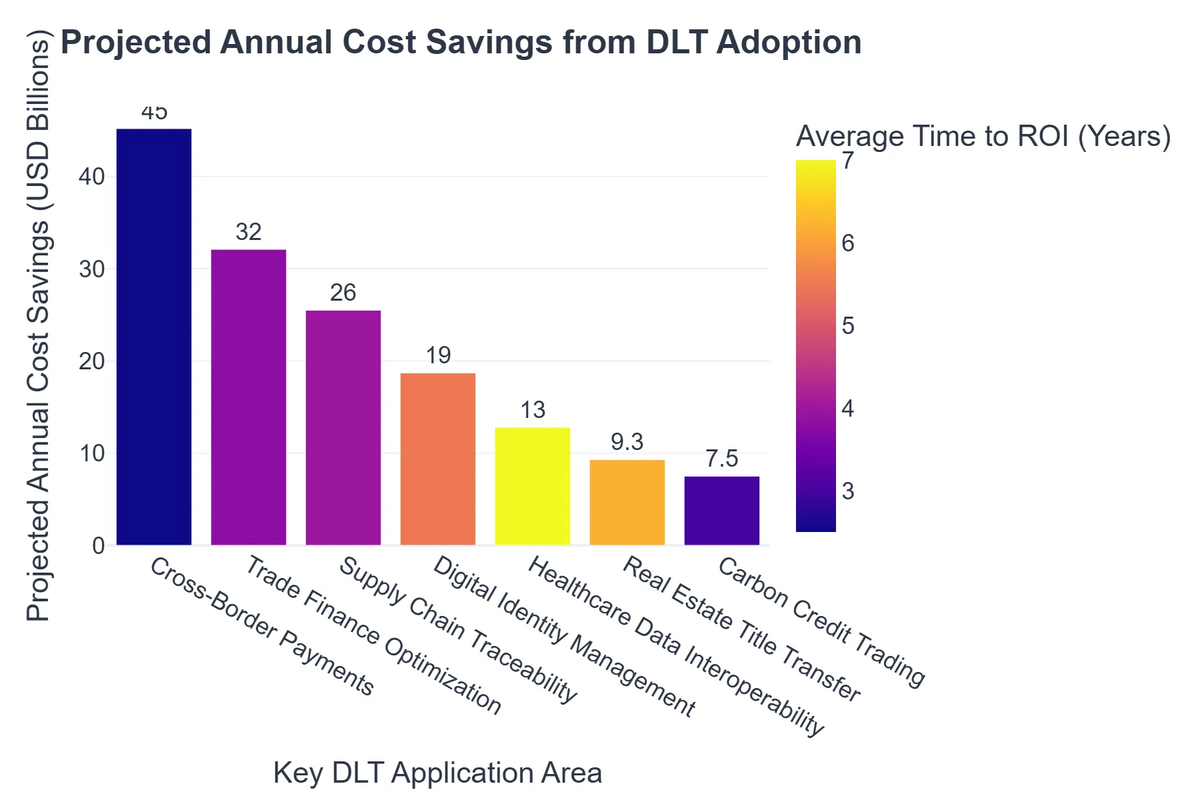
- ➡️ Cross-border Payments: Faster, cheaper, and more transparent international money transfers.
- ➡️ Trade Finance: Streamlining complex processes involving multiple parties, reducing fraud, and speeding up settlements.
- ➡️ Digital Assets: Enabling the creation and secure transfer of tokenized securities, real estate, and other assets.
- ➡️ Central Bank Digital Currencies (CBDCs): Exploring DLT as the underlying technology for national digital currencies.
📦 Supply Chain Management
- ➡️ Traceability: Tracking goods from origin to consumer, enhancing transparency and combating counterfeiting.
- ➡️ Logistics Optimization: Automating freight tracking, payments, and customs documentation.
Companies like IBM Blockchain are at the forefront of driving enterprise adoption, particularly within supply chain and logistics, demonstrating the robustness of DLT in complex, multi-party environments.

⚡ Energy Sector
DLT is transforming energy grids by enabling peer-to-peer energy trading, microgrids, and transparent energy tracking. Projects like `power ledger` exemplify how DLT facilitates the trading of renewable energy, allowing individuals and businesses to buy and sell excess solar power directly, optimizing energy distribution and promoting sustainability.
🏥 Healthcare
- ➡️ Patient Records Management: Securely sharing medical data between providers while maintaining patient privacy.
- ➡️ Drug Traceability: Preventing counterfeit drugs from entering the supply chain.
🏛️ Government and Public Sector
From digital identity to land registries and voting systems, DLT offers unprecedented levels of transparency, security, and efficiency in public services. For enterprises considering integrating these powerful ledgers, engaging with specialized `DLT consulting services` can provide the necessary expertise and strategic guidance.
For further insights into how large enterprises leverage this technology, explore SAP Blockchain: Revolutionizing Business with Distributed Ledgers.

Recommended Video
Navigating the Future: Challenges and Opportunities
Despite its immense promise, DLT is not without its challenges. Scalability remains a key hurdle for many networks, as does interoperability between different ledgers. Regulatory frameworks are still evolving, and the energy consumption of some proof-of-work systems raises environmental concerns. The World Bank offers a comprehensive analysis of these considerations in their report, Distributed Ledger Technology (DLT) and blockchain.
📈 Opportunities for Growth
- ✅ Increased Adoption: As DLT matures, more industries will recognize and implement its benefits.
- ✅ Technological Advancements: Continuous innovation will address current limitations, making DLT more efficient and scalable. This includes advancements seen in platforms like Avalanche Blockchain: Subnets, Speed, and Scalability which aim to solve some of these issues.
- ✅ Talent Development: A growing demand for DLT experts creates opportunities for individuals to pursue `blockchain courses` and specialize in this burgeoning field.
- ✅ Interoperability Solutions: Bridges and cross-chain protocols will enable seamless communication between different DLTs, unlocking new possibilities for decentralized applications.
Understanding the nuances of various DLT platforms, such as Neo Blockchain: Unlocking its Potential, is crucial for anyone looking to build or invest in this space.
Conclusion: Charting Tomorrow’s Technological Course
Distributed Ledger Technology is far more than just blockchain; it’s a foundational shift in how we manage, verify, and trust information. By moving beyond centralized systems, DLT promises a future of greater transparency, efficiency, and security across virtually every sector. While the journey is still unfolding, the diverse array of DLTs, from traditional blockchains to innovative DAGs and beyond, underscores a collective effort to build a more decentralized, robust, and equitable digital world.
As we continue to chart the course of tomorrow’s technology, DLT stands as a cornerstone, inviting innovation and collaboration to unlock its full, transformative potential, truly living up to the vision of Future Perfect?: Charting the Course of Tomorrow’s Technology.
Frequently Asked Questions
What is the difference between DLT and Blockchain?
DLT (Distributed Ledger Technology) is the broader concept referring to any decentralized database distributed across multiple nodes. Blockchain is a specific type of DLT that organizes data into blocks, linked together cryptographically in a chain.
Are there DLTs that are not blockchains?
Yes, examples include Directed Acyclic Graphs (DAGs) like IOTA’s Tangle and Hedera Hashgraph. These DLTs process transactions concurrently, offering different scalability and consensus mechanisms than traditional blockchains.
What are the primary benefits of using DLT?
DLT offers enhanced data security through immutability, increased transparency, improved efficiency by removing intermediaries, and greater resilience due to its decentralized nature.
How is DLT being used in real-world applications?
DLT is revolutionizing supply chain tracking, digital identity verification, cross-border payments, healthcare data management, and intellectual property rights, offering secure and transparent solutions across diverse industries.