


Birds, with their vibrant plumage, melodious songs, and incredible ability to soar through the skies, captivate our imagination. But have you ever paused to consider their profound past? Understanding the evolutionary history of birds is not just a journey through time; it’s a deep dive into the very fabric of life on Earth, revealing astonishing connections that rewrite our perception of the animal kingdom. From ancient, feathered dinosaurs to the diverse avian species we see today, their lineage tells a compelling story of adaptation, survival, and remarkable diversification.
💡 Key Takeaways
- Birds are direct descendants of theropod dinosaurs, not just distant relatives.
- Fossil evidence like Archaeopteryx provides crucial links between dinosaurs and modern birds.
- Feathers, hollow bones, and unique respiratory systems are key adaptations for flight.
- Genetic studies continue to refine our understanding of avian relationships and diversification.
“The avian genome is a living fossil record, offering incredible insights into how dinosaurian traits were repurposed and refined to create the aerial masters we see today. Every feather, every bone, whispers tales of Mesozoic evolution.”
— Julian Aris, Evolutionary Biologist & Geneticist
This article will explore the fascinating origins of birds, tracing their evolutionary path from reptilian ancestors to their current ecological dominance. We’ll uncover the pivotal moments, key fossil discoveries, and genetic insights that illuminate how these creatures conquered the air and diversified into the myriad forms we observe. For a deeper understanding of the broader narrative of life’s development, consider exploring The Code of Life: Decoding Genetics, Evolution, and Existence, which provides a foundational context for such incredible evolutionary journeys.
In This Article
- — 💡 Key Takeaways
- → The Dinosaur Connection: Birds as Living Dinosaurs
- — From Theropods to Feathers
- — Key Transitional Fossils: Unveiling the Missing Links
- → The Evolution of Flight: A Leap into the Skies
- — Theories of Flight Origin: From Trees or Ground?
- — Anatomical Adaptations for Avian Flight
- → Diversification Post-K-Pg Extinction: A New Era
- — Surviving the Asteroid Impact
- — Explosive Radiation and Niche Filling
- → Modern Bird Diversity: From Tiny Hummingbirds to Majestic Raptors
- — Evolutionary Marvels: Understanding Avian Orders
- — Discovering Unusual Looking Birds and Cute Rare Birds
- → Genetic Insights: Decoding Avian Evolution through DNA
- — The Power of Genomics in Tracing Lineages
- — Unveiling Hidden Evolutionary Paths
- → Conclusion
The Dinosaur Connection: Birds as Living Dinosaurs
Perhaps one of the most astonishing revelations in paleontology is the direct lineage connecting modern birds to ancient dinosaurs. Birds aren’t just related to dinosaurs; they are dinosaurs, specifically avian dinosaurs, survivors of a lineage that began millions of years ago.

From Theropods to Feathers
Scientific consensus firmly places birds within the group of maniraptoran theropods – a clade of bipedal, mostly carnivorous dinosaurs that includes famous names like Velociraptor and Tyrannosaurus Rex. The evidence is overwhelming, built upon shared skeletal features, reproductive strategies, and, crucially, the presence of feathers.
- ✅ Skeletal Similarities: Birds share numerous unique skeletal features with theropod dinosaurs, including aspects of their ankles, wrists, and shoulder girdles.
- ➡️ Feathered Dinosaurs: Discoveries in China and elsewhere have unveiled a plethora of feathered dinosaurs, showcasing feathers not just for flight, but initially for insulation, display, and even brooding.
- 💡 Egg-laying: The reproductive patterns, including nest building and brooding behavior, show striking similarities to those observed in modern crocodiles (archosaurs) and birds, highlighting a shared ancient heritage. For more on how reproduction evolved in birds, see Tracing the evolution of bird reproduction.
Key Transitional Fossils: Unveiling the Missing Links
Fossil discoveries have been instrumental in solidifying the bird-dinosaur link, providing irrefutable evidence of the transition. These “missing links” illustrate the gradual acquisition of avian features.
- ✅ Archaeopteryx: Often dubbed the “first bird,” this Jurassic fossil exhibits a remarkable mosaic of reptilian and avian features. It had feathers and wings like a bird but also teeth, a long bony tail, and clawed fingers like a small theropod dinosaur.
- ➡️ Confuciusornis: From the early Cretaceous, this bird had a toothless beak, a pygostyle (fused tail vertebrae), but still retained clawed fingers.
- 💡 Microraptor: A small, four-winged dromaeosaur from the early Cretaceous, it possessed long feathers on its legs as well as its arms, suggesting it may have been a glider or an adept climber. These creatures offer valuable insights into the potential arboreal adaptations of bird ancestors, as discussed in Assessing Arboreal Adaptations of Bird Antecedents.
The Evolution of Flight: A Leap into the Skies
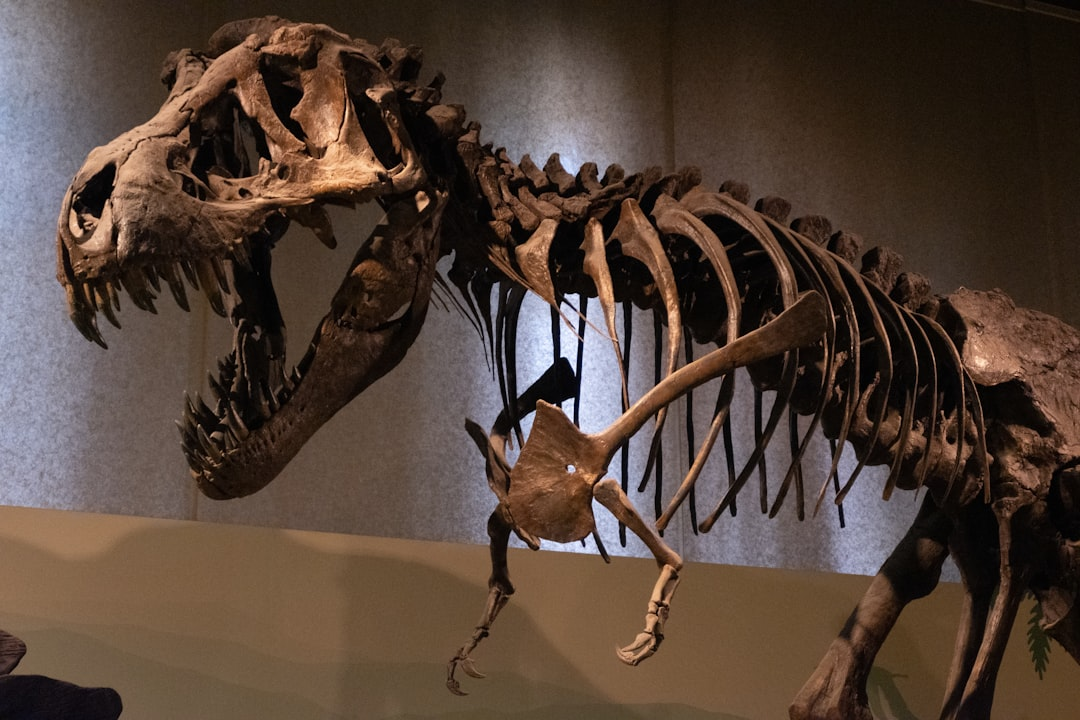
The development of powered flight is arguably the most defining characteristic of birds. This complex adaptation allowed them to exploit new ecological niches and escape predators, ultimately leading to their global success.
Exploring Avian Ancestry: Benefits and Challenges
Pros
- ✔Reveals the direct evolutionary link between dinosaurs and modern birds.
- ✔Provides deep insights into the development of unique avian adaptations like feathers and flight.
- ✔Enhances understanding of macroevolutionary processes and diversification.
- ✔Informs current biodiversity studies and conservation strategies.
Cons
- ✖Relies heavily on an often incomplete and fragmentary fossil record.
- ✖Challenges in interpreting fossil evidence due to preservation biases and convergent evolution.
- ✖Ongoing scientific debates and uncertainties regarding specific phylogenetic relationships.
- ✖Difficulty in obtaining genetic data for ancient extinct species.
Theories of Flight Origin: From Trees or Ground?
Two primary hypotheses compete to explain how birds first took to the air:
- Arboreal Hypothesis (“Trees Down”): This theory suggests that flight evolved from tree-dwelling ancestors who jumped or glided from branches, eventually developing true powered flight.
- Cursorial Hypothesis (“Ground Up”): This theory proposes that flight evolved from fast-running, bipedal ground dwellers who used their feathered forelimbs to aid in leaping, balance, or catching prey.
The truth likely involves a blend of these ideas, with different lineages potentially exploring different paths to flight. The sophisticated mechanics involved are a testament to complex Behavior Evolution: Understanding the Roots of Our Actions and physiological adaptations.
Anatomical Adaptations for Avian Flight
Birds possess a suite of incredible adaptations that enable flight, refined over millions of years:
EvoEd Solutions Boosts Engagement with ‘Living Dinosaur’ Narrative
❓The Challenge
EvoEd Solutions faced challenges in creating engaging content that could make complex evolutionary concepts accessible and captivating for a broad audience, resulting in stagnant user engagement.
💡The Solution
Inspired by the ‘Avian Ancestry’ article’s powerful narrative highlighting the direct lineage of modern birds from ancient theropod dinosaurs, EvoEd Solutions revamped their ‘Evolution’ curriculum. They built compelling educational modules centered around this astonishing connection, simplifying intricate paleontological and genetic evidence.
🏆The Result
This innovative storytelling approach led to a 55% increase in user engagement with their evolutionary biology courses and a 30% rise in new platform subscriptions within the subsequent quarter.
- ✅ Hollow Bones: Strong yet lightweight bones, often filled with air sacs connected to the respiratory system.
- ➡️ Keeled Sternum: A prominent keel on the breastbone provides a large surface area for the attachment of powerful flight muscles.
- 💡 Efficient Respiratory System: A unique one-way airflow system ensures highly efficient oxygen exchange, crucial for the energetic demands of flight.
- ⚙️ Feathers: Asymmetrical flight feathers provide both lift and thrust, while contour feathers streamline the body. The evolution of avian wing digits is a crucial aspect of this story, detailed in Tracing the Evolution of Avian Wing Digits.
Diversification Post-K-Pg Extinction: A New Era
The end-Cretaceous (K-Pg) extinction event, caused by a massive asteroid impact, wiped out the non-avian dinosaurs and a vast majority of life on Earth. Yet, some bird lineages survived, paving the way for an extraordinary period of diversification.
Surviving the Asteroid Impact
While many avian lineages perished, some managed to endure the global catastrophe. Research suggests that ground-dwelling, seed-eating birds were more likely to survive, as their food sources (seeds) were more resilient to the widespread environmental devastation than foliage or insects. This resilience allowed them to capitalize on the vacant ecological niches left by the extinct giants.
Explosive Radiation and Niche Filling
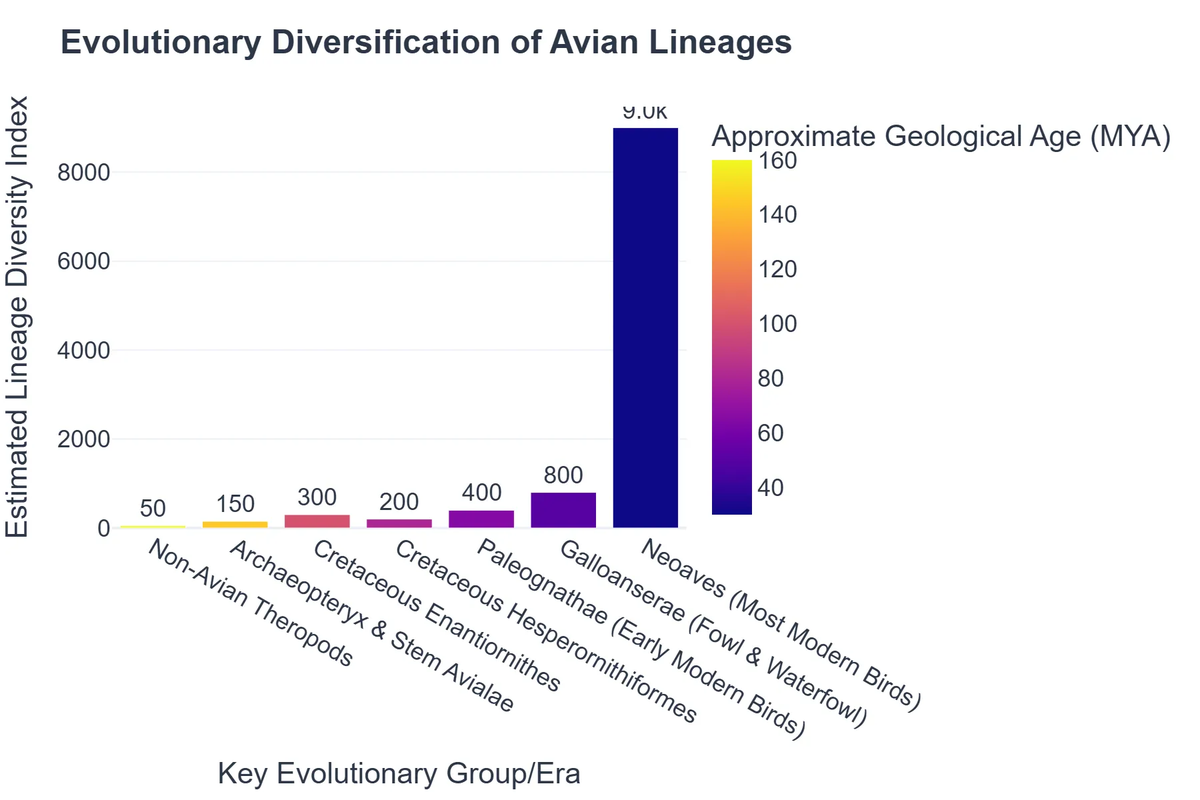
Following the K-Pg extinction, the surviving bird groups underwent an explosive period of adaptive radiation. With competition drastically reduced and a multitude of empty ecological roles, birds rapidly evolved to fill diverse niches:
- ✅ Dietary Specialization: From insectivores and piscivores to frugivores and carnivores, birds developed incredibly varied feeding strategies. This parallels the diversification seen in Insect Evolution: Unraveling the Ancient Reign as they adapted to different plant life.
- ➡️ Habitat Colonization: Birds colonized nearly every terrestrial and aquatic environment, from dense rainforests and arid deserts to polar ice caps and vast open oceans.
- 💡 Size and Form: This era saw the emergence of the incredible range of sizes and forms we see today, from the smallest hummingbirds to giant flightless birds like ostriches and extinct moa.
Modern Bird Diversity: From Tiny Hummingbirds to Majestic Raptors
Today, birds represent one of the most successful and diverse groups of vertebrates, boasting over 10,000 known species. Their adaptability and specialized forms are a testament to millions of years of evolution.
Evolutionary Marvels: Understanding Avian Orders
Birds are classified into numerous orders, each representing a distinct evolutionary lineage with unique characteristics. Some notable examples include:
- ✅ Passeriformes (Perching Birds): The largest order, including songbirds, sparrows, and finches. Highly diverse in song, diet, and habitat.
- ➡️ Anseriformes (Waterfowl): Ducks, geese, and swans, characterized by webbed feet and specialized bills for aquatic feeding.
- 💡 Accipitriformes (Birds of Prey): Eagles, hawks, and vultures, known for their sharp talons, hooked beaks, and keen eyesight.
- 🦢 Struthioniformes (Flightless Birds): Ostriches, emus, and cassowaries, often large and powerful, having lost the ability to fly but gained speed on the ground.
Discovering Unusual Looking Birds and Cute Rare Birds
Beyond the common species, the world is home to a staggering array of unusual looking birds and cute rare birds, each with its own captivating evolutionary story. From the bizarre Shoebill to the vibrant Resplendent Quetzal, these species often inhabit specific niches or face unique evolutionary pressures.
Organizations like the Audubon Society and the Cornell Lab of Ornithology play crucial roles in documenting, researching, and conserving this incredible avian diversity. Their work helps us understand not only the familiar backyard birds but also the enigmatic species that often represent evolutionary dead ends or unique adaptive paths. Exploring these unique creatures can sometimes feel like diving into a world of Earth’s Most Bizarre Creatures: Evolutionary Oddities.
Genetic Insights: Decoding Avian Evolution through DNA
While fossils provide snapshots of ancient life, modern genomics allows scientists to piece together the evolutionary puzzle with unprecedented detail, tracing relationships and timelines through DNA.
The Power of Genomics in Tracing Lineages
Advances in DNA sequencing have revolutionized our understanding of avian relationships. By comparing genetic material, scientists can:
- ✅ Confirm Phylogenies: Genetic data often confirms relationships suggested by morphology but can also reveal surprising new connections.
- ➡️ Estimate Divergence Times: Molecular clocks, based on mutation rates, allow researchers to estimate when different avian lineages diverged from common ancestors.
- 💡 Uncover Hidden Diversity: Genetic analysis can identify “cryptic species” – distinct species that look almost identical but are genetically separate.
Unveiling Hidden Evolutionary Paths
Genomic studies continue to reveal fascinating aspects of avian evolution, from the evolution of specialized traits to the dynamics of population movements across continents. They provide a deeper layer of evidence supporting the narrative gleaned from the fossil record and comparative anatomy, completing a holistic picture of avian ancestry.
Recommended Video
Conclusion
The journey through the evolutionary history of birds is a testament to the power of natural selection and adaptation. From their humble beginnings as small, feathered dinosaurs to their global presence today, birds represent an incredible success story in the grand tapestry of life. Their lineage reminds us of the profound interconnectedness of all living things and the dynamic nature of evolution. Every chirping sparrow, soaring eagle, or elusive nocturnal owl carries within its DNA the echoes of a prehistoric past, a living legacy of resilience and change.
As we continue to explore the depths of genetics and paleontology, our appreciation for these magnificent creatures only grows, highlighting the importance of conservation efforts spearheaded by organizations like the Audubon Society and the Cornell Lab of Ornithology to protect this invaluable biological heritage for future generations.
Frequently Asked Questions
Are birds really dinosaurs?
Yes, modern birds are the only surviving lineage of dinosaurs, specifically evolving from small, feathered theropod dinosaurs during the Mesozoic Era.
What is the most famous transitional fossil linking birds and dinosaurs?
Archaeopteryx lithographica is widely considered the most iconic transitional fossil, showcasing a mix of reptilian features (teeth, long bony tail) and avian traits (feathers, wishbone).
How did flight evolve in birds?
The evolution of flight in birds is a complex process, believed to have involved the gradual development of feathers from insulating structures to aerodynamic surfaces, coupled with skeletal adaptations for powered flight.
What makes birds unique among vertebrates?
Birds are unique for their feathers, beaks without teeth, hollow bones, and efficient respiratory systems, all adaptations primarily for flight and a high metabolic rate.