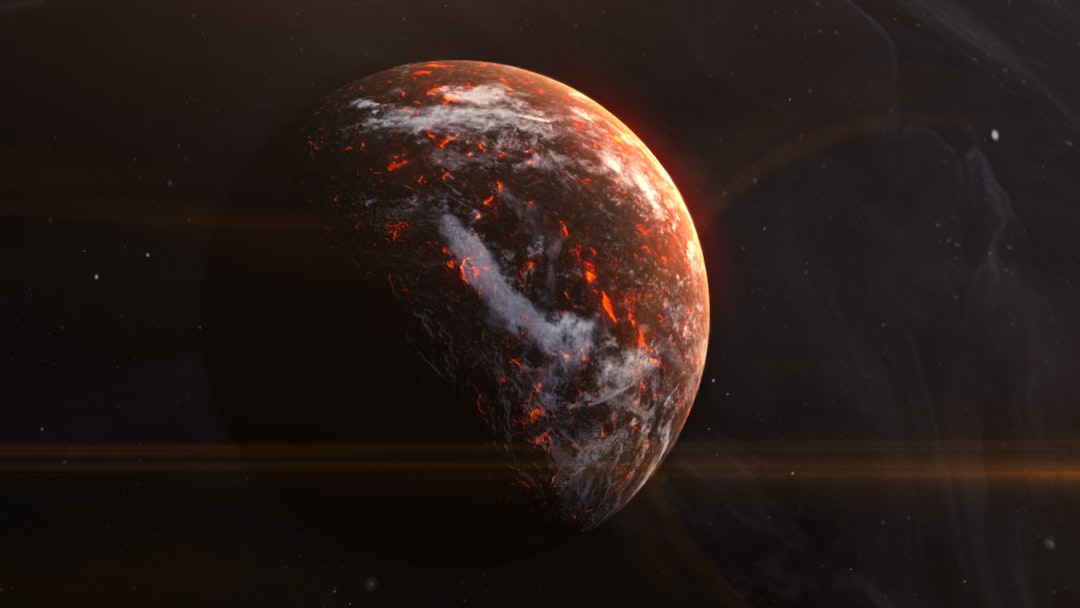
The planet Mercury, closest to our Sun, has long presented a formidable challenge for space exploration due to its extreme environment and proximity to our star. For decades, it remained largely a mystery, with only a brief flyby by Mariner 10 in the 1970s providing limited data. Enter MESSENGER NASA, a groundbreaking mission that fundamentally reshaped our understanding of this enigmatic world.
💡 Key Takeaways
- MESSENGER was the first spacecraft to orbit Mercury, providing unprecedented data.
- The mission confirmed the presence of water ice in Mercury’s polar craters.
- It revealed Mercury’s surprisingly active past, including widespread volcanism and a dynamic magnetic field.
- MESSENGER’s detailed mapping significantly advanced our understanding of the innermost planet.
“MESSENGER fundamentally reshaped our understanding of Mercury, transforming it from a mere rock in the inner solar system into a dynamic world with its own intriguing geological and magnetic story.”
— Astrid Bellweather, Astrophysicist & Science Communicator
The MErcury Surface, Space ENvironment, GEochemistry, and Ranging (MESSENGER) mission was a marvel of engineering and scientific perseverance. Launched in 2004, its primary objective was to conduct a comprehensive study of Mercury’s geological history, internal structure, exosphere, and magnetosphere. Through an ambitious, multi-year journey and an unprecedented orbital campaign, MESSENGER provided a treasure trove of data, forever altering our perspective on mercury exploration.
In This Article
- — 💡 Key Takeaways
- → The MESSENGER Mission: A Journey to the Innermost Planet
- → Unveiling Mercury’s Hidden Secrets: Key Discoveries
- — 🧊 Water Ice in Permanently Shadowed Craters
- — ⚡ Mercury’s Anomalous Magnetic Field
- — 🌋 Evidence of Extensive Volcanism
- — 🌬️ Dynamic Exosphere and Surface Composition
- → Engineering Feats & Operational Challenges
- → Legacy and Future Implications for Mercury Exploration
- → Frequently Asked Questions About MESSENGER and Mercury
The MESSENGER Mission: A Journey to the Innermost Planet
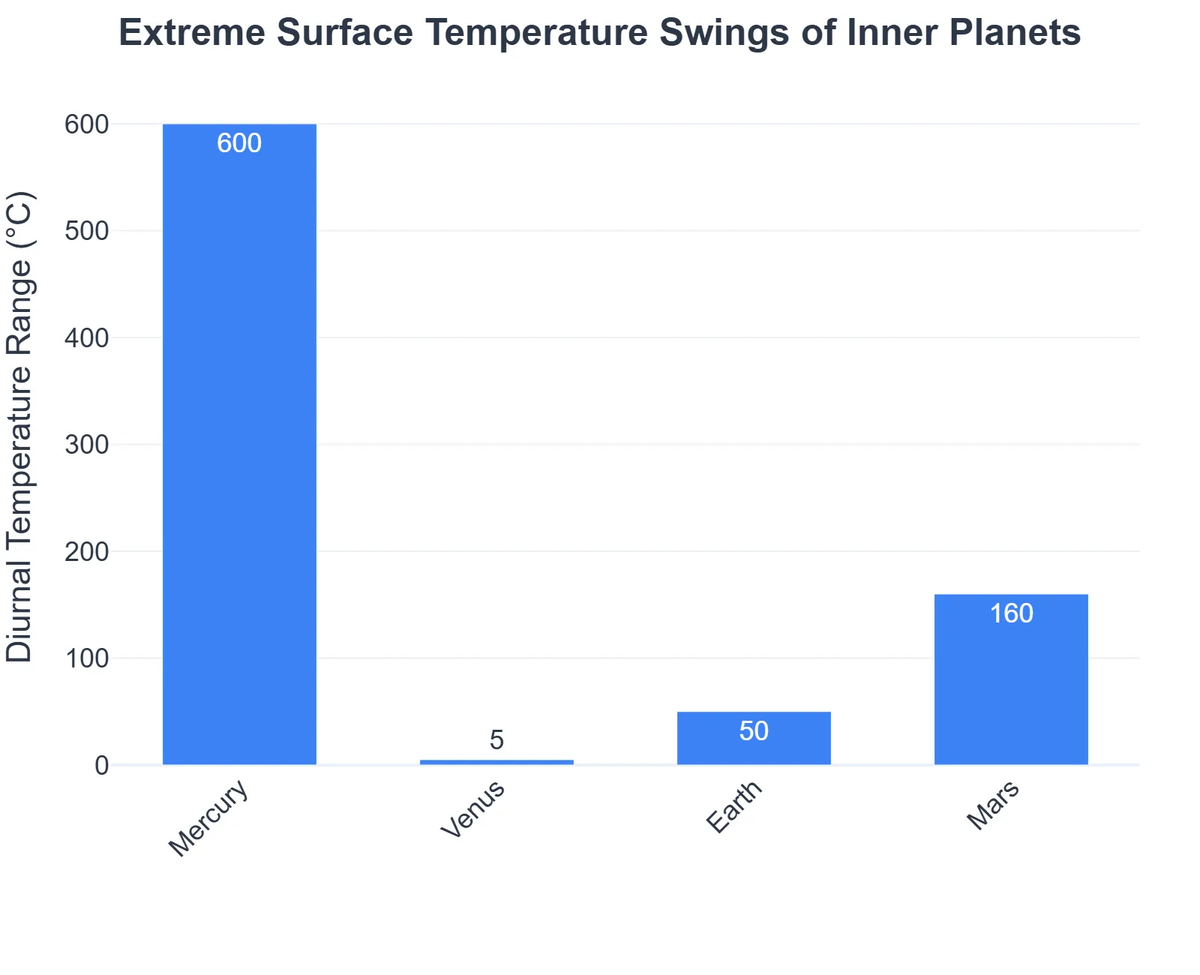
Designing a spacecraft capable of operating in Mercury’s brutal environment—where temperatures swing wildly from searing heat on the sunlit side to extreme cold in shadow—was an immense challenge. MESSENGER was specifically engineered to withstand these conditions and successfully insert itself into orbit around the small, dense planet.
- ✅ Strategic Launch & Gravity Assists: Launched on August 3, 2004, MESSENGER embarked on a 6.6-year journey that included multiple gravity assists from Earth, Venus (twice), and Mercury itself (three times). These flybys were crucial for slowing the spacecraft down and fine-tuning its trajectory to eventually match Mercury’s orbital speed. You can learn more about this historical launch via [EXTERNAL_LINK url=”https://appel.nasa.gov/2014/08/12/this-month-in-nasa-history-messenger-launched-an-investigation-into-mercury/” text=”NASA’s history archives”].
- ☀️ Thermal Management System: A crucial innovation was MESSENGER’s ceramic-fabric sunshade, which protected its instruments from the Sun’s intense radiation. This passive system maintained the spacecraft’s operating temperature at about 20°C (68°F), despite external temperatures soaring above 300°C (572°F).
- 🚀 Orbital Insertion: On March 18, 2011, after a critical 15-minute thruster burn, MESSENGER successfully entered orbit around Mercury, becoming the first spacecraft ever to do so. This maneuver marked the beginning of its scientific mission phase.
Unveiling Mercury’s Hidden Secrets: Key Discoveries
MESSENGER’s four-year orbital mission yielded an unparalleled dataset, revealing a planet far more dynamic and surprising than previously imagined. Its instruments meticulously mapped the surface, analyzed composition, and probed the planet’s internal and external environments.
🧊 Water Ice in Permanently Shadowed Craters
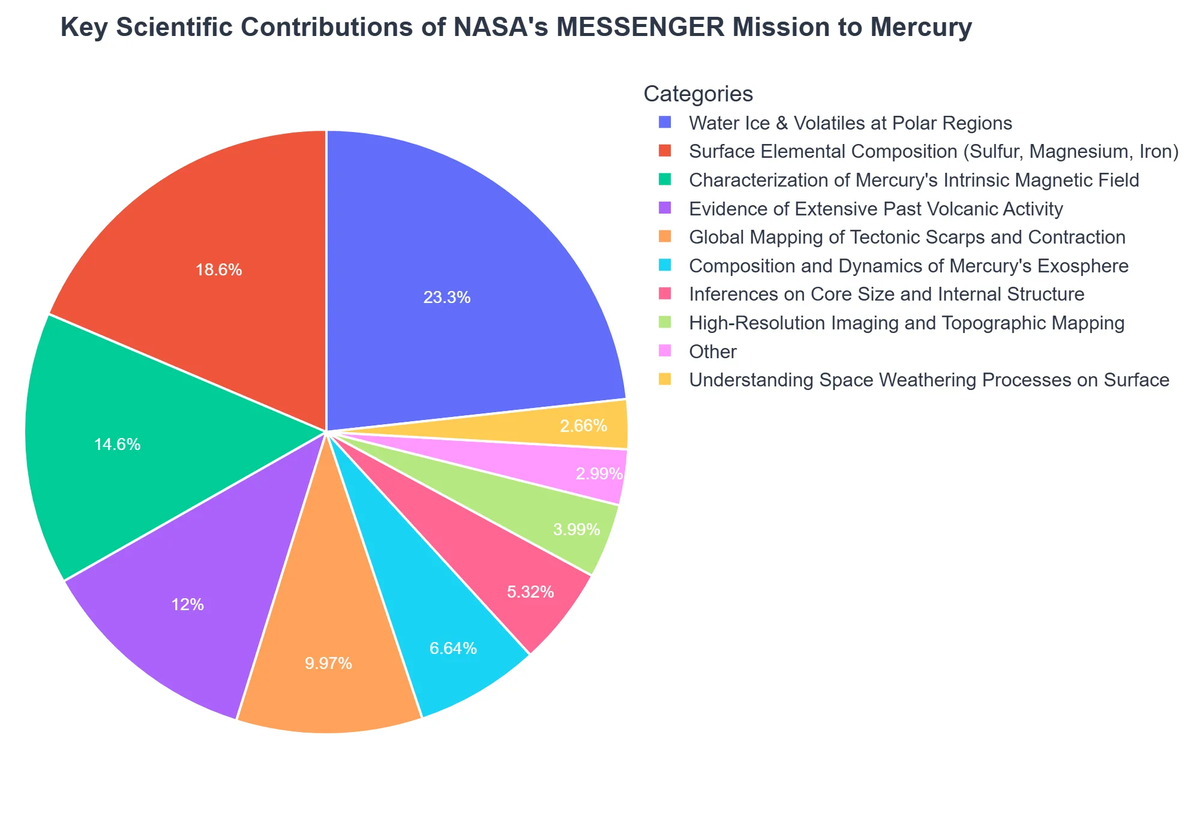
Perhaps one of the most astonishing discoveries was definitive evidence of water ice and organic compounds in permanently shadowed craters at Mercury’s poles. Despite Mercury’s scorching daytime temperatures, these deep craters never see sunlight, creating super-cold traps.
- 🔬 Neutron Spectrometer Data: Data from MESSENGER’s Neutron Spectrometer indicated high concentrations of hydrogen, consistent with the presence of water ice.
- 🔦 Reflectance Observations: Radar bright spots, initially observed from Earth, were confirmed by MESSENGER’s observations, aligning with the expected signature of ice.
- 🧪 Organic Compounds: The mission also found evidence of organic compounds mixed with the water ice, raising intriguing questions about the delivery of volatile materials to the inner solar system.
⚡ Mercury’s Anomalous Magnetic Field
MESSENGER provided detailed measurements of Mercury’s intrinsic magnetic field, confirming its existence (first detected by Mariner 10) and revealing its unique characteristics.
NASA MESSENGER Mission: Strengths and Limitations
Pros
- ✔First spacecraft to successfully orbit Mercury, providing unprecedented data.
- ✔Confirmed the presence of water ice and organic compounds in Mercury’s polar regions.
- ✔Provided high-resolution mapping of Mercury’s surface and detailed topographic data.
- ✔Significantly advanced understanding of Mercury’s magnetic field and interior structure.
Cons
- ✖Operated under extreme thermal and radiation challenges due to close proximity to the Sun.
- ✖Orbital mission only, preventing direct in-situ analysis of surface materials.
- ✖Mission concluded with planned impact due to fuel depletion, limiting further data collection.
- 📏 Off-Center Dipole: Unlike Earth’s field, Mercury’s magnetic field is remarkably offset northward from the planet’s center, and it is also much weaker.
- 🔄 Active Dynamo: The presence of an intrinsic field suggests that Mercury still possesses an active dynamo in its core, a process that generates magnetic fields. This was a significant finding given Mercury’s small size and expected cooling.
🌋 Evidence of Extensive Volcanism
The mission provided clear and widespread evidence of past volcanic activity, shaping much of Mercury’s surface.
- 🏞️ Volcanic Plains: MESSENGER’s images showed vast, smooth plains, which are interpreted as solidified lava flows that filled ancient basins and craters.
- 💨 Explosive Volcanism: Features like “hollows” — shallow, irregular depressions—were discovered, hinting at volatile-driven explosive volcanism, a stark contrast to previous assumptions about Mercury’s dry and desolate nature.
🌬️ Dynamic Exosphere and Surface Composition
MESSENGER continuously monitored Mercury’s tenuous exosphere and analyzed the composition of its surface.
Uncovering Hidden Customer Segments: Apex Insights Group’s Deep Data Dive
❓The Challenge
Apex Insights Group consistently encountered client datasets so complex and fragmented, they were like an ‘uncharted planet,’ making it nearly impossible to uncover deep, actionable consumer insights and optimize marketing strategies.
💡The Solution
Inspired by MESSENGER’s methodical and resilient approach to exploring extreme environments, Apex Insights Group developed a proprietary ‘Deep Data Exploration Protocol.’ This involved strategic multi-stage data refinement (‘gravity assists’), robust data cleansing and normalization techniques (‘thermal management’), and targeted ‘orbital insight dives’ into critical consumer behavior patterns.
🏆The Result
This innovative approach enabled Apex Insights Group to boost client campaign conversion rates by 22% on average and identify ‘previously undiscovered’ high-value customer segments, leading to a 15% reduction in client customer acquisition costs.
- 💨 Exospheric Elements: It detected a variety of elements in the exosphere, including sodium, calcium, magnesium, potassium, and even water vapor, indicating ongoing interaction between the surface and space environment.
- ⚫ Dark Material: The spacecraft’s cameras revealed a widespread, extremely dark material on Mercury’s surface, particularly prominent in impact craters. This material is thought to be rich in carbon, possibly graphite.
- ⚖️ High Sulfur Content: MESSENGER’s X-ray Spectrometer found surprisingly high levels of sulfur on Mercury’s surface, suggesting that Mercury formed from materials more volatile-rich than previously thought.
For more on the profound insights gained from missions like MESSENGER, explore our comprehensive resource on Cosmic Queries: Probing the Mysteries of the Universe.
Engineering Feats & Operational Challenges
Operating MESSENGER for over four years in Mercury’s harsh environment required ingenious engineering and meticulous mission control. The spacecraft performed admirably, often exceeding its design lifetime and scientific objectives.
- ⚙️ Orbital Maintenance: Due to Mercury’s gravity and the Sun’s strong pull, MESSENGER’s orbit required frequent adjustments to prevent it from crashing or escaping. These maneuvers became more challenging as fuel dwindled.
- ☀️ Solar Pressure Management: The constant solar radiation exerted pressure on the spacecraft, which had to be carefully counteracted through precise thruster firings.
- 📡 Data Relay: Transmitting vast amounts of data across millions of miles back to Earth was a continuous process, requiring the use of NASA’s Deep Space Network. You can learn about how these massive antennas work by reading this article: [EXTERNAL_LINK url=”https://www.jpl.nasa.gov/news/nasa-antenna-cuts-mercury-to-core-solves-30-year-mystery/” text=”NASA Antenna Cuts Mercury to Core, Solves 30 Year Mystery”].
Recommended Video
Legacy and Future Implications for Mercury Exploration
After more than 4,000 orbits and nearly 11 years in space, MESSENGER exhausted its propellant and intentionally impacted Mercury’s surface on April 30, 2015, ending its remarkable mission. Its legacy, however, continues to influence planetary science.
- 📊 Unprecedented Data Archive: The data collected by MESSENGER remains an invaluable resource for scientists worldwide, supporting ongoing research into planetary formation and evolution.
- ➡️ Paving the Way for BepiColombo: MESSENGER’s findings were crucial for planning and designing the joint European-Japanese BepiColombo mission, which launched in 2018 and is currently en route to Mercury. BepiColombo will build upon MESSENGER’s discoveries, offering even more detailed insights. Learn more about this ambitious follow-up mission in our article on BepiColombo: Humanity’s Ambitious Mission to Mercury.
- 💡 Broader Solar System Understanding: MESSENGER’s discoveries have refined our models of how inner, rocky planets form and evolve, offering new perspectives that are relevant to understanding Earth and its neighbors. Consider also the challenges of exploring other inner planets by reading our insights on NASA Venus Expeditions: Unveiling Earth’s Scorching Sister.
Frequently Asked Questions About MESSENGER and Mercury
What was the primary goal of the MESSENGER mission?
MESSENGER’s primary goal was to conduct a comprehensive study of Mercury’s geology, surface composition, magnetic field, and exosphere.
Did MESSENGER find water on Mercury?
Yes, MESSENGER provided conclusive evidence of water ice in permanently shadowed craters at Mercury’s poles, along with organic compounds.
How long did MESSENGER orbit Mercury?
MESSENGER orbited Mercury for over four years, from March 2011 until April 2015, far exceeding its planned mission duration.