

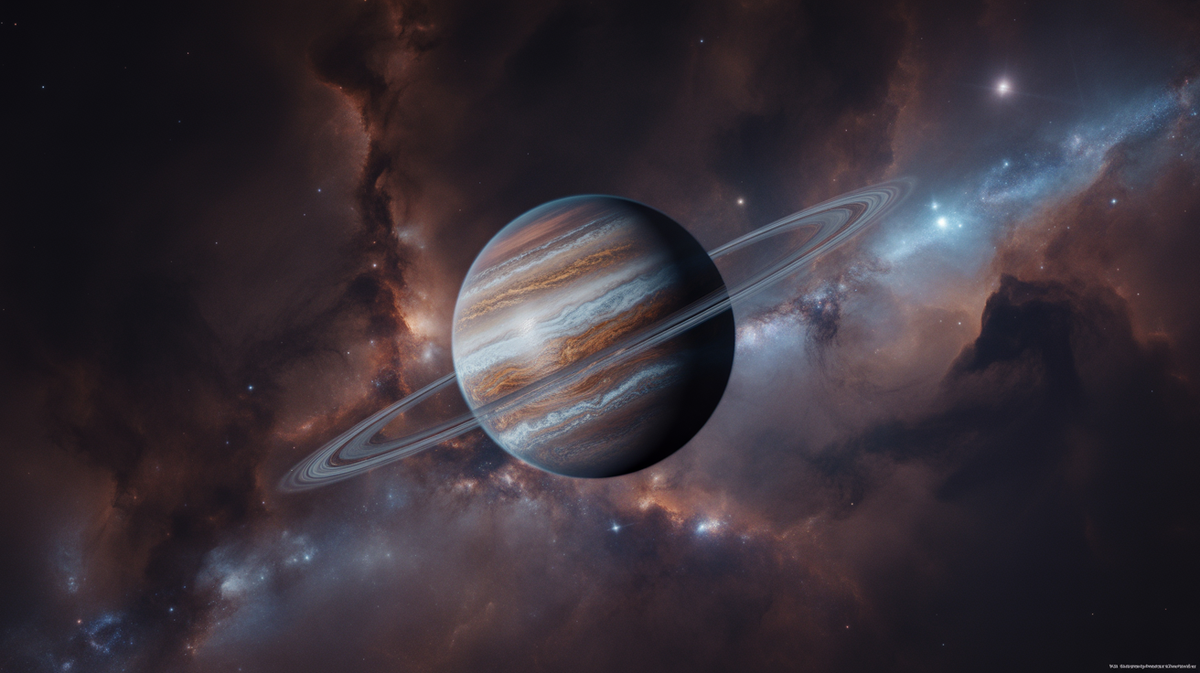
What Are Exoplanets? Defining Worlds Beyond Our Solar System
In the vast expanse of the cosmos, beyond the familiar orbits of Mars, Jupiter, and Saturn, lies a realm teeming with an astonishing diversity of celestial bodies: exoplanets. An exoplanet is, quite simply, any planet that exists outside our solar system, orbiting a star other than our Sun. The existence of these distant worlds was once purely theoretical, a staple of science fiction, but today, thanks to groundbreaking observational techniques, thousands have been confirmed, with countless more awaiting discovery.
💡 Key Takeaways
- Exoplanets are planets orbiting stars outside our Solar System, offering vast opportunities for discovery.
- Scientists use various techniques, like the transit method and radial velocity, to detect these distant worlds.
- Exoplanets exhibit incredible diversity, ranging from scorching hot Jupiters to potentially habitable super-Earths.
- The study of exoplanets is crucial for understanding planet formation and the potential for life beyond Earth.
“Every new exoplanet discovery is a step closer to understanding our place in the cosmos and the potential for life beyond Earth. It’s a profound testament to human curiosity and technological prowess.”
— Astrid Bellweather, Astrophysicist & Science Communicator
The first definitive detection of an exoplanet orbiting a Sun-like star occurred in 1995 with the discovery of 51 Pegasi b, a gas giant orbiting its star in just four days. This landmark discovery ushered in a new era of astrophysics, revolutionizing our understanding of planetary formation and the prevalence of planetary systems in the Milky Way galaxy. For a broader understanding of cosmic phenomena, explore our guide on Cosmic Queries: Probing the Mysteries of the Universe.
In This Article
- → What Are Exoplanets? Defining Worlds Beyond Our Solar System
- — 💡 Key Takeaways
- → How Do We Find Them? Exoplanet Detection Methods
- → Classifying Exoplanets: A Diverse Cosmic Menagerie
- → The Hunt for Habitable Worlds: Exoplanets and the Search for Life
- → The Future of Exoplanet Research: Unveiling More Cosmic Secrets

How Do We Find Them? Exoplanet Detection Methods
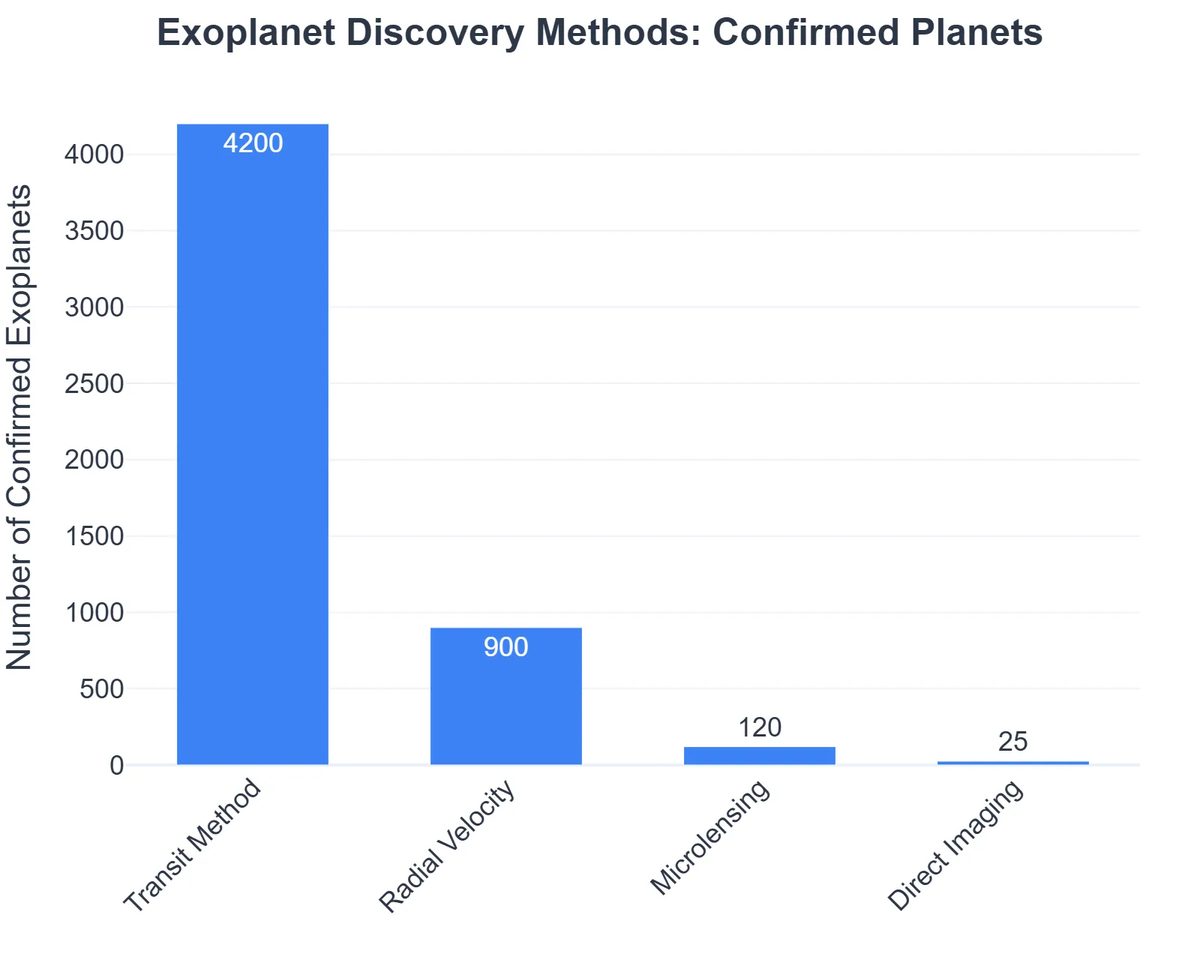
Detecting a faint, small planet orbiting a distant, blindingly bright star is an immense challenge, akin to spotting a firefly next to a lighthouse from hundreds of miles away. Yet, scientists have developed ingenious methods to achieve this. The primary techniques that have led to the bulk of confirmed exoplanet discoveries include:
- ✅ Radial Velocity Method (Doppler Spectroscopy): This technique relies on the gravitational tug a planet exerts on its host star. As a planet orbits, it causes its star to wobble slightly. This wobble changes the star’s light spectrum, shifting it towards blue when moving towards us and red when moving away (the Doppler effect). By measuring these tiny shifts, astronomers can infer the planet’s mass and orbital period.
- ➡️ Transit Method: The most prolific method, particularly for missions like Kepler and TESS. It involves observing a slight, periodic dip in a star’s brightness as a planet passes in front of it from our perspective. This allows for the determination of the planet’s size and orbital period. It’s how many of the planets outside of our solar system have been found.
- 💡 Direct Imaging: While challenging, this method involves taking direct pictures of exoplanets. It typically requires sophisticated instruments to block out the star’s glare and is most successful for large, young, hot planets far from their host stars.
- ⚙️ Gravitational Microlensing: This method relies on a prediction of Einstein’s theory of relativity: the bending of light by massive objects. When a star and its planet pass in front of a more distant background star, their combined gravity can magnify and brighten the background star’s light in a characteristic way, revealing the planet’s presence.
- 🔭 Astrometry: Similar to radial velocity, astrometry seeks to detect the tiny wobble in a star’s position on the sky caused by an orbiting planet. This method requires incredibly precise measurements and is effective for long-period, massive planets.
The sheer number of discoveries, particularly from transit surveys, underscores the fact that planets are common throughout the galaxy. For more on specific missions, see our article on TESS Spacecraft: Discovering Habitable Exoplanets Beyond Our Solar System.
Classifying Exoplanets: A Diverse Cosmic Menagerie
The thousands of discovered exoplanets reveal a cosmic menagerie far more diverse than the planets in our own solar system. They defy easy categorization, but astronomers have identified several recurring types:
- ⭐ Hot Jupiters: Gas giants similar in size or larger than Jupiter, but orbiting incredibly close to their stars, often completing an orbit in mere days. Their atmospheres are superheated, sometimes reaching thousands of degrees Celsius.
- 🌍 Super-Earths: Planets larger than Earth but smaller than Neptune. Their compositions vary wildly, from rocky to icy or water-rich. Some may even have dense atmospheres.
- 💧 Mini-Neptunes: Planets smaller than Neptune but larger than Earth, likely with thick hydrogen-helium atmospheres and potentially deep oceans or icy interiors.
- 🔥 Lava Worlds: Terrestrial planets so close to their stars that their surfaces are perpetually molten, covered in oceans of liquid rock.
- 🌊 Ocean Worlds: Planets believed to have vast, deep oceans beneath thick ice shells, or even entirely covered in water.
- 🌌 Rogue Planets: These are planets that have been ejected from their star systems and now wander freely through interstellar space, not orbiting any star. They are incredibly difficult to detect.
Understanding the formation of these diverse worlds helps us piece together the puzzle of planetary evolution, including how a planet outside our solar system forms. Insights into these processes can be found in our discussion on Solar System Formation: Key Theories and Evolution.
The Hunt for Habitable Worlds: Exoplanets and the Search for Life
Perhaps the most compelling aspect of exoplanet research is the quest for habitable worlds—planets that could potentially support life as we know it. This search primarily focuses on finding planets within their star’s “habitable zone,” often called the “Goldilocks zone.”
What defines a potentially habitable world?
Cosmic Insights Academy Soars with In-Depth Exoplanet Content
❓The Challenge
Cosmic Insights Academy faced low engagement and high drop-off rates for its ‘Beyond Our Solar System’ module, as students found the existing content on exoplanets too general and lacking specific insights into their discovery.
💡The Solution
Leveraging the detailed insights from the article, Cosmic Insights Academy revamped its module to deeply explain exoplanet detection methods like the Radial Velocity, Transit, and Direct Imaging techniques, providing a compelling look at the scientific process.
🏆The Result
Within a quarter, student enrollment for the module increased by 35%, and average completion rates saw a significant boost of 55%, along with overwhelmingly positive feedback.
- ✔️ Liquid Water: The most crucial ingredient. The habitable zone is the range of orbital distances where a planet’s temperature is just right for liquid water to exist on its surface.
- 🌟 Stable Star: The host star should be relatively stable, not prone to extreme flares or variations in brightness that could strip a planet’s atmosphere or irradiate its surface.
- 🌬️ Suitable Atmosphere: An atmosphere is essential for regulating temperature, protecting against radiation, and allowing for the cycling of vital elements.
- 🌎 Rocky Composition: While not strictly necessary for life, a rocky surface provides a stable environment for complex chemistry.
Notable systems that have captured scientific attention include TRAPPIST-1, a system of seven Earth-sized planets, three of which are in the habitable zone, and Proxima Centauri b, the closest known exoplanet to our Sun, orbiting the nearest star, Proxima Centauri. For an in-depth look, check out Exoplanets: The Hunt for Habitable Worlds Beyond Our Solar System.
Future missions, such as the James Webb Space Telescope (JWST) and the upcoming Nancy Grace Roman Space Telescope, are designed to characterize the atmospheres of these distant worlds, searching for biosignatures—gases like oxygen or methane that could indicate the presence of life. Learn more about the ongoing hunt at NASA Science: Exoplanets.
The Future of Exoplanet Research: Unveiling More Cosmic Secrets
The field of exoplanet research is rapidly evolving, driven by technological advancements and increasingly ambitious missions. The next decades promise to revolutionize our understanding of worlds beyond our solar system, moving beyond mere detection to detailed characterization.

Key areas of focus for the future include:
- 🚀 Next-Generation Telescopes: Instruments like JWST are already providing unprecedented data on exoplanet atmospheres, and future observatories will push these capabilities even further, potentially allowing for direct imaging and spectroscopy of Earth-sized planets.
- 🛰️ Atmospheric Characterization: Analyzing the composition of exoplanet atmospheres for biosignatures is paramount. This involves looking for chemical imbalances that can only be explained by biological processes.
- 🧪 Expanding Habitable Zone Concepts: Scientists are exploring broader definitions of habitability, considering factors like tidal heating, alternative solvents to water, and life in subsurface oceans.
- 📊 Statistical Surveys: Large-scale surveys will continue to refine our understanding of planet formation and prevalence, providing crucial data for statistical analysis of galactic planetary populations.
The pursuit of exoplanets not only expands our celestial map but also refines our understanding of our place in the universe. Each new discovery brings us closer to answering one of humanity’s oldest questions: Are we alone? The journey to uncover the myriad wonders of planets outside of our solar system has only just begun. Further historical context can be found by exploring the timeline on NASA Exoplanet Exploration.
Recommended Video
What is an exoplanet?
An exoplanet (or extrasolar planet) is a planet that orbits a star outside our own Solar System.
How are exoplanets discovered?
Common methods include the transit method (detecting dimming of a star’s light as a planet passes in front) and the radial velocity method (observing wobbles in a star caused by a planet’s gravity).
Are there any exoplanets similar to Earth?
Yes, scientists have discovered ‘super-Earths’ and ‘mini-Neptunes’ that are rocky and could potentially have conditions suitable for liquid water, placing them in habitable zones.
Could life exist on exoplanets?
While direct evidence of extraterrestrial life hasn’t been found, the vast number of exoplanets, especially those in habitable zones, suggests a high probability that life could exist elsewhere in the universe.