


In This Article
- → Unraveling the Human Psyche: Foundations of American Behavioral Science
- — 💡 Key Takeaways
- → Groundbreaking Minds in Cognitive and Learning Theories
- — B.F. Skinner: The Architect of Operant Conditioning
- — Richard F. Thompson: Bridging Mind and Brain
- → Shaping Our Understanding of Decision-Making and Economics
- — Herbert Simon: Bounded Rationality and Satisficing
- — Daniel Kahneman & Amos Tversky: The Architects of Prospect Theory
- → Behavioral Science’s Influence on Health and Society
- — Nancy Adler: Bridging Health and Socioeconomic Status
- — The Broader Social Impact
- → The Enduring Legacy and Future Frontiers
Unraveling the Human Psyche: Foundations of American Behavioral Science
The pursuit of understanding human behavior, thought processes, and societal interactions has driven countless brilliant minds. In the United States, a vibrant tradition of inquiry has led to monumental breakthroughs, shaping disciplines from psychology and sociology to economics and neuroscience. These pioneers, often referred to collectively as american behavioral scientist trailblazers, laid the groundwork for how we study and interpret the complexities of the human condition.
💡 Key Takeaways
- Discover the foundational figures who established behavioral science as a distinct field in America.
- Understand the key theories and methodologies developed by pioneering American behavioral scientists.
- Learn how interdisciplinary approaches have advanced our insights into complex human interactions.
- Recognize the lasting impact of these minds on modern psychology, sociology, and neuroscience.
“The ingenuity of American behavioral scientists lies in their relentless pursuit of empirical truth about human experience, often bridging the gap between abstract thought and tangible impact on society.”
— Dr. Eleanor Vance, PhD, Cognitive Neuroscientist & Human Potential Researcher
American behavioral science is not a monolithic field but a dynamic tapestry woven from diverse perspectives and methodologies. It encompasses everything from the observable actions of individuals to the intricate neurological processes underlying decision-making, and the broader societal forces that mold our collective experiences. This holistic approach is crucial for truly unlocking The Human Enigma: Unlocking the Secrets of Our Body and Mind.
- ✅ Interdisciplinary Roots: Drawing from psychology, sociology, anthropology, economics, and political science.
- ➡️ Empirical Focus: Emphasizing data-driven research and rigorous methodologies to test hypotheses.
- 💡 Real-World Application: A strong commitment to translating theoretical insights into practical solutions for societal challenges.
Groundbreaking Minds in Cognitive and Learning Theories
The evolution of behavioral science in America owes much to those who dared to delve into the fundamental mechanisms of learning and cognition. Their work provided essential frameworks for understanding how we acquire knowledge, form habits, and process information.
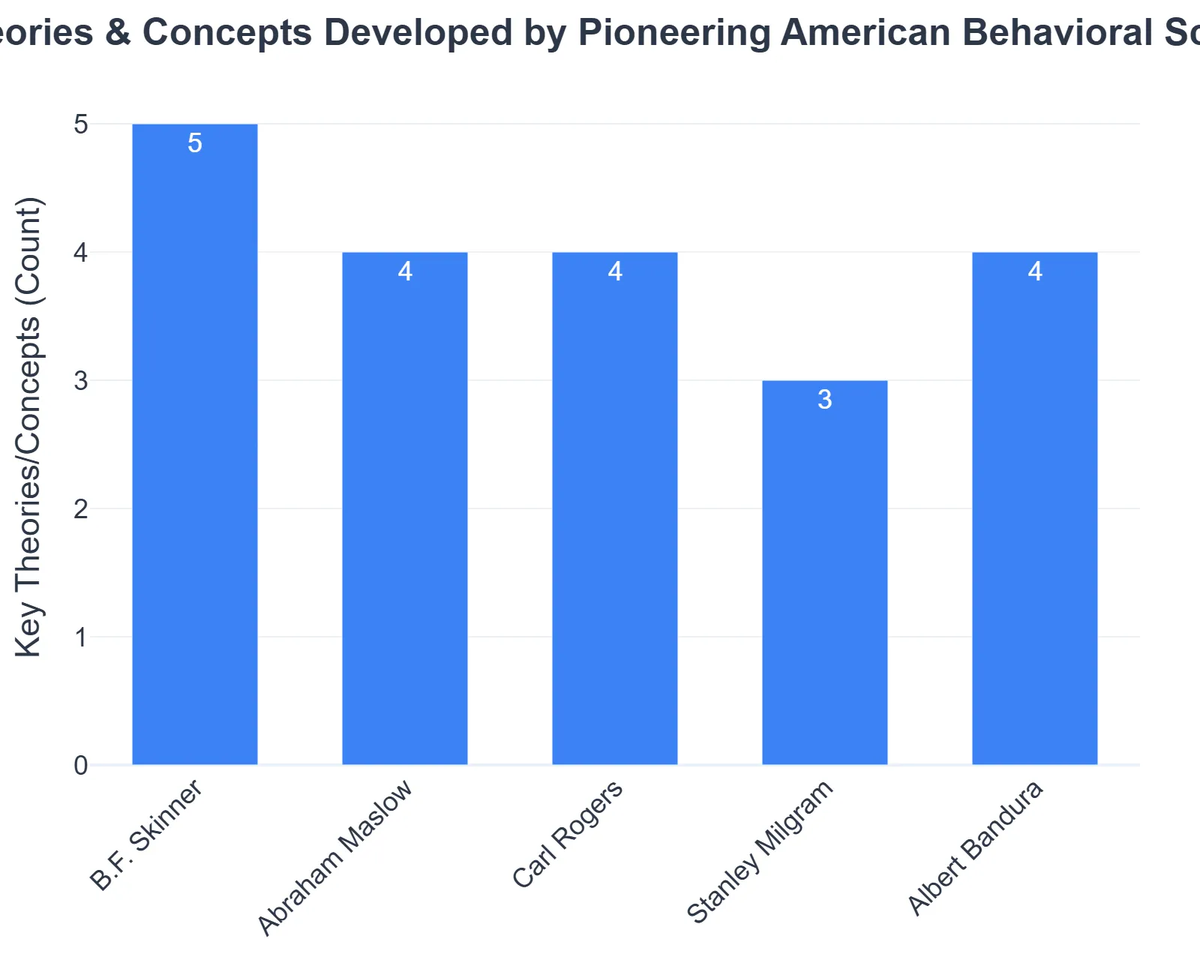
B.F. Skinner: The Architect of Operant Conditioning
Burrhus Frederic Skinner (1904-1990) stands as one of the most influential and controversial figures in modern psychology. A staunch advocate for behaviorism, Skinner’s work on operant conditioning revolutionized our understanding of how consequences shape behavior. Through meticulous experiments, often involving rats and pigeons in “Skinner boxes,” he demonstrated the power of reinforcement and punishment in modifying actions.
- ✅ Key Contribution: Developed the concept of operant conditioning, distinguishing it from Pavlovian classical conditioning.
- ➡️ Notable Works: The Behavior of Organisms (1938), Walden Two (1948), and About Behaviorism (1974).
- 💡 Impact: His theories profoundly influenced educational practices, clinical interventions, and even animal training.
Richard F. Thompson: Bridging Mind and Brain
Moving from pure behaviorism to the neurobiological underpinnings, figures like Richard F. Thompson (1930-2014) pioneered research that connected specific brain regions to learning and memory. His work provided critical insights into how the brain processes and stores information, laying foundational stones for Behavioral and Cognitive Neuroscience: Bridging Brain and Behavior. Thompson’s research on classical conditioning in the cerebellum illuminated the neural circuitry of simple forms of associative learning. His contributions exemplify the move towards understanding human behavior from a biological perspective. You can learn more about his legacy at [External Link: Richard F. Thompson – Pioneering Minds](https://www.pioneeringminds.com/PQPosts/richard-f-thompson/).
Shaping Our Understanding of Decision-Making and Economics
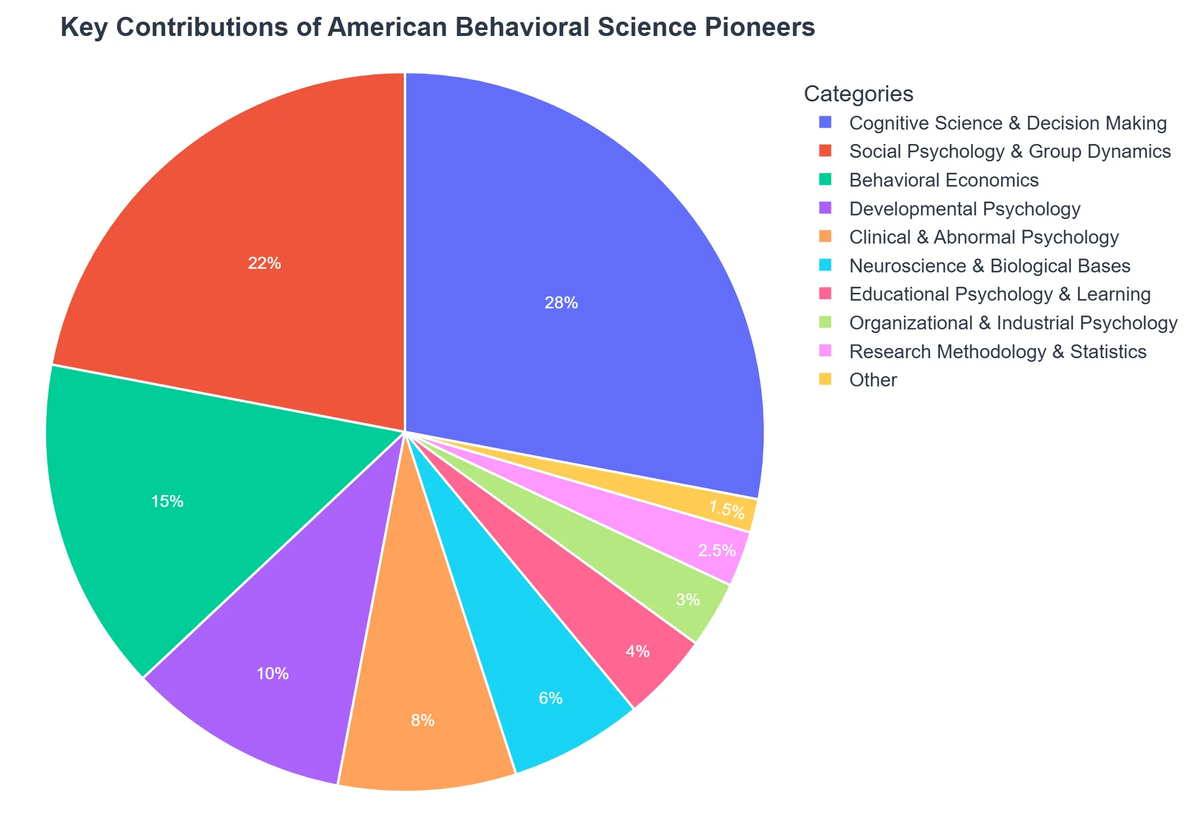
A significant wave of American behavioral scientists brought psychological insights to bear on economic theory, fundamentally altering our understanding of human rationality and decision-making. This realm, often termed behavioral economics, challenges traditional assumptions of homo economicus.
Herbert Simon: Bounded Rationality and Satisficing
Herbert A. Simon (1916-2001), a polymath and Nobel laureate, introduced the concept of bounded rationality. He argued that human decision-making is not perfectly rational but constrained by cognitive limitations, available information, and time. His work on “satisficing”—the idea that people often settle for a “good enough” solution rather than searching for the optimal one—was revolutionary for both economics and cognitive psychology.
- ✅ Core Idea: Human rationality is limited, leading to simplified decision-making strategies.
- ➡️ Nobel Prize: Awarded the Nobel Memorial Prize in Economic Sciences in 1978.
- 💡 Influence: Paved the way for behavioral economics and cognitive science, shaping our understanding of how organizations make decisions.
Daniel Kahneman & Amos Tversky: The Architects of Prospect Theory
While Amos Tversky (1937-1996) was Israeli-American, his collaboration with Daniel Kahneman (American-Israeli) profoundly impacted American behavioral science. Their groundbreaking work on prospect theory demonstrated that people make decisions under risk based on potential gains and losses rather than final outcomes, and that losses loom larger than equivalent gains. They uncovered numerous cognitive biases and heuristics, revealing systematic deviations from rational choice theory.
- ✅ Key Contributions: Prospect theory, identification of cognitive biases (e.g., anchoring, availability heuristic, framing effect).
- ➡️ Impact: Revolutionized behavioral economics, providing a psychological foundation for understanding economic behavior.
- 💡 Recognition: Kahneman received the Nobel Memorial Prize in Economic Sciences in 2002 for their joint work.
Another significant figure in this domain is Max Bazerman, whose research focuses on ethical decision-making, negotiations, and organizational behavior. His insights into how psychological biases affect managerial decisions offer critical lessons for leaders and policymakers alike. Dive deeper into his work via [External Link: Max Bazerman – Pioneering Minds](https://www.pioneeringminds.com/PQPosts/max-bazerman/).
American Behavioral Scientist: Pioneering Minds – Pros and Cons
Pros
- ✔Highlights foundational theories and influential figures in behavioral science.
- ✔Provides valuable historical context to the evolution of the field.
- ✔Features rigorous, peer-reviewed academic research.
- ✔Offers multidisciplinary insights into human behavior.
Cons
- ✖May primarily focus on historical perspectives, potentially overlooking current trends.
- ✖Can have a strong emphasis on American scholarship, limiting global diversity.
- ✖Academic language may be dense and less accessible to non-specialists.
- ✖Might offer less emphasis on practical or applied implications of research.
Behavioral Science’s Influence on Health and Society
Beyond individual decision-making, American behavioral scientists have significantly impacted public health and social policy, highlighting the intricate relationship between individual behavior and societal well-being. This reflects the core principles of Behavioral Social Sciences: How Society Shapes Us.
Nancy Adler: Bridging Health and Socioeconomic Status
Dr. Nancy Adler, a distinguished American psychologist, has been a leading voice in health psychology, particularly in understanding the impact of socioeconomic status on health outcomes. Her work has meticulously documented how factors like income, education, and social standing correlate with health disparities, advocating for policies that address these underlying social determinants of health. Her research underscores the importance of a holistic view, as explored in Human Behavior: An Introduction to Behavioral Biology. Dr. Adler’s pioneering efforts have made her an “icon in American medicine” according to UCSF Psychiatry. Find out more about her work at [External Link: Nancy Adler, ‘icon in American medicine’ and architect of health…](https://psych.ucsf.edu/news/nancy-adler).
- ✅ Research Focus: Socioeconomic determinants of health, stress, and health behaviors.
- ➡️ Policy Impact: Provided critical evidence for public health interventions and policy changes.
- 💡 Legacy: Her work has shaped our understanding of health equity and disparities.
The Broader Social Impact
The insights generated by these and many other pioneering American behavioral scientists have not remained confined to academia. They have permeated various sectors, influencing:
- ✅ Public Health Campaigns: Designing more effective interventions for smoking cessation, obesity prevention, and disease management.
- ➡️ Education Reform: Developing teaching methods that align with how students actually learn and retain information.
- 💡 Policy Design: Informing “nudge” policies that subtly guide citizens towards better choices without restricting freedom.
- ⚖️ Legal Systems: Influencing our understanding of eyewitness testimony, jury decision-making, and rehabilitation programs.
Recommended Video
The Enduring Legacy and Future Frontiers
The collective efforts of these american behavioral scientist pioneers have irrevocably altered our understanding of what it means to be human. From the microscopic neural pathways influencing a simple reflex to the macroscopic societal structures shaping collective behavior, their work provides the lens through which we continue to explore the “human enigma.”
Today, behavioral science continues to evolve, incorporating new technologies like AI and big data analytics, and expanding into domains like climate change, financial well-being, and digital behavior. The foundational theories laid by these pioneering minds remain indispensable tools for navigating the complexities of the modern world and for solving its most pressing challenges. Their legacy is a testament to the power of rigorous inquiry and interdisciplinary collaboration in advancing human knowledge.
Who are some notable early American behavioral scientists?
Figures like B.F. Skinner, Carl Rogers, Abraham Maslow, and George Herbert Mead are foundational, each contributing significantly to different facets of behavioral science.
How did American behavioral science influence global thought?
American behavioral scientists pioneered new research methods and theoretical frameworks, such as behaviorism and humanistic psychology, which had a profound global impact on psychological practice and theory.
What is the primary focus of American behavioral science?
It broadly focuses on understanding human actions, thoughts, and feelings through systematic observation, experimentation, and analysis, often blending insights from psychology, sociology, and anthropology.
What lasting legacy did these pioneering minds leave?
Their legacy includes established research methodologies, widely accepted theories of development and motivation, and a deep influence on educational practices, therapeutic approaches, and social policy.