

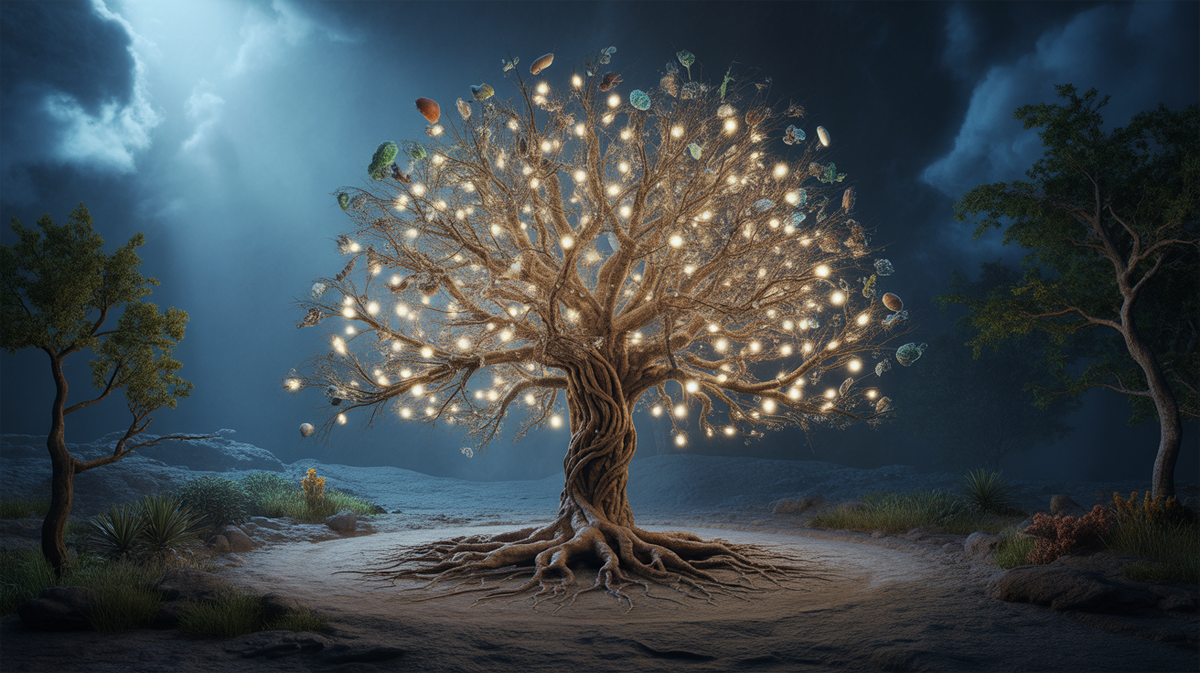
Understanding Biological Evolution: The Engine of Life’s Diversity
Biological evolution is a fundamental concept in biology, explaining the incredible diversity of life on Earth. At its core, it refers to the process by which living organisms change over successive generations, leading to new species and the complex web of life we observe today. This isn’t just about individual development; it’s about changes in the heritable characteristics of biological populations over time.
💡 Key Takeaways
- Biological evolution is the process by which life forms change over successive generations, leading to Earth’s vast biodiversity.
- Natural selection is a primary mechanism of evolution, favoring individuals with traits that enhance their survival and reproduction in a given environment.
- Evidence for evolution is robust, stemming from fossil records, comparative anatomy, embryology, and molecular biology (DNA).
- Understanding evolution is crucial for advancements in medicine, agriculture, and effective conservation strategies.
“Evolution isn’t just a theory; it’s the unifying principle that explains the intricate tapestry of life, from our shared ancestry to the stunning adaptations we see daily. It’s the grand narrative of existence.”
— Julian Aris, PhD, Geneticist & Evolutionary Biologist
The modern understanding of biological evolution largely stems from the groundbreaking work of Charles Darwin. His monumental work provided the framework for what is now known as darwin’s theory of biological evolution, primarily through the mechanism of natural selection. This theory posits that all species of organisms arise and develop through the natural selection of small, inherited variations that increase the individual’s ability to compete, survive, and reproduce.
To truly grasp the profound implications of this concept, it’s essential to delve into its mechanisms, evidence, and its pervasive impact on everything from microorganisms to complex human societies. For a comprehensive overview of how life’s blueprint is assembled and modified, explore The Code of Life: Decoding Genetics, Evolution, and Existence.
In This Article
- → Understanding Biological Evolution: The Engine of Life’s Diversity
- — 💡 Key Takeaways
- → ⚙️ Core Mechanisms Driving Biological Evolution
- — Natural Selection: Survival of the Fittest
- — Genetic Drift: The Role of Chance
- — Gene Flow: Mixing Populations
- — Mutation: The Ultimate Source of Variation
- → 🔍 Compelling Evidence for Biological Evolution
- → 🌎 Biological Evolution: Shaping Life’s Diversity on Earth
- — Speciation: The Birth of New Species
- — The Biological Evolution of Human Beings
- → 🤔 Addressing Common Misconceptions About Evolution
⚙️ Core Mechanisms Driving Biological Evolution
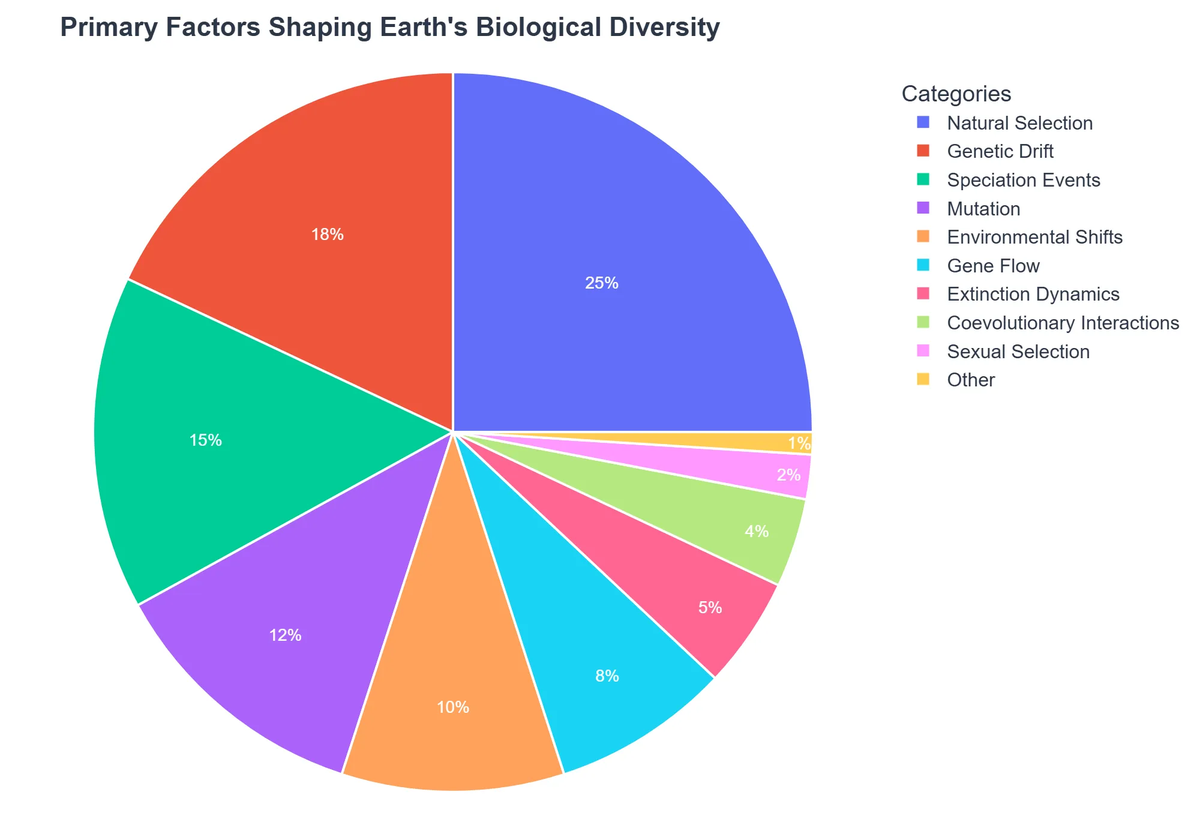
The process of biological evolution isn’t a single event but a continuous interplay of several key mechanisms that introduce variation and select for advantageous traits within a population. Understanding these drivers is crucial to comprehending the biological evolution theory.
Natural Selection: Survival of the Fittest
As famously outlined by Darwin, natural selection is the differential survival and reproduction of individuals due to differences in phenotype. It’s a non-random process where traits that are beneficial for survival and reproduction in a given environment tend to become more common in a population over generations. This leads to populations becoming better adapted to their environment.
- ✅ Variation: Individuals within a population exhibit differences in their traits.
- ✅ Inheritance: Many of these traits are heritable, passed from parents to offspring.
- ✅ Differential Survival & Reproduction: Individuals with certain traits are more likely to survive and reproduce than others in a particular environment.
- ✅ Adaptation: Over time, the frequency of advantageous traits increases in the population.
For a detailed exploration of Darwin’s insights, see Darwin and Evolution: Understanding Natural Selection.
Biological Evolution: Understanding Life’s Diversity – Pros and Cons
Pros
- ✔Provides a robust scientific framework for the diversity and relatedness of all life forms.
- ✔Essential for advancements in medicine, agriculture, and environmental conservation.
- ✔Explains adaptive changes, speciation, and the history of life on Earth.
Cons
- ✖Can conflict with certain traditional or religious worldviews for some individuals.
- ✖Complex concepts are often subject to public misunderstanding or misrepresentation.
- ✖Has been historically misused to justify harmful social or political ideologies.
Genetic Drift: The Role of Chance
Unlike natural selection, genetic drift is a random process where the frequencies of alleles (different forms of a gene) in a population change due to chance events. It’s particularly significant in small populations, where random fluctuations can have a much larger impact. Genetic drift can lead to the loss of genetic variation within a population and can cause alleles to become fixed (reach 100% frequency) even if they are not advantageous.
- ➡️ Founder Effect: A new population is established by a very small number of individuals from a larger population, carrying only a fraction of the original genetic diversity.
- ➡️ Bottleneck Effect: A population undergoes a drastic reduction in size, leading to a loss of genetic variation in the surviving population.
Gene Flow: Mixing Populations
Gene flow, also known as gene migration, is the transfer of genetic material from one population to another. This can occur through the movement of individuals (e.g., animals migrating) or their gametes (e.g., pollen dispersal). Gene flow tends to reduce genetic differences between populations, making them more similar, and can introduce new genetic variations into a population.
Mutation: The Ultimate Source of Variation
Mutations are random changes in the DNA sequence. They are the ultimate source of all new genetic variation in a population. While many mutations are neutral or harmful, some can be beneficial, providing the raw material upon which natural selection and other evolutionary forces can act. Without mutation, evolution as we know it would not occur.
How ‘Adapt Digital’ Leveraged Evolutionary Principles for Client Success
❓The Challenge
The digital marketing agency struggled with client retention as traditional campaign strategies became less effective in a rapidly evolving online landscape, leading to diminishing returns for their clients.
💡The Solution
Inspired by the principles of biological evolution, ‘Adapt Digital’ launched an ‘Adaptive Campaign Framework.’ They systematically introduced variations in campaign elements, used A/B testing as ‘natural selection’ to identify high-performing traits, and continuously ‘inherited’ successful strategies to refine client campaigns.
🏆The Result
Within nine months, this ‘evolutionary’ approach boosted average client conversion rates by 40% and improved client retention by 25%.
🔍 Compelling Evidence for Biological Evolution
The concept of biological evolution meaning change over time is supported by an overwhelming body of evidence from various scientific disciplines. This evidence paints a consistent picture of life’s long, changing history on Earth.
- ✅ Fossil Record: Fossils provide a tangible history of life, showing sequences of organisms from simpler to more complex forms, and transitional forms that link different groups (e.g., archaeopteryx linking reptiles and birds).
- ✅ Comparative Anatomy: Similarities in the anatomical structures of different species, even those with different functions (e.g., the pentadactyl limb structure in humans, bats, whales, and horses), suggest common ancestry. These are known as homologous structures.
- ✅ Embryology and Developmental Biology: Early developmental stages of many vertebrates are remarkably similar, suggesting common ancestral developmental pathways.
- ✅ Molecular Biology and Genetics: The universality of the genetic code, shared genes, and patterns of molecular similarity (e.g., DNA and protein sequences) among diverse organisms strongly support common descent. The more closely related two species are, the more similar their DNA and protein sequences. According to a publication by NCBI, studies in molecular evolution have confirmed and refined phylogenetic trees based on morphological data, providing robust evidence for evolutionary relationships (Evolution and Diversity – Opportunities in Biology – NCBI Bookshelf).
- ✅ Biogeography: The geographical distribution of species can be explained by evolution and plate tectonics. Species found in isolated regions often have unique characteristics, but their closest relatives are found in nearby landmasses, reflecting ancestral dispersal and subsequent diversification.
- ✅ Direct Observation: Evolution can be observed in real-time in organisms with short generation times, such as bacteria evolving antibiotic resistance or insects evolving pesticide resistance. Artificial selection in agriculture and selective breeding of domesticated animals also demonstrate the power of selective pressures to alter populations over generations.
🌎 Biological Evolution: Shaping Life’s Diversity on Earth
The cumulative effect of evolutionary mechanisms over vast spans of geological time has led to the incredible biodiversity we see. The continuous process of change, adaptation, and divergence results in the emergence of new species, a process known as speciation. This explains the vast array of life forms, from microscopic bacteria to towering sequoias and complex mammals.
Speciation: The Birth of New Species
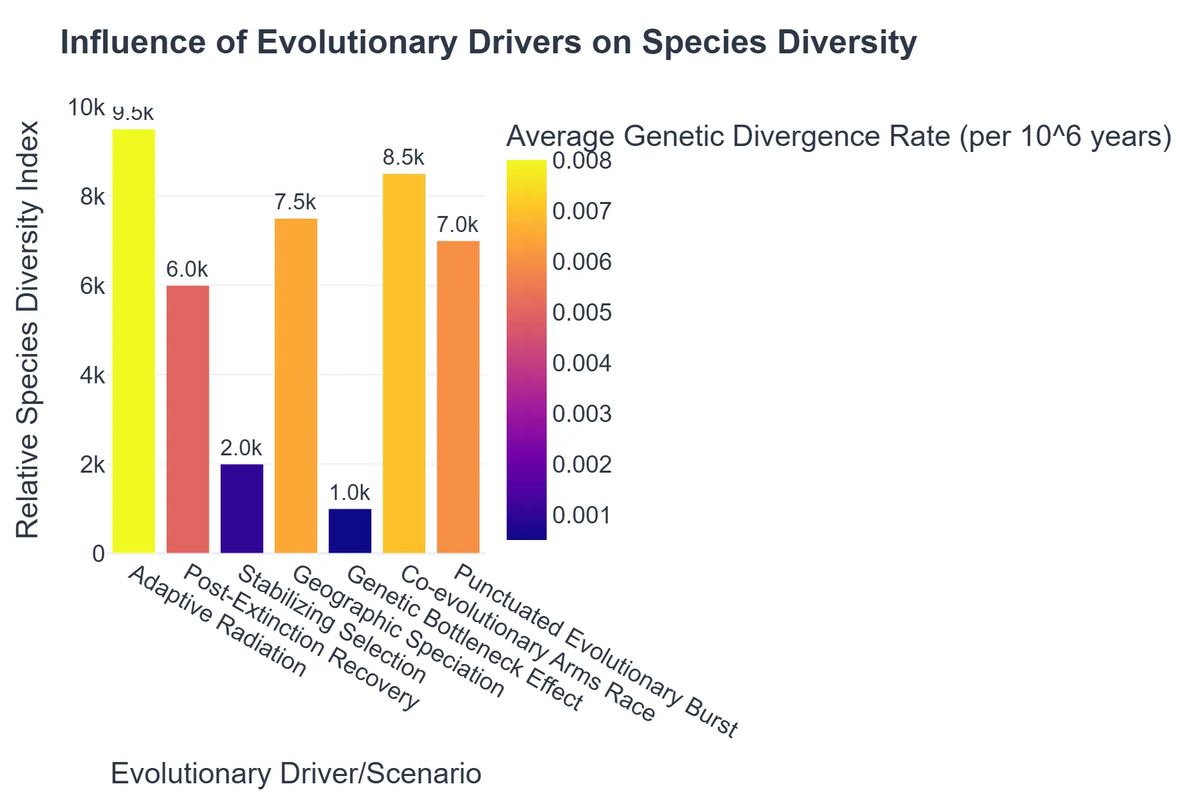
Speciation is the evolutionary process by which new biological species arise. It typically occurs when populations become reproductively isolated, meaning they can no longer interbreed. Over time, genetic differences accumulate due to mutation, genetic drift, and different selective pressures in their respective environments, eventually leading to distinct species.
- 💡 Allopatric Speciation: Occurs when populations are geographically separated, preventing gene flow.
- 💡 Sympatric Speciation: Occurs when new species arise from a single ancestral species while inhabiting the same geographic region, often due to mechanisms like polyploidy or behavioral isolation.
The Biological Evolution of Human Beings
The biological evolution of human beings is a compelling example of evolutionary processes at work. Humans (Homo sapiens) are primates, and our evolutionary journey traces back millions of years to a common ancestor shared with other apes. This journey involved significant changes in bipedalism, brain size, tool use, and complex social behaviors. Studying human evolution helps us understand our place in the tree of life and the adaptive pressures that shaped our unique characteristics.
To learn more about our primate lineage, read Ape Evolution: Understanding Our Closest Primate Relatives.
🤔 Addressing Common Misconceptions About Evolution
Despite the overwhelming scientific consensus, there are several common misunderstandings about biological evolution. Clarifying these helps foster a more accurate understanding of the biological evolution theory.
- ❌ “Humans evolved from monkeys.” This is incorrect. Humans and modern monkeys share a common ancestor that lived millions of years ago, but humans did not evolve directly from any living monkey species. We are cousins, not descendants.
- ❌ “Evolution is just a theory, not a fact.” In scientific terminology, a “theory” is a well-substantiated explanation of some aspect of the natural world, based on a body of facts that have been repeatedly confirmed through observation and experiment. Gravity is also “just a theory.” The fact that evolution occurs is undeniable; how it occurs is explained by evolutionary theory.
- ❌ “Evolution is a linear progression towards perfection.” Evolution does not have a predetermined goal or direction. It’s a branching process, and adaptations are always relative to a specific environment at a specific time. What’s beneficial today might not be tomorrow. Organisms are “fit enough” for their environment, not perfect.
- ❌ “Individual organisms evolve during their lifetime.” Evolution occurs at the population level, over generations, not within a single individual. Individuals may adapt to their environment (e.g., tanning in the sun), but these acquired traits are generally not heritable.
For more insights on common misconceptions, explore resources like the one from the University of California, Berkeley: Misconceptions about evolution.
The study of biological evolution continues to be a vibrant field of research, constantly revealing new insights into the intricate processes that have shaped life’s spectacular diversity. It’s a testament to the dynamic and ever-changing nature of the living world.

Recommended Video
What is biological evolution?
Biological evolution is the process through which populations of organisms change over generations, resulting in the development of new species and the diversity of life on Earth.
How does natural selection drive evolution?
Natural selection is a key mechanism where individuals with traits better suited to their environment are more likely to survive and reproduce, passing those advantageous traits to their offspring, leading to gradual changes in the population.
What are some key pieces of evidence for evolution?
Evidence for evolution comes from multiple fields, including the fossil record, comparative anatomy (homologous structures), embryology, molecular biology (DNA and protein similarities), and biogeography (distribution of species).
Why is understanding evolution important in today’s world?
Understanding evolution is vital for addressing challenges in medicine (antibiotic resistance, vaccine development), agriculture (crop and livestock breeding), and conservation (predicting species responses to climate change and habitat loss).