


What is ArXiv and Why is it Essential for Quantum Physics Research?
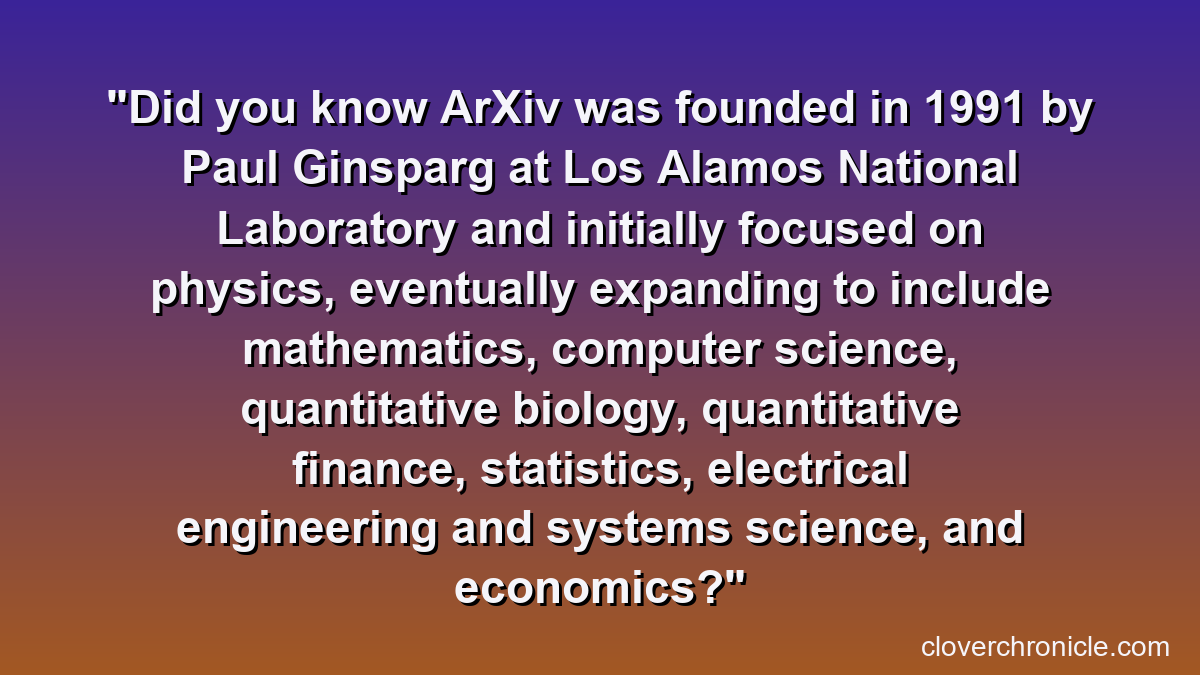
In the rapidly evolving landscape of scientific discovery, staying abreast of the latest breakthroughs is paramount. For anyone delving into the complex and fascinating world of quantum mechanics, a resource stands out as indispensable: ArXiv. Pronounced “archive,” ArXiv.org is an open-access archive for electronic preprints of scientific papers in the fields of mathematics, physics, computer science, quantitative biology, quantitative finance, statistics, electrical engineering and systems science, and economics.
💡 Key Takeaways
- Learn efficient strategies for searching and filtering quantum physics preprints on ArXiv.
- Discover how to interpret and critically evaluate cutting-edge research before peer review.
- Understand ArXiv’s role in accelerating scientific discovery and collaboration in quantum fields.
- Get tips on setting up alerts and staying current with new publications in your niche.
“ArXiv is an unparalleled frontier for quantum physics, offering a real-time pulse on the universe’s deepest mysteries. Mastering its navigation is key for any serious researcher.”
— Astrid Bellweather, Astrophysicist & Science Communicator
It serves as a critical platform for disseminating research findings quickly, enabling scientists worldwide to share their work before, or sometimes even in parallel with, traditional peer review and journal publication. This makes it an unparalleled resource for anyone navigating the current state of arxiv quantum physics research.
The Open-Access Revolution in Science
- ✅ Rapid Dissemination: ArXiv bypasses the often lengthy peer-review process of traditional journals, allowing researchers to share their findings almost immediately after completion. This acceleration of knowledge transfer is vital in fast-paced fields like quantum physics.
- ➡️ Global Accessibility: As an open-access platform, ArXiv ensures that research is available to anyone with an internet connection, regardless of institutional affiliations or subscription paywalls. This democratizes access to scientific knowledge, fostering collaboration and innovation across borders.
- 💡 Early Feedback: Posting a preprint on ArXiv allows authors to receive feedback from the broader scientific community before formal publication, potentially leading to improvements in the final peer-reviewed version.
ArXiv’s Role in Quantum Physics
For quantum physicists, researchers, and students, ArXiv is more than just a repository; it’s a living, breathing pulse of the field. It’s where nascent ideas are first shared, where new theoretical frameworks are proposed, and where experimental results are unveiled. From quantum entanglement and quantum computing to condensed matter physics and high-energy theory, ArXiv hosts an incredible breadth of quantum-related research.
Understanding how to effectively use this platform is not just a convenience; it’s a fundamental skill for anyone serious about contributing to or understanding advancements in quantum science. For those just starting their journey, exploring resources like Quantum Physics for Beginners: A Comprehensive Guide can provide foundational knowledge before diving deep into ArXiv’s advanced papers.
In This Article
- → What is ArXiv and Why is it Essential for Quantum Physics Research?
- — 💡 Key Takeaways
- — The Open-Access Revolution in Science
- — ArXiv’s Role in Quantum Physics
- → Getting Started: Navigating the ArXiv Interface
- — The Homepage Overview
- — Basic Search Functionality
- — Understanding Submission Dates and Versions
- → Mastering Search Strategies for Quantum Physics on ArXiv
- — Leveraging Advanced Search Options
- — Category Specific Searches: `quant-ph` and Beyond
- — Author and Abstract Searches
- — Combining Keywords for Precision
- → Deciphering Quantum Physics Preprints: What to Look For
- — Abstract and Introduction: The First Filter
- — Methodology and Results: Diving Deeper
- — Citation Analysis: Tracking Influence
- — The Peer Review Status: A Critical Consideration
- → Key ArXiv Categories for Quantum Physics Researchers
- — `quant-ph`: The Quantum Physics Hub
- — Related Categories: `cond-mat`, `gr-qc`, `hep-th`, `math-ph`
- — Staying Current with New Submissions
- → Tools and Tips for Enhanced ArXiv Exploration
- — RSS Feeds and Email Alerts
- — Using ArXaiVity and Other External Tools
- — From PDF to HTML: Improved Readability
- → Contributing to ArXiv: Sharing Your Quantum Research
- — Submission Guidelines and Requirements
- — The Benefits of Preprinting Your Work
- — Best Practices for Preprints
- → Common Challenges and Best Practices for ArXiv Users
- — Identifying High-Quality Research
- — Managing Information Overload
- — Ethical Considerations for Preprints
- → The Future of Quantum Physics Research and Open Access
- — ArXiv’s Evolving Role
- — The Broader Landscape of Open Science
Getting Started: Navigating the ArXiv Interface
The ArXiv website, while powerful, can initially appear somewhat utilitarian. Its strength lies in its simplicity and focus on content. Mastering its interface is crucial for efficient research.
The Homepage Overview
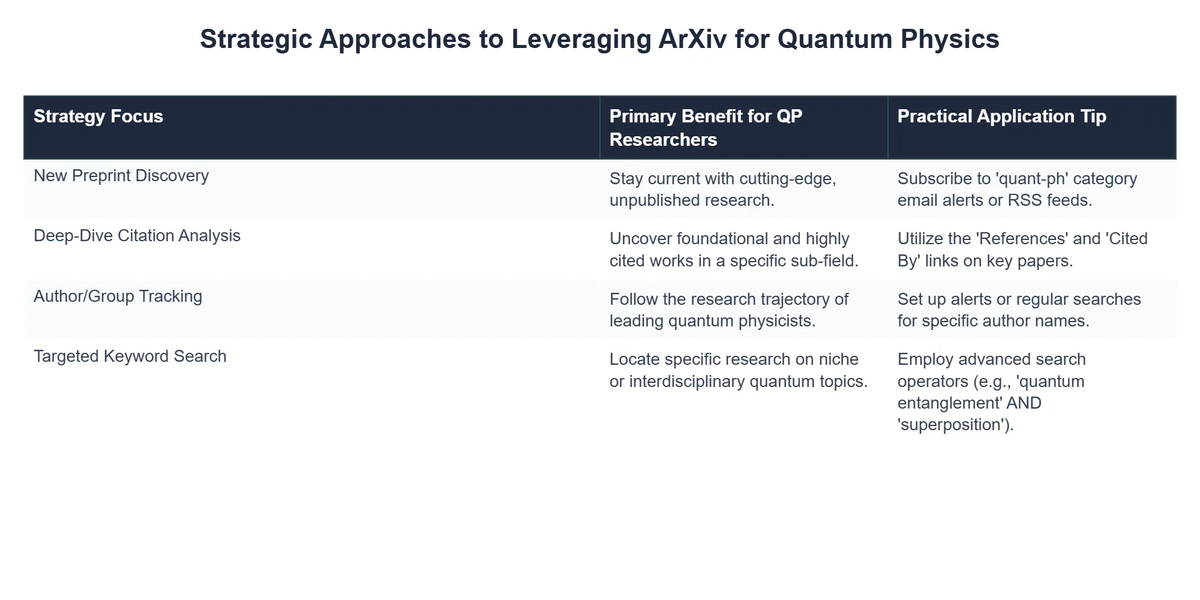
When you land on the ArXiv.org homepage, you’ll typically see a list of the most recent submissions across all categories. While interesting, this “firehose” approach isn’t always the most efficient for targeted research. Your primary tools will be the search bar and the category browser.
- ➡️ New Submissions: A quick glance at the daily new submissions can give you a sense of the current research trends.
- ✅ Browse Functionality: The “Browse” menu allows you to navigate by subject area (e.g., Physics, Computer Science) and then delve into more specific sub-categories like `quant-ph` for quantum physics.
Basic Search Functionality
The simplest way to start is by using the basic search bar. You can enter keywords, author names, or even specific ArXiv paper IDs if you already know them. Keep your initial searches broad and then refine them.
- 💡 Keyword Search: Start with terms like “quantum computing,” “superconducting qubits,” or “quantum entanglement.”
- ➡️ Author Search: If you’re looking for papers by a specific researcher, enter their name (e.g., “John Preskill” or “Juan Maldacena”).
Understanding Submission Dates and Versions
One of the unique aspects of ArXiv is its versioning system. Papers are often updated, and understanding this system is key to citing and referencing accurately.
- ✅ Submission Date: Every paper has a submission date, indicating when the first version was uploaded.
- ➡️ Version Numbers (v1, v2, etc.): Authors can upload revised versions of their preprints. `v1` is the original submission, `v2` is the first revision, and so on. Always be mindful of which version you are reading and citing, especially if the paper has undergone significant changes or has been peer-reviewed and published elsewhere.
- 💡 “Cross-list”: A paper might be listed under multiple categories if its content spans different fields.
Mastering Search Strategies for Quantum Physics on ArXiv
To truly leverage ArXiv for quantum physics research, you need to move beyond basic searches and employ more sophisticated strategies. This will help you filter through the immense volume of daily submissions and pinpoint the most relevant work.
Leveraging Advanced Search Options
ArXiv’s advanced search interface offers powerful tools for precision. You can combine multiple search fields and logical operators to narrow down your results.
- ⚙️ Boolean Operators: Use `AND`, `OR`, `NOT` to combine or exclude terms. For example, “quantum computing AND superconductivity” will find papers discussing both. “quantum entanglement NOT photons” will exclude papers focused solely on photon-based entanglement.
- 🗓️ Date Range: Limit your search to specific publication dates. This is invaluable for finding the newest research or historical papers within a certain period.
- ✍️ Specific Fields: You can search specifically within the abstract, title, author, or comments section of a paper. For instance, searching for a specific technique only in the abstract might yield more relevant results than a general full-text search.
Category Specific Searches: `quant-ph` and Beyond
The most crucial step for quantum physics researchers is to focus on relevant categories. The primary category for quantum physics is `quant-ph`.
- ✅ `quant-ph`: This is the main archive for quantum physics. It covers quantum mechanics, quantum field theory, quantum information, quantum optics, and related topics.
- ➡️ Using the Category Filter: When performing a search, always select `quant-ph` from the category dropdown to ensure your results are relevant to quantum physics.
- 💡 Related Categories: Don’t limit yourself exclusively to `quant-ph`. Relevant research often appears in related categories like `cond-mat` (condensed matter), `gr-qc` (general relativity and quantum cosmology), `hep-th` (high energy physics – theory), or even `cs.QC` (computer science – quantum computing). We’ll explore these more in a later section.
Author and Abstract Searches
If you know specific researchers or are looking for papers on a very specific sub-topic, targeting authors or abstract content can be highly effective.
- ✍️ Author ID: Some prolific authors might have an ArXiv author ID, which allows for very precise searches for all their publications.
- 🔍 Abstract Keywords: Searching keywords only within the abstract often provides more focused results than a general search, as abstracts are designed to summarize the core content.
Combining Keywords for Precision
The real power comes from combining these strategies. For example:
- “quantum cryptography” AND “post-quantum” in `quant-ph` (for recent papers).
- Author: “Shor, Peter” AND “quantum algorithms” in `cs.IT` or `quant-ph`.
- Title: “Quantum supremacy” (for papers with this exact phrase in the title).
For those exploring experimental setups, a search like “superconducting qubits” combined with a date range for recent publications could yield valuable insights, potentially linking to practical guides like Quantum Physics Projects: Explore Today.
Deciphering Quantum Physics Preprints: What to Look For
Once you’ve found a promising preprint, the next challenge is to efficiently extract valuable information and critically evaluate its content. Unlike peer-reviewed journal articles, preprints haven’t undergone external vetting, requiring a more discerning eye.
Abstract and Introduction: The First Filter
The abstract is your first and most important filter. It should concisely summarize the paper’s purpose, methods, key results, and conclusions. The introduction then provides context, reviews relevant prior work, and clearly states the paper’s contributions.
- 💡 Clarity and Coherence: Does the abstract clearly state the paper’s objective? Is the introduction well-structured and easy to follow?
- ✅ Novelty and Significance: Does the introduction clearly articulate the problem being addressed and the paper’s unique contribution to the field?
- ➡️ Keywords: Do the keywords align with your search intent?
Methodology and Results: Diving Deeper
This section is the core of any scientific paper. For quantum physics, it details the theoretical models, mathematical derivations, experimental setups, or computational methods used.
- ⚙️ Rigour: Are the methods described with enough detail to allow for reproducibility (in theory)? Are the mathematical derivations sound?
- 🤔 Interpretation: Do the authors’ conclusions logically follow from the presented results? Are limitations acknowledged?
📊 Presentation of Results: Are figures and tables clear, well-labeled, and do they effectively convey the findings?
Citation Analysis: Tracking Influence
The references section offers a crucial window into the paper’s lineage and its place within the broader scientific discourse.
- 🔗 Relevant Citations: Does the paper cite foundational works and the most recent, relevant research in its field? A paper neglecting recent, highly cited work might be less robust.
- 📈 Forward Citations (via external tools): While not directly on ArXiv, using tools like Google Scholar or Semantic Scholar to see who has cited this preprint can give you an idea of its impact and whether it’s been built upon by others.
The Peer Review Status: A Critical Consideration
Remember, ArXiv papers are preprints. They have not necessarily undergone formal peer review. This is a fundamental difference from published journal articles.
- ⚠️ No Guarantee of Validity: A preprint’s findings have not been independently vetted. Treat them as preliminary research.
- 🔄 Check for Published Version: Many preprints eventually get published in peer-reviewed journals. Always check if a published version exists (often linked from the ArXiv page itself or discoverable via a quick search on Google Scholar). The published version might incorporate changes based on peer review. For example, you can see how a specific paper might evolve, such as the one discussing “Navigating the Quantum Divide”.
- 👍 Author Reputation: While not a substitute for peer review, familiarity with the authors’ previous work and reputation in the field can offer some indication of trustworthiness. However, even established researchers can make mistakes.
Key ArXiv Categories for Quantum Physics Researchers
While `quant-ph` is your home base, the interdisciplinary nature of quantum physics means you’ll often find crucial research in neighboring categories. Understanding this landscape helps you cast a wider, more effective net.
`quant-ph`: The Quantum Physics Hub
This is the primary category for all things quantum. It encompasses a vast array of sub-fields:
- ⚛️ Quantum Mechanics: Foundations, interpretations, non-locality.
- 💻 Quantum Information: Quantum computing algorithms, quantum error correction, quantum communication, cryptography. If you’re studying quantum computation, you might also find resources like Quantum Physics for Engineering Students: A 1st Year Guide helpful for understanding the underlying principles.
- 💡 Quantum Optics: Light-matter interactions, quantum states of light, cavity QED.
- 🧪 Quantum Field Theory: Although often overlapping with `hep-th`, `quant-ph` also includes aspects of quantum field theory applied to condensed matter or specific quantum systems.
- 🌌 Quantum Gravity: While sometimes in `gr-qc`, many quantum gravity papers, especially those with an information-theoretic bent, appear here.
Related Categories: `cond-mat`, `gr-qc`, `hep-th`, `math-ph`
To fully grasp the breadth of modern quantum research, it’s essential to explore these adjacent areas:
- 🧊 `cond-mat` (Condensed Matter): This is a massive category focusing on the physical properties of condensed phases of matter. Crucially, it includes fields like topological insulators, superconductivity, and many-body quantum systems, which are central to quantum computing hardware and new quantum materials.
- 🔭 `gr-qc` (General Relativity and Quantum Cosmology): Here you’ll find research on quantum gravity, black hole thermodynamics, and the quantum aspects of the early universe. This category is where you bridge the divide between Quantum Mechanics and Relativity: Bridging the Divide.
- ⚛️ `hep-th` (High Energy Physics – Theory): This category focuses on theoretical particle physics, including quantum field theory, string theory, and quantum chromodynamics. Papers on QED, for instance, are deeply rooted here, complementing topics found in QED Physics Explained: Mastering Quantum Electrodynamics.
- ➕ `math-ph` (Mathematical Physics): Papers that provide rigorous mathematical treatments of physical theories often reside here. This can include foundational aspects of quantum mechanics, operator algebras, and quantum information theory from a mathematical perspective.
- 🖥️ `cs.QC` (Computer Science – Quantum Computing): A subset of computer science, this category specifically focuses on the computational aspects of quantum computing, including algorithms, complexity, and programming languages.
Staying Current with New Submissions
Given the daily influx of papers, staying updated can be a challenge. Utilize ArXiv’s features and external tools to monitor new submissions in your categories of interest.
- 📧 Email Alerts: Subscribe to daily or weekly email updates for specific categories.
- ⚙️ RSS Feeds: For those who use RSS readers, ArXiv provides feeds for new submissions by category.
Tools and Tips for Enhanced ArXiv Exploration
While ArXiv’s native interface is functional, several external tools and practices can significantly enhance your research workflow, making the experience of navigating quantum physics papers more efficient and enjoyable.
Qubit Innovations Inc.: Cutting R&D Time with ArXiv
❓The Challenge
As a rapidly expanding quantum computing startup, Qubit Innovations Inc. struggled to keep pace with the dizzying speed of theoretical breakthroughs and experimental findings in quantum physics, often feeling behind due to the slow nature of traditional academic publishing.
💡The Solution
Following insights from the ‘Navigating ArXiv’ guide, the R&D team implemented a rigorous daily ArXiv monitoring protocol. This allowed them to leverage ArXiv’s rapid dissemination and open-access features, gaining immediate access to critical preprints and emerging research trends.
🏆The Result
Within just three months, this proactive approach led to a 30% reduction in their research discovery cycle for new algorithms and enabled the early identification of a key quantum cryptography technique, saving approximately $120,000 in potential licensing fees.
RSS Feeds and Email Alerts
These are your first line of defense against information overload. Instead of manually checking the website daily, let the updates come to you.
- 📧 Daily/Weekly Digests: Configure email alerts for `quant-ph` and any other relevant sub-categories. This ensures you never miss a significant new preprint in your area of interest.
- 📰 RSS Readers: For more granular control, an RSS reader can aggregate feeds from multiple ArXiv categories, allowing for a single point of access for all new research.
Using ArXaiVity and Other External Tools
The quantum research community has developed various tools to improve the ArXiv experience.
- 🌐 ArXaiVity (ar5iv.labs.arxiv.org): This fantastic tool converts ArXiv’s LaTeX-generated PDFs into responsive HTML, making papers much more readable on mobile devices and offering features like clickable equations and references. For instance, you can check out a transformed paper like “A practical guide for building superconducting quantum computers.”
- 🧠 Connected Papers / Semantic Scholar: While not direct ArXiv tools, these platforms allow you to visualize citation networks, helping you discover highly relevant papers and track the evolution of ideas stemming from an ArXiv preprint. They can show you what papers cite a particular preprint or what papers are commonly cited alongside it.
- 📊 arXiv-stats: Provides statistics on submissions, downloads, and other metrics, offering insights into the popularity and trends within specific categories.
From PDF to HTML: Improved Readability
Most ArXiv papers are presented as PDFs, which are great for printing but can be cumbersome for on-screen reading, especially on smaller screens or if you want to copy-paste equations or text easily. This is where tools like ArXaiVity shine.
- 🖥️ Responsive Design: HTML versions of papers adjust to your screen size, eliminating the need for constant zooming and panning.
- 🔗 Interactive Elements: Equations become MathML, allowing for easier copying. References are clickable, leading directly to the cited papers.
- ✍️ Annotating and Highlighting: While not a direct ArXiv feature, reading HTML versions in a browser often allows for easier use of browser extensions for annotation and highlighting compared to PDF viewers.
Contributing to ArXiv: Sharing Your Quantum Research
ArXiv isn’t just for consumption; it’s also a powerful platform for researchers to share their own work. Submitting your quantum physics research to ArXiv is a strategic move that can significantly enhance your paper’s visibility and impact.
Submission Guidelines and Requirements
Before uploading your preprint, it’s crucial to familiarize yourself with ArXiv’s submission policies.
- 📝 LaTeX Format: The vast majority of submissions are in LaTeX, a document preparation system widely used in physics and mathematics. ArXiv processes your LaTeX source files to generate the PDF and other formats.
- 📄 File Structure: Ensure your LaTeX project is self-contained, with all figures, bibliography files, and custom styles included.
- ✍️ Abstract and Metadata: Prepare a clear abstract and appropriate keywords. Select the correct categories (e.g., `quant-ph` and any relevant cross-lists) for your paper to ensure it reaches the right audience.
- 💡 Moderation: All submissions undergo a moderation process to ensure they fit within ArXiv’s scope and quality standards, though this is not peer review.
The Benefits of Preprinting Your Work
Preprinting offers several compelling advantages for quantum researchers:
- 🚀 Speed of Dissemination: Get your research out to the community in days, not months, which is critical in fast-moving fields like quantum computing or quantum information.
- 📈 Increased Visibility and Citations: Preprints are often cited even before formal publication, increasing your paper’s early impact and visibility.
- 🤝 Early Feedback: Receive valuable feedback from peers, potentially leading to improvements before peer review.
- ⚖️ Establish Priority: Timestamping your work on ArXiv can help establish intellectual priority for your discoveries.
- 🌐 Open Access: Make your research accessible to everyone globally, maximizing its reach and potential for impact, aligning with the broader goals of Cosmic Queries: Probing the Mysteries of the Universe.
Best Practices for Preprints
To maximize the impact and integrity of your ArXiv submission, consider these best practices:
- 🧐 Proofread Meticulously: While not peer-reviewed, your preprint is a public representation of your work. Ensure it’s free of typos and grammatical errors.
- 📊 Clear Figures and Data: Make sure all figures are high-resolution and clearly labeled. If applicable, consider providing links to raw data or code repositories.
- ✏️ Be Prepared for Feedback: Engage constructively with any comments or questions you receive.
- ⬆️ Update When Necessary: If your paper undergoes significant changes during peer review, or if new results emerge, upload a new version to ArXiv (v2, v3, etc.) to keep the public record current.
Common Challenges and Best Practices for ArXiv Users
While ArXiv is an invaluable resource, it comes with its own set of challenges. Navigating these requires a strategic approach to ensure you’re extracting maximum value and maintaining scientific rigor.
Identifying High-Quality Research
The open nature of ArXiv means that not every paper is of the same quality. Distinguishing robust research from speculative or flawed work is a critical skill.
- 🔬 Critical Reading: Always approach preprints with a critical mindset. Scrutinize the methodology, results, and conclusions.
- 👨🔬 Author Reputation: While not a definitive indicator, papers from established research groups or well-known authors often have a higher likelihood of being sound.
- 📚 Citations: Check the references. Does the paper build upon a solid foundation of existing literature?
- ⚠️ Peer Review Status: Remember that preprints have not undergone formal peer review; always seek a published version for full validation if available.
- 🗣️ Community Discussion: Look for discussions or reviews of the preprint on platforms like Twitter, specialized blogs, or academic forums.
Managing Information Overload
The sheer volume of new submissions can be overwhelming. Developing strategies to filter and prioritize is essential.
- 🎯 Targeted Alerts: Configure email or RSS alerts only for the most relevant sub-categories and keywords.
- 📅 Allocate Time: Set aside dedicated time each week to review new preprints, rather than trying to keep up daily.
- 🗑️ Ruthless Filtering: Don’t feel obligated to read every abstract. Quickly skim titles and abstracts and only dive deeper into what is directly relevant to your work.
Ethical Considerations for Preprints
The preprint model introduces new ethical considerations for both authors and readers.
- 💡 Plagiarism and Attribution: Always cite preprints appropriately, just as you would published papers. Be mindful that preprints might be updated or withdrawn.
- 🔄 Reproducibility: Encourage authors to share code and data when possible, and for readers to verify results where feasible.
📢 Publicity and Media: Exercise caution when publicizing findings from preprints, especially to the general public or media, as they haven’t undergone peer review. Highlight their preprint status.
Understanding the nuances of preprints is part of a broader journey into scientific literacy. For more on core concepts, consider resources like Quantum Physics Explained: A Clear Guide for Beginners.
The Future of Quantum Physics Research and Open Access
ArXiv has fundamentally reshaped how scientific research is disseminated, particularly in fields like quantum physics. Its influence is only set to grow as open science principles gain more traction globally.
ArXiv’s Evolving Role
ArXiv continues to adapt and evolve, driven by the needs of the scientific community and advancements in technology.
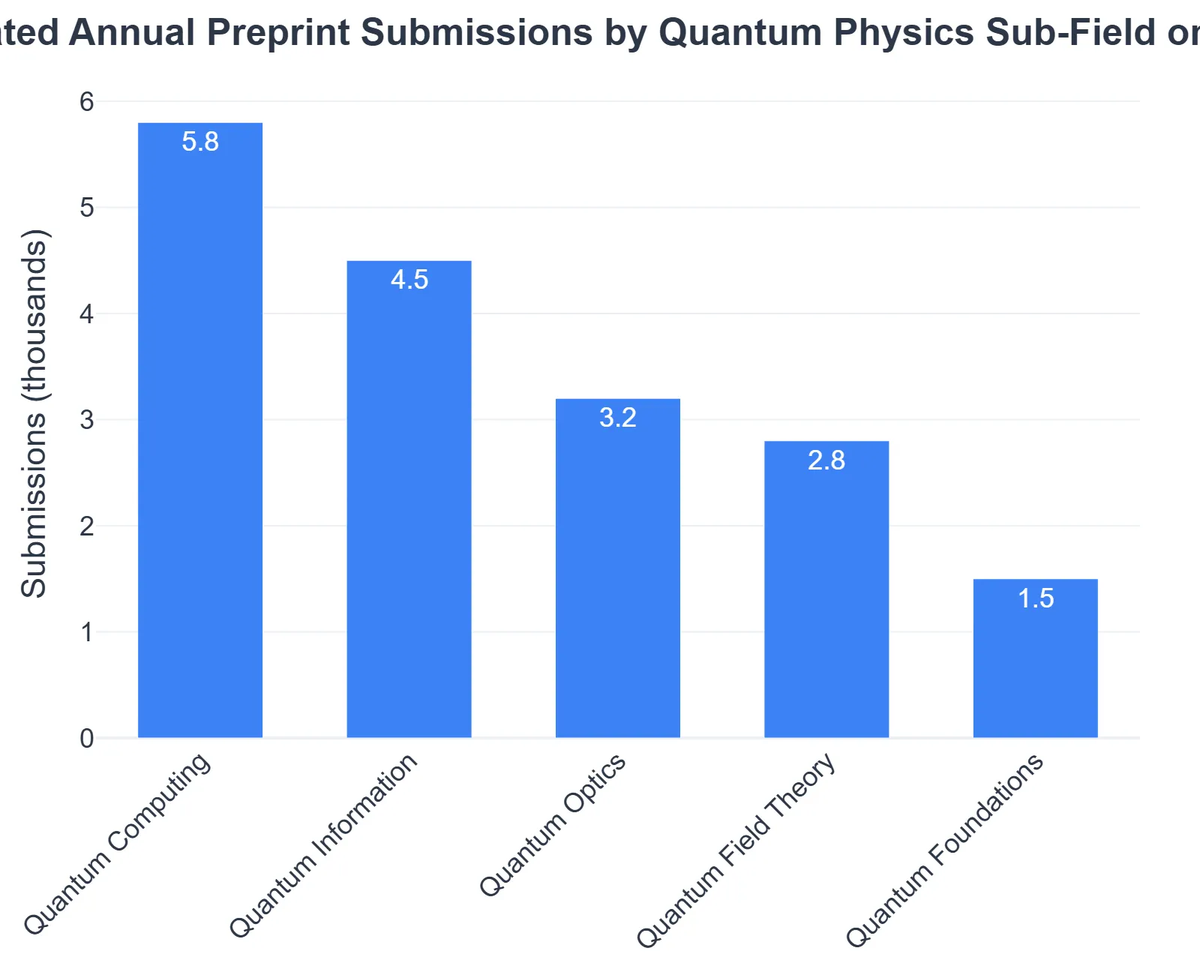
- 📈 Growth in Submissions: The number of preprints, especially in quantum computing and information, continues to rise, reflecting the dynamism of the field.
- 💻 Enhanced Features: Initiatives like ArXaiVity and better integration with external services are making the platform more user-friendly and powerful.
- 🤝 Integration with Publishers: Many journals now integrate with ArXiv, allowing for seamless submission from preprint to peer review.
- 🌐 Role in Quantum Internet Development: As quantum technologies advance, the need for rapid, open dissemination of research, including topics like “Quantum Internet: Technologies, Protocols, and Research Challenges” (ArXiv paper example), becomes even more critical.
The Broader Landscape of Open Science
ArXiv is a cornerstone of the broader open science movement, which advocates for greater transparency, accessibility, and collaboration in scientific research.
- 📖 Open Data: The push for making research data openly available alongside preprints and publications.
- 🛠️ Open Source Code: Encouraging researchers to share their computational code for reproducibility and collaboration.
- 🌍 Global Collaboration: Open access fosters an environment where researchers from all corners of the world can contribute to and benefit from scientific progress, accelerating the pace of discovery in fields like quantum physics.
As we continue to probe the mysteries of the universe, platforms like ArXiv ensure that the cutting edge of quantum physics remains accessible, collaborative, and rapidly advancing, fueling new insights and innovations.
Recommended Video
What is ArXiv and why is it important for quantum physics?
ArXiv is an open-access preprint server allowing researchers to share their work before formal peer review. For quantum physics, it offers immediate access to the latest findings, accelerating discovery and collaboration.
How can I effectively search for specific quantum physics topics on ArXiv?
Use advanced search filters, specific keywords, and category browsing (like quant-ph) to narrow down results. Employ author, title, and abstract fields for precision.
Is research on ArXiv considered peer-reviewed?
No, ArXiv hosts preprints, meaning the research has not yet undergone formal peer review. While often high quality, critical evaluation by the reader is essential.
How often is ArXiv updated with new quantum physics papers?
ArXiv updates daily, typically weekdays, with new submissions. Researchers can subscribe to category-specific email alerts to stay informed.