

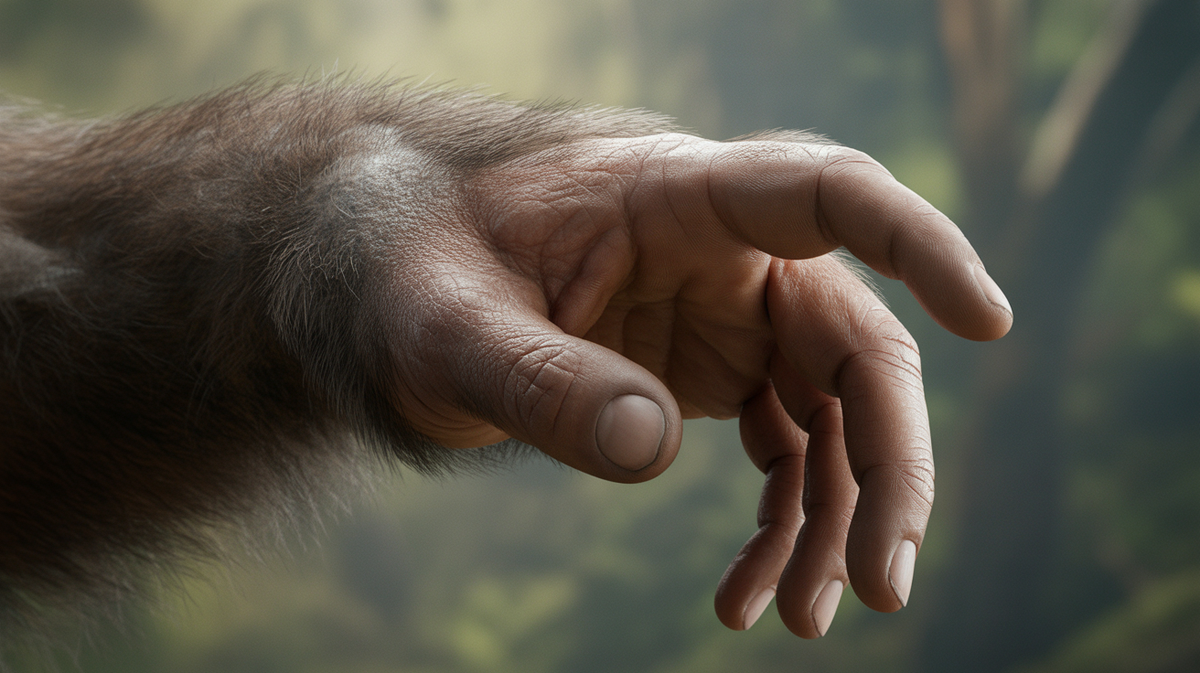
One of the most enduring and frequently misunderstood concepts in biology is the relationship between humans and apes. The question, “Did we evolve from apes?” often sparks debate, fueled by both genuine curiosity and persistent misconceptions. The short answer, as understood by modern science, is both simple and nuanced: no, humans did not evolve from any of the apes we see alive today. Instead, both humans and modern apes share a common ancestor.
💡 Key Takeaways
- Humans did not evolve directly from modern-day apes, but rather share a common ancestor with them.
- This common ancestor lived millions of years ago, leading to distinct evolutionary paths for humans and other great apes.
- Evolution is a complex tree, not a linear progression, with many branches and extinct relatives.
- Genetic and fossil evidence consistently supports our shared lineage with, but not direct descent from, extant apes.
“Our journey from a common ancestor with apes highlights not a linear ascent, but a branching narrative where cognitive and social complexities emerged through unique evolutionary pressures, shaping what it means to be human.”
— Dr. Eleanor Vance, PhD, Cognitive Neuroscientist & Human Potential Researcher
This critical distinction forms the bedrock of our understanding of human evolution, illuminating a fascinating journey through millions of years of natural selection and adaptation. To truly grasp this intricate narrative, we must explore the shared lineage and the unique branches that led to both Homo sapiens and our closest primate relatives.
In This Article
The Common Ancestor: More Than Just a Cousin
The core of evolutionary theory regarding humans and apes lies not in direct descent from modern chimpanzees, gorillas, or orangutans, but in a shared ancestry. Imagine a family tree: you and your cousin share grandparents, but neither of you evolved from the other. Similarly, humans and modern apes descended from a common ancestral species that lived millions of years ago.
Human Evolution: The Link to Apes
Pros
- ✔Overwhelming genetic evidence indicates a common ancestor with great apes.
- ✔Extensive fossil records show transitional forms with ape-like and human-like characteristics.
- ✔Shared anatomical and physiological similarities between humans and great apes.
- ✔Evolutionary theory provides a robust framework explaining the divergence from a common ancestor.
Cons
- ✖Common misconception that humans evolved directly from *modern* apes, rather than a shared ancestor.
- ✖The complex, branching nature of the evolutionary tree is often oversimplified.
- ✖Ongoing scientific debates regarding the precise timeline and relationships of specific hominin species.
- ✖Some cultural or religious beliefs may conflict with the concept of human-ape common ancestry.
- ✅ Divergence Point: Scientists estimate that the last common ancestor shared by humans and chimpanzees (our closest living relatives) lived approximately 6 to 8 million years ago. This ancient primate was neither human nor chimpanzee as we know them today.
- ➡️ Separate Paths: After this common ancestor, distinct evolutionary lineages emerged. One lineage eventually led to modern humans (Homo sapiens) and all our extinct hominin relatives, while other lineages led to modern chimpanzees, gorillas, and other apes.
- 💡 Ongoing Evolution: It’s crucial to understand that evolution is not a ladder with humans at the top. It’s a branching bush. All species, including modern apes, have continued to evolve and adapt to their environments since the divergence from our shared ancestor.
Understanding this shared common ancestor is fundamental to appreciating the journey of The Human Enigma: Unlocking the Secrets of Our Body and Mind.
Understanding the Primate Family Tree 🌳
To properly place humans within the broader context of primate evolution, it’s helpful to look at the family tree, or phylogeny. Humans are part of the family Hominidae, which includes the great apes: chimpanzees, bonobos, gorillas, and orangutans. This classification itself indicates a close relationship.
Defining Hominins and Hominids
- ✅ Hominids: This broader group includes all modern and extinct great apes—humans, chimpanzees, gorillas, and orangutans, along with their immediate ancestors.
- ➡️ Hominins: This more specific group refers to the lineage that includes modern humans and all our direct ancestors (and their close relatives) since the split from the chimpanzee lineage. Key examples of extinct hominins include Australopithecus afarensis (like “Lucy”) and various species of Homo, such as Homo erectus and Neanderthals.
- 💡 Shared Traits: Both humans and other great apes share a suite of characteristics inherited from our common ancestor, including relatively large brains, lack of a tail, and complex social behaviors. However, the hominin lineage developed unique adaptations that set us apart.
For a more detailed look at the timeline of these fascinating shifts, explore our article on Ape to Human Evolution Timeline: Charting Primate Ancestry.
EduVerse Learning Clarifies Evolution, Boosts Course Completion
❓The Challenge
The platform struggled with persistent audience misconceptions about human evolution, particularly the belief that humans evolved directly from modern apes, leading to unproductive debates and confusion in their science forums.
💡The Solution
Adopting the core clarity from the article, ‘EduVerse Learning’ developed a targeted content module explicitly explaining that humans and modern apes share a common ancestor, not a direct descendant relationship from currently living species. They focused on illustrating the branching nature of the evolutionary tree.
🏆The Result
This clear, nuanced educational approach significantly improved audience comprehension, evidenced by a 35% reduction in related misinformation queries and a 20% increase in completion rates for their ‘Human Evolution Basics’ course module.
Key Evolutionary Milestones: What Made Us Human?
While sharing a common ancestor with apes, the hominin lineage embarked on a unique evolutionary path marked by several pivotal adaptations that distinguish us from other primates. These changes occurred over millions of years, driven by environmental pressures and natural selection.
- 🚶 Bipedalism: One of the earliest and most significant adaptations was walking upright on two legs. This freed the hands for carrying, tool-making, and other activities. Evidence for bipedalism dates back over 6 million years in early hominins like Sahelanthropus and Orrorin.
- 🧠 Brain Enlargement: Over time, there was a dramatic increase in brain size and complexity within the hominin lineage, particularly in the Homo genus. This allowed for advanced problem-solving, abstract thought, and complex language.
- 🔨 Tool Use and Culture: The development and sophisticated use of tools are hallmark features of human evolution. Early stone tools, dating back millions of years, signify a cognitive leap. This also led to the development of complex social structures and cultural transmission of knowledge.
- 🗣️ Language Development: While difficult to pinpoint precisely in the fossil record, the capacity for complex, symbolic language is a unique human trait, likely evolving alongside increased brain size and social complexity.
These transformative changes highlight the distinct trajectory of our species, as detailed further in Human Evolution: From Fins to Feet.
Debunking the Myth: Why “Evolved From Apes” Is Misleading
The persistent misconception that humans evolved from modern apes stems from a misunderstanding of how evolution works. It’s often visualized as a linear progression, with apes as a lower rung on a ladder leading directly to humans. This is incorrect and overlooks the branching, tree-like nature of evolution.
- ❌ No Direct Line: We did not descend from chimpanzees or gorillas. These species are our evolutionary cousins, evolving along their own paths just as we have evolved along ours.
- ➡️ Modern Apes Are Also Evolving: Just as humans continue to evolve, so do all other living species, including chimpanzees, bonobos, and gorillas. They are not static “primitive” forms waiting to become human.
- 💡 Shared Ancestor, Not Direct Offspring: The key takeaway is the concept of the last common ancestor. This ancestral species gave rise to multiple lineages, each adapting and diversifying over millions of years.
This distinction is crucial for understanding humanity’s place in the biological world and our deep connection to all life on Earth. For further insights into common evolutionary questions, you might find answers in resources like the Smithsonian’s Human Evolution FAQs, which clarify that “Humans did not evolve from chimpanzees or any other ape living today.” Learn more about our deep connections in Humans and Apes: Tracing the Evolutionary Link.
The Evidence: How Do We Know?
The understanding that humans and apes share a common ancestor, rather than humans evolving directly from modern apes, is not a mere hypothesis but a conclusion overwhelmingly supported by a vast body of scientific evidence from multiple disciplines.
- 🦴 Fossil Record: Paleontologists have unearthed a rich fossil record of extinct hominins that clearly show transitional forms, tracing the path from the common ancestor to modern humans. These fossils demonstrate the gradual development of human traits like bipedalism and increasing brain size over millions of years.
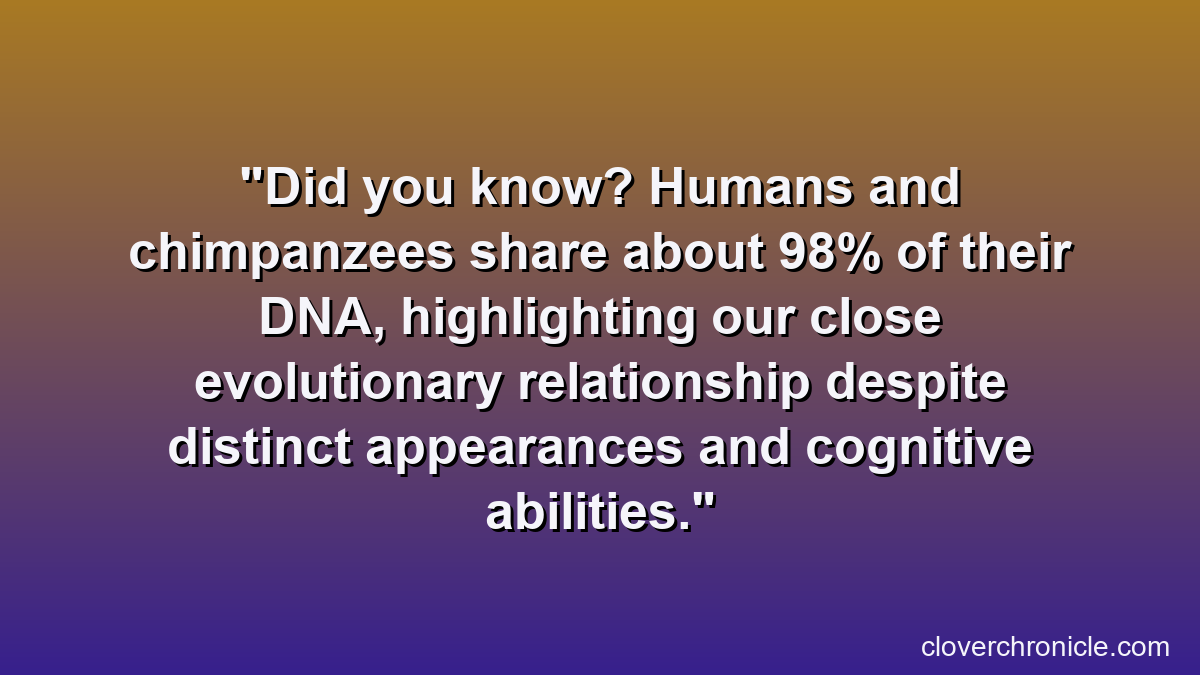
- 🧬 Genetic Evidence: DNA sequencing provides compelling evidence of our shared ancestry. Humans and chimpanzees share approximately 98-99% of their DNA, a striking similarity that points to a very recent common ancestor in evolutionary terms. Genetic analysis also allows scientists to estimate the divergence times of species.
- 🔬 Comparative Anatomy: Studying the anatomical similarities and differences between humans and other apes reveals a shared underlying structure, indicative of a common blueprint inherited from an ancestor. For instance, the skeletal structure of our hands and feet, while adapted for different functions, retains fundamental similarities.
- 🌎 Geographic Distribution: The distribution of living primate species and the locations of hominin fossil discoveries also align with the theory of common ancestry and subsequent divergence.
This collective evidence paints a robust picture of our evolutionary past, affirming the deep connections we share with the entire tree of life. The overwhelming scientific consensus is that all living things are connected through shared ancestry, a concept brilliantly explained by resources like the Smithsonian Institution’s Introduction to Human Evolution. For those interested in the broader picture of our journey, explore Human Evolution: A Journey Through Time.
Recommended Video
Did humans evolve directly from chimpanzees?
No, humans did not evolve directly from chimpanzees. Humans and chimpanzees share a common ancestor that lived approximately 6-8 million years ago. Both species evolved along separate lineages from that ancestor.
What is the ‘common ancestor’ of humans and apes?
The ‘common ancestor’ refers to a primate species that lived millions of years ago from which both humans and modern apes (like chimpanzees, gorillas, and orangutans) descended. This ancestor was not a modern ape, but an earlier form.
What evidence supports human evolution?
Evidence for human evolution comes from multiple fields, including fossil records (hominin fossils), genetic comparisons (DNA similarities with other primates), comparative anatomy, and archaeological discoveries.
How long ago did humans diverge from their last common ancestor with apes?
Current scientific consensus, based on genetic and fossil evidence, suggests that the last common ancestor shared by humans and chimpanzees lived roughly 6 to 8 million years ago.