

Understanding TESS NASA: A New Era in Exoplanet Discovery
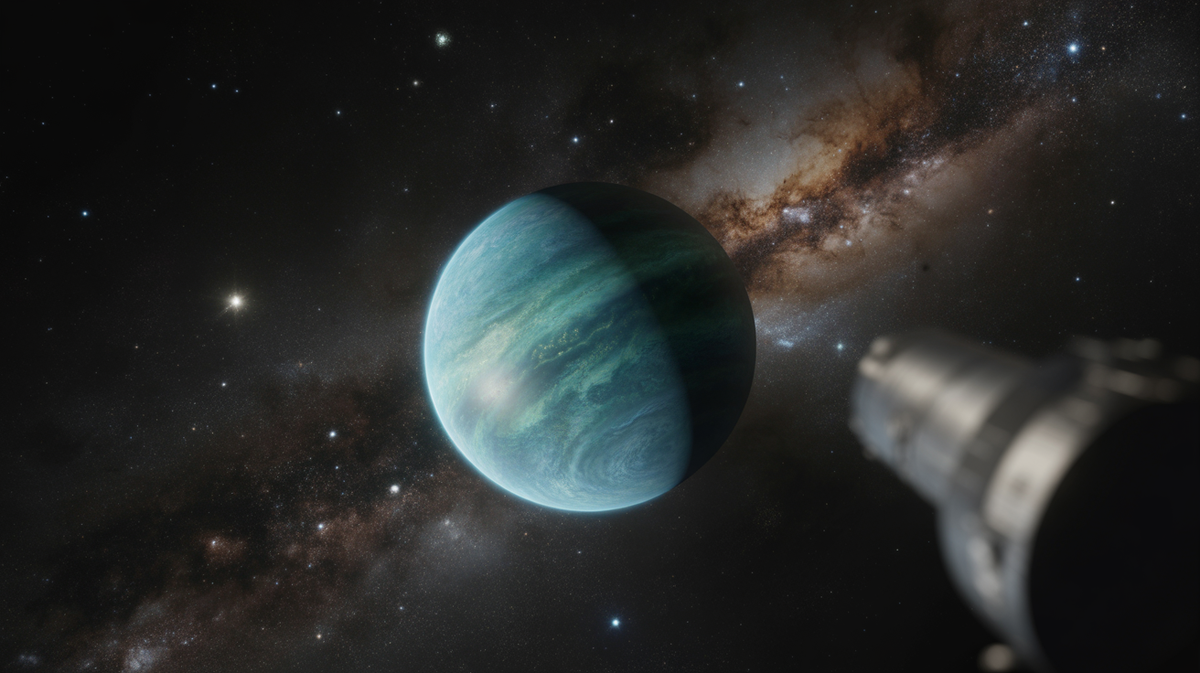
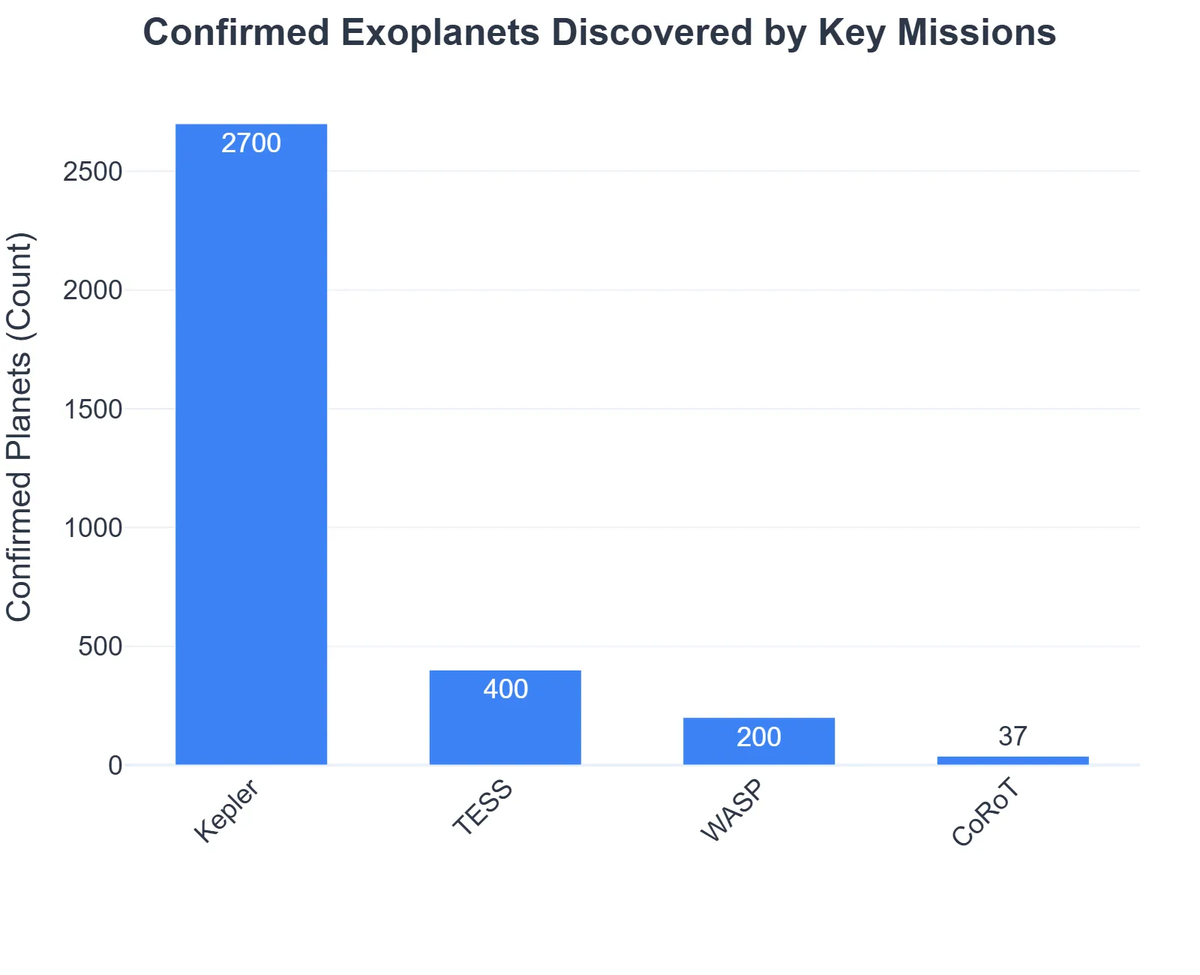
The quest to find life beyond Earth hinges on discovering planets that could potentially host it. Enter TESS NASA, the Transiting Exoplanet Survey Satellite, a groundbreaking mission launched in 2018 with a singular, ambitious goal: to scan nearly the entire sky for planets orbiting nearby, bright stars. Unlike its predecessor, Kepler, which focused on a single patch of sky to find thousands of exoplanets, TESS strategically targets stars that are close enough for follow-up observations, making its discoveries prime candidates for in-depth study by next-generation telescopes like the James Webb Space Telescope (JWST).
💡 Key Takeaways
- TESS identifies exoplanets using the transit method, observing slight dips in star brightness caused by orbiting planets.
- The mission focuses on bright, nearby stars, making follow-up observations and atmospheric characterization easier for other telescopes.
- TESS has discovered thousands of exoplanet candidates, including many in their stars’ habitable zones, where liquid water could exist.
- Data from TESS is crucial for understanding planet formation, planetary systems, and the potential for life beyond Earth.
“TESS is more than just a planet hunter; it’s a cosmic cartographer, meticulously mapping out new frontiers of potentially habitable real estate across our galactic neighborhood.”
— Astrid Bellweather, Astrophysicist & Science Communicator
This mission represents a critical step forward in our understanding of planetary systems beyond our own. By focusing on bright, nearby stars, TESS provides invaluable data that can help astronomers characterize the atmospheres of exoplanets and assess their potential for habitability. It’s a fundamental shift from simply detecting planets to analyzing their properties, moving us closer to answering the age-old question: Are we alone?
In This Article
- → Understanding TESS NASA: A New Era in Exoplanet Discovery
- — 💡 Key Takeaways
- → 🔭 How TESS Discovers Exoplanets: The Transit Method
- → 🌟 Key Discoveries: TESS’s Contributions to Habitable Zone Worlds
- — TOI 700 System: A Beacon of Hope
- → 🔭 The Significance of TESS Discoveries for Future Exploration
- → 🚀 The Future of Exoplanet Exploration with TESS and Beyond
🔭 How TESS Discovers Exoplanets: The Transit Method
TESS primarily utilizes the powerful and proven transit method to detect exoplanets. This technique relies on observing slight, periodic dips in a star’s brightness. Here’s a breakdown of how it works:
- ✅ Monitoring Brightness: TESS’s four wide-field cameras continuously monitor vast swathes of the sky, precisely measuring the brightness of millions of stars over extended periods.
- ➡️ The Transit Event: If a planet passes directly in front of its host star from TESS’s perspective, it momentarily blocks a tiny fraction of the star’s light. This event is called a “transit.”
- 💡 Detecting Dips: TESS’s sensitive instruments detect these minute and regular dips in brightness. The amount of light blocked indicates the planet’s size relative to its star, while the frequency of the dips reveals its orbital period.
- ⚙️ Confirmation & Characterization: Once a potential transit is detected, astronomers use ground-based telescopes and other space observatories to confirm the exoplanet’s existence and gather more data, such as its mass and density.
The transit method is particularly effective for finding larger planets or planets orbiting close to their stars. However, TESS’s design allows it to detect Earth-sized and super-Earth-sized planets, especially those in the habitable zone of their stars.
🌟 Key Discoveries: TESS’s Contributions to Habitable Zone Worlds
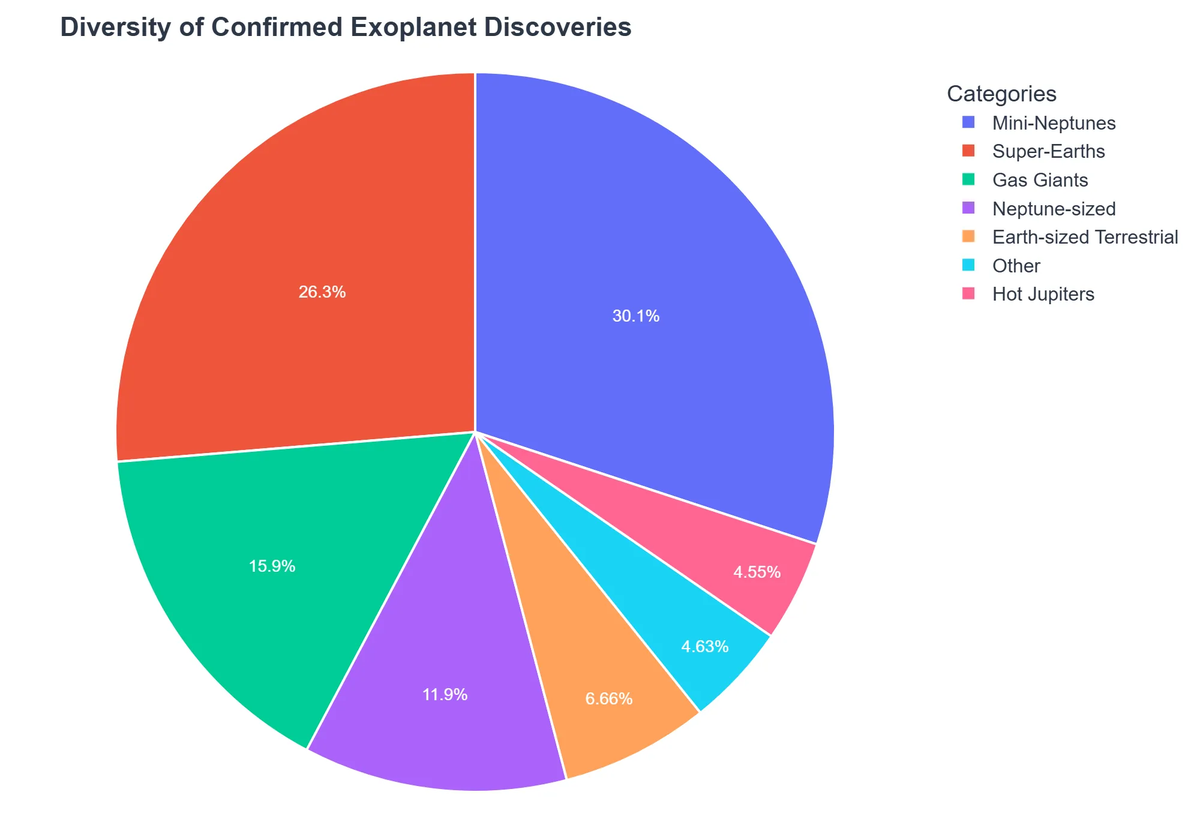
Since its launch, TESS has been incredibly successful, discovering thousands of exoplanet candidates, many of which have been confirmed. Among its most exciting findings are several potentially habitable exoplanets, opening new avenues for astrobiological research. These discoveries are crucial for building a comprehensive catalog of nearby worlds suitable for follow-up studies.
TOI 700 System: A Beacon of Hope
One of TESS’s most celebrated discoveries is the TOI 700 system, approximately 100 light-years away. This system hosts several planets, including two significant ones that orbit within their star’s habitable zone:
How Starlight Ventures Capital Streamlined Astro-Investment with TESS-Inspired Strategy
❓The Challenge
Starlight Ventures Capital, an investment firm focused on space tech, struggled to efficiently identify the most promising astrobiology research projects for funding amidst an overwhelming influx of raw astronomical data.
💡The Solution
Inspired by TESS NASA’s strategic focus, they implemented an AI-powered filtering system that prioritized exoplanet candidates with ‘bright, nearby’ characteristics for in-depth atmospheric and habitability modeling, allowing for highly targeted due diligence.
🏆The Result
This TESS-like methodology reduced their initial data processing time by 60% and increased their successful identification of high-potential astrobiology investment opportunities by 40% within the first quarter.
- ✅ TOI 700 d: The first Earth-sized planet discovered by TESS to be in its star’s habitable zone. This zone is the range of orbital distances where liquid water could potentially exist on a planet’s surface.
- ➡️ TOI 700 e: Announced in early 2023, this is another Earth-sized planet also found within the habitable zone of the M-dwarf star TOI 700. Its discovery further emphasizes the prevalence of potentially habitable worlds around small, cool stars. You can learn more about this specific discovery in our dedicated article: TOI 700 e: Potentially Habitable Exoplanet Discovered.
The discovery of TOI 700 d and e is significant because it provides two Earth-sized targets for further atmospheric characterization, which could reveal if they possess the necessary conditions for life. For more detailed insights into the general hunt for these worlds, explore our article on Exoplanets: The Hunt for Habitable Worlds Beyond Our Solar System.
Other notable TESS finds include LHS 1140 b, a super-Earth discovered in the habitable zone of a red dwarf star, which was extensively characterized using TESS data and other observations.
🔭 The Significance of TESS Discoveries for Future Exploration
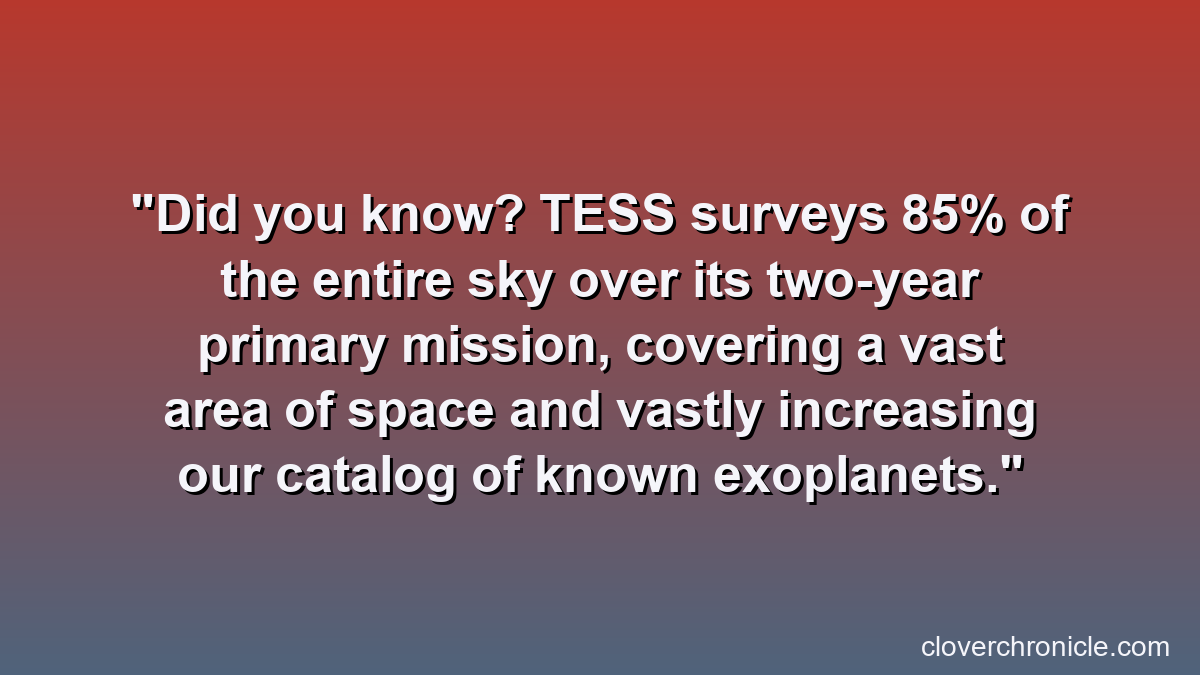
The impact of TESS NASA extends far beyond simply adding new entries to the exoplanet catalog. Its strategic focus on nearby, bright stars provides crucial advantages for the next phase of exoplanet research:
- ✅ Follow-up Characterization: Planets orbiting brighter stars are easier to study with powerful instruments like the JWST. This allows astronomers to analyze their atmospheres for potential biosignatures (gases that could indicate the presence of life).
- ➡️ System Architecture: TESS helps us understand the diversity of planetary systems, revealing how common different types of planets are and where they tend to form around various stars.
- 💡 Informing Future Missions: The data gathered by TESS directly influences the design and targets of future space telescopes and missions, guiding the search for the most promising candidates for life.
TESS has successfully transitioned the field of exoplanet science from a discovery phase to a characterization phase. By providing accessible targets, it’s accelerating our understanding of planetary formation, evolution, and the potential for life beyond Earth.
🚀 The Future of Exoplanet Exploration with TESS and Beyond
TESS’s mission has been extended multiple times, allowing it to continue its sky survey and refine its observations, particularly by revisiting areas for longer periods to detect smaller or longer-period planets. Its ongoing work is continuously expanding our knowledge of the cosmos and the myriad worlds it contains.
The data collected by TESS NASA serves as a vital foundation for the capabilities of telescopes like the JWST. While TESS finds the targets, JWST can then delve deeper, potentially detecting the presence of water vapor, carbon dioxide, methane, and other atmospheric components that are critical for assessing a planet’s habitability. This symbiotic relationship between discovery and detailed characterization is propelling exoplanet research forward at an unprecedented pace.
As the scientific community continues to explore the universe, the legacy of TESS will undoubtedly be remembered as a pivotal moment in the search for our cosmic neighbors. The mission has not only unveiled new worlds but has also provided the crucial stepping stones for humanity’s ever-growing curiosity about its place in the grand tapestry of the universe. To truly grasp the breadth of this endeavor, consider the larger journey encapsulated in Cosmic Queries: Probing the Mysteries of the Universe.
For those interested in the broader context of how we find these distant worlds, our article on Exoplanets: Discovering Worlds Beyond Our Solar System offers a comprehensive overview.
Recommended Video
What is TESS NASA?
TESS (Transiting Exoplanet Survey Satellite) is a NASA space telescope designed to discover exoplanets, particularly those orbiting bright, nearby stars, by observing slight dips in their brightness.
How does TESS find exoplanets?
TESS uses the transit method. It observes stars for periodic, tiny dips in their light, which indicates that a planet is passing in front of the star from our perspective.
Has TESS found any habitable exoplanets?
TESS has identified numerous exoplanets and candidates within their stars’ habitable zones, the region where conditions could allow for liquid water to exist on a planet’s surface.
Why is TESS important for future space missions?
TESS’s discoveries pinpoint promising exoplanets for more detailed study by powerful instruments like the James Webb Space Telescope, which can analyze their atmospheres for signs of life.