


Black Hole in Water: Understanding Vortices and Fluid Dynamics
Dive into the mesmerizing world where the mundane meets the cosmic. The phrase “black hole in water” might sound like science fiction, but it’s a fascinating concept that bridges the gap between astrophysics and everyday phenomena. While not an actual astrophysical black hole, it refers to an analog system in fluids that mimics some of the most profound properties of their gravitational counterparts.
💡 Key Takeaways
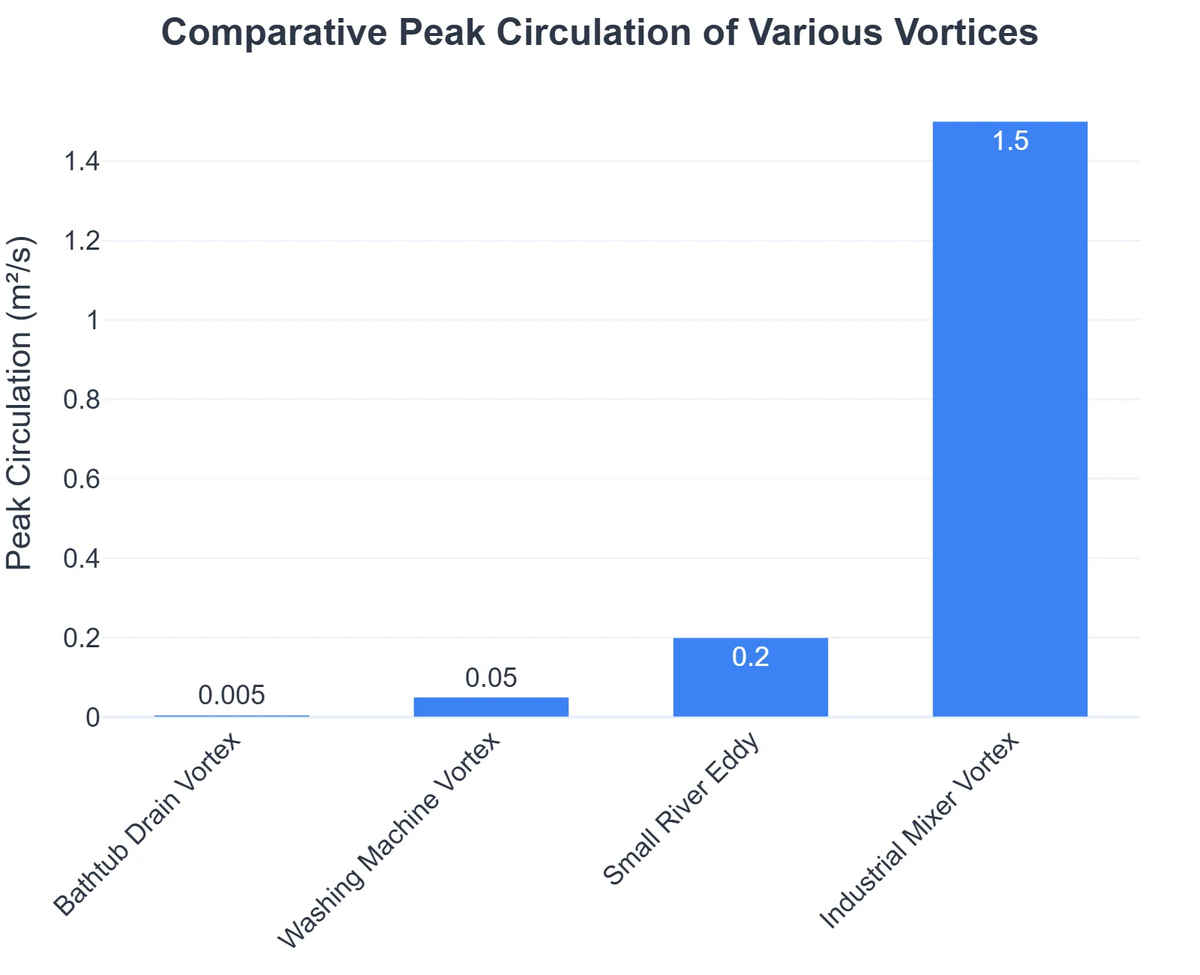
- Vortices are rotating regions of fluid that exhibit powerful, inward-pulling forces.
- The ‘black hole in water’ is an analogy highlighting the intense gravitational-like effects observed in strong vortices.
- Fluid dynamics is the study of how liquids and gases move, a field crucial for understanding natural phenomena and engineering applications.
- Understanding vortices is key to various applications, from designing efficient propellers to predicting weather patterns.
“The elegant complexity of fluid dynamics, particularly in understanding vortices, reveals how fundamental physical laws govern phenomena from the smallest eddy to the grandest galaxy, reminding us that the universe often echoes its own patterns in surprising ways.”
— Dr. Evelyn Reed, Professor of Theoretical Hydrodynamics
This article will unravel the science behind these captivating liquid spirals, known as vortices, and explore how they serve as tangible models for understanding complex cosmic events through the lens of fluid dynamics. Get ready to see your bathtub drain in a whole new light!
In This Article
- → Black Hole in Water: Understanding Vortices and Fluid Dynamics
- — 💡 Key Takeaways
- → What is a “Black Hole in Water”? The Analogy Explained
- → The Science of Vortices: Swirling Fluid Dynamics
- — ⚙️ Conditions for Formation
- — 🌀 Key Characteristics of a Vortex
- → How Vortices Form and Behave
- → Real-World Examples of Vortices
- → Analog Black Holes: Bridging Astrophysics and Fluid Mechanics
- → Applications and Research in Vortex Dynamics
- → Conclusion
What is a “Black Hole in Water”? The Analogy Explained
When scientists talk about a “black hole in water,” they are referring to what’s known as an analog black hole. This isn’t a miniature version of a star-devouring cosmic entity, but rather a system (often a fluid one) that exhibits properties mathematically analogous to those of a black hole’s event horizon.
- ✅ Event Horizon Mimicry: In an astrophysical black hole, the event horizon is the point of no return – anything crossing it (even light) cannot escape. In a fluid analog, a similar boundary can exist for waves (like water ripples or sound waves) where the flow of the fluid becomes faster than the wave’s propagation speed, effectively trapping the waves.
- ➡️ Testing Theories: These fluid systems provide a controlled, accessible environment to study phenomena that are otherwise impossible to observe directly in extreme gravitational fields. They allow researchers to test certain theoretical predictions about black holes, such as Hawking radiation (though in the form of sound or water waves).
- 💡 Focus on Flow: The analogy primarily focuses on the behavior of waves and particles interacting with a strong gravitational field, translated into how waves behave in a rapidly flowing fluid.
The Science of Vortices: Swirling Fluid Dynamics
At the heart of the “black hole in water” concept lies the fascinating phenomenon of vortices. A vortex is a region within a fluid where the flow revolves around an axis line, which may be straight or curved. This rotational motion is a fundamental aspect of fluid dynamics, governing everything from the drain in your sink to colossal hurricanes.
⚙️ Conditions for Formation
Vortices form when forces acting on a fluid cause it to rotate. Common triggers include:
- ➡️ Pressure Gradients: Differences in pressure can initiate swirling motion.
- 🔄 Shear Forces: When layers of fluid move at different speeds, they can create rotational tendencies.
- 💧 Draining Action: In the case of a bathtub or sink, the draining action creates a converging flow that intensifies pre-existing rotational motion in the water (often due to small disturbances or the Earth’s rotation).
🌀 Key Characteristics of a Vortex
Every vortex, whether massive or microscopic, shares certain defining features:
Understanding Water Vortices and Fluid Dynamics
Pros
- ✔Provides practical engineering applications (e.g., pump design, naval architecture).
- ✔Deepens fundamental scientific understanding of fluid behavior and turbulence.
- ✔Offers an accessible analogy for complex astrophysical concepts like black holes.
- ✔Serves as an effective educational tool for physics and engineering principles.
Cons
- ✖Fluid dynamics is inherently complex, making accurate prediction challenging.
- ✖Experimental study of vortices can be difficult to control and measure precisely.
- ✖The ‘black hole in water’ analogy can lead to conceptual misunderstandings if not carefully explained.
- ✖High computational resources are often required for detailed simulations.
- Central Core: The innermost region where the fluid spins fastest and pressure is lowest. This is often visible as a hollow funnel in water vortices due to the pressure drop.
- Rotational Flow: Fluid particles move in roughly circular paths around a central axis.
- Conservation of Angular Momentum: As fluid moves closer to the center of the vortex, its speed increases, similar to how an ice skater spins faster when pulling their arms in. This is a core principle in Basic Mechanical Principles: Understanding the Science of Motion.
How Vortices Form and Behave
Understanding the behavior of vortices is crucial to grasping their analogous relationship with black holes. Their formation is a common occurrence, driven by the inherent properties of fluids.
- 🌪️ Instability and Shear: Fluid flows are rarely perfectly smooth. Small disturbances or instabilities can amplify, leading to the formation of swirling patterns. When fluid layers move past each other at different speeds (shear), the friction between them can induce rotation.
- 📈 Intensification: Once a rotational motion begins, it can intensify as the fluid converges towards a central point. This is why draining water speeds up as it gets closer to the plug hole.
- 📐 Turbulence: Vortices are often components of turbulent flow, a complex fluid behavior characterized by chaotic and unpredictable changes in pressure and velocity.
Real-World Examples of Vortices
Vortices are everywhere, shaping our world in ways both subtle and dramatic:
- 🛁 Bathtub/Sink Drains: The classic example, a small whirlpool formed as water empties.
- 💨 Tornadoes and Hurricanes: Large-scale atmospheric vortices, driven by temperature and pressure differences, creating powerful and destructive weather systems.
- 🌊 Ocean Eddies and Whirlpools: Swirling currents in oceans and rivers that can transport heat, nutrients, and marine life.
- 🚬 Smoke Rings: A perfect example of a toroidal (doughnut-shaped) vortex, where the fluid rotates within the ring itself.
- ✈️ Wingtip Vortices: Airplanes create vortices at their wingtips, a side effect of lift generation, which can be hazardous to following aircraft.
Analog Black Holes: Bridging Astrophysics and Fluid Mechanics
The concept of an analog black hole moves beyond just observing vortices to actively creating fluid systems that mimic the physics of cosmic black holes. These are not merely observations but controlled experiments designed to shed light on some of the universe’s most enigmatic objects.
Scientists have successfully simulated black holes in water tanks by creating rapidly draining or flowing systems that form an “event horizon” for water waves. Beyond this point, water waves cannot propagate upstream against the overwhelming flow, much like light cannot escape a black hole once it crosses the event horizon. This allows for experimental investigation of phenomena like Hawking radiation, where the analogue involves sound or surface water waves instead of quantum particles.
For instance, researchers at the University of Nottingham have demonstrated how a vortex in a water tank can simulate the event horizon, providing a laboratory setting to study the complex interactions between waves and extreme gravitational fields. This research helps bridge the gap between theoretical astrophysics and practical experimentation. To delve deeper into such experiments, you can explore studies like “On the analogy between black holes and bathtub vortices” (Arxiv.org). Just as quantum mechanics presents counter-intuitive phenomena like Quantum Entanglement, fluid dynamics offers its own surprising parallels to cosmic events.
Applications and Research in Vortex Dynamics
The study of vortices and fluid dynamics is not merely an academic exercise; it has profound implications across various fields, from engineering to fundamental physics.
- 🧪 Engineering Design: Understanding vortex behavior is critical in designing more efficient aircraft wings (reducing drag), optimizing turbine blades (for power generation), and improving the flow in pipelines and pumps.
- ⛈️ Meteorology: Predicting the formation, intensity, and path of hurricanes and tornadoes relies heavily on advanced models of atmospheric vortex dynamics.
- 🌌 Fundamental Physics: Analog black holes provide a unique tabletop laboratory for testing gravitational theories, offering insights into the properties of space-time and quantum gravity without needing to observe distant, extreme cosmic events. As phys.org reported, “Scientists simulate a black hole in a water tank” (Phys.org), showcasing the experimental potential.
- 🔬 Biophysics: Vortices play roles in biological systems, such as blood flow in the heart or the swimming mechanisms of microorganisms.
Recommended Video
The “black hole in water” concept is a testament to the interconnectedness of science. It beautifully illustrates how fundamental principles of fluid dynamics, observable in our everyday lives, can unlock insights into the most mysterious phenomena of the cosmos. From a simple draining sink to groundbreaking laboratory experiments, the study of vortices continues to deepen our understanding of how the world really works.
The next time you see a swirling pattern in water, remember that you’re witnessing a universal phenomenon, one that offers a tangible window into the universe’s most profound secrets. For more fascinating insights into the science behind everyday occurrences, explore The Science of Everyday: How the World Really Works.
What is a vortex?
A vortex is a region within a fluid where the flow revolves around an axis line, which may be straight or curved. Examples include whirlpools, tornadoes, and even the spiral formed when water drains from a bathtub.
Why is a vortex sometimes called a ‘black hole in water’?
This analogy highlights the strong inward pull and destructive power of some vortices, similar to how a black hole’s immense gravity pulls everything towards its center. While not a true black hole, the visual and physical effects can be strikingly similar.
What is fluid dynamics?
Fluid dynamics is a branch of fluid mechanics that studies fluids (liquids and gases) in motion. It has numerous applications, including calculating forces and moments on aircraft, determining the mass flow rate of petroleum through pipelines, and predicting weather patterns.

