In the annals of space exploration, few endeavors capture the imagination quite like the ambitious projects born from the Cold War’s heated space race. Among these, the Buran spacecraft stands as a monumental, yet largely unfulfilled, testament to Soviet engineering prowess. Often referred to as the “Soviet space shuttle,” Buran was much more than a mere replica; it represented a distinct philosophical approach to reusable spaceflight.
💡 Key Takeaways
- The Buran was a highly sophisticated Soviet space shuttle, technically superior to the U.S. Space Shuttle in several aspects, including its uncrewed flight capability.
- Despite its advanced design and successful automated orbital flight in 1988, the Buran program was ultimately canceled due to geopolitical shifts and economic constraints.
- Only one Buran orbiter completed a space mission, and the destruction of this sole operational vehicle in 2002 left many questions unanswered regarding its full potential.
- Buran represents a significant, yet often overlooked, chapter in Cold War space race history, showcasing remarkable engineering prowess.
“The Buran wasn’t just a Soviet response; it was a parallel evolution in spaceplane design, demonstrating an autonomous capability that still feels like science fiction. Its brief flicker in the cosmos reminds us of alternate futures that could have been.”
— Astrid Bellweather, Astrophysicist & Science Fiction Consultant
This comprehensive guide delves into the enigmatic history of the Buran program, unraveling its origins, groundbreaking technologies, solitary flight, and the reasons behind its ultimate demise. Join us as we probe the mysteries of this remarkable vehicle, exploring its place in the broader context of the Cosmic Queries: Probing the Mysteries of the Universe that continue to fascinate us.
In This Article
- — 💡 Key Takeaways
- → The Dawn of the Soviet Shuttle Program
- — ➡️ Origins and Motivations
- — 💡 A Response to the Space Race
- → Engineering Marvel: Buran’s Design and Capabilities
- — ⚙️ Key Design Features
- — 🤖 Unmanned Flight and Automation
- — Compare & Contrast: Buran vs. American Shuttle
- → The Sole Flight: Buran’s Moment in History
- — 🗓️ Mission Details (November 15, 1988)
- — 🎯 Autonomy and Precision
- → The Unfulfilled Potential and Program’s Demise
- — 📉 Financial Strain and Political Shifts
- — 🤔 Legacy and What If?
- → Buran’s Impact on Space Exploration and Technology
- — 🚀 Technological Advancements
- — ⭐ A Symbol of Ambition
- → Conclusion
The Dawn of the Soviet Shuttle Program
The genesis of the Buran program was deeply intertwined with the geopolitical tensions and technological one-upmanship of the Cold War. As the United States embarked on its Space Shuttle Program, the Soviet Union felt compelled to develop a comparable, if not superior, reusable space transportation system.
➡️ Origins and Motivations
- ✅ Strategic Parity: The primary driver was to match the perceived military and strategic capabilities of the U.S. Space Shuttle, which was initially envisioned for a range of missions, including satellite deployment and potential military applications.
- ✅ Technological Advancement: Beyond military considerations, the program aimed to push the boundaries of Soviet aerospace engineering, fostering innovation in materials science, propulsion, and automated flight systems.
- ✅ Economic Efficiency (Theoretical): Like its American counterpart, Buran was conceived to reduce the cost of space access through reusability, though this promise was ultimately elusive for both programs.
💡 A Response to the Space Race
By the mid-1970s, the conceptual design work had begun in earnest. The Soviet leadership was acutely aware that falling behind in critical space technologies could have significant political and military ramifications. This intense pressure fueled the rapid development of what would become the Buran system, a crucial chapter in the Soviet space program.
Engineering Marvel: Buran’s Design and Capabilities
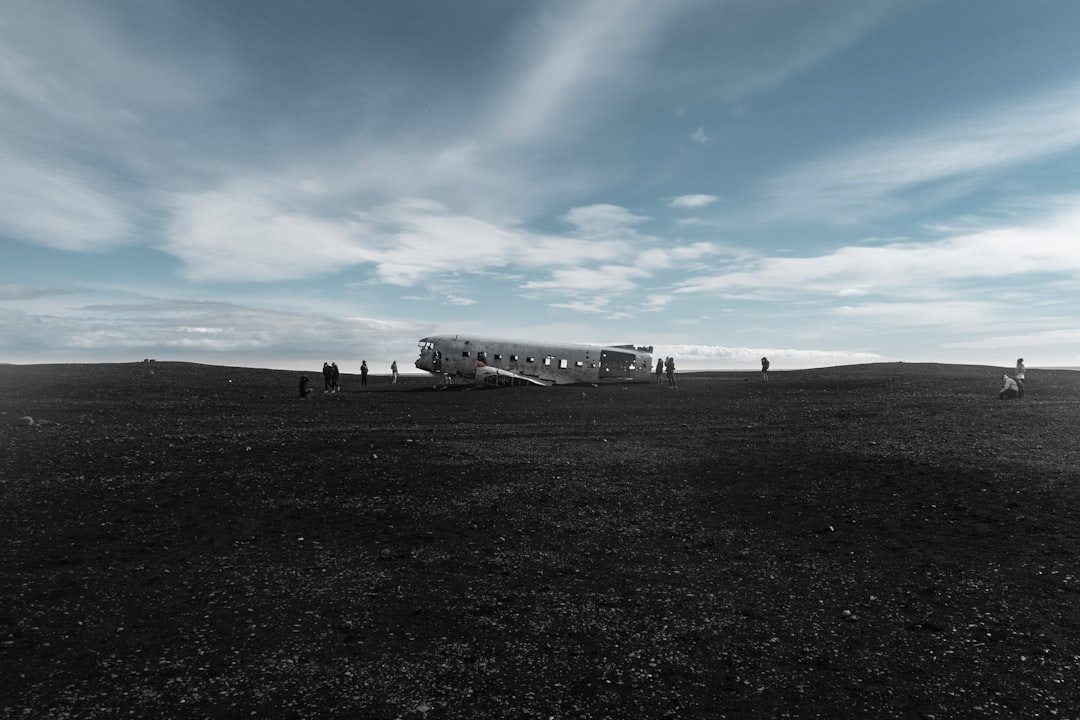
While externally similar to NASA’s Space Shuttle, the Buran was fundamentally different in its operational philosophy and several key design aspects. These distinctions highlight the Soviet Union’s independent engineering approach.
Buran Spacecraft: Advantages and Disadvantages
Pros
- ✔Achieved a fully automated, uncrewed orbital flight and precise landing.
- ✔Featured a robust and potentially more durable design than its U.S. counterpart.
- ✔Designed for high payload capacity and versatility for various missions.
- ✔Demonstrated significant Soviet technological prowess in reusable spacecraft.
Cons
- ✖Incurred astronomical development and operational costs.
- ✖Only completed one uncrewed orbital flight before program cancellation.
- ✖Ultimately became obsolete due to the collapse of the Soviet Union.
- ✖The sole flight-rated orbiter was destroyed in a hangar collapse, sealing its fate.
⚙️ Key Design Features
- ✅ Unpowered Glider: Unlike the U.S. Space Shuttle, which used its main engines during ascent, Buran was designed as a pure glider during its return to Earth. Its engines were only for orbital maneuvers.
- ✅ External Propulsion: Buran was launched atop the powerful Energia super heavy-lift rocket, which provided all the thrust for ascent. This meant the orbiter itself did not need massive main engines, freeing up valuable payload capacity.
- ✅ Robust Thermal Protection: Comprised of over 38,000 heat-resistant tiles, Buran’s thermal protection system was crucial for surviving reentry, designed to withstand extreme temperatures.
🤖 Unmanned Flight and Automation
Perhaps Buran’s most distinctive capability was its full automation. The vehicle was designed to perform entire missions, from launch to landing, without any human input. This was a direct contrast to the U.S. Space Shuttle, which always required a crew for operational control.
This capability was demonstrated spectacularly during its only flight, showcasing an advanced level of autonomous control that was cutting-edge for its time. For a look at more contemporary uncrewed spaceplane technologies, consider the insights from the Boeing X-37 program.
Compare & Contrast: Buran vs. American Shuttle
While superficially similar, the differences were profound:
- ➡️ Propulsion: Buran relied entirely on the Energia rocket for launch thrust; the U.S. Shuttle used its own main engines alongside solid rocket boosters.
- ➡️ Crew Autonomy: Buran was fully capable of autonomous flight; the U.S. Shuttle required human pilots.
- ➡️ Orbiter Design: Buran was more robust and could carry a larger payload relative to its size due to the lack of large main engines.
- ➡️ Emergency Escape: The Buran program planned for crew escape systems in early flight phases, a feature largely absent from the U.S. Shuttle.
The Sole Flight: Buran’s Moment in History
Despite years of intensive development and significant investment, the Buran spacecraft completed only a single orbital mission. This solitary flight, however, was a resounding success and a powerful demonstration of Soviet technological prowess.
🗓️ Mission Details (November 15, 1988)
On November 15, 1988, the unmanned Buran 1.01, carrying no crew, lifted off from Baikonur Cosmodrome atop the Energia rocket. The mission’s objectives were primarily to test the orbiter’s flight characteristics, thermal protection system, and, crucially, its automated landing capabilities.
- ✅ Duration: The flight lasted for 3 hours and 25 minutes.
- ✅ Orbits: Buran completed two orbits around the Earth.
- ✅ Automated Landing: The most remarkable feat was its fully automatic return and landing on a specially constructed runway at Baikonur, in crosswinds that would have challenged a human pilot.
🎯 Autonomy and Precision
The precision of Buran’s automated landing astonished observers worldwide. It landed within a few meters of the centerline, a testament to the sophistication of its onboard navigation and control systems. This achievement validated the Soviet approach to autonomous spaceflight and underscored the technical skill of the engineers involved in the Soviet space program.
The Unfulfilled Potential and Program’s Demise
Despite the resounding success of its maiden flight, the Buran program faced insurmountable challenges that ultimately led to its cancellation. Its unfulfilled potential remains one of the greatest “what ifs” in space history.
📉 Financial Strain and Political Shifts
The primary reason for Buran’s demise was the severe economic downturn and political instability plaguing the Soviet Union in the late 1980s and early 1990s. The program was incredibly expensive, consuming vast resources that the failing Soviet economy could no longer sustain.
- ➡️ Budgetary Constraints: The cost of developing, building, and operating the Buran system was astronomical, diverting funds from other critical areas.
- ➡️ End of the Cold War: With the dissolution of the Soviet Union in 1991, the primary strategic imperative—to counter the U.S. Space Shuttle—vanished. The immediate need for such a costly system diminished significantly.
- ➡️ Lack of Clear Mission: Beyond mirroring the U.S. program, a definitive and sustained mission profile for Buran was not fully established, making it difficult to justify its continued existence amidst budget crises.
This period saw significant changes across the entire former Soviet space infrastructure, impacting programs and personnel alike, including those of the Russian Cosmonaut Program: A Legacy of Pioneers.
🤔 Legacy and What If?
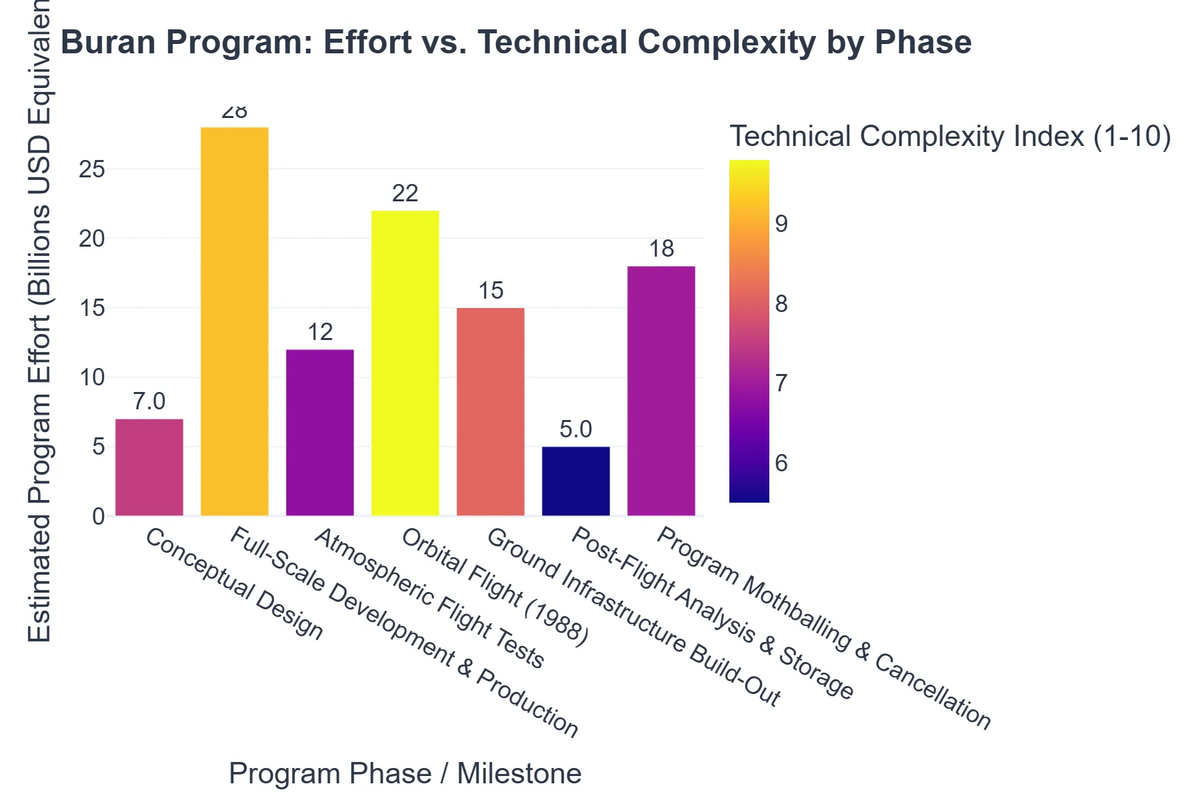
The cancellation of the Buran program in 1993 left several orbiters incomplete and the single flown vehicle, Buran 1.01, tragically destroyed years later in a hangar collapse in 2002. Its legacy is thus one of immense achievement shadowed by an untimely end.
- 💡 Unrealized Potential: Had the political and economic climate been different, Buran could have been a formidable workhorse for the Soviet space program, potentially expanding human presence in orbit and undertaking ambitious scientific missions.
- 💡 A Cautionary Tale: The Buran story serves as a reminder that even the most advanced technological feats are vulnerable to geopolitical shifts and economic realities.
Buran’s Impact on Space Exploration and Technology
Despite its brief operational life, the Buran spacecraft left an indelible mark on the history of space exploration. Its development pushed the boundaries of engineering, contributing valuable insights and technologies that continue to resonate today.
🚀 Technological Advancements
The Buran program spurred innovations across numerous fields:
- ✅ Advanced Automation: The fully automated flight and landing demonstrated a level of robotic control unprecedented for large spacecraft, influencing later autonomous systems.
- ✅ Materials Science: Development of new high-temperature resistant materials and thermal protection systems.
- ✅ Aerodynamics: Extensive research into hypersonic flight and re-entry dynamics informed future aerospace designs.
- ✅ Energia Rocket: The development of the Energia rocket itself, a versatile heavy-lift launcher, proved the Soviet Union’s capability to build rockets comparable to the Saturn V.
⭐ A Symbol of Ambition
Beyond its technical merits, Buran remains a powerful symbol of the Soviet Union’s scientific and engineering ambition. It showcased a determination to compete at the highest levels of space technology, even in the face of significant challenges. Its story continues to inspire fascination and debate among space enthusiasts and historians.
The engineering challenges overcome by programs like Buran are similar in scope to those faced by other Soviet projects, such as the less-known TKS Spacecraft: The Soviet Union’s Unsung Spacecraft, which also contributed to the rich tapestry of the Soviet space program.
Recommended Video
Conclusion
The Buran spacecraft is a captivating enigma in the history of spaceflight. A marvel of engineering that successfully completed a fully automated orbital flight and landing, it represented the pinnacle of Soviet reusable spacecraft technology. Yet, its story is also one of unfulfilled potential, a grand vision curtailed by the collapse of an empire and shifting geopolitical landscapes.
While only one Buran ever flew, its legacy is undeniable. It pushed the boundaries of automated flight, inspired a generation of engineers, and solidified its place as a unique and formidable competitor in the fierce space race. The mystery of the Soviet shuttle, though largely resolved in its technical capabilities, endures in the haunting question of what might have been.
Frequently Asked Questions
What was the Buran spacecraft?
The Buran spacecraft was the Soviet Union’s reusable spaceplane, developed in response to the U.S. Space Shuttle program. It was designed for orbital flights, capable of carrying both crew and cargo.
How many times did Buran fly into space?
The Buran orbiter only completed one uncrewed orbital flight, which occurred on November 15, 1988. It performed flawlessly, including an automated landing.
Why was the Buran program canceled?
The Buran program was canceled primarily due to the dissolution of the Soviet Union, leading to severe economic difficulties and a shift in geopolitical priorities that made the costly program unsustainable.
Is the Buran spacecraft still intact today?
Unfortunately, the only space-flown Buran orbiter was destroyed in 2002 when the hangar roof it was stored in at the Baikonur Cosmodrome collapsed. Other test articles and incomplete orbiters exist in various locations.