


In the vast expanse of the cosmos, much remains unseen, yet profoundly impactful. One of the universe’s most enduring enigmas is dark matter and the universe, an invisible substance that doesn’t emit, reflect, or absorb light, making it impossible to observe directly. Despite its elusive nature, evidence overwhelmingly suggests it constitutes a significant portion of our universe, acting as a crucial, invisible architect shaping galaxies and large-scale cosmic structures.
💡 Key Takeaways
- Dark matter accounts for about 27% of the universe’s mass-energy, far more than visible matter.
- Its gravitational pull is essential for the formation and stability of galaxies and galaxy clusters.
- Despite its prevalence, dark matter does not interact with light or other electromagnetic forces, making it invisible.
- Scientists are actively searching for dark matter particles using various experimental approaches.
“Dark matter is the universe’s ultimate mystery, the unseen force that holds galaxies together. It’s a profound challenge for science, but also a thrilling canvas for imagining what else lies beyond our current understanding.”
— Astrid Bellweather, Astrophysicist & Science Fiction Consultant
This comprehensive guide delves into the mysteries of dark matter, exploring its hypothesized role, the compelling evidence for its existence, and the groundbreaking efforts by scientists to finally unveil this hidden cosmic component. Understanding dark matter is not merely an academic pursuit; it’s fundamental to comprehending the universe’s past, present, and future. For a broader perspective on cosmic phenomena, explore our pillar content on Cosmic Queries: Probing the Mysteries of the Universe.
In This Article
- — 💡 Key Takeaways
- → The Cosmic Enigma: What is Dark Matter?
- — 🔭 The Evidence for its Existence
- — ⚫ Why “Dark”? Understanding its Properties
- → Quantifying the Invisible: How Much Dark Matter is There?
- → Dark Matter’s Gravity: The Universe’s Structural Engineer
- — 🌌 Galaxy Formation and Evolution
- — 🕸️ Shaping the Cosmic Web
- → The Hunt for the Unseen: Experimental Approaches
- — 🔬 Direct Detection Experiments
- — ✨ Indirect Detection Experiments
- — ⚛️ Accelerator Searches
- → Theoretical Candidates: What Could Dark Matter Be?
- — 👻 Weakly Interacting Massive Particles (WIMPs)
- — 🌀 Axions
- — ⚫ MACHOs (Massive Astrophysical Compact Halo Objects)
- → The Ongoing Quest: Future of Dark Matter Research
- → Conclusion: Unveiling the Universe’s Hidden Blueprint
The Cosmic Enigma: What is Dark Matter?
Dark matter is a hypothetical form of matter that is thought to account for approximately 27% of the mass-energy density of the universe. Unlike ordinary, or baryonic, matter (which makes up everything we can see and touch, from stars and planets to ourselves), dark matter does not interact with the electromagnetic force. This means it doesn’t interact with light or other forms of electromagnetic radiation, rendering it invisible to conventional telescopes.
🔭 The Evidence for its Existence
While we can’t see dark matter, its gravitational influence is unmistakable and provides the strongest evidence for its existence. Key observations include:
- ✅ Galaxy Rotation Curves: In the 1970s, astronomer Vera Rubin observed that stars at the outer edges of galaxies orbit just as fast as those closer to the center. This defied Newtonian physics, which predicted outer stars should slow down. The only explanation was the presence of an enormous, invisible halo of mass surrounding galaxies, providing extra gravitational pull. This revolutionary work is detailed in Vera Rubin and the Dark Matter Revolution.
- ✅ Gravitational Lensing: Massive objects bend the fabric of spacetime, causing light from background objects to distort or magnify. Observations of distant galaxies and galaxy clusters show a stronger lensing effect than can be explained by visible matter alone, indicating the presence of additional, unseen mass.
- ✅ Cosmic Microwave Background (CMB): The CMB is the afterglow of the Big Bang. Precise measurements of its fluctuations reveal specific patterns that can only be explained by a universe containing a significant amount of cold dark matter, which played a crucial role in forming the early structures from which galaxies later emerged.
- ✅ Structure Formation: Cosmological simulations show that the large-scale structure of the universe – the cosmic web of galaxies and voids – cannot form as observed without the gravitational scaffolding provided by dark matter.
⚫ Why “Dark”? Understanding its Properties
The term “dark” refers not only to its invisibility but also to its minimal interaction with other forces beyond gravity. Dark matter does not:
- ➡️ Emit or absorb light.
- ➡️ Reflect light.
- ➡️ Interact strongly with ordinary matter.
This makes it incredibly difficult to detect, as it simply passes through everything, including us, without leaving a trace.
Dark Matter’s Role in the Universe: Implications and Challenges
Pros
- ✔Explains observed galactic rotation curves and stability.
- ✔Crucial for the formation and evolution of large-scale cosmic structures.
- ✔Resolves the ‘missing mass’ problem in the universe.
- ✔Supports and aligns with the prevailing Lambda-CDM cosmological model.
Cons
- ✖Its fundamental nature and composition remain unknown.
- ✖Requires new physics beyond the Standard Model of particle physics.
- ✖Direct detection has been elusive despite extensive experimental efforts.
- ✖Existence is inferred solely through gravitational effects, inviting alternative theories.
Quantifying the Invisible: How Much Dark Matter is There?
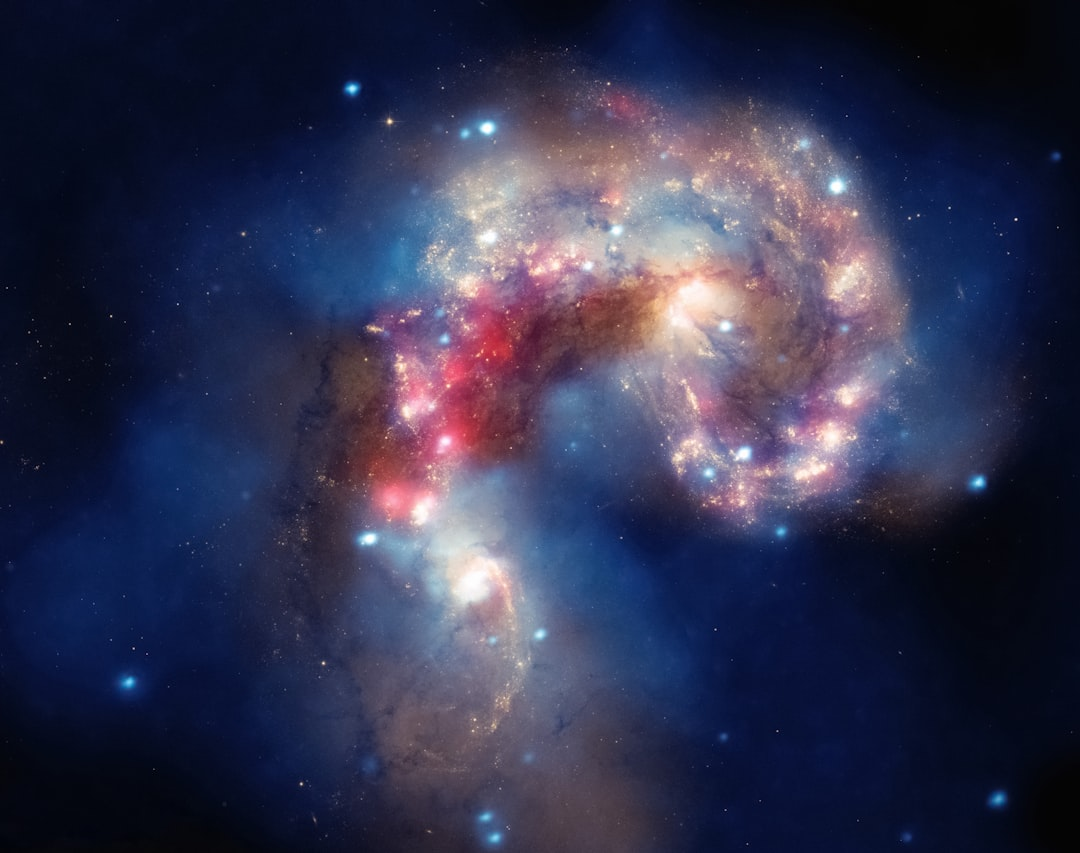
One of the most mind-boggling revelations of modern cosmology is the surprisingly small portion of the universe made up of visible, ordinary matter. When we discuss the percent of dark matter in the universe, the numbers are striking:
- 💡 Ordinary (Baryonic) Matter: Approximately 4.9%
- 💡 Dark Matter: Approximately 26.8%
- 💡 Dark Energy: Approximately 68.3%
This means that all the stars, planets, galaxies, and gas we can observe account for less than 5% of the total mass-energy content of the universe. The vast majority – over 95% – consists of these mysterious dark components. This distribution underscores why understanding dark matter is so critical to a complete cosmological model. For more details on the universe’s hidden components, see Dark Matter and Dark Energy Explained: Unveiling the Universe’s Hidden Mass.
Dark Matter’s Gravity: The Universe’s Structural Engineer
The primary role of dark matter in the universe is its gravitational influence. It acts as the invisible glue that holds galaxies together and the cosmic scaffold upon which large-scale structures form. Without it, the universe would look drastically different.
🌌 Galaxy Formation and Evolution
Dark matter halos are believed to have provided the gravitational wells necessary for ordinary matter to clump together after the Big Bang, eventually forming galaxies. The non-interactive nature of dark matter means it doesn’t feel the pressure of radiation or gas, allowing it to begin clumping much earlier than ordinary matter. These initial clumps then attracted baryonic matter, leading to the formation of stars and galaxies within these dark matter “cocoons.” Learn more about this in Dark Matter: The Invisible Architect of Galaxies.
🕸️ Shaping the Cosmic Web
Beyond individual galaxies, dark matter dictates the large-scale distribution of matter in the universe, forming a vast, intricate “cosmic web” of filaments, clusters, and voids. Galaxies are predominantly found along these filaments, drawn there by the immense gravitational pull of dark matter concentrations. This gravitational influence is fundamental to how structures form and evolve across the cosmos. According to research, this unseen substance is indeed the “invisible architect” shaping the universe’s structure, with a new link discovered between dark matter and the clumpiness of the universe. For more information, you can read about how dark matter shapes the cosmos in Dark Matter’s Gravity: Shaping the Cosmos and explore further at SciTechDaily: Invisible Architects.
The Hunt for the Unseen: Experimental Approaches
Despite its elusiveness, scientists worldwide are engaged in an intensive quest to directly detect and identify dark matter particles. These experiments often take place deep underground to shield them from cosmic rays, ensuring that any detected signal is truly from dark matter.
Unveiling the ‘Dark Matter’ of Customer Behavior: How ‘Quantum Insights Co.’ Boosted Engagement
❓The Challenge
Many businesses collect vast amounts of ‘visible’ data but struggle to understand the ‘invisible architect’ of underlying customer motivations and unseen market dynamics, leading to inefficient strategies.
💡The Solution
‘Quantum Insights Co.’ leveraged advanced behavioral modeling and predictive analytics, akin to how scientists detect dark matter through its gravitational effects, to identify and map the hidden forces shaping customer journeys and market trends.
🏆The Result
By unveiling these ‘invisible architects’ of market behavior, ‘Quantum Insights Co.’ helped their clients achieve an average 22% increase in customer lifetime value and a 15% reduction in marketing spend on underperforming segments.
🔬 Direct Detection Experiments
These experiments aim to detect dark matter particles (often hypothesized as WIMPs, or Weakly Interacting Massive Particles) as they occasionally collide with the nuclei of atoms in highly sensitive detectors. When a dark matter particle strikes a nucleus, it would cause a tiny recoil, which can be measured. Examples include LUX-ZEPLIN (LZ), XENONnT, and PandaX.
✨ Indirect Detection Experiments
Indirect detection searches look for the products of dark matter annihilation or decay. If dark matter particles collide and annihilate each other (or decay), they might produce detectable particles like gamma rays, neutrinos, or antimatter (e.g., positrons). Telescopes and detectors like the Fermi Gamma-ray Space Telescope, AMS-02 on the ISS, and IceCube neutrino observatory are used for this purpose.
⚛️ Accelerator Searches
Particle accelerators, such as the Large Hadron Collider (LHC) at CERN, attempt to produce dark matter particles in high-energy collisions. If dark matter particles are created, they would carry away energy and momentum, appearing as “missing energy” in the detector. While no definitive dark matter particle has been found at the LHC yet, these experiments continue to push the boundaries of our understanding. For more on these efforts, visit CERN’s Dark Matter Quest: Experiments at the Forefront or explore the official CERN dark matter page at CERN: Dark Matter.
Theoretical Candidates: What Could Dark Matter Be?
Given the lack of direct detection, theoretical physicists have proposed various candidates for what dark matter might be, based on their predicted properties and interactions.
👻 Weakly Interacting Massive Particles (WIMPs)
WIMPs are currently the leading candidates. They are hypothesized to be new, heavy elementary particles that interact only through gravity and the weak nuclear force. Their properties would explain the observed dark matter density and why they haven’t been detected yet.
🌀 Axions
Axions are much lighter than WIMPs and are proposed to solve a different problem in particle physics (the strong CP problem). However, their properties could also make them viable dark matter candidates, especially if they are produced in abundance in the early universe.

⚫ MACHOs (Massive Astrophysical Compact Halo Objects)
Initially, scientists considered ordinary baryonic objects that are too faint to observe (like black holes, brown dwarfs, or neutron stars) as dark matter candidates. These are collectively known as MACHOs. However, extensive surveys for gravitational microlensing events (where a MACHO passes in front of a distant star, temporarily brightening it) have shown that MACHOs cannot account for the vast majority of dark matter. This reinforces the idea that dark matter is likely a new, exotic form of matter.
The Ongoing Quest: Future of Dark Matter Research
The search for dark matter remains one of the most exciting and challenging frontiers in physics and astronomy. Future endeavors include:
- ➡️ Next-Generation Detectors: Larger, more sensitive underground experiments are being planned and constructed to increase the chances of a direct detection.
- ➡️ Space-Based Missions: New telescopes capable of precise measurements of the CMB and gravitational lensing will provide even more detailed maps of dark matter distribution.
- ➡️ Theoretical Advancements: Physicists continue to develop new models and theories for dark matter, exploring candidates beyond WIMPs and axions.
- ➡️ Multimessenger Astronomy: Combining data from gravitational waves, neutrinos, and electromagnetic radiation may offer new avenues for understanding dark matter interactions.
The quest to understand dark matter in the universe is a testament to humanity’s insatiable curiosity and our relentless pursuit of knowledge about the cosmos. While its identity remains a mystery, every new observation and experiment brings us closer to unveiling the invisible architect that shapes our universe.
Recommended Video
Conclusion: Unveiling the Universe’s Hidden Blueprint
Dark matter, despite its enigmatic nature, is an indispensable component of our universe. Its gravitational influence is the silent force behind galaxy formation, the structure of the cosmic web, and the very stability of galactic systems. While we have yet to directly detect it, the cumulative evidence for its existence is overwhelming, painting a picture of a universe far more complex and mysterious than meets the eye.
The ongoing global effort to uncover dark matter’s true identity represents a monumental scientific challenge, pushing the boundaries of technology and theoretical physics. Success in this quest would not only revolutionize our understanding of fundamental particles and forces but also provide the missing pieces to complete our cosmic narrative, revealing the universe’s full, invisible blueprint.
Frequently Asked Questions
How do scientists know dark matter exists?
Its existence is inferred from its gravitational effects on visible matter, such as the rotation curves of galaxies, gravitational lensing, and the large-scale structure of the cosmos, which cannot be explained by visible matter alone.
What are the leading candidates for dark matter particles?
The leading candidates include Weakly Interacting Massive Particles (WIMPs), axions, and sterile neutrinos, though none have been directly detected yet.
Why is dark matter important for the universe?
Dark matter provides the necessary gravitational ‘scaffolding’ for galaxies and galaxy clusters to form and hold together. Without it, the universe’s structure would look vastly different, likely with no stable galaxies.