


Future Innovations: Exploring Promising Technologies
We stand at the precipice of an unprecedented era, where the pace of change is accelerating, and the lines between science fiction and reality are blurring. The landscape of tomorrow is being meticulously crafted today by breakthroughs across diverse fields. Understanding these future innovations isn’t just about curiosity; it’s about preparing for a world profoundly reshaped by these advancements.
💡 Key Takeaways
- Explore the forefront of AI, biotechnology, and sustainable energy advancements.
- Understand how these innovations are poised to reshape industries and daily life.
- Learn about the ethical considerations and societal impacts of emerging technologies.
- Identify key trends driving the next wave of global technological transformation.
“The true measure of future innovation isn’t just what we can build, but how responsibly and equitably we integrate it into society. AI ethics will define our progress.”
— Kira Chen, Futurist & AI Ethics Advocate
From the microscopic realm of genetic engineering to the vast expanse of space, technological breakthroughs are promising solutions to humanity’s most pressing challenges while also introducing new considerations. This comprehensive guide will navigate the most promising technologies poised to define our future, offering insights into their potential impact and the journey ahead.
In This Article
- → Future Innovations: Exploring Promising Technologies
- — 💡 Key Takeaways
- → The Dawn of a New Era: Key Technological Frontiers
- — 🧠 Artificial Intelligence and Machine Learning
- — ⚛️ Quantum Computing
- — 🧬 Biotechnology and Gene Editing
- → Reshaping Industries: Sector-Specific Transformations
- — ☀️ Sustainable Energy Solutions
- — 🤖 Advanced Robotics and Automation
- — 🌐 Immersive Technologies: AR, VR, and the Metaverse
- → Exploring the Cosmos: Future Missions and Space Exploration
- — 🚀 Next-Generation Space Travel
- — 🪐 Planetary Colonization and Resource Utilization
- — 🛰️ International Collaboration and India’s Role (ISRO)
- → Ethical Considerations and Societal Impact of Innovations
- — 🔒 Privacy and Data Security
- — ⚖️ Job Displacement vs. Creation
- — 🌍 Ensuring Equitable Access
- → Charting the Course: Preparing for Tomorrow’s Technology
- — 🤝 Fostering Innovation Ecosystems
- — 📚 Lifelong Learning and Adaptability
- → Conclusion
The Dawn of a New Era: Key Technological Frontiers

At the heart of tomorrow’s world lie foundational technologies that are not only evolving rapidly but also converging to create synergistic effects. These are the engines driving transformative change across every sector imaginable.
🧠 Artificial Intelligence and Machine Learning
Artificial Intelligence (AI) and Machine Learning (ML) are no longer abstract concepts; they are integral to modern life, powering everything from recommendation engines to complex diagnostic tools. The next wave of innovation promises even more sophisticated capabilities.
- ✅ Advanced Algorithms: Expect AI systems that can learn with less data, adapt more flexibly, and perform more nuanced tasks.
- ➡️ Generative AI: Beyond understanding, AI is now creating. This includes sophisticated text, images, and even code, pushing the boundaries of creativity and automation.
- 💡 Natural Language Processing (NLP) Future: The evolution of NLP future promises truly conversational AI, capable of understanding context, emotion, and intent, leading to more human-like interactions and advanced translation services.
⚛️ Quantum Computing
While still in its nascent stages, quantum computing holds the potential to solve problems currently intractable for even the most powerful supercomputers. Its unique approach to processing information could unlock solutions in fields ranging from medicine to cryptography.
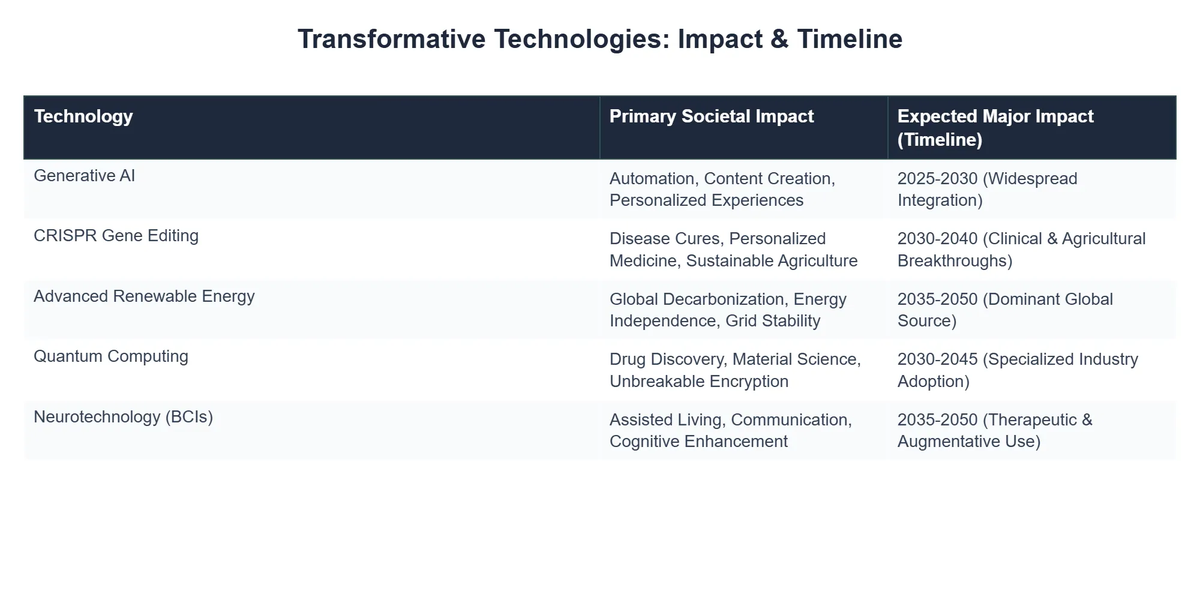
- ✅ Drug Discovery: Simulating molecular interactions at a quantum level could revolutionize drug development, leading to faster creation of new medicines.
- ➡️ Materials Science: Designing novel materials with unprecedented properties, from superconductors to highly efficient catalysts.
- 💡 Enhanced Security: While posing a threat to current encryption, quantum cryptography could also offer unbreakable communication channels.
🧬 Biotechnology and Gene Editing
Innovations in biotechnology, particularly gene editing technologies like CRISPR, are enabling unprecedented control over biological systems. This power comes with immense promise and significant ethical considerations.
- ✅ Personalized Medicine: Tailoring treatments based on an individual’s genetic makeup, leading to more effective therapies for diseases like cancer.
- ➡️ Disease Eradication: Potential to correct genetic defects responsible for inherited diseases, and even to engineer resistance to infectious diseases.
- 💡 Sustainable Agriculture: Developing crops with enhanced yield, disease resistance, and nutritional value.
Reshaping Industries: Sector-Specific Transformations
The impact of these overarching technologies ripples through every industry, catalyzing sector-specific transformations that redefine how we live, work, and interact with the world.
☀️ Sustainable Energy Solutions
The global imperative for clean energy is driving rapid innovation in how we generate, store, and consume power. These advancements are critical for combating climate change and ensuring a sustainable future.
- ✅ Advanced Renewables: Beyond traditional solar and wind, innovations include concentrated solar power, advanced geothermal, and tidal energy.
- ➡️ Next-Gen Batteries: Developments in solid-state batteries, flow batteries, and other storage solutions are crucial for grid stability and electric vehicle adoption.
- 💡 Nuclear Fusion Research: While challenging, the pursuit of clean, virtually limitless fusion energy continues to be a high-impact, long-term goal.
🤖 Advanced Robotics and Automation
Robotics is moving beyond factory floors into our daily lives, transforming industries from healthcare to logistics. These advancements are making processes more efficient, safer, and often more precise. To understand the foundational aspects, delve into Robotics: Exploring Types, Applications, and Future Trends.
- ✅ Collaborative Robots (Cobots): Designed to work safely alongside humans, boosting productivity in manufacturing and services.
- ➡️ Autonomous Systems: Self-driving vehicles, drones for delivery and inspection, and automated warehousing systems.
- 💡 Service Robotics: Robots for domestic tasks, elder care, and intricate surgical procedures are becoming increasingly sophisticated.
🌐 Immersive Technologies: AR, VR, and the Metaverse
Augmented Reality (AR), Virtual Reality (VR), and the nascent concept of the Metaverse are poised to redefine how we interact with digital content and each other. For a comprehensive look at the underlying infrastructure, explore Future Internet Technology: Exploring Web3 and Beyond.
- ✅ Enhanced Training & Education: Immersive simulations for surgery, flight training, and complex machinery operation.
- ➡️ Remote Work & Collaboration: Virtual meeting spaces that feel more engaging and personal than traditional video calls.
- 💡 Entertainment & Social Experiences: New forms of gaming, virtual concerts, and digital social gatherings that push the boundaries of interaction.
Exploring the Cosmos: Future Missions and Space Exploration
Space exploration remains a frontier of incredible innovation, driven by ambitious future missions and technological leaps. Humanity’s quest to understand and potentially colonize beyond Earth is accelerating.
🚀 Next-Generation Space Travel
The development of reusable rockets and advanced propulsion systems is dramatically lowering the cost of access to space, opening up new possibilities for exploration and commercial ventures. The groundbreaking advancements in Starship Technology: The Future of Space Exploration are particularly noteworthy here.
- ✅ Reusable Launch Systems: Dramatically reducing the cost per launch, making space more accessible for research, tourism, and industry.
- ➡️ Advanced Propulsion: Research into nuclear thermal propulsion, electric propulsion, and even warp drive concepts aims to shorten travel times to distant celestial bodies.
- 💡 Space Habitats: Development of self-sustaining modules and stations for long-duration stays in Earth orbit and beyond.
🪐 Planetary Colonization and Resource Utilization
The long-term vision for space exploration includes establishing permanent human outposts on other celestial bodies and utilizing their resources to sustain future missions.
- ✅ Moon & Mars Bases: Plans are underway to establish sustained human presence, serving as stepping stones for deeper space exploration.
- ➡️ Asteroid Mining: Tapping into the vast mineral resources of asteroids to supply future space ventures, reducing reliance on Earth-bound resources.
- 💡 In-Situ Resource Utilization (ISRU): Techniques to extract and use resources found on other planets (e.g., water ice on Mars) to produce fuel, oxygen, and building materials.
🛰️ International Collaboration and India’s Role (ISRO)
Space exploration is increasingly a collaborative effort, with nations pooling resources and expertise for grander goals. India’s space agency, ISRO, is a pivotal player in this global endeavor.
- ✅ ISRO Future Missions: India’s space agency, ISRO, continues its ambitious trajectory with planned missions including Gaganyaan (human spaceflight), Chandrayaan-4 (lunar exploration), and potential future interplanetary missions beyond Mars and Venus.
- ➡️ Future Missions to Venus: While challenging, the exploration of Venus remains a scientific priority due to its extreme environment and potential to yield insights into planetary evolution. Several nations, including India with its Shukrayaan-1 mission, have proposals for future missions to Venus.
- 💡 Global Partnerships: Collaborations between agencies like NASA, ESA, Roscosmos, JAXA, and ISRO are crucial for complex missions like the International Space Station and future lunar gateways.
Ethical Considerations and Societal Impact of Innovations
As we embrace these powerful technological breakthroughs, it’s crucial to address the ethical dilemmas and societal shifts they inevitably bring. Innovation must be guided by responsibility.
Future Innovations: Advantages and Challenges
Pros
- ✔Potential to solve complex global challenges (e.g., health, environment).
- ✔Drives economic growth and creates new industries and jobs.
- ✔Enhances human capabilities and improves overall quality of life.
- ✔Fosters continuous scientific and technological advancement.
Cons
- ✖Potential for job displacement due to increased automation.
- ✖Raises complex ethical and societal dilemmas (e.g., privacy, bias).
- ✖Risk of widening social and economic inequalities.
- ✖Unforeseen negative consequences or potential for misuse.
🔒 Privacy and Data Security
The proliferation of interconnected devices and AI systems generates unprecedented amounts of data, raising concerns about privacy, surveillance, and data breaches.
- ✅ Robust Regulations: The need for clear, enforceable global regulations to protect individual data rights.
- ➡️ Secure Architectures: Developing inherently secure systems that prioritize privacy-by-design and employ advanced encryption.
- 💡 Digital Identity Management: Empowering individuals with greater control over their digital footprint and online identities.
⚖️ Job Displacement vs. Creation
Automation and AI will undoubtedly change the nature of work, leading to concerns about job losses in some sectors while creating new opportunities in others.
- ✅ Reskilling Initiatives: Investing in education and training programs to equip the workforce with skills relevant to the new economy.
- ➡️ New Industry Growth: Anticipating and fostering the growth of entirely new industries and job roles that emerge from technological advancements.
- 💡 Human-AI Collaboration: Focusing on how AI can augment human capabilities rather than simply replace them, leading to hybrid job roles.
🌍 Ensuring Equitable Access
The benefits of future innovations must be broadly accessible to avoid exacerbating existing inequalities and creating new digital divides.
- ✅ Infrastructure Development: Ensuring access to high-speed internet and necessary hardware in underserved regions globally.
- ➡️ Affordable Technology: Policies and innovations aimed at making advanced technologies affordable and accessible to all socio-economic strata.
- 💡 Inclusive Design: Designing technologies that are intuitive, adaptable, and usable by people of all abilities and backgrounds. According to an article from Simplilearn, staying abreast of these trends is crucial for professional development and societal advancement. (Source: Simplilearn)
Charting the Course: Preparing for Tomorrow’s Technology
Navigating the complex landscape of future innovations requires foresight, adaptability, and a commitment to continuous learning. As we explore the top emerging trends for 2024 and beyond, as highlighted by sources like LinkedIn Pulse (Source: LinkedIn Pulse), preparation is key.
🤝 Fostering Innovation Ecosystems
Collaboration between academia, industry, government, and civil society is crucial for accelerating research, development, and responsible deployment of new technologies.
- ✅ Public-Private Partnerships: Joint ventures that leverage the strengths of both sectors to drive innovation.
- ➡️ Startup Support: Creating environments that nurture entrepreneurial ventures focused on cutting-edge technologies.
- 💡 International Collaboration: Working across borders on grand challenges that require global solutions.
📚 Lifelong Learning and Adaptability
The rapid pace of change necessitates a shift towards a mindset of continuous learning and skill adaptation for individuals and organizations alike.
- ✅ Skill Reinvention: Prioritizing soft skills like critical thinking, creativity, and adaptability alongside technical proficiencies.
- ➡️ Educational Reforms: Integrating future-ready skills and technological literacy into educational curricula from early stages.
- 💡 Embracing Change: Cultivating a culture that views change as an opportunity for growth and improvement, rather than a threat.
For a deeper dive into the overarching vision and strategic planning for what lies ahead, we encourage you to explore our pillar page: Future Perfect?: Charting the Course of Tomorrow’s Technology.
Recommended Video
Conclusion
The journey into the future is dynamic, filled with both immense potential and significant challenges. The future innovations discussed, from the advancements in AI and quantum computing to the ambitious strides in space exploration, paint a picture of a world poised for profound transformation. By embracing a fact-checker’s mindset, understanding the underlying trends, and actively preparing for their impact, we can collectively chart a course towards a future that is not just technologically advanced, but also equitable, sustainable, and prosperous for all.
The next decade promises to be one of the most innovative in human history. Being informed and engaged is the first step towards shaping this incredible journey.
Frequently Asked Questions
What are the most impactful emerging technologies discussed?
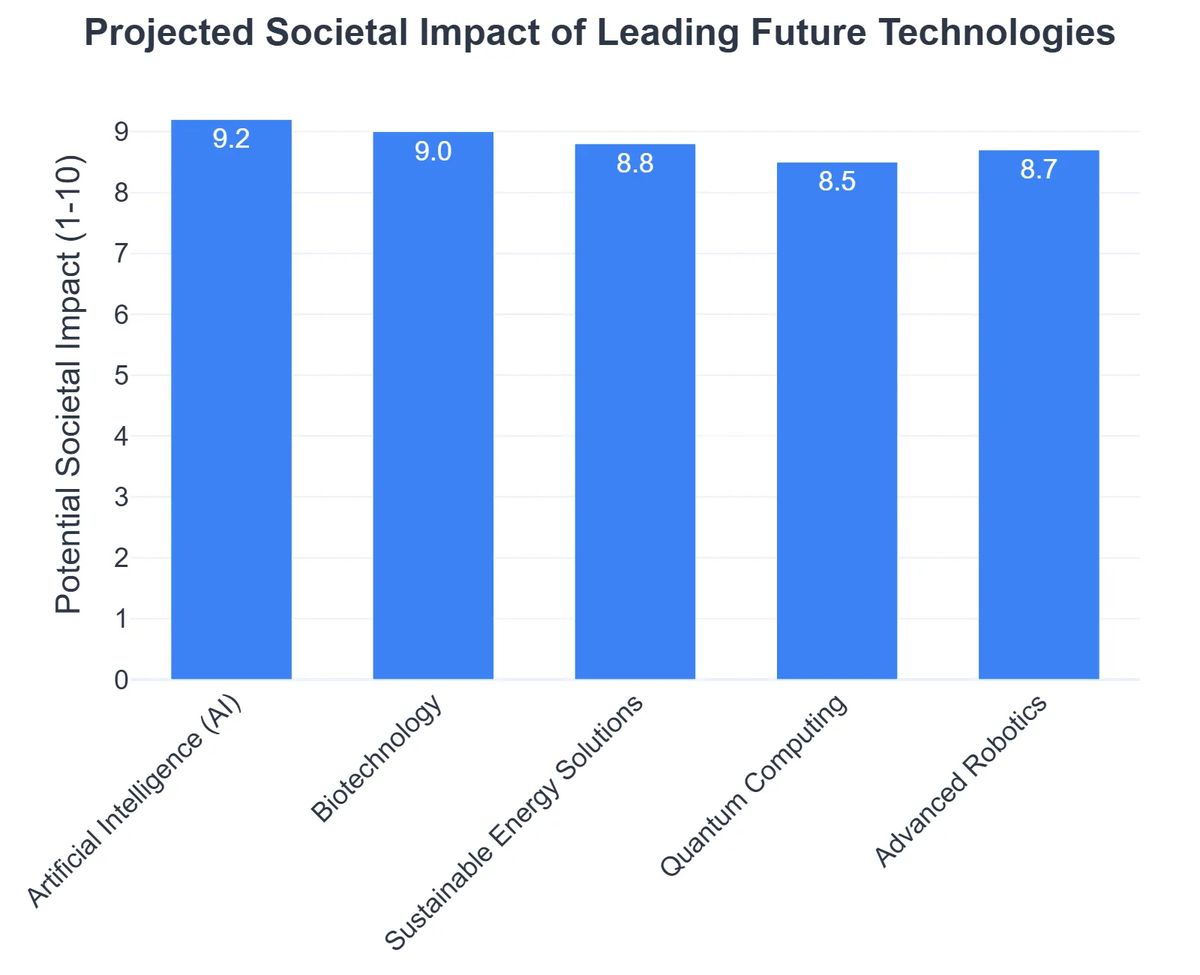
This article highlights advancements in Artificial Intelligence, Biotechnology, Sustainable Energy Solutions, and Quantum Computing, among others.
How will AI affect daily life in the near future?
AI is expected to further personalize experiences, automate routine tasks, enhance healthcare diagnostics, and transform transportation, making daily life more efficient and connected.
What role does sustainable energy play in future innovations?
Sustainable energy is critical for mitigating climate change, reducing reliance on fossil fuels, and powering future technological growth in an environmentally responsible manner, driving innovations in storage and generation.
Are there ethical concerns associated with these promising technologies?
Yes, ethical considerations include data privacy, potential job displacement, algorithmic bias, the equitable distribution of technological benefits, and the responsible development of autonomous systems.