


NASA Robots: Exploring the Robotic Frontier of Space
In the vast expanse of the cosmos, where human presence is often impractical or impossible, NASA robots serve as humanity’s tireless eyes, ears, and hands. These sophisticated machines are at the forefront of space exploration, venturing into environments too extreme, too distant, or too dangerous for astronauts. From the dusty plains of Mars to the icy moons of the outer solar system, NASA’s robotic explorers are continuously pushing the boundaries of our understanding, delivering groundbreaking discoveries that redefine our place in the universe.
💡 Key Takeaways
- NASA robots are crucial for exploring environments too hazardous or distant for human presence.
- Key missions like the Mars rovers and Voyager probes have fundamentally reshaped our cosmic understanding.
- Advancements in AI and autonomy are making future robotic missions even more ambitious.
- Robotic exploration is a vital precursor to human deep-space travel and potential colonization.
“The robots of NASA aren’t just tools; they are our senses extended into the void, charting futures not just for science, but for the very narratives of humanity’s expansion among the stars.”
— Astrid Bellweather, Astrophysicist & Science Fiction Consultant
This article delves into the indispensable role of robotics in space exploration, highlighting key missions, technological marvels, and the profound impact these automated pioneers have on our quest to unravel the mysteries of the universe. For a broader perspective on space exploration, consider our pillar content on Cosmic Queries: Probing the Mysteries of the Universe.
In This Article
- → NASA Robots: Exploring the Robotic Frontier of Space
- — 💡 Key Takeaways
- → Why NASA Relies on Robots for Space Exploration
- — 🛡️ Overcoming Harsh Environments
- — ➡️ Extending Human Reach
- — 💲 Cost-Effectiveness and Safety
- → Legendary NASA Mars Robots and Rovers
- — 🌌 The Pioneer Rovers: Spirit and Opportunity
- — 🔬 Curiosity: A Mobile Martian Laboratory
- — 🚁 Perseverance and Ingenuity: The Next Generation
- → Beyond Mars: Robotic Missions Across the Solar System
- — 🪐 Exploring Distant Worlds
- — 🛠️ Robotic Arms on Orbiters
- — 🔭 Future Concepts: Sample Return and Subsurface Exploration
- → The Engineering Marvels Behind NASA’s Robotic Explorers
- — 🧠 Autonomous Navigation and AI
- — ⚡ Powering the Mission: RTGs and Solar Panels
- — 🔬 Advanced Scientific Instruments
- → The Impact and Future of NASA Robotic Exploration
- — 🚀 Paving the Way for Human Missions
- — 🌍 Terrestrial Benefits and Innovations
- — 🌠 The Next Frontier: Expanding Robotic Capabilities
- → Conclusion
Why NASA Relies on Robots for Space Exploration
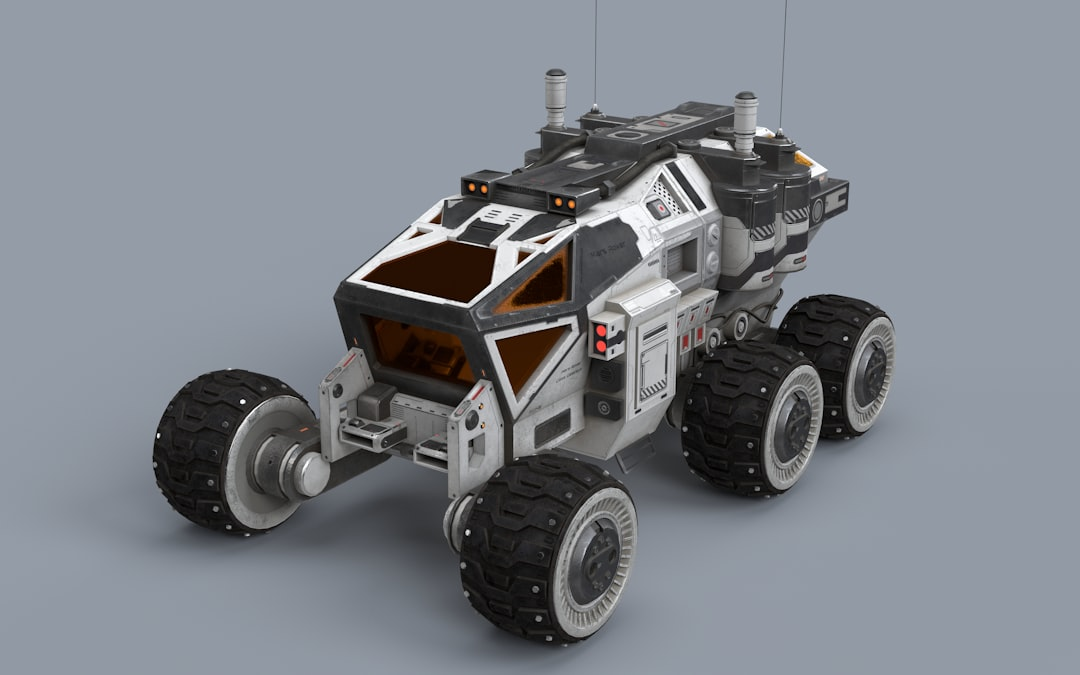
The decision to deploy robotic explorers instead of human crews is driven by a combination of practical, safety, and scientific imperatives. Robots offer unparalleled advantages in the challenging domain of space.
🛡️ Overcoming Harsh Environments
- ✅ Extreme Temperatures: Robots can withstand temperatures far below freezing or scorching hot conditions that would be lethal to humans.
- ✅ Radiation Hazards: Space is rife with harmful radiation, which robots can endure for prolonged periods without the need for extensive shielding or health monitoring.
- ✅ Vacuum and Pressure: Unmanned probes are designed to operate flawlessly in the vacuum of space or under immense atmospheric pressures found on other planets.
➡️ Extending Human Reach
Robots can journey to destinations that are simply too far or too long a journey for human missions, such as the outer planets and beyond. They act as our proxies, gathering data and images from places we can only dream of visiting in person.
💲 Cost-Effectiveness and Safety
- 💡 Reduced Risk: Sending robots eliminates the inherent risks to human life associated with space travel, such as launch failures, deep-space radiation, and unforgiving planetary surfaces.
- 💡 Lower Costs: While still incredibly expensive, robotic missions generally cost less than human expeditions, which require life support, return capabilities, and extensive safety protocols.
Legendary NASA Mars Robots and Rovers
Perhaps no other celestial body has been as thoroughly explored by NASA’s robotic armada as Mars. The Red Planet serves as a proving ground for advanced robotic technologies and has yielded some of the most exciting discoveries about the potential for past or present life beyond Earth.
🌌 The Pioneer Rovers: Spirit and Opportunity
Launched in 2003, the twin Mars Exploration Rovers, Spirit and Opportunity, far exceeded their planned 90-sol missions. They provided unprecedented geological data, proving that Mars once had liquid water on its surface. Opportunity, in particular, operated for nearly 15 years, traveling over 28 miles (45 kilometers) before succumbing to a planet-encircling dust storm in 2018. For more on these incredible journeys, read about Mars Rovers: Epic Journeys of NASA’s Perseverance, Spirit, and Opportunity.
🔬 Curiosity: A Mobile Martian Laboratory
The Mars Science Laboratory mission’s star, the Curiosity rover, landed in Gale Crater in 2012. This remarkable nasa mars robot is roughly the size of a car and carries the most advanced suite of scientific instruments ever sent to the Martian surface. Curiosity confirmed that ancient Mars had the chemical ingredients and environments necessary to support microbial life. Learn more about its incredible findings in Curiosity Rover: Exploring NASA’s Martian Discoveries.
🚁 Perseverance and Ingenuity: The Next Generation
The latest additions to NASA’s Martian exploration fleet are the Perseverance rover and its companion, the Ingenuity Mars Helicopter. Perseverance, which landed in February 2021, is designed to seek signs of ancient microbial life, characterize the planet’s geology and past climate, and collect carefully selected rock and regolith samples for future return to Earth. Ingenuity, the first aircraft to achieve controlled, powered flight on another planet, demonstrated the feasibility of aerial exploration, paving the way for future robotic aerial vehicles. Dive deeper into this pioneering aerial mission with NASA Ingenuity: Mars Helicopter Missions.
Beyond Mars: Robotic Missions Across the Solar System
While Mars often dominates headlines, NASA’s robotic explorers have ventured far beyond the Red Planet, revealing astonishing details about other celestial bodies and pushing the boundaries of engineering.
🪐 Exploring Distant Worlds
- ✅ Voyager Probes: Launched in 1977, Voyager 1 and 2 are the only spacecraft to have visited all four outer planets (Jupiter, Saturn, Uranus, Neptune) and are now in interstellar space, continuing to send back data.
- ✅ Cassini-Huygens: This mission to Saturn and its moons (1997-2017) transformed our understanding of the ringed planet and discovered subsurface oceans on Enceladus and Titan.
- ✅ New Horizons: Conducted the first close flyby of Pluto and its moons in 2015, revealing a surprisingly active and complex world, and later explored the Kuiper Belt object Arrokoth.
🛠️ Robotic Arms on Orbiters
Not all space robots are independent rovers. Many orbiters, like the Hubble Space Telescope and the International Space Station (ISS), feature sophisticated robotic arms (such as the Canadian-built Canadarm2) crucial for maintenance, cargo handling, and capturing visiting spacecraft.
🔭 Future Concepts: Sample Return and Subsurface Exploration
NASA is continually developing new robotic capabilities. Future missions envision robotic sample return from asteroids or Mars, and even highly specialized robots capable of melting through ice to explore potential subsurface oceans on moons like Europa and Enceladus. This is an exciting frontier in expanding our understanding of the universe, as discussed in “Expanding the final frontier with robots” by Aerospace America. Expanding the final frontier with robots – Aerospace America
The Engineering Marvels Behind NASA’s Robotic Explorers
The success of NASA’s robotic missions hinges on incredible feats of engineering, cutting-edge software, and innovative power solutions, allowing these machines to operate autonomously millions of miles from Earth.
🧠 Autonomous Navigation and AI
Modern robot nasa explorers rely heavily on advanced AI and autonomous navigation systems. Given the time delay in communication with Earth, rovers must be able to make their own decisions about safe paths, avoiding hazards, and identifying scientific targets. Technologies like those being developed for “Robotic Navigation Tech Will Explore the Deep Ocean” for Earth-bound purposes also have direct parallels and applications for space missions. Robotic Navigation Tech Will Explore the Deep Ocean | NASA Jet Propulsion Laboratory
- ✅ Hazard Avoidance: Onboard cameras and software detect obstacles and plan safe routes.
- ✅ Target Identification: AI helps identify rocks, soil, or geological features of scientific interest.
- ✅ Self-Correction: Robots can often diagnose and, in some cases, fix minor issues autonomously.
⚡ Powering the Mission: RTGs and Solar Panels
Providing consistent power is critical for long-duration missions. NASA uses two primary methods:
- 💡 Radioisotope Thermoelectric Generators (RTGs): These devices convert heat from the natural decay of plutonium-238 into electricity, providing a consistent power source regardless of sunlight, crucial for outer planet missions and long-duration Mars rovers like Curiosity and Perseverance.
- ☀️ Solar Panels: Ideal for missions closer to the Sun, like the Spirit and Opportunity rovers, solar panels convert sunlight into electrical energy, though they are susceptible to dust accumulation and seasonal light changes.
🔬 Advanced Scientific Instruments
Each robot is a miniaturized laboratory, packed with instruments designed for specific scientific objectives:
- ✅ Spectrometers: Analyze the chemical composition of rocks and soil.
- ✅ Cameras: Provide high-resolution images and video for geological context and public engagement.
- ✅ Drills and Scoops: Collect samples for onboard analysis or future return to Earth.
- ✅ Environmental Sensors: Measure atmospheric conditions, temperature, and radiation levels.
The Impact and Future of NASA Robotic Exploration
The journey of NASA’s robotic explorers is not just about scientific discovery; it has profound implications for humanity’s future in space and on Earth.
🚀 Paving the Way for Human Missions
Robotic missions are essential precursors to human exploration. They scout potential landing sites, assess environmental hazards, locate resources, and test technologies that will eventually enable astronauts to safely live and work on other celestial bodies. The data gathered by a nasa mars robot is invaluable for planning future crewed missions to the Red Planet.
🌍 Terrestrial Benefits and Innovations
The technologies developed for space robots often find their way back to Earth, benefiting various industries. Robotics, autonomous systems, advanced materials, and miniature instrumentation initially designed for space exploration have led to breakthroughs in medicine, manufacturing, environmental monitoring, and more. This trickle-down effect is a core benefit stemming from space exploration. Benefits Stemming from Space Exploration | NASA
🌠 The Next Frontier: Expanding Robotic Capabilities
The future of NASA robotics is even more ambitious. We can anticipate:
- 💡 Swarms of Small Robots: Miniature, cooperative robots working together to map vast areas or explore complex terrains.
- 💡 Autonomous Construction: Robots capable of building habitats and infrastructure on other planets.
- 💡 Extreme Environment Explorers: Robots designed for unique environments, like deep-sea submersibles adapted for icy moons or flying robots for Titan.
- 💡 AI-Powered Science: Increasingly intelligent robots that can conduct complex scientific investigations with minimal human intervention.
Recommended Video
Conclusion
From their humble beginnings as simple landers to today’s highly complex mobile laboratories and helicopters, NASA’s robots have redefined our understanding of the universe. They have brought distant worlds into our living rooms, answered fundamental questions about our cosmic origins, and continue to inspire generations. As technology advances, these robotic pioneers will continue to lead the charge, ensuring that humanity’s reach extends ever further into the boundless frontier of space, bringing us closer to answering the most profound cosmic queries.
Frequently Asked Questions
What types of robots does NASA primarily use for space exploration?
NASA employs a diverse range of robots, including rovers (like Perseverance on Mars), landers (such as InSight), orbiters (like the Hubble Space Telescope), and deep-space probes (such as the Voyager and New Horizons spacecraft).
How do NASA robots get their power in space?
Most NASA robots utilize either solar panels for missions closer to the Sun (e.g., Mars rovers) or Radioisotope Thermoelectric Generators (RTGs) for deep-space missions where sunlight is too dim, like the Voyager probes or the Perseverance rover.
What is the primary goal of NASA’s robotic missions?
The primary goal is to conduct scientific research, gather data on celestial bodies and phenomena, search for signs of life, understand the origins of the universe, and pave the way for future human exploration beyond Earth.