
Unveiling Earth’s Dynamic Core: Plate Tectonics and Planetary Rotation
In This Article
- → Unveiling Earth’s Dynamic Core: Plate Tectonics and Planetary Rotation
- — 💡 Key Takeaways
- — The Grand Mechanism: Understanding Plate Tectonics
- → The Driving Engine: Forces Behind Plate Movement
- → Earth’s Rotation: A Fundamental Planetary Force
- → The Interplay: How Plate Tectonics and Rotation Influence Each Other
- → Global Impact and Future Insights
Our planet is a vibrant, ever-changing system, shaped by powerful, often unseen forces. At the heart of these transformations lies plate tectonics, a fundamental concept explaining the large-scale motion of Earth’s lithosphere. This intricate process, combined with the planet’s continuous rotation, forms the bedrock of understanding Earth’s dynamics, influencing everything from mountain ranges to the distribution of seismic activity.
💡 Key Takeaways
- Earth’s rotation influences mantle convection and plate movements through forces like Coriolis.
- Plate tectonics, by redistributing mass, can subtly alter Earth’s rotation rate and axial tilt over geological time.
- The interaction between the solid Earth, its fluid core, and rotational forces is crucial for understanding geological phenomena.
- Understanding this dynamic interplay is key to predicting geological hazards and comprehending long-term planetary evolution.
“The intricate dance between Earth’s rotation and plate tectonics is fundamental; it orchestrates everything from continental drift to subtle climate shifts, revealing our planet’s profound and continuous dynamism.”
— Dr. Marcus Sterling, PhD, Planetary Geoscientist & Climatologist
The Grand Mechanism: Understanding Plate Tectonics
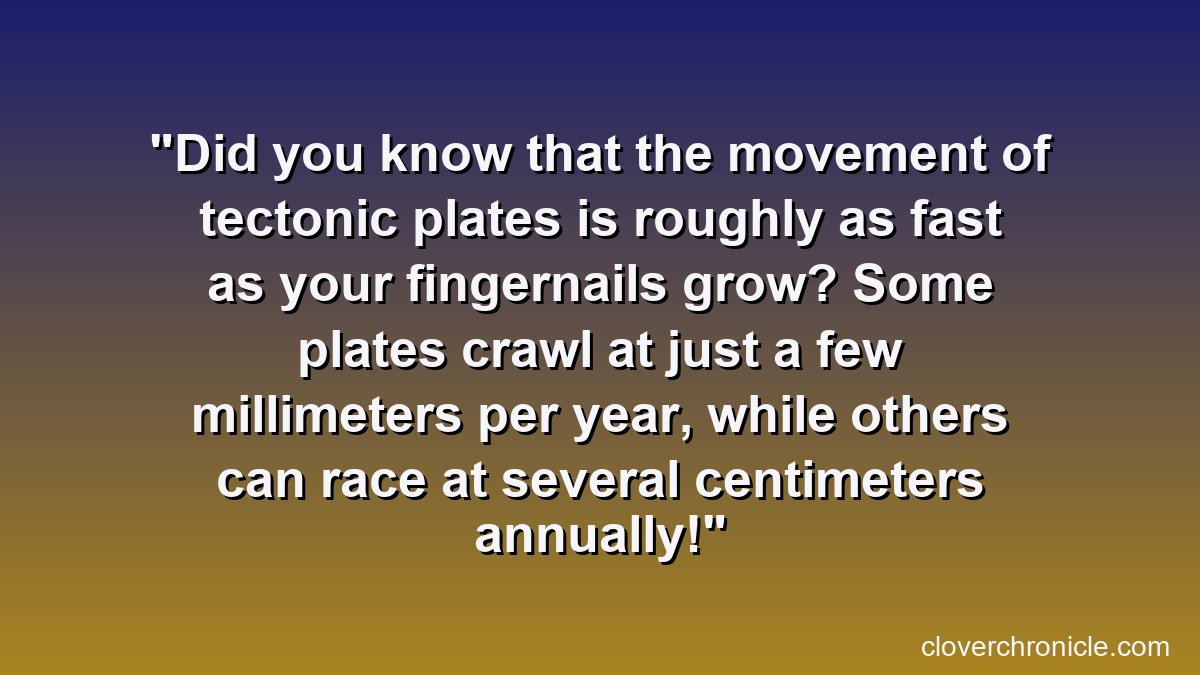
Plate tectonics describes how Earth’s outermost layer, the lithosphere, is broken into large, rigid slabs known as tectonic plates. These plates are constantly in motion, gliding over the semi-fluid asthenosphere beneath them. This relentless movement, occurring at rates comparable to fingernail growth, is responsible for many of the geological features we observe on our planet.
- ✅ Defining Plates: Earth’s lithosphere is segmented into seven major plates and numerous minor ones. These include the Pacific Plate, North American Plate, Eurasian Plate, and others. For a detailed look at their arrangement, explore Major Plates of Earth: Unveiling Our Planet’s Tectonic Puzzle.
- ➡️ Plate Boundaries: The interactions at the edges of these plates are where most geological activity occurs. There are three primary types of boundaries:
- Divergent Boundaries: Plates pull apart, allowing magma to rise and form new crust (e.g., Mid-Atlantic Ridge).
- Convergent Boundaries: Plates collide, leading to subduction (one plate sliding beneath another) or continental collision (forming mountain ranges like the Himalayas).
- Transform Boundaries: Plates slide past each other horizontally, often causing significant earthquakes (e.g., San Andreas Fault).
For more foundational knowledge on these processes, refer to our comprehensive guide on Plate Tectonics Explained: Your Essential Guide to Earth’s Moving Plates.
The Driving Engine: Forces Behind Plate Movement
The monumental scale of plate movement raises a crucial question: What drives these colossal slabs across the planet’s surface? Geologists point to several interconnected forces originating from within Earth’s hot interior.
- 💡 Mantle Convection: The prevailing theory suggests that the primary driver is the slow, churning motion of the Earth’s mantle. Heat from the core causes mantle material to rise (like boiling water), cool as it nears the surface, and then sink again, creating convection cells. These currents drag the overlying plates along.
- ⚙️ Ridge Push: At mid-ocean ridges (divergent boundaries), new, hot, buoyant crust is formed. This elevated crust slides away from the ridge crest due to gravity, pushing the older parts of the plate ahead of it.
- ⬇️ Slab Pull: This is considered the most significant force. As an oceanic plate cools and becomes denser, it eventually sinks back into the mantle at subduction zones. The weight of this descending slab pulls the rest of the plate along behind it, much like an anchor pulling a rope.
These forces act in concert, creating the complex dance of Earth’s crust that continually reshapes our world. The USGS provides an excellent resource for further understanding these dynamics: Understanding Plate Motions.
Earth’s Rotation: A Fundamental Planetary Force
While plate tectonics governs the solid Earth’s surface movements, Earth’s rotation introduces another critical dimension to understanding our planet’s dynamics. The continuous spin of our home planet impacts everything from weather patterns to the very shape of the Earth itself.
- 🌎 The Spinning Sphere: Earth completes one full rotation on its axis approximately every 24 hours, defining our days and nights. This rotation generates significant inertial forces.
- 💨 Coriolis Effect: A key consequence of Earth’s rotation is the Coriolis effect. This apparent force deflects moving objects (like air currents and ocean currents) to the right in the Northern Hemisphere and to the left in the Southern Hemisphere. This deflection is vital in shaping Global Wind Patterns and ocean circulation.
- 📏 Planetary Bulge: The centrifugal force generated by Earth’s rotation causes the planet to bulge slightly at the equator and flatten at the poles. While subtle, this oblateness is a direct result of our planet’s spin.
For a detailed exploration of how this invisible force shapes our environment, delve into Earth’s Rotation: Unseen Forces Shaping Our Planet.
The Interplay: How Plate Tectonics and Rotation Influence Each Other
The relationship between plate tectonics and Earth’s rotation is a fascinating area of scientific study, with implications for our broader understanding of Earth’s Unseen Forces: The Hidden Dynamics of Our Planet. While the mantle convection drives plate movement, and rotation is a constant physical property, subtle interactions and influences exist.
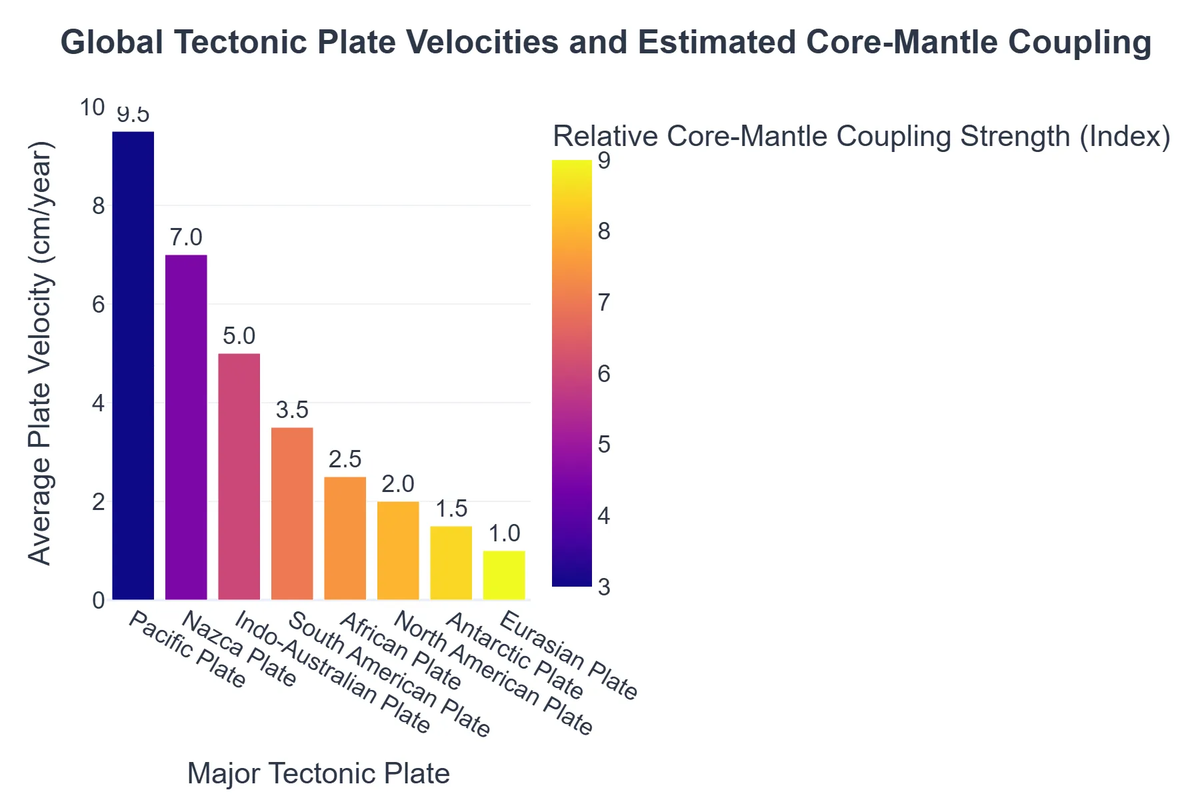
- 🌀 Rotation’s Influence on Mantle Convection: The Earth’s rotation can influence the geometry and efficiency of mantle convection cells. The Coriolis force can impart a rotational component to the rising and sinking plumes within the mantle, potentially affecting the patterns of heat transfer and therefore, plate motion. This is a complex area of research, but models suggest that rotation plays a role in the overall fluid dynamics within the Earth’s interior.
- ⏳ Plate Tectonics’ Influence on Rotation (Minor but Present): While the effect is minute, the redistribution of mass due to plate tectonic processes can slightly alter Earth’s moment of inertia, leading to tiny, almost imperceptible changes in the length of a day. For example, large-scale seismic events like major earthquakes can shift mass and temporarily affect the Earth’s rotation speed.
- 🏔️ Tectonic Alignment: Some theories suggest that long-term plate movements and the orientation of fault lines might exhibit a statistical preference for certain directions, potentially influenced by Earth’s rotation and the associated stresses within the lithosphere.
Understanding these subtle interconnections is crucial for a complete picture of Earth’s dynamics, highlighting that our planet is a single, interconnected system where every major force can subtly influence others.
Recommended Video
Global Impact and Future Insights
The combined understanding of plate tectonics and planetary rotation provides profound insights into Earth’s past, present, and future. These forces are responsible for:
- 🌋 Volcanoes and Earthquakes: The vast majority of these geological hazards occur at plate boundaries, directly resulting from tectonic interactions.
- ⛰️ Mountain Building: The majestic mountain ranges across the globe are products of continental collision at convergent plate boundaries.
- 🌍 Ocean Basins and Continents: The constant creation and destruction of crust define the very shapes of our continents and the vastness of our oceans.
- 🧭 Geomagnetic Field: While not a direct consequence, the Earth’s rotation plays a critical role in generating the geomagnetic field, which protects us from harmful solar radiation.
Scientists continue to refine models and collect data, using advanced techniques like GPS measurements and seismic tomography to map the Earth’s interior and track plate movements with increasing precision. This ongoing research helps us better predict natural disasters and understand the long-term evolution of our unique planet. For more information, consider reading a comprehensive overview like the Plate Tectonics Wikipedia entry for a broad perspective on the subject.
How does Earth’s rotation influence plate tectonics?
Earth’s rotation generates Coriolis forces that can affect the patterns and efficiency of mantle convection, which is the driving force behind plate tectonics, influencing plate motions and stress fields.
Can plate tectonics affect Earth’s rotation?
Yes, large-scale mass redistributions due to tectonic processes, such as the formation of mountain ranges or changes in ice sheets, can cause tiny but measurable changes in Earth’s moment of inertia, subtly altering its rotation speed and axial tilt.
What is the role of Earth’s core in this dynamic system?
The Earth’s liquid outer core generates the magnetic field, and its convection can interact with the mantle-core boundary. While not directly driving plate tectonics, core dynamics influence the mantle, indirectly linking to surface processes and rotational effects.
Why is it important to understand the relationship between rotation and tectonics?
Understanding this relationship provides critical insights into our planet’s long-term evolution, past climates, the mechanics of earthquakes and volcanoes, and the potential for life on other celestial bodies with similar internal dynamics.