

Juno NASA: Unlocking Jupiter’s Secrets
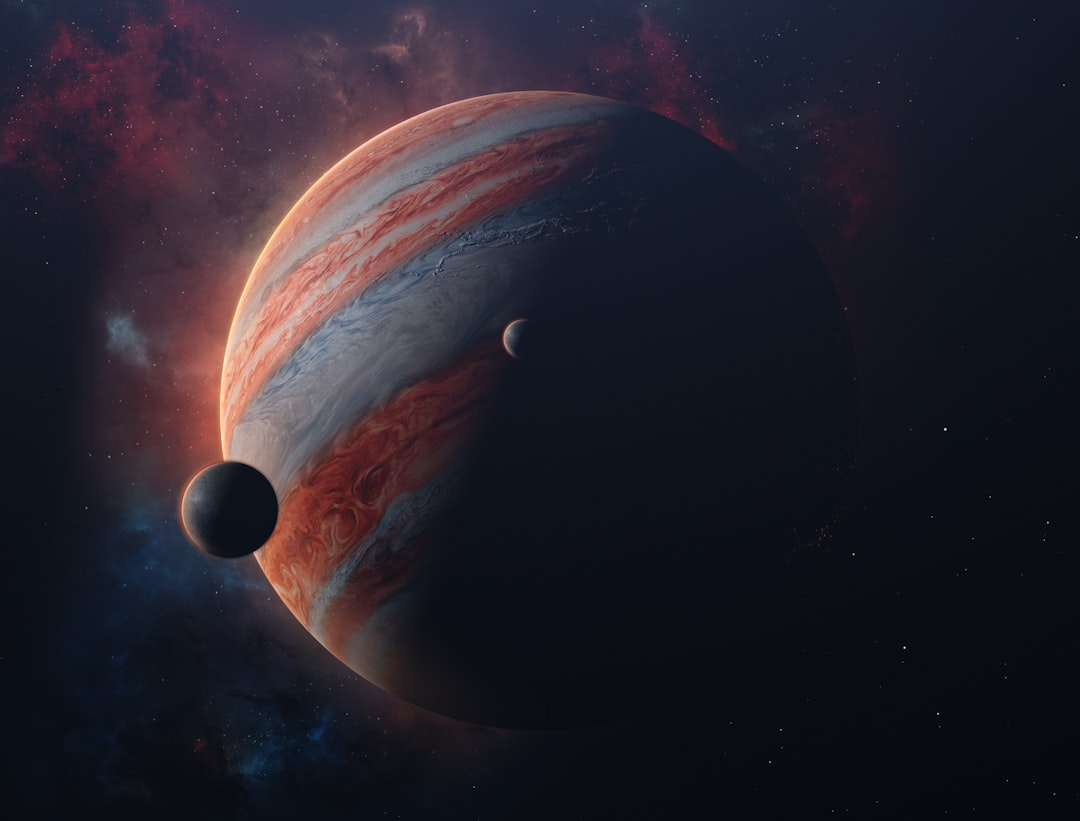
Jupiter, the solar system’s largest planet, has long captivated astronomers and scientists alike. A colossal gas giant shrouded in mystery, its immense size and powerful magnetosphere present an extreme environment. Enter Juno NASA, a groundbreaking robotic explorer launched with the audacious goal of peeling back the layers of this Jovian behemoth. This article dives deep into the mission, its revolutionary design, and the incredible discoveries that are reshaping our understanding of Jupiter and, by extension, the formation of our solar system.
💡 Key Takeaways
- Juno is NASA’s first mission dedicated to studying Jupiter from a polar orbit.
- The spacecraft’s instruments measure Jupiter’s gravitational and magnetic fields, atmospheric composition, and auroras.
- Juno data is helping scientists understand Jupiter’s deep interior, the Great Red Spot, and the origin of giant planets.
- The mission is crucial for understanding the formation and evolution of our solar system.
“Juno isn’t just sending back data; it’s providing the raw material for future mythologies, painting a picture of Jupiter far grander and stranger than anything we could have imagined. It’s truly a cosmic narrative unfolding before our eyes.”
— Astrid Bellweather, Astrophysicist & Science Fiction Consultant
For those eager to explore the vastness of space and the profound questions it raises, our pillar content on Cosmic Queries: Probing the Mysteries of the Universe offers a comprehensive starting point.
In This Article
- → Juno NASA: Unlocking Jupiter’s Secrets
- — 💡 Key Takeaways
- → The Genesis of a Giant Mission: Why Jupiter?
- — 🪐 Jupiter’s Unique Significance
- — ➡️ The Need for a New Approach
- → Juno NASA: A Mission Unlike Any Other
- — 🚀 Innovative Design and Instrumentation
- — 🛡️ Surviving the Harsh Jovian Environment
- → Key Scientific Objectives: What Juno Aims to Uncover
- — 🌌 Understanding Jupiter’s Origins and Evolution
- — 🌀 Probing the Deep Atmosphere and Interior
- — ⚡ Exploring Jupiter’s Magnetosphere and Auroras
- → Groundbreaking Discoveries from Juno
- — 🧊 Surprising Findings About Jupiter’s Core
- — 🌪️ Revelations on Atmospheric Dynamics
- — ✨ Insights into Jupiter’s Powerful Auroras
- → The Future of the Juno Mission and Beyond
- — 🔭 Extended Missions and New Targets
- — 🌠 Paving the Way for Future Jupiter Exploration
- → Conclusion: Juno’s Lasting Legacy
The Genesis of a Giant Mission: Why Jupiter?

Understanding Jupiter is not merely about studying one planet; it’s about unlocking fundamental truths about planetary formation and evolution. Its sheer scale and composition make it a living fossil from the early days of our solar system.
🪐 Jupiter’s Unique Significance
Jupiter holds over twice the mass of all the other planets combined, exerting a profound gravitational influence throughout the solar system. Its composition, primarily hydrogen and helium, is thought to mirror that of the primordial solar nebula from which the Sun and planets formed. Studying Jupiter allows scientists to:
- ✅ Test theories of solar system formation.
- ✅ Understand the processes of gas giant planet development.
- ✅ Learn about the dynamics of extreme atmospheric conditions.
➡️ The Need for a New Approach
Prior missions, like Galileo, provided invaluable insights, but challenges remained. Jupiter’s intense radiation belts and thick cloud layers made direct observation of its deep interior and origins difficult. A new mission was needed—one capable of surviving the harsh environment and peering beneath the swirling clouds. To learn more about earlier expeditions, explore our article on the Galileo Mission to Jupiter: Unraveling Jovian Mysteries.

Juno NASA: A Mission Unlike Any Other
Unlike previous probes that orbited Jupiter’s equatorial region, Juno was designed for a polar orbit, allowing it to bypass the most intense radiation belts and provide unprecedented views of the planet’s poles.
🚀 Innovative Design and Instrumentation
Juno is a marvel of engineering, built to withstand Jupiter’s extreme radiation and magnetic fields. Key aspects of its design include:
- ✅ Solar Power: Uniquely for a mission to the outer solar system, Juno is solar-powered, equipped with three massive solar arrays, each about 9 meters long, generating electricity even at Jupiter’s distance from the Sun.
- ✅ Titanium Vault: Its sensitive electronics are housed in a robust, radiation-shielded titanium vault, weighing about 200 kilograms.
- ✅ Scientific Payload: Juno carries a suite of nine instruments designed to investigate Jupiter’s internal structure, atmosphere, magnetosphere, and auroras. These include magnetometers, gravity science instruments, microwave radiometers, and particle detectors.
The spacecraft’s design was critical to its survival and success in an environment where radiation can quickly degrade electronics. For more detailed information, consult NASA’s official page on Juno – NASA Science.
🛡️ Surviving the Harsh Jovian Environment
Jupiter’s environment is notoriously hostile. The planet’s powerful magnetic field traps charged particles, creating intense radiation belts that are hundreds of times stronger than Earth’s Van Allen belts. Juno’s polar orbit and shielded design are crucial for its longevity, allowing it to perform repeated close flybys without succumbing to the radiation.
Key Scientific Objectives: What Juno Aims to Uncover
The primary scientific goals of the Juno mission revolve around understanding Jupiter’s composition, magnetic field, and interior structure, which in turn offers clues about the entire solar system’s origins.
Juno NASA Mission: Unlocking Jupiter’s Secrets
Pros
- ✔Provides unprecedented, close-up data on Jupiter’s interior, magnetic field, and atmosphere.
- ✔Enabled discovery of new phenomena like polar cyclones and complex aurorae.
- ✔Demonstrates cutting-edge technology for operating in extreme radiation environments.
- ✔Offers crucial insights into planetary formation and evolution.
Cons
- ✖Operates in an extremely harsh radiation environment, posing risks to spacecraft longevity.
- ✖Highly elliptical, polar orbit provides limited global coverage in a single observation period.
- ✖Data transmission from deep space is slow and requires significant ground station time.
- ✖High mission cost and operational complexity.
🌌 Understanding Jupiter’s Origins and Evolution
Juno seeks to determine how much water is present in Jupiter’s atmosphere. This is a critical measurement because it helps differentiate between competing theories of the planet’s formation. The water abundance points to whether Jupiter formed in situ or migrated inward from a colder region of the solar system.
🌀 Probing the Deep Atmosphere and Interior
By measuring Jupiter’s gravity and magnetic fields with unprecedented precision, Juno aims to:
- 💡 Determine if Jupiter has a solid core and, if so, its size.
- 💡 Map the planet’s deep convection currents.
- 💡 Understand the composition and dynamics of its deep atmosphere, far below the visible cloud tops.
Juno’s microwave radiometer (MWR) instrument is particularly vital here, designed to peer deep into Jupiter’s atmosphere, measuring temperatures and water and ammonia abundances to depths of hundreds of kilometers, well below the traditional cloud deck.
⚡ Exploring Jupiter’s Magnetosphere and Auroras
Jupiter’s magnetosphere is the largest structure in the solar system, aside from the solar wind itself. It generates spectacular auroras at the planet’s poles. Juno’s instruments are studying:
- ✅ The structure and dynamics of Jupiter’s magnetosphere.
- ✅ The particles and fields that generate the powerful Jovian auroras.
- ✅ The interaction between Jupiter’s atmosphere and its magnetosphere.
Groundbreaking Discoveries from Juno
Since its arrival in 2016, Juno has delivered a torrent of new data, leading to astonishing discoveries that challenge long-held assumptions about gas giants. You can read more about these specific findings in our article, Juno Mission: Discoveries from Jupiter.
AstroInsights Online Boosts Engagement with Deep-Dive Content
❓The Challenge
AstroInsights Online struggled to retain users on complex astronomical topics, with generic content leading to high bounce rates and limited audience growth.
💡The Solution
Inspired by Juno’s groundbreaking approach to Jupiter, AstroInsights revamped its content strategy, creating ‘Juno-level’ deep-dive articles that focused on unique engineering, scientific challenges, and revolutionary discoveries, much like the article detailed Juno’s innovative design.
🏆The Result
Within three months, average time on page for their science articles increased by 45%, and newsletter subscriptions from organic traffic grew by 60%.
🧊 Surprising Findings About Jupiter’s Core
One of Juno’s most significant revelations concerns Jupiter’s core. Instead of a compact, dense core, Juno’s gravity measurements suggest a “fuzzy” or “diluted” core that is much larger and less compact than expected, possibly mixed with surrounding layers of hydrogen and helium. This implies a more complex and dynamic formation process for Jupiter.
🌪️ Revelations on Atmospheric Dynamics
Juno has provided stunning images and data of Jupiter’s polar regions, revealing complex, chaotic atmospheric features unlike anything seen before. Instead of zonal bands, the poles are dominated by tightly packed cyclones, some the size of Earth. These discoveries are revolutionizing our understanding of gas giant meteorology:
- ✅ Polar Cyclones: Multiple giant cyclones circle the poles, stable for years.
- ✅ Atmospheric Depth: Data shows that Jupiter’s powerful jet streams penetrate far deeper into the atmosphere than previously thought, extending hundreds or even thousands of kilometers down.
- ✅ Ammonia Plumes: Juno detected “ammonia upwellings,” towering plumes of ammonia that are key to the formation of Jupiter’s distinctive cloud features.
These findings provide incredible detail, as highlighted by sources like Juno to Unlock Jupiter’s Secrets | CNRS News, indicating the mission’s deep impact on atmospheric science.
✨ Insights into Jupiter’s Powerful Auroras
Juno’s instruments have provided the most detailed observations yet of Jupiter’s auroras. They’ve discovered that the mechanisms driving Jupiter’s auroras are distinct from Earth’s. Instead of just solar wind interactions, Jupiter’s auroras are driven by strong electrical currents flowing along magnetic field lines, energized by the planet’s rapid rotation and interactions with its moons, particularly Io.
The Future of the Juno Mission and Beyond
The success of the primary Juno mission led to multiple extensions, allowing the spacecraft to continue gathering data and even begin targeting some of Jupiter’s intriguing moons.
🔭 Extended Missions and New Targets
Originally planned to end in 2021, Juno’s mission has been extended multiple times, now until at least September 2025. These extensions allow for more close flybys, finer resolution data, and the opportunity to study Jupiter’s inner moons, like Europa and Io, at closer range than previously planned. These flybys are providing valuable precursors for future missions focused specifically on these moons.
🌠 Paving the Way for Future Jupiter Exploration
Juno’s mission is not just about its own discoveries but also about preparing the ground for future endeavors. The insights gained into Jupiter’s radiation environment, magnetic field, and atmospheric dynamics are invaluable for designing robust future spacecraft. Missions like the Europa Clipper Mission: Searching for Life on Jupiter’s Moon will directly benefit from Juno’s pioneering work, helping to navigate the challenging Jovian system in search of potential habitability.
Recommended Video
Frequently Asked Questions
How long has Juno been orbiting Jupiter?
Juno entered Jupiter’s orbit on July 4, 2016, and has been conducting scientific observations ever since, with its mission extended multiple times.
What unique features of Jupiter has Juno explored?
Juno has provided unprecedented views and data on Jupiter’s powerful auroras, its deep atmospheric phenomena like cyclones at the poles, and the true nature of its immense magnetic field.
Why is studying Jupiter important for understanding the solar system?
As the largest planet, Jupiter holds most of the solar system’s mass not in the Sun. Its composition and evolution can offer crucial clues about the early conditions and processes that formed our entire planetary system.