
Our planet is a marvel of interconnected systems, a dynamic tapestry where every element plays a crucial role in sustaining life. Far from being a mere collection of species and landscapes, Earth operates as a finely tuned machine, driven by intricate processes that often go unseen. Understanding these underlying mechanisms is key to appreciating our world and ensuring its future.
💡 Key Takeaways
- Ecosystem functioning refers to the processes nature performs to sustain life, like nutrient cycling and water purification.
- These natural processes provide invaluable “ecosystem services” essential for human survival and well-being.
- Maintaining healthy, functioning ecosystems is crucial for biodiversity conservation and climate stability.
- Human activities significantly impact ecosystem health, requiring conscious efforts for preservation and restoration.
“Ecosystems are the Earth’s vital organs, intricately linked to geological and atmospheric processes. Their health directly dictates our planet’s climate resilience and the very habitability of our home.”
— Marcus Sterling, Geophysical Explorer & Climate Dynamics Analyst
This comprehensive guide delves into the heart of ecosystem functioning, exploring how nature’s hidden dynamics provide the very foundation for all life on Earth. We’ll uncover the vital processes, the indispensable role of biodiversity, the myriad services ecosystems provide, and the critical importance of their preservation.
In This Article
- — 💡 Key Takeaways
- → What is Ecosystem Functioning?
- — Defining Ecosystems
- — The Interconnected Web of Life
- → Key Ecological Processes that Sustain Life
- — 💡 Energy Flow: The Sun’s Power
- — 🔄 Nutrient Cycles: Nature’s Recycling System
- — 💧 Water Cycle: Essential for All Life
- → The Indispensable Role of Biodiversity
- — 📈 Stability and Resilience
- — 🧬 Genetic Diversity
- — 🌍 Species Diversity
- — 🌳 Ecosystem Diversity
- → Ecosystem Services: Nature’s Gifts to Humanity
- — ✅ Provisioning Services
- — ✅ Regulating Services
- — ✅ Cultural Services
- — ✅ Supporting Services
- → Human Impact and the Threat to Ecosystem Functioning
- — Habitat Destruction & Fragmentation
- — Climate Change
- — Pollution
- — Overexploitation
- → Strategies for Preserving Ecosystem Health
- — 🌿 Conservation & Restoration Efforts
- — ♻️ Sustainable Practices
- — 🤝 Global Cooperation
- → Conclusion
What is Ecosystem Functioning?
At its core, ecosystem functioning refers to the biological, geochemical, and physical processes that occur within an ecosystem. These processes are the actions, interactions, and results of a complex web of living organisms and their non-living environment working together. Think of it as the ‘how’ and ‘why’ an ecosystem is able to sustain itself and the life within it.
Defining Ecosystems
An ecosystem is a community of living organisms (biotic components) interacting with each other and with their non-living environment (abiotic components) within a specific area. These can range from microscopic puddles to vast oceans or entire forests. Key components include:
- ✅ Biotic Components: Producers (plants, algae), Consumers (herbivores, carnivores, omnivores), Decomposers (bacteria, fungi).
- ✅ Abiotic Components: Sunlight, water, soil, temperature, air, nutrients.
The Interconnected Web of Life
No organism or element within an ecosystem exists in isolation. Everything is connected. For instance, plants depend on sunlight and soil nutrients, while herbivores depend on plants, and carnivores on herbivores. Decomposers then break down dead organic matter, returning vital nutrients to the soil for plants to use again. This constant interplay defines the functioning of an ecosystem.
Key Ecological Processes that Sustain Life

The health and resilience of an ecosystem depend on the smooth operation of several fundamental ecological processes. These are the engines that keep life going.
💡 Energy Flow: The Sun’s Power
Almost all energy in ecosystems originates from the sun. Photosynthesis, carried out by producers like plants and algae, converts solar energy into chemical energy. This energy then flows through the ecosystem in a unidirectional manner via food chains and food webs.
- ➡️ Producers: Convert light energy into organic matter.
- ➡️ Primary Consumers (Herbivores):: Obtain energy by eating producers.
- ➡️ Secondary Consumers (Carnivores/Omnivores): Obtain energy by eating primary consumers.
- ➡️ Tertiary Consumers: Eat secondary consumers.
- ➡️ Decomposers: Break down dead organic matter from all trophic levels, recycling nutrients but dissipating energy as heat.
🔄 Nutrient Cycles: Nature’s Recycling System
Unlike energy, nutrients are finite and must be recycled. Biogeochemical cycles ensure that essential elements like carbon, nitrogen, phosphorus, and water are continuously moved through the biotic and abiotic components of an ecosystem.
- ✅ Carbon Cycle: Carbon moves from the atmosphere to plants (photosynthesis), through the food web, and back to the atmosphere (respiration, decomposition, combustion). For a deeper understanding of how this vital element shapes our world, explore our article on CO2 Evolution: Understanding Carbon Dioxide’s Role in Earth’s Systems.
- ✅ Nitrogen Cycle: Nitrogen gas (N2) is converted by bacteria into usable forms for plants, then moves through the food web, and is returned to the atmosphere by other bacteria.
- ✅ Water Cycle: Evaporation, condensation, precipitation, and runoff continuously move water through ecosystems, making it available for all life forms.
💧 Water Cycle: Essential for All Life
Water is the universal solvent and a vital medium for all biological processes. The continuous movement of water through the atmosphere, land, and oceans ensures its availability. Forests, for example, play a critical role in regulating regional rainfall and maintaining water quality.
The Indispensable Role of Biodiversity
Biodiversity – the variety of life on Earth – is not just about counting species; it’s fundamental to robust and resilient ecosystem functioning. A greater variety of genes, species, and ecosystems allows nature to perform its functions more effectively and adapt to change.
📈 Stability and Resilience
Ecosystems with higher biodiversity tend to be more stable and resilient to disturbances like disease outbreaks, climate fluctuations, or invasive species. If one species declines, others can often fill its functional role, preventing a collapse of the entire system.
🧬 Genetic Diversity
Variety within a single species (genetic diversity) allows populations to adapt to changing environmental conditions, such as new diseases or shifts in climate. It’s the raw material for evolution.
🌍 Species Diversity
The number and abundance of different species in an ecosystem contribute directly to its functionality. Different species perform different roles, creating a complex web of interactions that supports the overall health of the system. To learn more about the intricate balance and critical importance of varied life forms, read our article on Ecosystem Diversity: Crucial for Life on Earth.
🌳 Ecosystem Diversity
The variety of different ecosystem types (e.g., forests, grasslands, wetlands, coral reefs) across the landscape provides a broader range of ecosystem services and enhances regional stability.
Ecosystem Services: Nature’s Gifts to Humanity
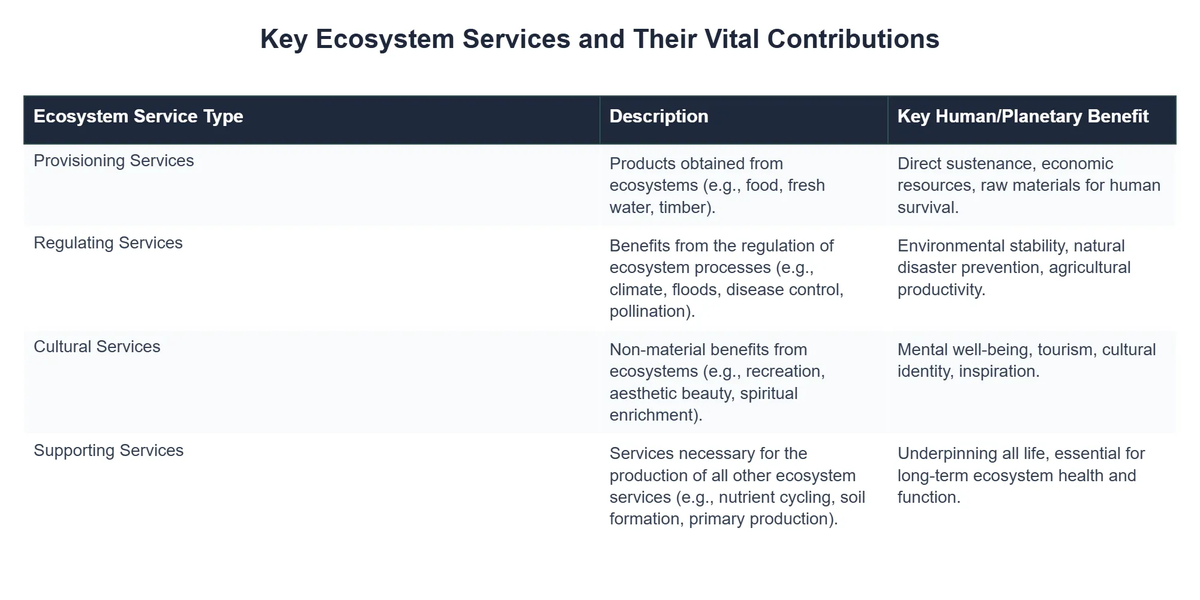
Ecosystem services are the many benefits that humans freely gain from the natural environment and from properly functioning ecosystems. They are categorized into provisioning, regulating, cultural, and supporting services, illustrating how intimately our well-being is tied to nature.
✅ Provisioning Services
These are the products obtained from ecosystems:
- ➡️ Food: Crops, livestock, fish, wild game.
- ➡️ Fresh Water: Clean water for drinking, irrigation, and industry.
- ➡️ Raw Materials: Timber, fibers, fuel.
- ➡️ Medicinal Resources: Many pharmaceuticals derive from natural compounds.
✅ Regulating Services
These are the benefits obtained from the regulation of ecosystem processes:
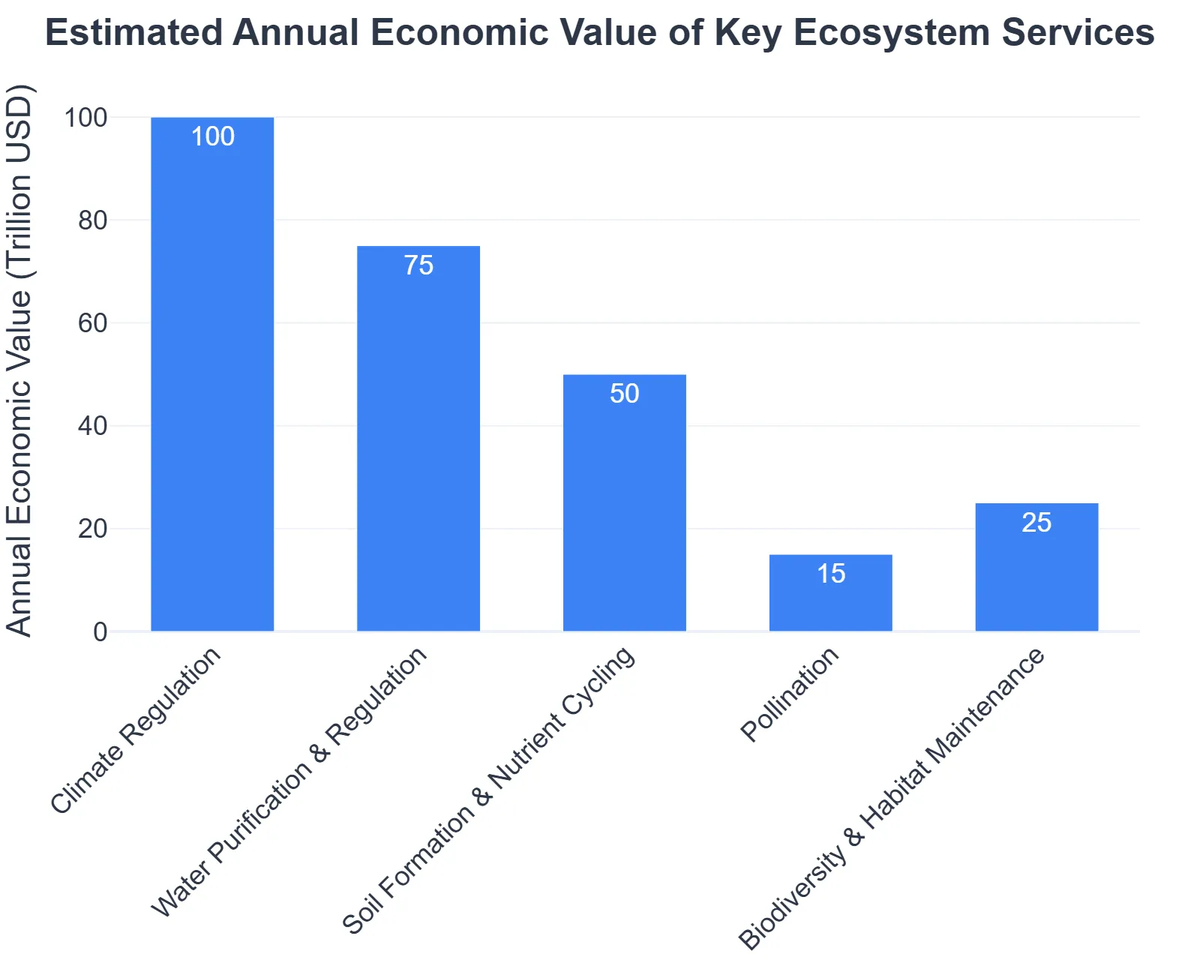
- ➡️ Climate Regulation: Forests absorb carbon dioxide; oceans regulate temperature.
- ➡️ Disease Regulation: Biodiversity can limit the spread of pathogens.
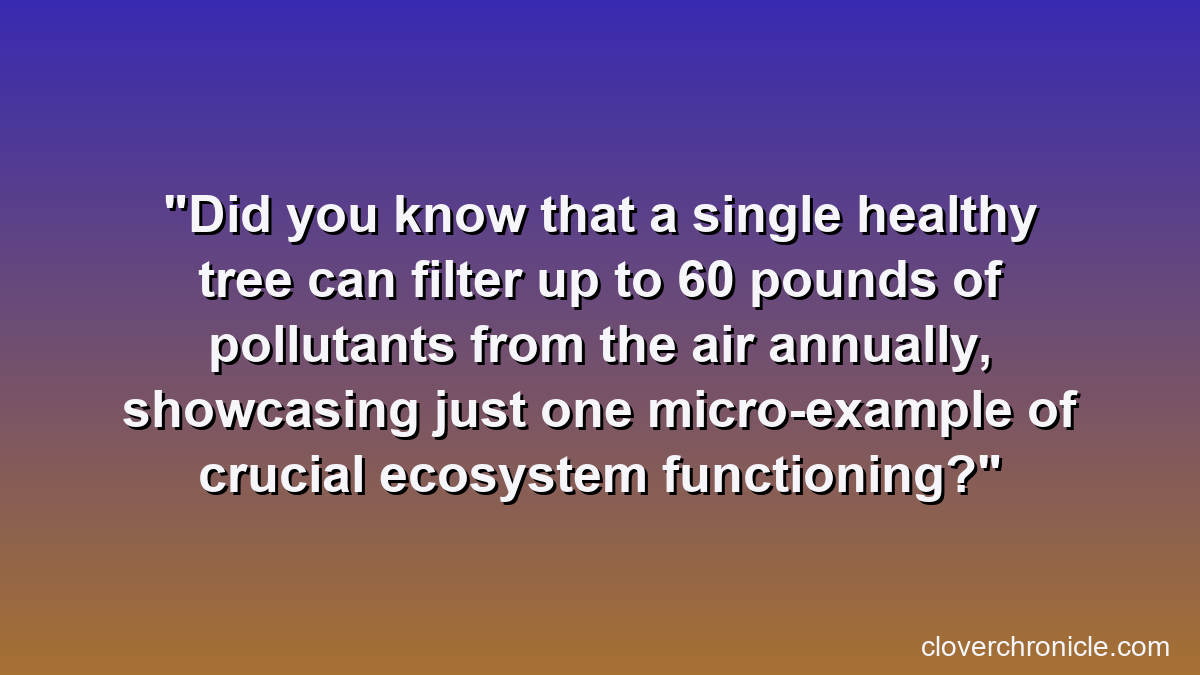
- ➡️ Water Purification: Wetlands and forests naturally filter pollutants.
- ➡️ Pollination: Insects and other animals pollinate crops and wild plants.
✅ Cultural Services
These are the non-material benefits people obtain from ecosystems:
- ➡️ Recreation and Tourism: Hiking, birdwatching, nature photography.
- ➡️ Aesthetic Value: Enjoyment of beautiful landscapes.
- ➡️ Spiritual and Religious Values: Nature as a source of inspiration and spiritual connection.
- ➡️ Mental and Physical Health: Time in nature reduces stress and promotes well-being.
✅ Supporting Services
These are the services necessary for the production of all other ecosystem services:
- ➡️ Soil Formation: The long process of creating fertile soil. Healthy soil is a cornerstone of robust ecosystems and agriculture, underpinning everything from food production to clean water. Learn more about its critical importance at Soil Health | Natural Resources Conservation Service.
- ➡️ Nutrient Cycling: The continuous flow of essential elements discussed earlier.
- ➡️ Primary Production: The generation of organic compounds from atmospheric or aquatic carbon dioxide, primarily through photosynthesis.
These services highlight why nature’s work is invaluable, a concept beautifully explored in the book, The Work of Nature: How The Diversity Of Life Sustains Us.
Human Impact and the Threat to Ecosystem Functioning
Despite their critical importance, many of Earth’s ecosystems are under severe stress due to human activities. Our actions are altering the planet’s hidden dynamics at an unprecedented pace.
Habitat Destruction & Fragmentation
Conversion of natural lands for agriculture, urbanization, and infrastructure development leads to loss of habitats, reducing biodiversity and disrupting ecological processes.
Climate Change
Rising global temperatures, altered precipitation patterns, and extreme weather events disrupt ecosystem functions, leading to species migration, extinction, and changes in productivity.
Pollution
Air, water, and soil pollution from industrial activities, agriculture, and waste disposal contaminate ecosystems, harming organisms and disrupting nutrient cycles.
Overexploitation
Unsustainable harvesting of resources like timber, fish, and wildlife, as well as over-extraction of water, can deplete natural stocks and degrade ecosystem health.
Strategies for Preserving Ecosystem Health
Safeguarding ecosystem functioning requires concerted effort and a shift towards more sustainable practices. It’s about recognizing the intrinsic value of nature and our dependence on it.
🌿 Conservation & Restoration Efforts
Protecting existing pristine ecosystems and restoring degraded ones are vital. This includes establishing protected areas, reforesting cleared lands, and revitalizing wetlands.
♻️ Sustainable Practices
Adopting sustainable agriculture, forestry, and fishing practices can reduce our footprint. Reducing consumption, recycling, and transitioning to renewable energy sources also play a major role.
🤝 Global Cooperation
Many environmental challenges transcend national borders, requiring international agreements and collaborative efforts to address issues like climate change, biodiversity loss, and pollution.
Recommended Video
Conclusion
Ecosystem functioning is the silent, complex machinery that underpins every aspect of life on Earth. From the flow of energy to the cycling of vital nutrients, these hidden dynamics create the conditions necessary for our existence. The services they provide are invaluable and irreplaceable, from the food we eat and the water we drink to the air we breathe and the very climate we depend on.
As inhabitants of this planet, we have a profound responsibility to understand, appreciate, and protect these intricate systems. By embracing conservation, sustainable practices, and global cooperation, we can ensure that Earth’s unseen forces continue to sustain life for generations to come. For a deeper exploration of our planet’s fundamental processes, delve into our pillar content on Earth’s Unseen Forces: The Hidden Dynamics of Our Planet.
Frequently Asked Questions
Why are healthy ecosystems important?
Healthy ecosystems provide essential “ecosystem services” like clean air and water, fertile soil, climate regulation, and pollination, which are vital for human survival and well-being.
How do human activities impact ecosystem functioning?
Human activities like deforestation, pollution, habitat destruction, and climate change can severely degrade ecosystem functioning, leading to loss of biodiversity and reduced natural services.
Can ecosystem functioning be restored?
Yes, through conservation efforts, habitat restoration, sustainable practices, and pollution control, degraded ecosystems can often recover some or all of their functioning.