Stepping into the Ajanta and Ellora Caves is akin to embarking on a profound journey through time, a direct encounter with the artistic brilliance and spiritual devotion of ancient India. These awe-inspiring rock-cut sanctuaries, carved into basalt cliffs in Maharashtra, India, stand as enduring testaments to human ingenuity and faith. They offer an unparalleled glimpse into India’s rich religious and artistic heritage, spanning centuries of creative endeavor.
💡 Key Takeaways
- Ajanta and Ellora Caves are UNESCO World Heritage Sites located in Maharashtra, India.
- Ajanta Caves primarily feature Buddhist rock-cut monuments, renowned for their ancient murals and frescoes.
- Ellora Caves uniquely represent a harmonious blend of Buddhist, Hindu, and Jain rock-cut temples and monasteries.
- Both sites offer invaluable insights into India’s artistic, architectural, and religious evolution from the 2nd century BCE to the 10th century CE.
“The Ajanta and Ellora Caves are not merely structures; they are living testaments to human ingenuity and spiritual aspiration. Their detailed artistry and architectural scale offer an unparalleled window into the religious syncretism and advanced engineering of ancient India.”
— Sebastian Thorne, Archaeologist & Historical Forensics Expert
As UNESCO World Heritage Sites, the Ajanta and Ellora Caves are globally recognized for their outstanding universal value. They encapsulate the vibrant tapestry of ancient Indian society, showcasing the seamless blend of Buddhist, Hindu, and Jain traditions. Understanding the ajanta and ellora caves history involves delving into the distinct narratives of each complex, revealing their unique contributions to art, architecture, and religious thought.
In This Article
- — 💡 Key Takeaways
- → The Legacy of Ajanta: Buddhist Monastic Art
- — 🗓️ A Timeline Through Faith and Art
- — 🎨 Masterpieces in Fresco: Artistry and Narrative
- — 🏛️ The Viharas and Chaityas: Architecture of Devotion
- → Ellora’s Ecumenical Harmony: A Symphony in Stone
- — 🙏 Three Faiths, One Mountain: Buddhist, Hindu, and Jain Caves
- — 🌟 The Kailasa Temple (Cave 16): An Architectural Marvel
- — 💎 Jain Caves: Intricate Details and Ascetic Beauty
- → Unearthing the Past: Construction Techniques and Discovery
- — 🔨 Rock-Cut Ingenuity
- — 🔎 Re-discovery and Preservation Efforts
- → Why Ajanta and Ellora Matter Today: A Global Heritage
- — 🌐 UNESCO Recognition and Global Significance
- — 💡 Cultural Impact and Modern Relevance
- → Visiting the Caves: Tips for Exploration
- — ☀️ Best Time to Visit and Logistics
- — Respecting the Ancient Art
- → Conclusion
The Legacy of Ajanta: Buddhist Monastic Art
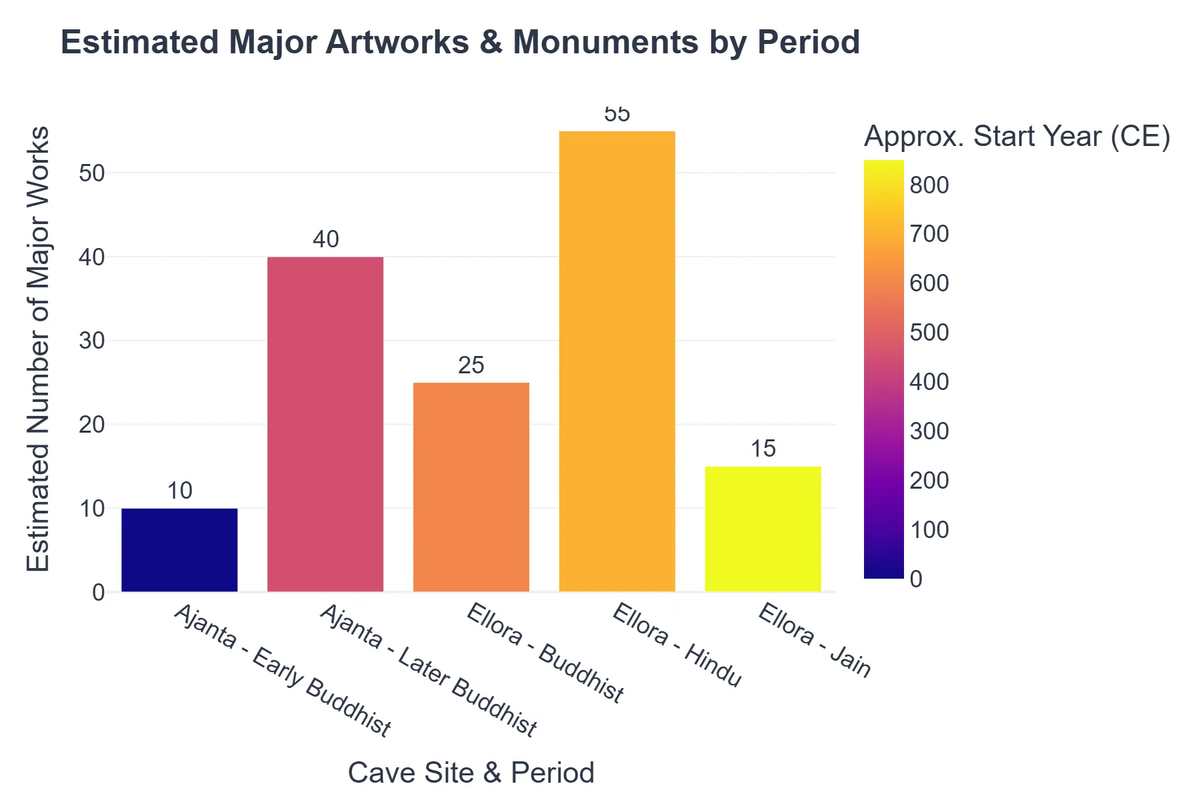
The Ajanta Caves, a collection of approximately 30 rock-cut Buddhist cave monuments, date from the 2nd century BCE to about 480 CE. Nestled in a horseshoe-shaped gorge, these caves served as monasteries (viharas) and prayer halls (chaityas) for Buddhist monks for nearly seven centuries, before being abandoned and lost to time until their rediscovery in 1819.
🗓️ A Timeline Through Faith and Art
- ✅ Early Phase (Satavahana Period, 2nd-1st Century BCE): This phase saw the creation of the earliest caves, primarily chaityas (prayer halls) and viharas (monasteries), characterized by simple, austere architecture. These reflect the Hinayana phase of Buddhism, where Buddha was symbolized rather than depicted in human form.
- ✅ Later Phase (Vakataka Period, 5th Century CE): Following a period of abandonment, a resurgence of activity occurred under the Vakataka dynasty, particularly during the reign of Emperor Harishena. This phase, often called the Mahayana phase, introduced elaborate sculptures and the world-renowned frescoes depicting the life of Buddha and Jataka tales (stories of his previous incarnations).
🎨 Masterpieces in Fresco: Artistry and Narrative
The frescoes of Ajanta are arguably its most celebrated feature. These vibrant murals, created using a dry fresco technique, adorn the walls and ceilings of the caves, depicting a myriad of subjects:
- ➡️ Jataka Tales: Rich narratives illustrating the moral principles of Buddhism through the adventures of the Buddha in his previous lives as a Bodhisattva.
- ➡️ Celestial Beings and Royal Processions: Portrayals of divine figures, kings, queens, and common folk, offering a vivid glimpse into the social life and costumes of the era.
- ➡️ Flora and Fauna: Intricate designs featuring animals, birds, and plants, showcasing the artists’ keen observation of nature.
The nuanced expressions, dynamic compositions, and sophisticated color palettes demonstrate an extraordinary level of artistic skill that profoundly influenced subsequent Indian and even Asian art forms. For those interested in how ancient artistry reveals untold stories, consider exploring Ancient Mysteries: Unraveling the World’s Most Enduring Enigmas.
🏛️ The Viharas and Chaityas: Architecture of Devotion
The structural layout of the Ajanta caves reflects their monastic purpose:
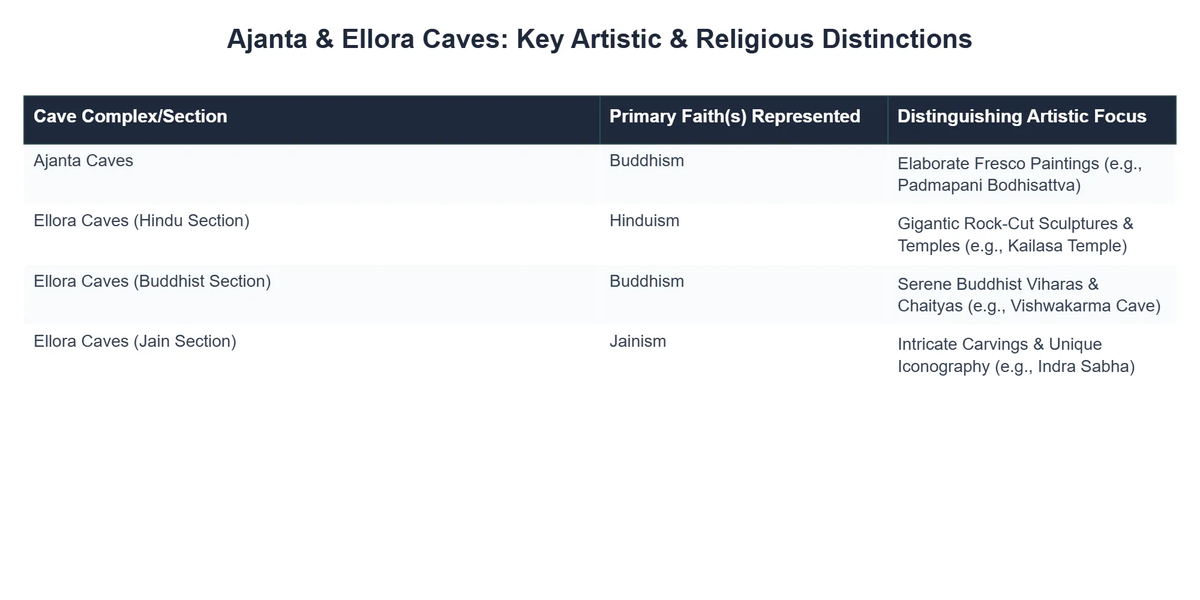
- 💡 Viharas: These were residential complexes for monks, featuring a central hall surrounded by cells for living and meditation. Many viharas also contain shrines with Buddha images in the later period.
- 💡 Chaityas: Prayer halls characterized by a stupa (a hemispherical structure containing relics, representing Buddha) at one end and a colonnade leading to it. The rock-cut stupas often served as focal points for circumambulation.
Ellora’s Ecumenical Harmony: A Symphony in Stone
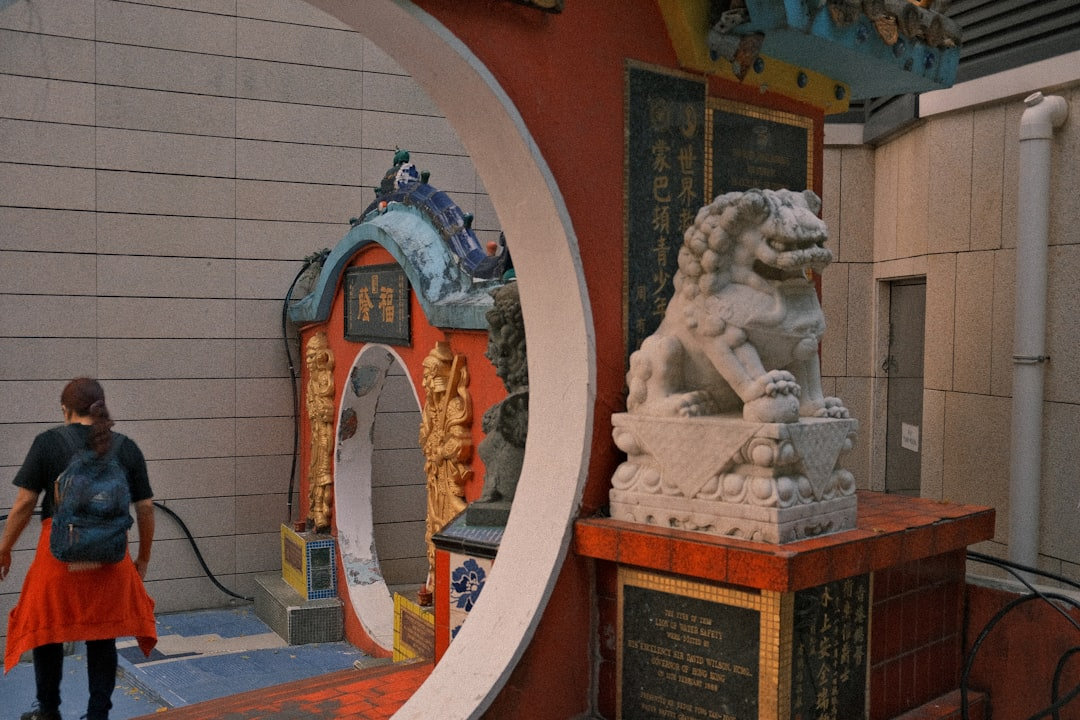
Just 100 kilometers from Ajanta lies the Ellora Caves, a complex of 34 caves excavated between the 6th and 10th centuries CE. What sets Ellora apart is its unique representation of three major Indian religions – Buddhism, Hinduism, and Jainism – coexisting in remarkable proximity.
🙏 Three Faiths, One Mountain: Buddhist, Hindu, and Jain Caves
- ✅ Buddhist Caves (Caves 1-12): Dating from the 6th-8th centuries, these caves include viharas and a large chaitya hall. They represent the later phase of Buddhism, with elaborate sculptures of Buddha and Bodhisattvas.
- ✅ Hindu Caves (Caves 13-29): Spanning the 7th-9th centuries, these are perhaps the most famous, renowned for their scale and intricate carvings dedicated to deities like Shiva, Vishnu, and Durga.
- ✅ Jain Caves (Caves 30-34): Carved in the 9th-10th centuries, these caves are smaller but equally intricate, featuring highly detailed sculptures of Jain Tirthankaras (ford-makers) like Mahavira and Parshvanatha.
🌟 The Kailasa Temple (Cave 16): An Architectural Marvel
The crowning glory of Ellora is undoubtedly the Kailasa Temple (Cave 16). This isn’t just a cave; it’s a colossal, multi-storeyed temple complex carved top-down from a single massive rock. Dedicated to Lord Shiva, its sheer scale and intricate detailing defy belief:
- ➡️ Monolithic Masterpiece: Carved from a single basaltic rock, it mimics a structural temple complete with a gateway, an antechamber, a main hall, and a sanctuary.
- ➡️ Epic Sculptures: The temple is adorned with exquisite sculptures depicting episodes from Hindu mythology, particularly those related to Shiva and his abode, Mount Kailasa. The famous Ravana shaking Mount Kailasa carving is a prime example of its dynamic artistry.
- ➡️ Unparalleled Engineering: The precise planning and execution required to carve such a massive structure from the top down, removing tons of rock, speak volumes about the engineering prowess of its creators.
💎 Jain Caves: Intricate Details and Ascetic Beauty
The Jain caves, though fewer in number, are noted for their delicate carvings, polished surfaces, and painted ceilings. They reflect the ascetic principles of Jainism, focusing on figures of Tirthankaras and intricate decorative motifs.
Unearthing the Past: Construction Techniques and Discovery
The creation of these monumental rock-cut caves required extraordinary skill, dedication, and sophisticated planning, especially given the tools available at the time. Their re-discovery also marks a significant moment in archaeological history.
🔨 Rock-Cut Ingenuity
The construction process for both Ajanta and Ellora involved a unique “cut-in” technique. Artisans would begin by carving from the top down, excavating massive amounts of rock to create the outer façade before proceeding inwards to sculpt the interiors, pillars, and detailed artworks. This method minimized structural collapse and allowed for precision.
- 💡 Tools: Simple tools like hammers, chisels, and picks were used. The sheer volume of rock removed and the precision achieved with these basic instruments is astonishing.
- 💡 Labor and Planning: Thousands of laborers, sculptors, and painters would have worked over generations, guided by master artisans and architects, following meticulously planned designs.
🔎 Re-discovery and Preservation Efforts
The Ajanta Caves, having been abandoned for centuries, were overgrown by jungle and forgotten until their accidental discovery by a British officer, John Smith, in 1819 while tiger hunting. The Ellora Caves, being more accessible, were never entirely lost to public knowledge, though their full historical and artistic significance was increasingly appreciated after scholarly documentation.
Today, both sites are meticulously maintained by the Archaeological Survey of India (ASI), which undertakes conservation, preservation, and research activities. Their efforts are crucial in protecting these fragile masterpieces from environmental degradation and human impact, ensuring that future generations can continue to explore these Archaeological Discoveries: Exploring Ancient Monuments and Lost Worlds.
Why Ajanta and Ellora Matter Today: A Global Heritage
The Ajanta and Ellora Caves are more than just tourist attractions; they are living testaments to human creativity, religious harmony, and historical continuity. Their global significance resonates deeply in the fields of art history, archaeology, and cultural studies.
🌐 UNESCO Recognition and Global Significance
Their status as UNESCO World Heritage Sites underscores their “outstanding universal value,” meaning they possess cultural and natural significance which is considered to be of such exceptional importance as to transcend national boundaries and to be of common importance for present and future generations of all humanity.
- ✅ Artistic Masterpiece: The rock-cut architecture, sculptures, and paintings are considered pinnacles of ancient Indian art.
- ✅ Cultural Interchange: Ellora, in particular, demonstrates a unique spirit of tolerance and co-existence among different faiths, which is a powerful message for the modern world.
💡 Cultural Impact and Modern Relevance
These caves continue to inspire artists, historians, and spiritual seekers worldwide. They serve as crucial primary sources for understanding ancient Indian social structures, religious practices, artistic techniques, and philosophical thought. Their intricate narratives and powerful imagery offer insights into a forgotten past, reminding us of the enduring human quest for meaning and expression. For a broader understanding of such significant places, delve into Historical Places: Exploring the World’s Most Fascinating Sites.
Recommended Video
Visiting the Caves: Tips for Exploration
Exploring the Ajanta and Ellora Caves is an unforgettable experience, but a little planning can enhance your visit.
☀️ Best Time to Visit and Logistics
- ➡️ Season: The cooler months from October to March are ideal for visiting, avoiding the intense heat of summer and the monsoon rains.
- ➡️ Location: Both cave complexes are near Aurangabad, Maharashtra. Aurangabad has an airport, and the caves are accessible by road.
- ➡️ Time Allotment: Dedicate at least half a day to Ajanta and another full day to Ellora to fully appreciate their scale and detail.
Respecting the Ancient Art
- 🚫 No Flash Photography: Flash can damage the delicate frescoes, especially in Ajanta.
- 🚶♀️ Footwear: Be prepared to remove your shoes in some cave sections, especially at Ellora.
- 🤫 Maintain Silence: These were places of worship and meditation; respect the serene atmosphere.
Conclusion
The Ajanta and Ellora Caves are more than just historical sites; they are profound expressions of faith, artistic genius, and engineering marvels that echo through millennia. Their intricate carvings, vibrant frescoes, and monumental architecture collectively tell the story of India’s spiritual and creative evolution. From the serene Buddhist narratives of Ajanta to the harmonious confluence of faiths at Ellora, these sites stand as an unparalleled testament to ancient India’s contribution to global heritage.
Exploring these “lost worlds” allows us to connect directly with the minds and hands of artisans and devotees who shaped our collective history. They remain essential destinations for anyone seeking to unearth the past’s greatest riddles and understand the enduring power of human creativity. Dive deeper into such captivating narratives by visiting our pillar page: Lost Worlds & Forgotten Histories: Unearthing the Past’s Greatest Riddles.
Frequently Asked Questions
What is the primary difference between Ajanta and Ellora Caves?
Ajanta Caves are predominantly Buddhist, focusing on chaityas (prayer halls) and viharas (monasteries) with famous frescoes. Ellora Caves showcase a harmonious blend of Buddhist, Hindu, and Jain rock-cut architecture from later periods, famously including the monolithic Kailasa Temple.
When were the Ajanta and Ellora Caves built?
The Ajanta Caves span two main periods: 2nd century BCE to 1st century CE, and 5th to 6th century CE. The Ellora Caves were constructed between the 6th and 10th centuries CE.
Are the Ajanta and Ellora Caves open to the public?
Yes, both Ajanta and Ellora Caves are major tourist attractions and are open to the public, typically from morning to late afternoon, though specific timings and visiting days may vary.